
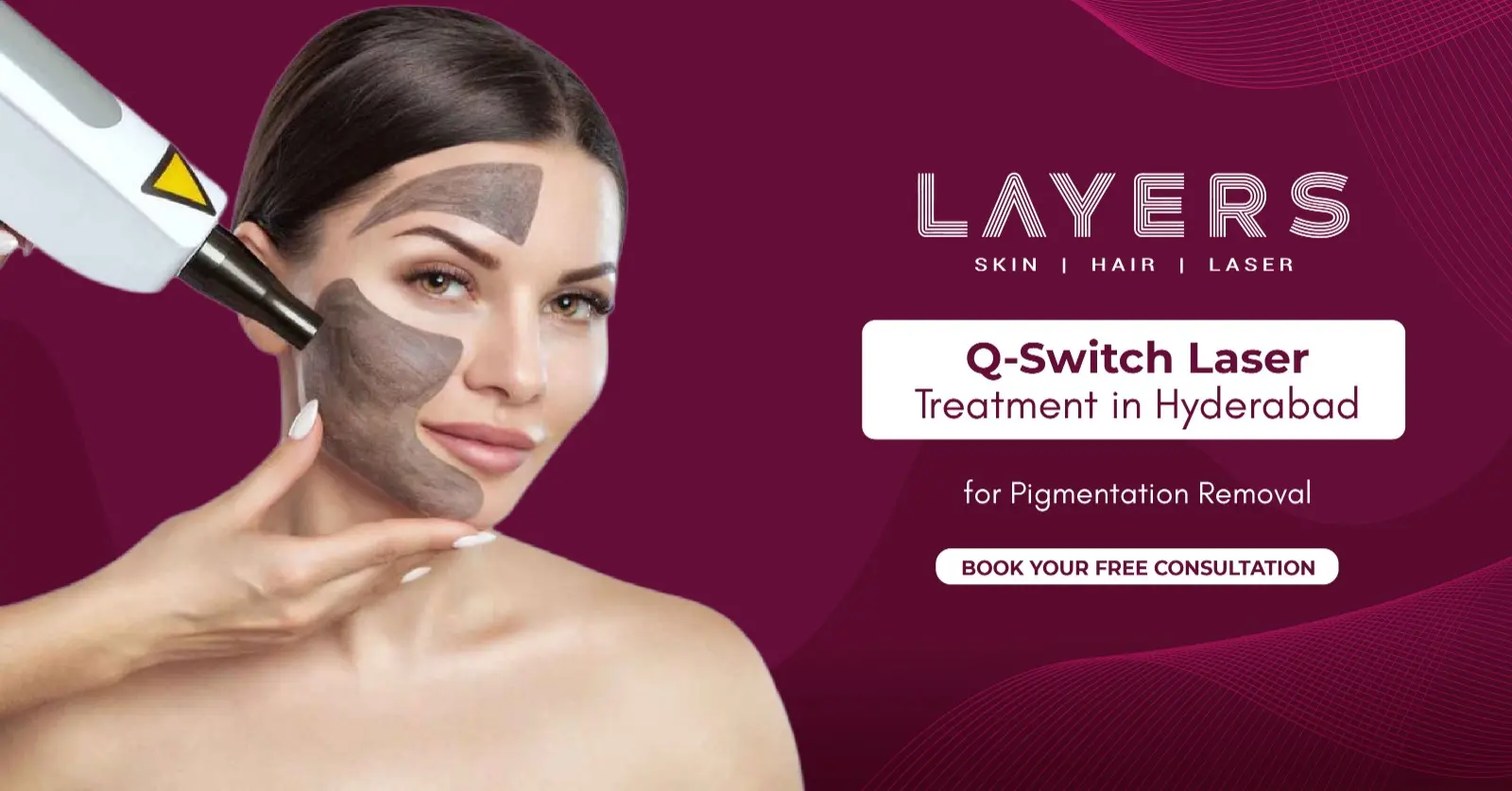
Hyderabad’s sun, pollution, and hard water take a visible toll on skin showing up as tanning, melasma, dark spots, and acne scars that don’t respond to creams or home remedies. If topical products and chemical peels haven’t worked, Q-Switch laser treatment in Hyderabad is one of the most clinically proven options for reducing stubborn pigmentation at its root, rather than just fading it on the surface.
At Layers Clinics, dermatologists use advanced Q-Switch laser technology, calibrated for Indian skin tones, to break down excess melanin safely and effectively. This guide explains how the treatment works, what to expect, how many sessions you’ll need, and answers to the questions patients ask most often.
What Is Q-Switch Laser Treatment?
Q-Switch laser treatment is a dermatological laser procedure that uses short, high-energy pulses of light to target excess pigmentation in the skin. The laser breaks pigment into smaller particles, which are gradually cleared by the body’s natural processes.
It may be considered for certain pigmentation concerns such as sun spots, post-inflammatory pigmentation, acne marks, and uneven skin tone. The appropriate laser wavelength and settings depend on the type and depth of pigmentation and the patient’s skin characteristics.
What Causes Pigmentation?
Pigmentation occurs when the skin overproduces melanin, the pigment responsible for skin color. The most common triggers are:
- Sun exposure — UV radiation is the single biggest driver of melanin overproduction
- Hormonal changes — melasma is often linked to pregnancy, PCOS, or contraceptive use
- Acne scars — post-inflammatory hyperpigmentation left behind after breakouts heal
- Skin injury or irritation — cuts, burns, or aggressive cosmetic procedures
- Aging and environmental damage — pollution and oxidative stress cause visible tone changes over time
Left untreated, pigmentation tends to deepen and spread rather than fade on its own, which is why a dermatologist-guided approach that targets the cause, not just the surface, produces more lasting results.
How Q-Switch Laser Technology Works
The Q-Switch laser delivers extremely short, high-energy pulses of light (measured in nanoseconds) that target melanin specifically, without damaging surrounding skin tissue. The laser breaks pigment into tiny fragments, which the body then clears naturally over the following weeks, resulting in gradually lighter spots and a more even skin tone.
Key advantages of this technology:
- Precisely targets pigmented lesions while sparing healthy skin
- Safe for Indian skin tones (Fitzpatrick phototypes III–VI), which are more prone to post-treatment darkening with less specialized lasers
- Quick sessions with minimal downtime
- Effective across a range of concerns: melasma, sun spots, acne scars, and post-inflammatory pigmentation
Q-Switch Laser vs Other Pigmentation Treatments
| Treatment | Common Use | Downtime | Approach |
|---|---|---|---|
| Topical creams | Mild pigmentation | None | Gradual pigment control |
| Chemical peels | Mild to moderate pigmentation | Low | Controlled exfoliation |
| Q-Switch laser | Selected pigmentation concerns | Usually low | Targeted pigment treatment |
| Combination treatment | Persistent or complex pigmentation | Depends on treatment | Multiple approaches |
The best treatment is not necessarily the most aggressive option. A dermatologist should select treatment according to the pigmentation diagnosis.
Is Q-Switch Laser Treatment Safe for Indian Skin?
Q-Switch laser treatment can be used for Indian skin when appropriate laser parameters are selected and the procedure is performed by a trained medical professional.
Indian skin can be more prone to post-inflammatory pigmentation following skin injury. Therefore, appropriate wavelength selection, conservative settings, skin assessment, and aftercare are important.
A dermatologist may recommend a patch test in selected cases before treating a larger area.
What to Expect During a Q-Switch Laser Session
- Consultation — a dermatologist examines your skin, identifies the type and depth of pigmentation, and confirms you’re a suitable candidate
- Preparation — the treatment area is cleansed and, if needed, a numbing cream is applied
- Laser delivery — controlled pulses are applied across the treatment area, typically taking 20–30 minutes
- Aftercare — a calming cream and broad-spectrum sunscreen are applied before you leave
Most patients experience mild redness or warmth for a few hours afterward, with little to no real downtime, most people return to normal activities the same day.
How Many Q-Switch Laser Sessions Are Needed?
There is no fixed number of sessions for every patient.
The treatment plan depends on:
- Type of pigmentation
- Depth of pigment
- Size of treatment area
- Skin type
- Response to previous sessions
- Whether other treatments are being used
Some patients may require multiple sessions spaced several weeks apart. Your dermatologist should determine the appropriate interval after evaluating your skin’s response.
When Can You See Results?
Some patients notice gradual lightening after the initial sessions, but pigmentation improvement usually develops progressively.
Results can vary depending on the pigmentation condition and individual response.
For conditions such as melasma, maintenance treatment and consistent sun protection may be necessary because pigmentation can recur.
Avoid promising a guaranteed number of sessions or permanent removal. This will make the content more medically credible and improve GEO quality.
What Can Affect Your Q-Switch Laser Results?
Results can differ from one patient to another. Factors that may influence treatment response include:
- Type and depth of pigmentation
- Skin tone and sensitivity
- Size and location of the treatment area
- Previous pigmentation treatments
- Sun exposure after treatment
- Consistency with prescribed skincare and sunscreen
- Individual response to laser treatment
For example, a localized sun spot may respond differently from widespread melasma. This is why treatment expectations should be based on an individual skin assessment rather than a fixed result timeline.
Q-Switch Laser Treatment Cost in Hyderabad
The cost varies from patient to patient.
Factors that can influence the price include:
- Treatment area
- Pigmentation type and severity
- Number of sessions
- Laser technology used
- Whether combination treatments are required
- Dermatologist consultation and treatment plan
Rather than quoting one universal price, Layers Clinics can provide an individualized estimate after assessing the skin and treatment area.
Post-Treatment Care for Better Results
After treatment:
- Use sunscreen as directed by your dermatologist.
- Minimize unnecessary sun exposure.
- Avoid picking or rubbing the treated area.
- Use gentle skincare while the skin recovers.
- Avoid aggressive exfoliation unless advised.
- Follow prescribed post-treatment products.
- Attend follow-up appointments as recommended.
Sun protection is particularly important because UV exposure can contribute to pigmentation returning.
Why Choose Layers Clinics for Q-Switch Laser Treatment in Hyderabad?
At Layers Clinics, treatment planning can include:
- Dermatologist-led skin assessment
- Individualized laser parameters
- Assessment of pigmentation type
- Skin-type considerations
- Patch testing where appropriate
- Treatment monitoring
- Post-treatment skincare guidance
The focus is on selecting an appropriate treatment rather than using the same laser protocol for every patient.
Frequently Asked Questions
Is Q-Switch laser treatment safe for all skin types?
Yes, it’s generally considered safe for most skin types, including Indian skin tones. When performed by an experienced dermatologist with settings calibrated to your skin type and pigmentation depth, the risk of side effects is minimized.
Does Q-Switch laser treatment hurt?
Most patients describe only mild discomfort often a slight tingling or snapping sensation. The nanosecond pulses make the procedure quick and generally well tolerated without anesthesia.
Is it suitable for sensitive skin?
Yes. Settings can be adjusted for sensitive skin, and a patch test is typically done beforehand to confirm safety and reduce the risk of irritation.
Can Q-Switch laser treatment permanently remove pigmentation?
It significantly reduces existing pigmentation by breaking down excess melanin, and results are long-lasting. However, pigmentation can recur if sun protection and skincare aren’t maintained afterward it’s a highly effective treatment, not a permanent immunity from future sun damage.
How is Q-Switch laser different from a chemical peel?
Chemical peels work on the outer skin layers and suit milder pigmentation, while Q-Switch laser targets melanin more precisely and works for deeper, more stubborn pigmentation like melasma and acne scars.
How much does Q-Switch laser treatment cost in Hyderabad?
Cost depends on the treatment area, pigmentation depth, and number of sessions required. An accurate quote is provided after an in-person consultation and skin assessment.
How soon will I see results?
Most patients notice visible lightening after 2–3 sessions, with continued improvement as the skin clears residual pigment over the following weeks.
Key Takeaway
Q-Switch laser treatment can help reduce certain types of pigmentation, including sun spots, acne marks, and uneven skin tone, when the treatment is selected and performed appropriately. The ideal laser settings and number of sessions depend on your pigmentation type, skin tone, and response to treatment, so a dermatologist assessment is important.
Conclusion
Q-Switch laser treatment can help reduce selected pigmentation concerns while offering a relatively low-downtime treatment option. However, successful treatment depends on correct diagnosis, appropriate laser settings, realistic expectations, and consistent aftercare.
If you are considering Q-Switch laser treatment in Hyderabad, a consultation with a qualified dermatologist can help determine whether the treatment is suitable for your pigmentation and create a personalized treatment plan.
