
Uneven skin tone, dark spots, and stubborn pigmentation are some of the most common concerns we see walk through the door at Layers Clinics. Melasma, tanning, and post-acne dark marks don’t discriminate by age or skin type they show up on almost everyone at some point. Home remedies and over-the-counter creams can take the edge off, but when pigmentation refuses to fade, it usually needs medical attention. That’s where laser treatment for pigmentation comes in a safe, advanced way to break down excess melanin sitting in the skin.
At Layers Clinics, our laser treatments are built specifically with Indian skin in mind most of which falls under Fitzpatrick skin types III to V, a category that needs more careful handling than lighter skin tones. Using proven laser technology and dermatologist supervision, our team works to clear out excess pigment and even out your complexion without compromising skin safety.
This guide covers what pigmentation laser treatment actually involves, what to expect from it, how safe it is for darker skin, and everything else you’d want to know before booking a session.
Why Pigmentation Shows Up More on Indian Skin
Indian skin naturally carries higher melanin levels than lighter skin types. Melanin is protective it shields skin from UV damage but that same protective quality makes it more reactive. Even small triggers like a mild breakout or a few hours in the sun can leave behind noticeable darkening that lighter skin might not develop as easily.
What Causes Pigmentation?
Sun exposure
India’s climate means near-constant UV exposure. Skip sunscreen regularly, and tanning, patchy pigmentation, and dark spots follow.
Hormonal changes (melasma)
Pregnancy, PCOS, thyroid imbalances, or oral contraceptives can all trigger melasma brownish or greyish patches that typically settle on the cheeks, forehead, and upper lip.
Post-inflammatory hyperpigmentation (PIH)
Acne, rashes, burns, or cosmetic procedures often leave dark marks behind on Indian skin that can linger for months if untreated.
Age-related pigmentation
Years of accumulated sun exposure catch up eventually, usually showing up as age spots and uneven tone past the mid-30s.
Before any laser session begins at Layers Clinics, we spend time figuring out exactly which of these is driving your pigmentation because treating the wrong cause rarely gets you the result you’re after.
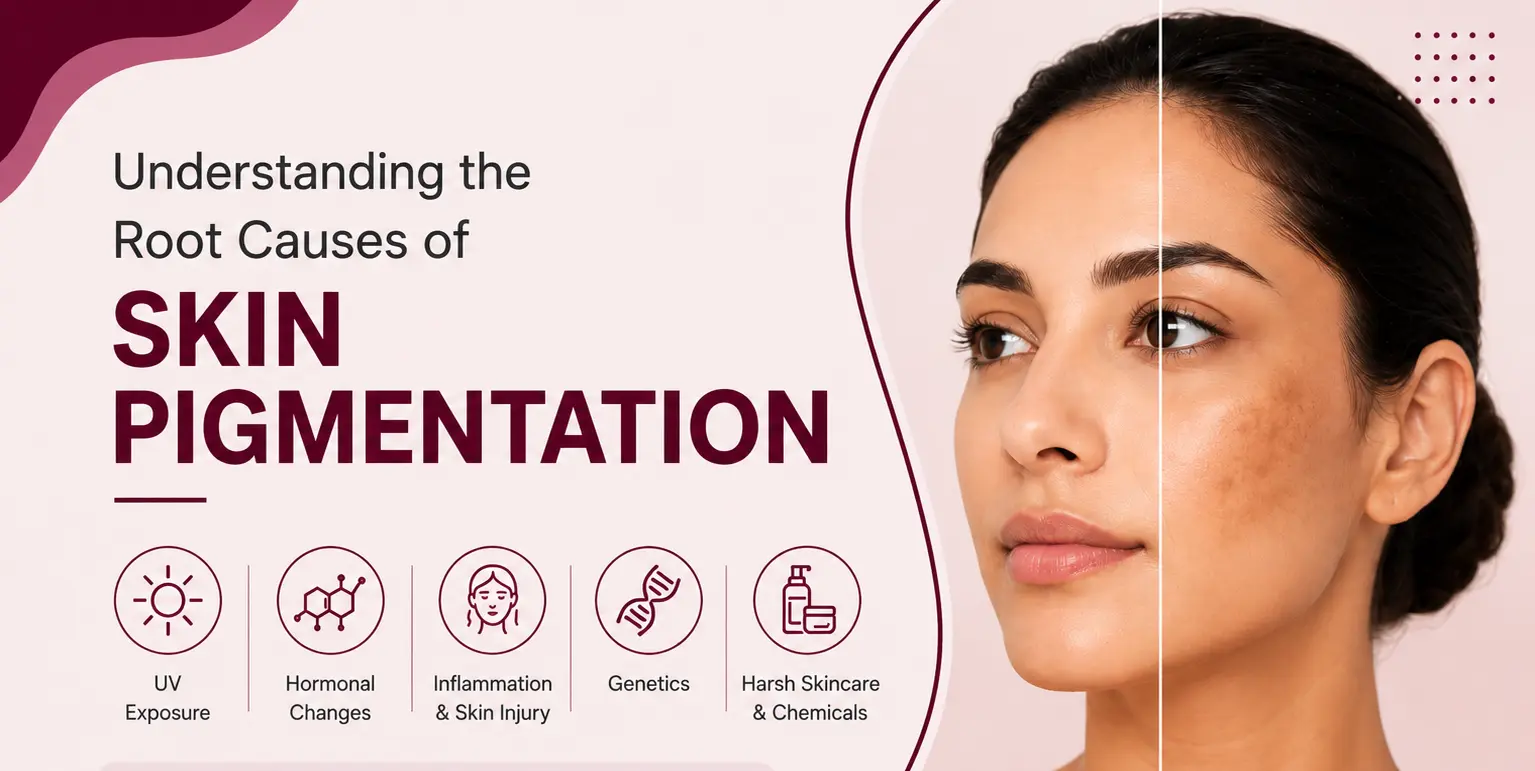
At Layers Clinics, we focus on identifying the exact cause before initiating laser therapy, as correct diagnosis is essential for effective results.
Types of Pigmentation We Treat
Pigmentation isn’t one condition it’s several different ones that happen to look similar, and each needs its own approach.
Melasma
Shows up as symmetrical brown or grey patches on sun-exposed parts of the face. Since melasma is hormonally driven and often sits deeper in the skin, we combine controlled laser toning sessions with medical therapy for gradual, lasting improvement and maintenance sessions are usually part of the plan.
Post-acne marks (PIH)
These respond well to laser toning using Q-switched technology, which breaks down excess melanin gently without disturbing the skin around it a big reason it works so well on Indian skin specifically.
Sun tanning
Uneven tan lines and patchiness from UV exposure typically improve with a combination of laser sessions and chemical peels, alongside a dermatologist-guided skincare routine.
Age spots
Localized, concentrated pigment deposits respond well to targeted, high-precision laser pulses aimed specifically at the affected spot.
How Laser Treatment for Pigmentation Works
The science behind it is fairly simple: the laser emits a specific wavelength of light that’s absorbed by melanin in the skin. That energy breaks the pigment down into microscopic fragments, which your body then clears out naturally over the following days and weeks.
Because the laser is targeting pigment specifically, the skin around it stays largely undisturbed. The real variable is calibration settings suited for Indian skin are what keep the treatment both safe and effective, which is why this isn’t something to have done by anyone without real dermatology experience.
Which Laser Technology Is Used for Pigmentation?
Picking the right laser matters more than people realize the wrong device or the wrong settings can lead to burns or, ironically, more pigmentation than you started with. At Layers Clinics, we work with a few different technologies depending on what we’re treating.
Q-Switched Nd:YAG Laser (Laser Toning)
Widely considered the gold standard for pigmentation. It delivers controlled pulses that gradually break up pigment over a series of sessions. Best suited for melasma, post-acne marks, and diffuse facial pigmentation.
Pico Laser
Uses ultra-short pulses to shatter pigment into even finer particles, which can mean fewer total sessions for pigmentation that’s proven resistant to other methods. Especially useful for stubborn melasma, deep-set pigmentation, and mixed pigmentation types.
Fractional Laser
When pigmentation shows up alongside acne scarring or textural issues, fractional lasers work on tone and texture together through controlled resurfacing.
Which device we use comes down to how deep the pigmentation sits, how it’s distributed across your skin, and how sensitive your skin is all things we assess before starting.
What a Treatment Plan Looks Like
Every patient starts with a proper skin evaluation nothing begins without it.
Sessions typically needed:
- Mild pigmentation: 4–6 sessions
- Moderate pigmentation: 6–8 sessions
- Melasma: 8–10 sessions
Spacing between sessions: roughly 3–4 weeks apart, giving your skin time to heal and pigment time to clear progressively.
Time per session: around 20–30 minutes, which is manageable even on a lunch break or between work commitments.
Who Is Laser Pigmentation Treatment Suitable For?
Laser pigmentation treatment tends to suit people dealing with melasma, post-acne dark marks, sun tanning, or age spots that haven’t responded to topical treatment alone. It’s generally not the first option for active, inflamed acne (that needs to be brought under control first), very recently sunburned skin, or pigmentation caused by an undiagnosed underlying condition — which is exactly why a proper consultation comes before any laser is switched on.
What Aftercare Is Required After Laser Pigmentation Treatment?
What you do after a session affects the result almost as much as the treatment itself.
- Apply broad-spectrum SPF 50+ sunscreen daily, without exception
- Stay out of direct sun exposure as much as possible
- Use any depigmenting creams your dermatologist prescribes
- Skip harsh exfoliation for 5–7 days post-session
- Stick to a gentle, non-irritating skincare routine
For melasma patients especially, strict sun protection isn’t optional it’s the single biggest factor in whether results hold or pigmentation creeps back.
Why Combination Treatments May Work Better
Laser alone doesn’t always fully control chronic or deep-set pigmentation, which is why we often build a broader plan around it.
Laser + chemical peels: peels clear out superficial pigment and help the laser work more effectively underneath.
Laser + medical skincare: prescription actives like tranexamic acid, azelaic acid, kojic acid, arbutin, and retinoids help regulate melanin production and reduce the chances of pigmentation coming back.
Laser + oral therapy: for select melasma cases, supervised oral medication can support longer-term pigment control alongside in-clinic treatment.
Combining approaches like this tends to get people to visible improvement faster, and helps maintain it for longer.
Is Laser Pigmentation Treatment Permanent?
It depends on what’s being treated. Post-acne marks and age spots often clear up permanently once treated. Melasma is different because it’s tied to hormones and sun exposure, it tends to need ongoing maintenance rather than a one-time fix, and how consistently you use sunscreen afterward is really what determines whether it stays away. Maintenance sessions every 4–6 months are common for melasma patients specifically.
Is It Safe for Indian Skin?
Yes, when it’s done right. Indian skin needs a more conservative approach than what works on lighter skin types that means lower energy settings, gradual progression across sessions, close monitoring throughout, and strict aftercare guidance. When performed by an experienced dermatologist, laser treatment is safe and effective for Fitzpatrick skin types III-V, which includes most Indian skin tones. If any side effects occur they are generally mild and temporary, they include some redness, slight swelling or a short period when pigmentation may appear slightly darker before improving. In rare cases there may be temporary light or dark patches. Most of this settles within a few days.
What to realistically expect: improvement is gradual, not instant. Most patients see 30–40% improvement after 2–3 sessions, and 60–80% improvement by the end of a full treatment course. The goal isn’t to change your natural skin tone it’s to even it out and bring back clarity and brightness.
How Much Does Laser Pigmentation Treatment Cost?
Pricing depends on a few factors which laser technology is used, the area being treated, how many sessions your specific case needs, and your overall treatment plan. Since pigmentation varies so much from person to person, the most accurate way to get a number is a consultation at Layers Clinics, where we can map out a realistic cost alongside the treatment roadmap.
Why Choose Layers Clinics for Pigmentation Treatment?
Indian skin does not take kindly to guess work over aggressive treatment can easily worsen pigmentation instead of helping it. At Layers Clinics, every plan begins with a detailed skin analysis, followed by laser settings specific to your skin, a gradual strategy to clear pigment safely and a maintenance plan for the long haul all based on evidence based dermatology rather than one size fits all protocols. The goal is visible improvement that respects your skin’s health, not a rushed fix that creates new problems.
Frequently Asked Questions
Is laser treatment good for pigmentation?
Yes, laser treatment can significantly improve several forms of pigmentation, including post-acne marks, tanning, age spots and some cases of melasma. The appropriate laser and settings depend on the type, depth and severity of pigmentation.
How many sessions are required for laser pigmentation treatment?
The number of sessions varies by pigmentation type and severity. Mild pigmentation may require around 4–6 sessions, moderate pigmentation 6–8 sessions, while melasma may require approximately 8–10 sessions. Your dermatologist will recommend the appropriate treatment schedule after evaluating your skin.
Is laser pigmentation treatment safe for Indian skin?
Yes, it can be safe for Indian skin when performed by an experienced dermatologist using appropriate laser settings. Indian skin requires careful energy calibration because aggressive treatment can increase the risk of post-inflammatory pigmentation.
Does laser treatment permanently remove pigmentation?
Laser treatment can provide long-lasting improvement, but results depend on the underlying cause. Some pigmentation may resolve significantly, while conditions such as melasma can recur because of hormonal and environmental triggers. Sunscreen and maintenance treatment are important for long-term control.
What is the best laser for pigmentation?
There is no single best laser for every pigmentation condition. Q-Switched Nd:YAG, Pico Laser and Fractional Laser may be used depending on whether the pigmentation involves melasma, post-acne marks, tanning, age spots or accompanying skin-texture concerns.
Can I go outside after laser pigmentation treatment?
You should minimize direct sun exposure after treatment and follow your dermatologist’s aftercare instructions. Daily use of a broad-spectrum SPF 50+ sunscreen is particularly important because UV exposure can worsen pigmentation and affect treatment results.
Key Takeaway
Laser treatment can significantly reduce pigmentation such as melasma, post-acne dark marks, tanning, and age spots when the correct laser and settings are selected for the individual’s skin type. For Indian skin, dermatologist-supervised treatment is particularly important because aggressive laser settings can increase the risk of post-inflammatory pigmentation. Depending on the type and severity of pigmentation, treatment may involve 4–10 sessions spaced several weeks apart, often combined with medical skincare, chemical peels, and strict SPF 50+ sun protection.
Conclusion
Pigmentation can be stubborn, but with an accurate diagnosis and the right laser approach, clearer, more even-toned skin is a realistic goal not a guarantee sold on a brochure. Combining laser toning, medical skincare, and consistent sun protection is what actually moves the needle for most patients at Layers Clinics.
If melasma, post-acne marks, tanning, or age spots have been bothering you, it’s worth getting an expert opinion before trying yet another cream. Clear skin isn’t about looking like someone else it’s about getting your own skin back to feeling even, calm, and confident.
