
Unwanted facial hair is a common concern for many women. Hair on the upper lip, chin, cheeks, jawline, or sideburns may be fine and barely noticeable or darker and more visible. While threading, waxing, shaving, and creams can provide temporary results, many women look for a longer-term solution that reduces the frequency and appearance of facial hair.
Laser facial hair removal is one of the most widely used clinical options for long-term hair reduction. However, the right treatment depends on your skin tone, hair type, growth pattern, hormonal factors, and treatment goals.
This guide explains the causes of unwanted facial hair, available removal methods, laser treatment, safety, sessions, aftercare, cost considerations, and how to choose a facial hair removal clinic.
Why Do Women Get Unwanted Facial Hair?
Before choosing a treatment, it helps to understand what’s driving the growth in the first place. The most common causes include:
- Hormonal imbalance, particularly PCOS
- Genetics and family history
- Certain medications
- Ageing and related hormonal shifts
- Chronic stress
Identifying the underlying cause matters because it affects which treatment will actually work. Hair driven by an untreated hormonal condition, for instance, tends to resist temporary methods and keeps returning no matter how often it’s removed.
What Are the Best Facial Hair Removal Methods?
There are several routes people take when researching facial hair remover options, each with real trade-offs:
Threading Quick and inexpensive, especially for the upper lip and eyebrows, but results last only a couple of weeks before regrowth starts.
Waxing Removes hair from the root and keeps skin smoother for longer than threading, though it can irritate sensitive skin.
Shaving & Dermaplaning Fast and painless, but regrowth is often visible within days, which makes it one of the least practical long-term options for the face.
Hair Removal Creams Chemical depilatories dissolve hair at the surface, but they don’t suit every skin type and can cause irritation with repeated use.
Home Remedies Turmeric masks, sugar scrubs, and similar natural methods are popular, but the results are slow, inconsistent, and rarely noticeable on coarser hair.
Laser Facial Hair Removal: How Does It Work?
Laser facial hair removal uses concentrated light energy to target melanin in the hair follicle, damaging its ability to produce new hair without harming the surrounding skin. Over a series of sessions, this leads to a significant, long-term reduction in hair growth.
A question we hear often: does laser remove facial hair permanently? The honest answer is that most patients see a substantial, lasting reduction rather than complete permanent removal in every case. Hair that does grow back tends to be finer and sparser, and occasional maintenance sessions are usually enough to keep results steady over the years.
Facial Hair Removal Areas Commonly Treated
Depending on your individual requirement, facial laser hair removal may be considered for:
- Upper lip
- Chin
- Jawline
- Cheeks
- Sideburns
- Full facial areas
The number of sessions varies depending on hair growth cycles, hormonal factors, hair thickness, skin type, and the treatment area. Your dermatologist can recommend an appropriate treatment schedule after assessment.
Upper Lip and Chin Hair Removal: What Works Best?
Upper lip hair removal and chin hair are two of the most common concerns clinics see. Threading and waxing offer a quick fix, but they only remove hair that’s already visible, they don’t reduce future growth. For anyone comparing the best hair removal for upper lip hair, the more effective long-term route is a treatment that targets the follicle directly, which is where laser comes in.
What Happens During a Laser Facial Hair Removal Session?
1. Consultation and Skin Assessment A dermatologist evaluates your skin tone, hair thickness, and growth pattern to confirm laser is the right fit and to rule out any underlying hormonal cause worth addressing separately.
2. Preparation The area is cleansed, and in some cases a cooling gel is applied to protect the skin and improve comfort during treatment.
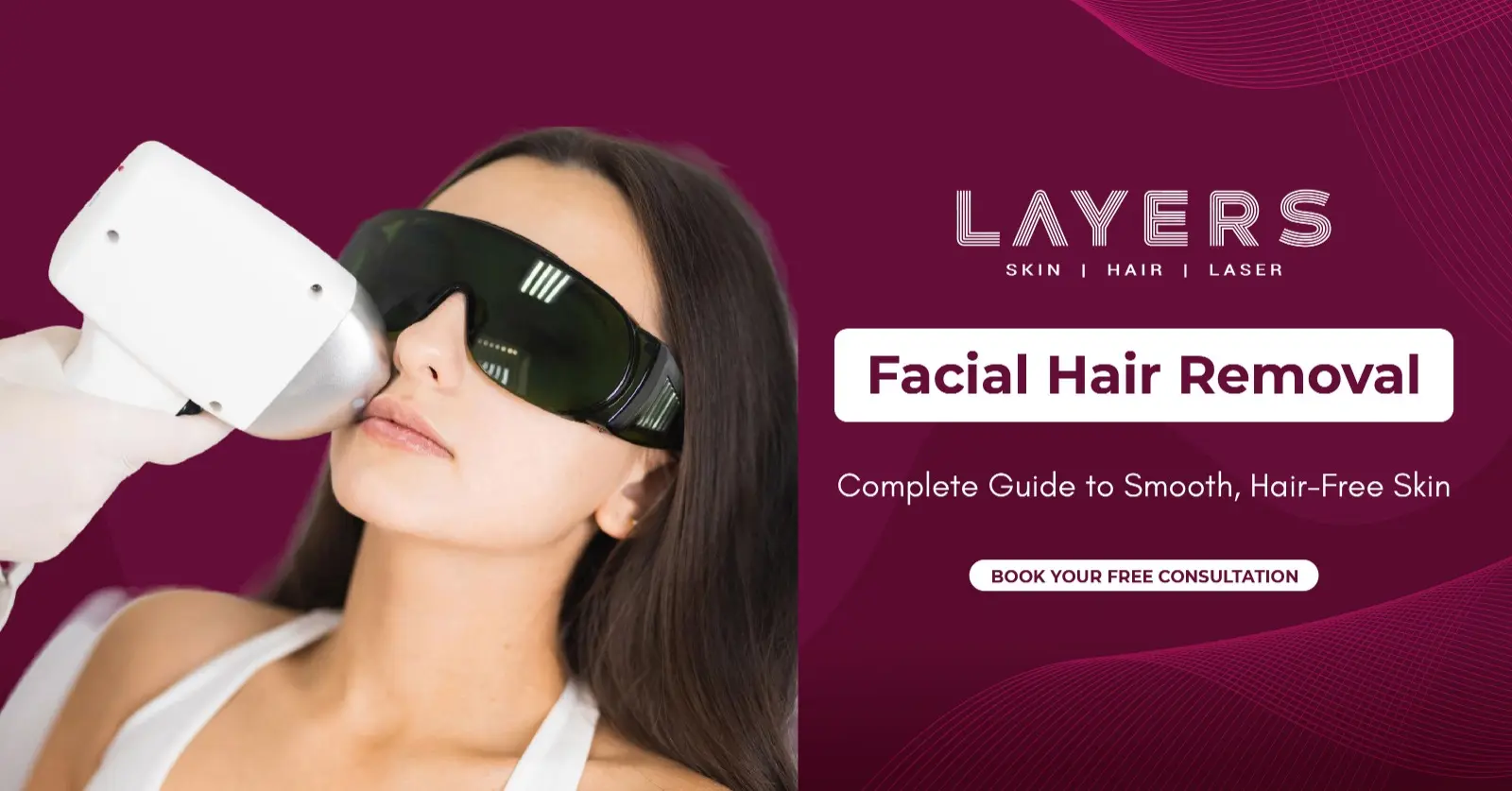
3. Laser Application The device is passed over the treatment area, delivering targeted pulses of light energy to the hair follicles. Most patients describe the sensation as a mild snapping or warm tingling.
4. Aftercare Mild redness is common immediately after and typically settles within a few hours. Sunscreen and gentle skincare are recommended for a few days following treatment.
A single session for the upper lip or chin usually takes under 15–20 minutes.
How Many Sessions Are Needed for Facial Hair Removal?
Most patients need 6–8 sessions, spaced 4–6 weeks apart, to see a substantial reduction in growth. Hair grows in cycles, and laser is most effective on actively growing follicles, which is why sessions are spaced out rather than done back-to-back. After the initial course, occasional touch-up sessions once or twice a year are usually enough to maintain results.
Is Laser Facial Hair Removal Safe for Indian Skin?
When performed by a trained professional using the right settings for your skin tone, laser hair removal is considered very safe. That said, a few mild, temporary effects are common:
- Slight redness or warmth immediately after treatment
- Minor sensitivity to touch for a day or so
- Rarely, small temporary bumps around treated follicles
Choosing a clinic that customizes laser settings for Indian skin tones matters, since incorrect settings on darker skin can increase the risk of pigmentation changes. This is why a proper consultation before starting treatment isn’t optional it’s what keeps the treatment both effective and safe.
Can You Stop Facial Hair Growth Naturally?
Search around “how to stop facial hair growth in women naturally” long enough, and you’ll find plenty of advice — but very little of it is a permanent solution on its own. What genuinely helps includes:
- Managing hormonal balance through diet, sleep, and stress reduction
- Eating a balanced diet that supports hormonal health
- Avoiding frequent, harsh removal methods that can stimulate follicle activity over time
- Addressing any underlying condition, such as PCOS, with a doctor’s guidance
These habits support results and can slow growth over time, but they won’t replace a clinical treatment for hair that’s already established. Combining lifestyle changes with a treatment like laser tends to give the most reliable long-term outcome.
How Much Does Facial Hair Removal Cost in Hyderabad?
The cost of facial hair removal in Hyderabad varies depending on several factors.
These may include:
- Treatment area
- Hair density
- Hair thickness
- Laser technology
- Number of sessions
- Clinic and practitioner
- Individual treatment requirements
Threading and waxing may cost less per visit, but they require frequent repetition.
Laser treatment generally involves a higher initial investment but can reduce the need for regular hair-removal appointments over time.
At Layers Clinics, the treatment plan and pricing can be discussed during a consultation based on your individual requirements.
Why Choose Layers Clinics for Facial Hair Removal?
At Layers Clinics, facial hair treatment for women is handled by experienced dermatologists using laser technology suited to a range of skin tones and hair types. Every treatment plan starts with an actual skin and hair assessment rather than a standard package, which is what makes the difference between a treatment that works and one that just adds another appointment to your calendar.
Frequently Asked Questions
What is the best method for facial hair removal?
It depends on your goals, but laser treatment is generally considered the most effective option for long-term reduction rather than temporary removal.
How can I remove facial hair permanently?
True permanence varies by individual, but laser hair removal, done as a full course of sessions, offers the closest thing to permanent reduction currently available.
Is facial hair removal safe for sensitive skin?
Yes, when performed by a trained professional using techniques and settings suited to your specific skin type.
How often should I get facial hair removal done?
Temporary methods like threading or waxing need to be repeated every 2–4 weeks. Laser treatment requires far fewer sessions overall, with results that last much longer.
What’s the best way for women to get rid of facial hair without irritation?
Laser tends to cause less repeated irritation than waxing or creams over time, since it reduces hair growth rather than requiring constant removal.
Does upper lip hair removal hurt?
Most patients describe mild discomfort, similar to a warm snap, and it’s generally well-tolerated, especially with proper cooling during the session.
Key Takeaway
- Facial hair can result from hormones, genetics, PCOS, ageing, or medications.
- Threading, waxing, and shaving provide temporary results.
- Laser facial hair removal offers long-term reduction in unwanted hair.
- Most people need around 6–8 sessions, depending on hair growth.
- Professional treatment helps ensure safe and effective results.
- Treating underlying hormonal issues can improve long-term outcomes.
Conclusion
Managing unwanted facial hair doesn’t have to be a constant, repetitive struggle. From quick fixes like threading to long-term solutions like laser, there are options suited to almost every skin type, budget, and goal. If lasting results matter more to you than a quick fix this week, investing in a proper laser treatment plan is usually the more reliable path.
Take the first step toward smoother, more confident skin with a personalized consultation at Layers Clinics.
