
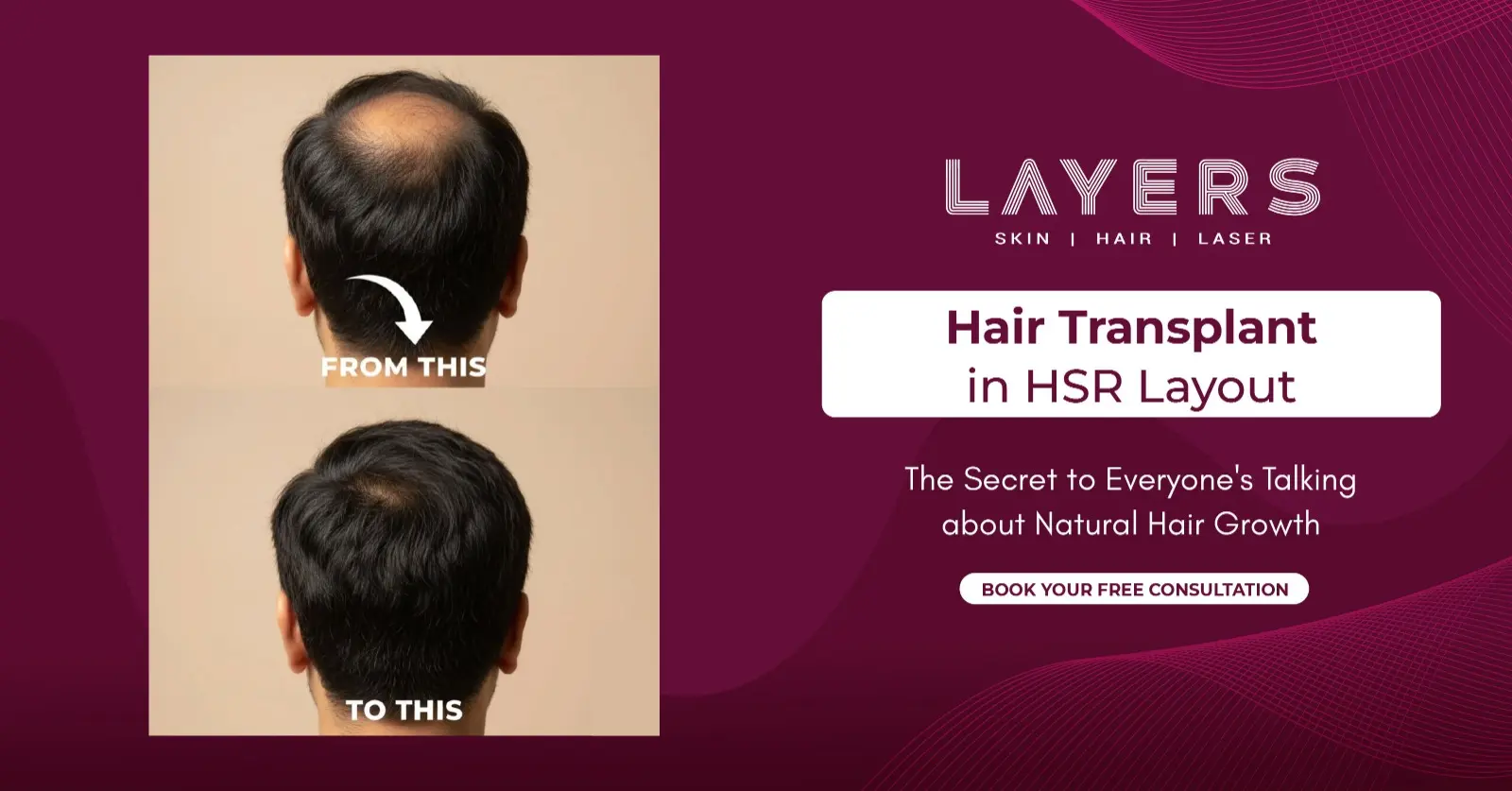
A hair transplant in HSR Layout can be a suitable long-term option for people with established hair loss and sufficient donor hair. FUE, FUT, and DHI are different transplantation approaches, and the appropriate technique depends on hair-loss pattern, donor density, scalp condition, and desired coverage. A professional assessment is recommended before choosing a procedure.
What Is a Hair Transplant?
A hair transplant is a minimally invasive procedure where healthy hair follicles are moved from a donor area (usually the back of the scalp, where hair is genetically resistant to thinning) to areas that are balding or thinning. The follicles retain their original growth characteristics, so once transplanted, they continue growing naturally in their new location for life.
Who Is a Good Candidate for a Hair Transplant?
Not everyone is an immediate candidate. Ideal candidates typically:
- Have stable hair loss (not still rapidly progressing)
- Have sufficient healthy donor hair
- Are in good general health
- Have realistic expectations about outcomes
Timing matters too the earlier hair loss is addressed, the more donor hair is typically available to work with, which directly affects how much density can be achieved.
What Causes Hair Loss Before a Hair Transplant?
Before committing to a hair transplant in HSR Layout, it’s important to understand why hair loss is happening in the first place. Common causes include:
- Genetics (androgenetic alopecia / male and female pattern baldness)
- Chronic stress and lifestyle factors
- Hormonal imbalances
- Nutritional deficiencies
- Underlying medical conditions
A transplant addresses hair that’s already been lost it doesn’t stop ongoing hair loss from other causes. That’s why a proper diagnosis before the procedure matters: if active shedding isn’t controlled first, new transplanted hair can end up surrounded by continued thinning.
Which Hair Transplant Technique Is Best?
| Technique | How It Works | Scarring | Best For |
| FUE (Follicular Unit Extraction) | Individual follicles extracted one at a time | Minimal, virtually undetectable | Most patients seeking natural results with faster recovery |
| FUT (Follicular Unit Transplantation) | A strip of scalp is removed and dissected into grafts | Linear scar at donor site | Cases needing a higher graft count in one session |
| DHI (Direct Hair Implantation) | An advanced FUE variant using a pen-like implanter tool for direct placement | Minimal | Patients prioritizing precision, density, and natural hairline design |
Our surgeons help you choose the right technique based on your scalp condition, donor hair availability, and desired outcome rather than defaulting to one method for everyone.
What Happens During a Hair Transplant?
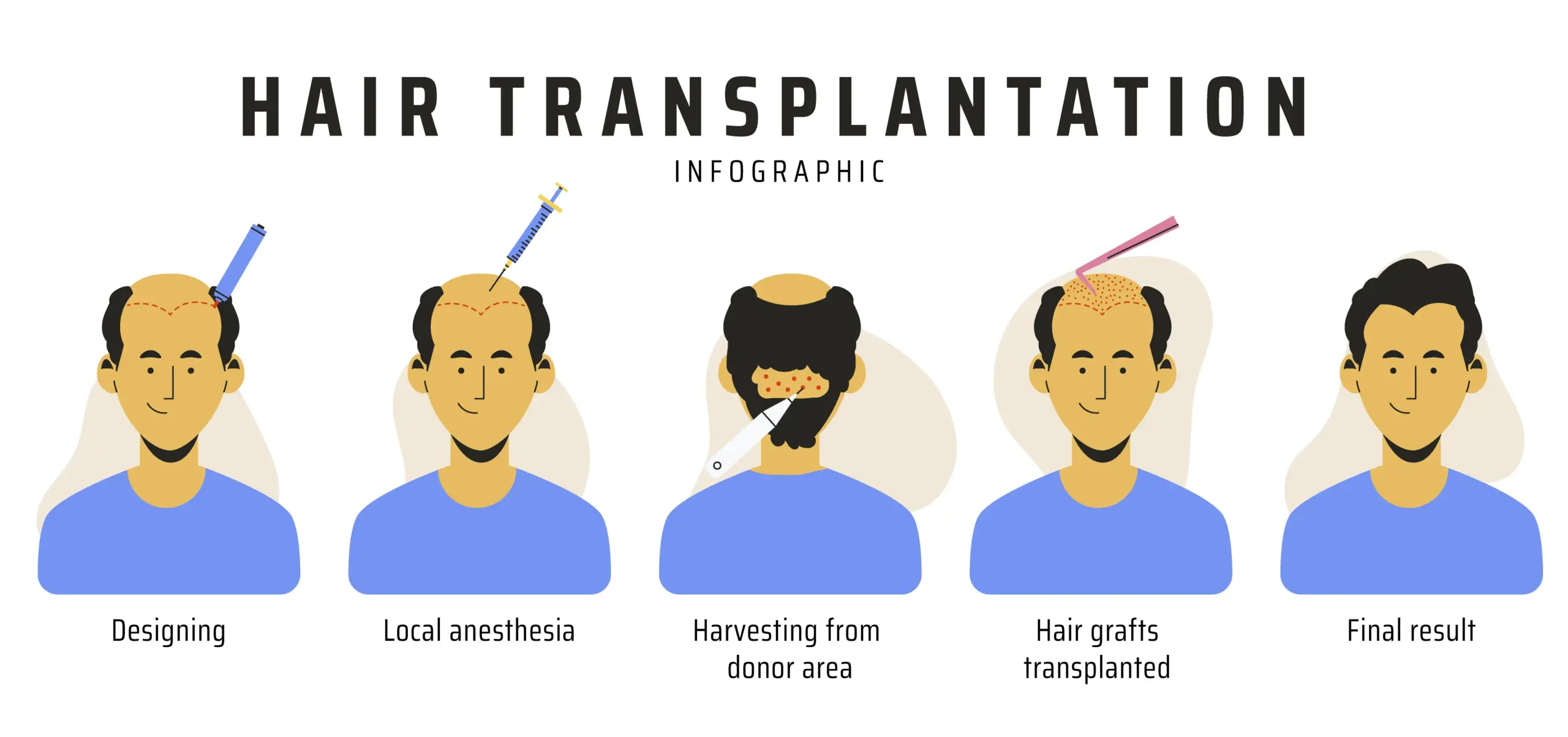
- Consultation – We evaluate your scalp, hair density, and medical history to confirm candidacy.
- Planning – A hairline design is customized to suit your facial structure and natural hair pattern.
- Extraction – Healthy follicles are carefully removed from the donor area.
- Implantation – Follicles are placed precisely into thinning or bald areas, following the natural direction of hair growth.
- Recovery – Post-procedure care ensures proper healing and graft survival.
Does a hair transplant hurt? The procedure is performed under local anaesthesia, so you won’t feel pain during surgery. Mild discomfort or tightness for a day or two afterward is normal and manageable with prescribed medication.
How Long Does It Take to See Hair Transplant Results?
Hair transplant results develop gradually, not overnight:
- Weeks 1–2: Transplanted hair sheds, this is normal and expected
- Months 3–4: New hair growth begins
- Months 6–9: Noticeable thickness and density improvement
- Month 12: Final, full results visible
How Much Does a Hair Transplant Cost in HSR Layout?
Hair transplant cost depends on several factors:
- Number of grafts required
- Technique used (FUE, FUT, or DHI)
- Extent of the balding or thinning area
- Surgeon expertise and clinic technology
While cost varies by case, it’s worth viewing a hair transplant as a one-time investment rather than an ongoing expense unlike medications or topical treatments that require continuous use for as long as you want to maintain results. A personalized quote is only possible after an in-person scalp evaluation, since graft count is the biggest cost driver.
Hair Transplant vs. PRP vs. Medication: Which Is Right for You?
| Option | Result Type | Best Suited For |
| Medications (minoxidil, finasteride) | Temporary — requires continuous use | Early thinning, maintenance |
| PRP Therapy | Improves hair quality and density | Early-stage hair loss, strengthening existing follicles |
| Hair Transplant | Permanent | Advanced hair loss, bald or significantly thinning areas |
Many patients actually combine approaches for example, PRP to strengthen existing hair alongside a transplant to restore density in bald areas.
What Are the Risks and Side Effects of a Hair Transplant?
Hair transplants are generally safe when performed by experienced specialists. Minor, temporary side effects can include:
- Mild swelling
- Redness at the donor or recipient site
- Short-term shedding of transplanted hair (normal, part of the growth cycle)
Serious complications are rare when the procedure is done by qualified professionals in a hygienic clinical setting.
What Should You Do After a Hair Transplant?
Do’s
- Follow your surgeon’s aftercare instructions closely
- Keep the scalp clean as directed
- Take prescribed medications on schedule
Don’ts
- Avoid touching or scratching the treated area
- Skip heavy workouts for the initial recovery period
- Avoid direct sun exposure on the scalp
Why Choose Layers Clinics for Hair Transplant in HSR Layout?
- Personalized consultation and honest candidacy assessment
- Advanced transplant equipment and techniques (FUE, FUT, DHI)
- Skilled, experienced surgeons
- Hygienic, well-monitored clinical environment
- Transparent pricing with no hidden costs
Frequently Asked Questions
How long does a hair transplant procedure take?
A hair transplant typically takes around 4–8 hours, depending on the number of grafts required, technique used, and complexity of the procedure.
Is transplanted hair permanent?
Transplanted hair can provide long-lasting growth because donor follicles are generally more resistant to pattern hair loss. However, existing non-transplanted hair may continue to thin over time.
Can I return to work after a hair transplant?
Many patients can return to routine work within a few days, depending on their occupation and recovery. Your hair transplant specialist will provide personalized guidance after the procedure.
Are there age restrictions for a hair transplant?
There is no universal age limit, but specialists generally prefer candidates with a relatively stable hair-loss pattern. Younger patients may require additional assessment because hair loss can continue to progress.
Will a hair transplant leave visible scars?
FUE and DHI generally leave small extraction marks that become less noticeable as they heal, while FUT creates a linear scar in the donor area. Scar visibility varies depending on the technique and individual healing.
Is a hair transplant painful?
Hair transplantation is usually performed under local anaesthesia, which helps minimize discomfort during the procedure. Mild soreness, tightness, swelling, or sensitivity may occur during the initial recovery period.
Key Takeaway
- A hair transplant moves healthy follicles from the donor area to areas affected by thinning or baldness.
- FUE, FUT, and DHI differ in extraction and implantation methods, so technique selection should be personalized.
- A proper scalp and donor-area assessment is important before deciding on transplantation.
- Hair transplant results develop gradually, with final results typically assessed around 9–12 months.
- PRP, medication, and hair transplantation serve different purposes and may sometimes be combined.
- Choosing a qualified hair-transplant team, appropriate technique, clinical hygiene, and structured aftercare can support safer, natural-looking results.
Book a Hair Transplant Consultation in HSR Layout
If you’re tired of temporary fixes and want a permanent, natural-looking solution, a hair transplant in HSR Layout at Layers Clinics could be the answer. Confidence comes from within, but restoring your hairline can make it a lot easier to feel like yourself again.
Book a consultation with Layers Clinics today to find out if you’re a good candidate for a hair transplant.
