
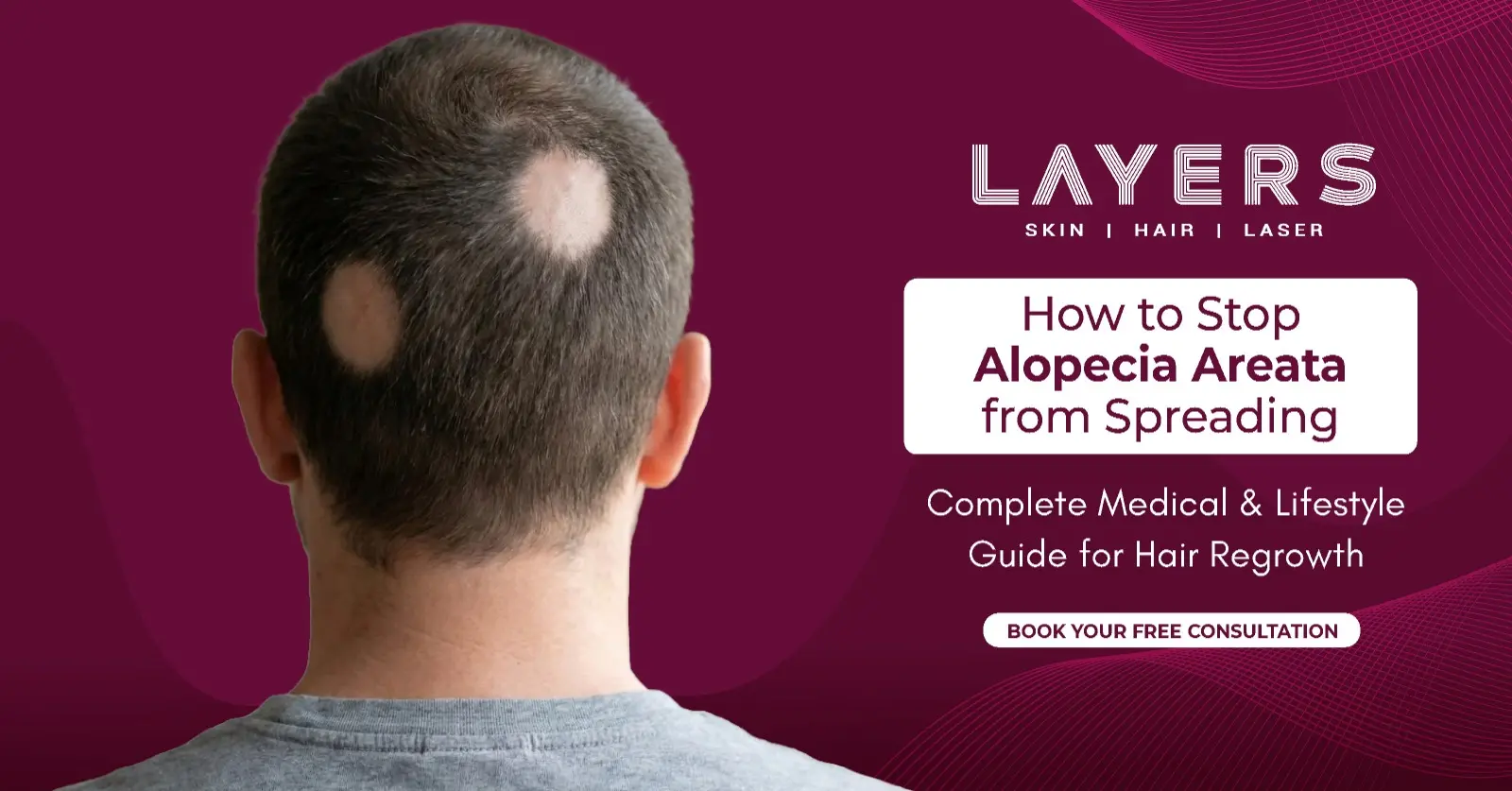
Alopecia Areata is an autoimmune disorder that results in loss of hair with little warning or control over the timing of new occurrences. Progressive loss of hair will continue until the condition is managed appropriately with medical treatment. “How to Stop Alopecia Areata from Spreading?“ The focus of Layers Clinics is to work closely together to accomplish two goals; 1) To understand how to manage and control the progression of Alopecia Areata, and, 2) To help promote healing and regrowth by establishing a clinically guided approach to this condition.
Effective management of Alopecia Areata will require multiple modalities to obtain the best possible results. Treatments may include dermatological therapies, specialized scalp treatment, immune modulating therapies, and modifications to lifestyle and behaviors. Early recognition and consistent therapy over time will assist in stabilizing the disease process, limiting the expansion of the disease process beyond present levels, and significantly increase the chance of regrowth of the hair over time.
Understanding Alopecia Areata Progression
Alopecia areata is an autoimmune disorder wherein the immune system mistakenly attacks hair follicles, leading to their degeneration and the halt of hair production.
Common Signs of Progression
- Round or oval bald spots that appear out of nowhere
- Expanding the current patches
- Losing hair on the body, head, beard, or eyebrows
- “Exclamation mark“ hairs at the edges of the patch
- “Exclamation mark“ hairs along the edges of the patch
It is important to control the immune response so that the follicles don’t get more damage and hair loss doesn’t spread.
Medical Treatments to Stop Alopecia Areata from Spreading
1. Corticosteroid Therapy
Corticosteroids are the best first-line treatment to keep the immune system from attacking hair follicles.
- Corticosteroids that are put on the skin make swelling go down.
- Steroid shots into the skin go right to the areas that hurt.
- Oral steroids are used in serious cases
These treatments help stop the patches from getting bigger and start the healing process.
2. Topical Immunotherapy
Topical immunotherapy changes how the immune system works by putting certain substances on the skin to cause a controlled allergic reaction.
- Speeds up the healing of hair follicles
- Reduces the immune system’s attack on hair follicles
- Works well for severe or hard-to-treat cases.
This method helps stop the spread and encourages hair to grow evenly.
3. Minoxidil for Hair Regrowth
People with alopecia often use minoxidil to help their hair grow back.
- Helps blood flow better to hair follicles
- Makes hair take longer to grow
- Helps spots that are hurt grow back faster.
Using it often makes the hair look thicker.
4. PRP Therapy (Platelet-Rich Plasma)
PRP therapy uses the patient’s own blood plasma, which is full of growth factors.
- Makes hair follicles that aren’t working work again
- Strengthens the roots of hair
- Helps calm down inflammation in the scalp.
PRP is great at stopping hair loss and helping new hair grow.
Scalp Care Routine to Prevent Alopecia Spread
It’s important to keep the scalp healthy so that the follicles can heal.
Things You Should Do for Your Scalp
- Use shampoos that are gentle and don’t have sulfates in them.
- Don’t use styling products or chemicals that are too strong.
- Wash and moisturize your scalp
- Don’t use heat to style your hair too much.
A healthy scalp makes hair grow faster and less irritated.
Diet and Nutrition to Control Alopecia Areata
Not getting enough of some nutrients can make autoimmune responses and hair loss worse.
Key Nutrients for Hair Health
- Biotin helps the body make keratin
- Vitamin D to help follicles work
- Iron and zinc make hair stronger.
- Omega-3 fatty acids are good for your hair.
Recommended Foods
- Nuts, seeds, and greens with leaves
- Eggs, salmon, and chicken are all lean proteins.
- Fruits that have a lot of antioxidants
A diet rich in nutrients helps the body fight inflammation and make hair grow back.
Stress Management to Stop Alopecia Areata Progression
One of the main things that can make alopecia areata worse is stress.
How to Handle Stress Well
- Yoga and meditation
- Breathing exercises
- Working out regularly
- Get enough sleep
Taking care of stress keeps the immune system strong and stops hair from falling out unexpectedly.
Avoid things that make alopecia areata worse
A big part of keeping the illness under control is finding and getting rid of triggers.
Common Triggers to Avoid
- Stress that makes you feel bad
- Not getting enough healthy foods
- Smoking and drinking
- Infections or swelling on the scalp
If you stay away from these things, you can help keep patches from coming back and spreading.
Hair Care Tips During Alopecia Areata
If you take care of your hair, it won’t get worse.
- Use wide-tooth combs to keep your hair from breaking.
- Don’t wear hairstyles that are too tight and pull on your hair roots.
- Don’t use too many chemical treatments, like straightening or coloring.
- Protect your scalp from the sun
Gentle care keeps hair that is already there healthy and strong.
Natural Supportive Remedies
Medical treatments are the most important, but other treatments can help too.
Common Natural Approaches
- Aloe vera to soothe the scalp
- Onion juice to get blood moving
- Lavender and rosemary are two examples of essential oils.
If you use these treatments on a regular basis, they can help your scalp stay healthy and grow hair back.
Tracking Hair Growth and Recovery
Keeping an eye on progress makes sure that changes to treatment are made on time.
Hair Growth Timeline
- Weeks 1–4: The hair loss stops getting worse
- Month 2–3: The first signs of new growth show up
- Month 4–6: Some spots get a lot better
- 6 to 12 months: A lot of hair grows
Consistent treatment makes effects that get better over time and are easy to see.
When to See a Dermatologist?
- The patches get bigger very quickly
- Hair loss spreads to the eyebrows or beard.
- No new growth after three to four months
- Episodes that happen again and again happen a lot
Getting help from a professional makes sure that the diagnosis is right and the treatment options are clear.
Long-Term Management of Alopecia Areata
To deal with alopecia areata, you have to be committed for a long time.
- Keep up with treatments for maintenance
- Eat a balanced diet and live a healthy life
- Make sure to follow up regularly
- Keep up with your scalp care routine.
Long-term care helps keep hair thick and stops it from falling out again.
Final Thoughts: Regain Control Over Alopecia Areata
With the appropriate plan for dealing with alopecia areata, you can manage the condition. Some methods of managing alopecia areata include following a healthy diet, managing your stress levels, taking care of your scalp, and taking medication prescribed by your doctor, as such things will help to contain the spread of the disease as well as to restore hair growth.
Achieving your desired long-term and noticeable results will require you to follow through with your treatment as well as apply the treatments consistently.
Conclusion: How to Stop Alopecia Areata from Spreading
You will want to act fast if you see any early warning signs of alopecia areata as time is critical when it comes to this disorder. You may be able to prevent it from spreading or getting worse by being able to receive a rapid diagnosis, modern medical treatments, and continuous care. You can reverse the loss of hair, heal follicle damage, and promote more natural hair growth when you make sure you do all three of these things.
At Layers Clinics we believe in the power of early intervention through customized treatment systems complete with evidence based solutions in order to assist clients in regaining hair density and maintaining long term viability of their scalp, while providing the most innovative and results driven treatments available.
