
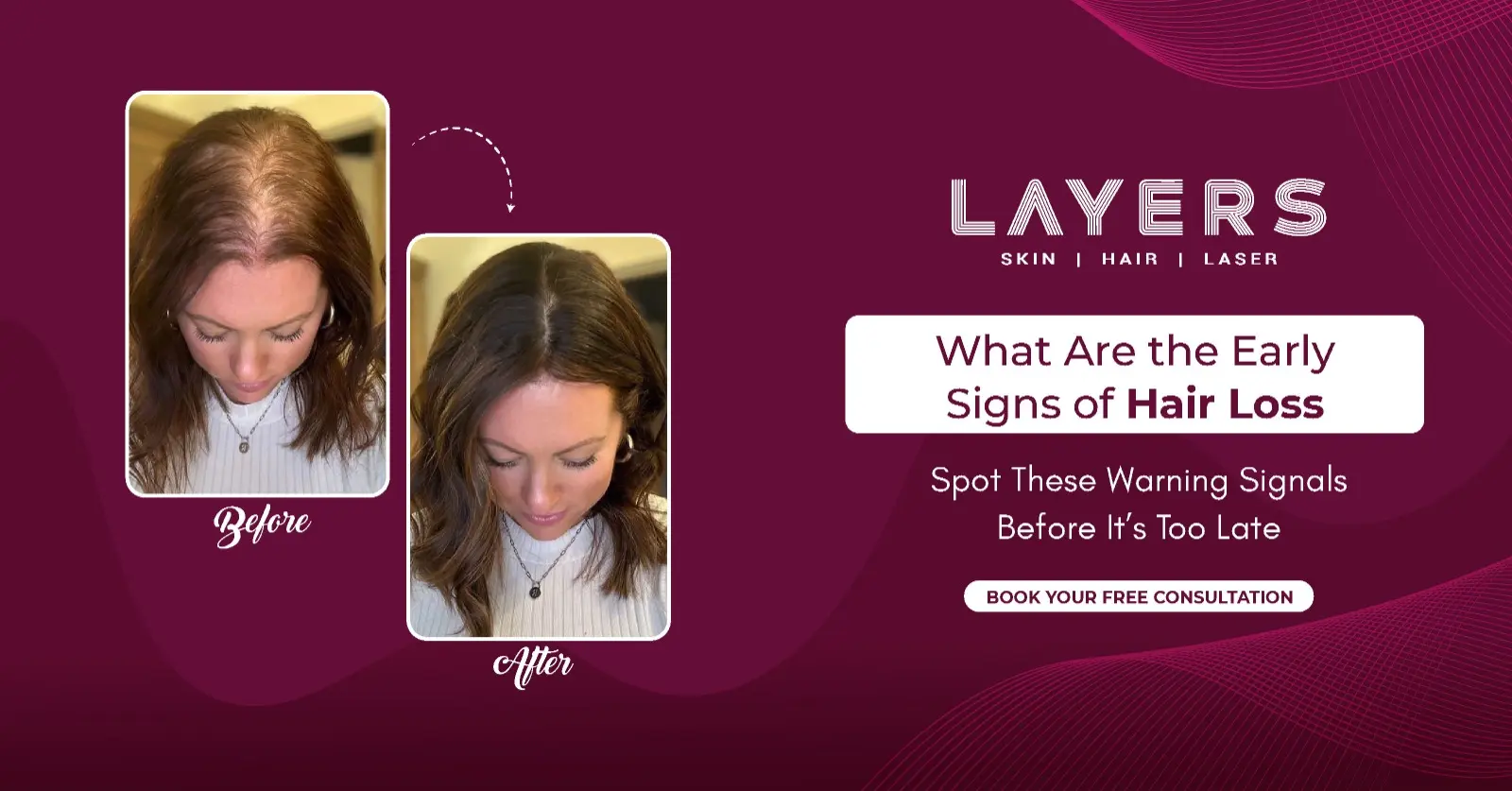
People usually don’t notice hair loss until they see thinning or bald spots. It doesn’t happen all at once; it happens slowly over time. A lot of people thinking about what are the early signs of hair loss but many fail to notice them in time, which can make treatment less effective. It’s important to find these little changes as soon as possible to keep your hair thick, strong, and healthy in general.
The main goal of Layers Clinics is to find problems early and treat them the right way. Before hair loss gets worse, experts look at the underlying causes and create personalized treatment plans to deal with them.
This detailed guide shows you the most important early signs of hair loss so you can act and choose the best ways to keep your hair strong, healthy, and full.
1. Excessive Hair Shedding During Daily Activities
One of the first and most obvious signs is that your hair starts to fall out more. Losing 50 to 100 hairs a day is normal, but if you lose more than that, something is wrong.
We often see:
- Hair on the pillows
- A lot of hair in the shower drains
- Hair clumps when you comb it.
This happens a lot when you lose hair and is easy to see. It means that the hair roots are getting weaker and the growth cycles are getting messed up.
2. Thinning Hair Density and Reduced Volume
Thinning hair is a slow process that makes the total amount of hair less. Thinning happens over time, so it’s harder to notice at first than hair loss that happens quickly.
Here are some important things to remember:
- The ponytail is getting smaller.
- Hair that isn’t as thick
- The light makes the scalp stand out more
This is an early sign of hair loss that needs to be looked at right away.
3. Receding Hairline in Men and Women
A hairline that is getting thinner is one of the most common early signs, especially in men. But women may also see small changes around their foreheads.
Some common patterns are:
- Hairline growth that looks like an M
- The hairline on the front of the head moves back slowly.
- Forehead edges that aren’t straight
Changes in hormones and hair loss that run in families are often linked to this problem.
4. Widening Part Line
A part that is getting wider is a clear sign that your hair is getting thinner. Women notice it the most, but it often goes unnoticed until they look at older pictures.
We see this a lot:
- More scalp showing at the parting.
- The hair isn’t evenly spread out
- It’s harder to style hair like it used to be.
This is an early sign of diffuse hair thinning, which affects the whole scalp.
5. Slow Hair Growth and Stunted Length
If your hair stops growing or grows very slowly, your hair follicles are likely weak. Healthy hair grows in a regular pattern, but when that pattern is broken, the strands get shorter and weaker.
Some signs are:
- Hair that doesn’t grow longer over time
- More breakage before it gets to its full length
- Rough and weak feel.
We think this is because the follicles didn’t get enough nutrients and were damaged.
6. Increased Hair Breakage and Split Ends
People often think that hair breakage is hair loss, but it really means that the hair is weak. If your hair strands break easily, it means that the hair shaft is weak.
Common signs:
- Ends that are split
- Feels dry and frizzy
- Hair breaking while brushing
This condition makes hair less dense, which makes it look thinner.
7. Itchy, Flaky, or Irritated Scalp
The scalp needs to be healthy for hair to grow strong. People who lose their hair early often have scalp problems that make it hard for hair follicles to do their jobs right.
We often see:
- Dandruff that won’t go away
- Itching and redness
- Too much oil or not enough oil.
These things make the environment unhealthy, which makes hair weak and prone to falling out.
8. Hair Becoming Finer and Less Pigmented
The change from thick hair strands to fine, silky, and light hair is a small but important sign.
We see:
- Losing the natural thickness of your hair
- Skin with less color
- Shrinking hair follicles
This is a sign of androgenetic alopecia, which is when hair slowly gets thinner until it falls out.
9. Visible Scalp in Certain Areas
When the hair density drops a lot, especially in bright light, the scalp starts to show through.
Some common places are:
- The crown area
- The top of the head
- Hairline in front
This means that hair loss has already gotten bad and needs to be treated right away.
10. Increased Hair Fall During Stress or Seasonal Changes
Changes in the weather or stress can make your hair fall out for a short time. This is often a sign of bigger problems.
We see:
- Shedding that happens all of a sudden when you’re stressed
- Losing hair in the winter or during the monsoon
- Hair that gets thin for a short time after being sick
Telogen effluvium is a common cause of this illness, which can last for a long time if not treated.
The main causes of hair loss in the early stages
If you know what causes something, you can find the early signs more easily. The things that make them angry the most are:
- Changes in hormones that affect how hair grows
- Genes that make it more likely for people to lose their hair in a certain way
- Not getting enough nutrients, especially iron and protein
- Stress and other things in your life that hurt the health of your scalp
- Hair might be damaged by too many styling products and chemical treatments.
We stress how important it is to catch the disease early so it doesn’t get worse.
How to Stop Hair Loss Early
Taking action right away when you see early signs can really help stop hair loss. We recommend:
- Eating a lot of foods that are good for you and full of vitamins and minerals
- Using shampoos that are gentle and don’t have sulfates
- Not using too much heat or strong chemicals on your hair
- Getting regular oil massages and taking care of your scalp
- Living a healthy life to deal with stress
Doing these things often makes hair roots stronger and helps hair grow.
Advanced Treatments for Hair Loss
When early signs don’t go away, expert treatments can help:
- PRP (Platelet-Rich Plasma) Therapy to stimulate follicles
- Laser Hair Therapy to improve scalp circulation
- Medications to control hormonal hair loss
- Hair Growth Serums with clinically proven ingredients
We treat each person differently depending on their hair type and how bad the problem is.
When to See a Dermatologist?
Going to the doctor early makes sure that the diagnosis is right and the treatment works. When we think you should get professional help:
- Your hair keeps falling out for more than four to six weeks.
- Thinning that can be seen gets worse very quickly
- Your scalp keeps having problems even though you take care of it at home.
- People in the family have lost hair before.
Intervening at the right time leads to better results in hair retention and renewal.
Conclusion: What Are the Early Signs of Hair Loss?
Hair loss often starts with changes that are hard to notice, like more shedding, thinning, or a hairline that is moving back. It’s easier to act quickly when you see these early warning signs. This can help slow down hair loss and keep your scalp healthy overall.
To get long-lasting results, you need to be aware of your hair, take good care of it, live a balanced life, and see a doctor. At Layers Clinics, we offer individualized treatments that address the root causes of hair loss and promote natural, healthy growth.
Taking action now has a big effect on keeping hair thick, strong, and growing over time.
