
A decision to consider hair transplant is an act of faith on healing yourself. It is a quiet promise that you deserve to feel lively again. But faith itself doesn’t contribute to growing follicles. The gap between opting for surgery and seeing the outcome is filled with your choice, patience, and a disciplined lifestyle. Great hair transplant results take place when there’s meticulous planning, skilled execution, and a committed aftercare.
Before a single graft is harvested, the blueprint of your hair transplant results is considered during the consultation. Layers Clinics has the skilled surgeons who evaluate your donor density, scalp laxity, hair calibre, and the pattern of hair loss. These variables determine not only the number of grafts available but also how they should be distributed to create a result that looks natural during the growth phase. We are living in a world where quick consultations or cookie-cutter hairline designs become popular rather than a clinic that details personalized outcomes.
Factors Contributing for Hair Transplant Results
Hairline design is the single most influential factor on your hair transplant results. A hairline that’s too low, too straight, or too dense will look artificial no matter how well the grafts survive. Our surgeons study your proportions, age, and the future trajectory of your hair loss before going for any customized treatment plan. At Layers Clinics, hairline design is a collaborative process with surgeons involved, feedback taken, and aligned with each other that balances aesthetics with long-term sustainability.
Surgical techniques matter greatly. Be it FUE, FUT, or DHI, the precision of extracting, storing, and implanting grafts determines the survival mechanism. Grafts are living tissue and as they are exposed to the environment, their viability is considerably reduced. Our clinic minimizes by working in coordinated teams where extraction and implantation are done in parallel. This orchestration is invisible to the patient but the hair transplant results prove everything.
Graft Survival is a concept that every patient should understand. Not every transplanted follicle will regrow hair from. According to the industry benchmarks, well-executed procedures achieve survival rates between eighty-five and ninety-five percent. This gap is determined by handling techniques, temperature of the storage solution, depth of implantation, and the angle of placing the graft. When you consider reviews on hair transplant results, you are in the zone of evaluating these granular results that a clinic performs.
The immediate post-operative period is where many patients unknowingly sabotage their own outcomes. Your surgeon will provide a detailed aftercare protocol covering sleeping position, washing technique, activity restrictions, and medication schedules. Following these instructions to the treatment is non-negotiable. Touching, scratching, or exposing the recipient area to direct sunlight in the first two weeks can degrade grafts and compromise your hair transplant results before the healing process.
Shock loss is a phenomenon that catches nearly every patient off the track. Within 2-6 weeks after surgery, the transplanted hairs fall out. This is entirely normal as the follicles shed their initial shafts and enter a resting phase before producing new, permanent growth. Understanding this timeline prevents the panic that leads some patients to conclude the procedure has failed. Patience during this phase is perhaps the most underrated ingredient in achieving outstanding hair transplant results.
New growth typically becomes visible around the 3–4-month mark, though it varies from person to person. The early hairs are often thin, wispy, and uneven. They thicken and mature over the following months, with most patients seeing their definitive hair transplant results between 10-14 months post-surgery. This extended timeline is why reputable clinics like Layers Clinics Treatments schedule follow-up appointments at regular intervals. We want to monitor progress, address concerns, and make any necessary adjustments to your care plan.
Medication plays a complementing role that many patients underestimate. Finasteride and minoxidil are commonly prescribed to protect existing native hair from further loss while the transplanted follicles establish themselves. Skipping these medications because you feel “the transplant should be enough” is a recipe for disappointment. The transplant addresses the bald area, but without medical support, the surrounding native hair may continue to thin, creating an unnatural contrast. Comprehensive hair transplant results depend on treating the entire scalp.
Nutrition and lifestyle choices influence your hair transplant results more than you deserve. A diet rich in protein, iron, zinc, and biotin supports hair growth at a cellular level. Chronic stress, smoking, and sleep deprivation, on the other hand, can impair circulation and slow healing. Consider your body as the soil in which the grafts are planted, and the richer and healthier the soil can be, the more robust the growth. If you consider your health seriously, then expect the best hair transplant results.
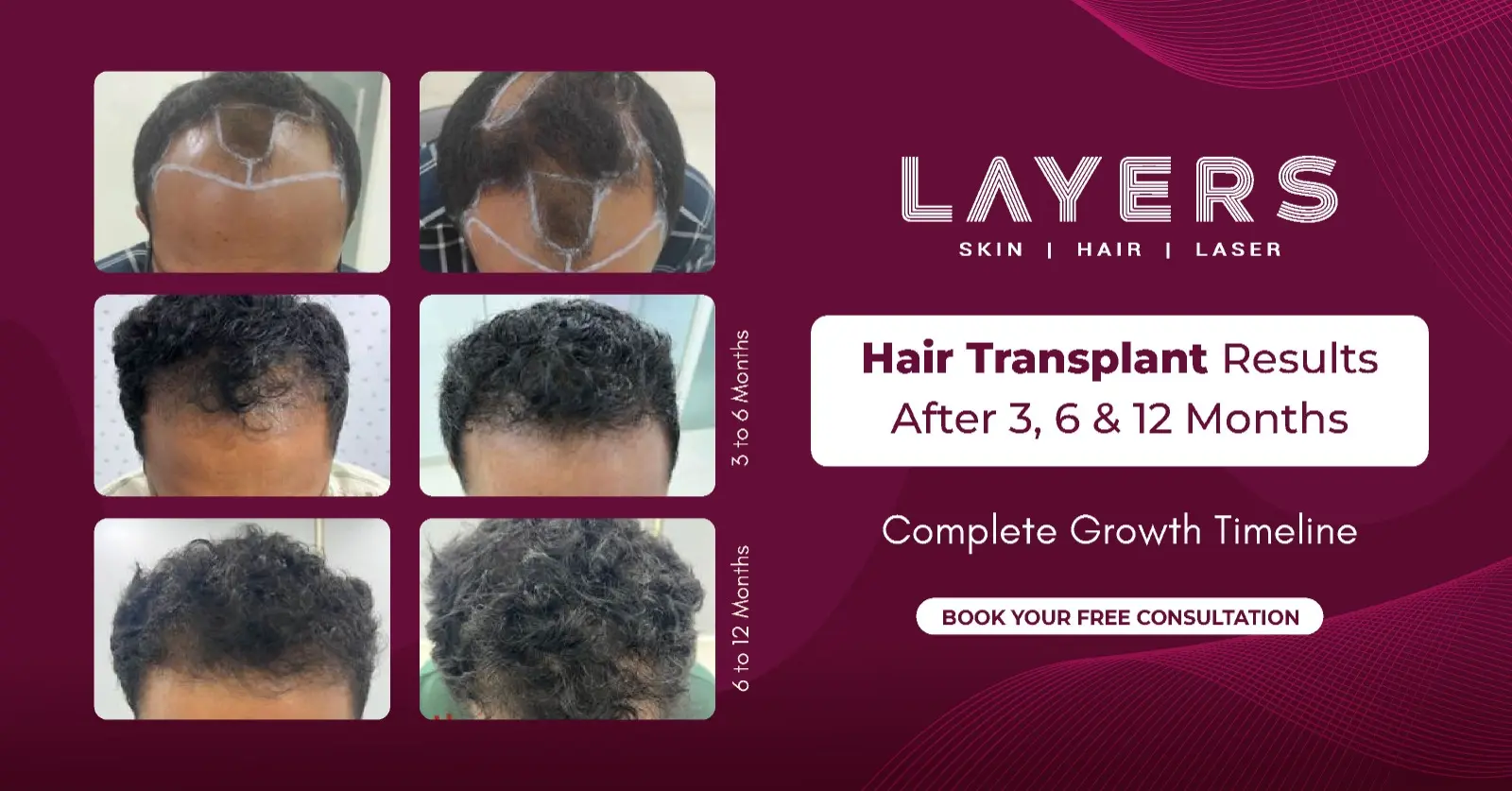
Hair Transplant Results Timeline: 3, 6 & 12 Months
Understanding hair transplant results becomes much easier when you break the journey into a clear timeline. While individual results may vary, most patients follow a predictable growth pattern after the procedure.
After 3 Months
At this stage, early signs of new growth begin to appear. The transplanted follicles start producing thin, soft, and uneven hair strands. Density is still low, and the results may look patchy. This phase requires patience, as the follicles are still transitioning from the resting phase to active growth.
After 6 Months
Hair growth becomes more noticeable and consistent. Around 50–60% of the final results are visible during this period. The hair strands start becoming thicker, darker, and more structured. Areas that previously looked sparse begin to fill in, giving a more defined hairline and improved coverage.
After 12 Months
This is where the majority of patients see their final hair transplant results. Nearly 90–100% of the transplanted follicles produce mature, thick hair. The texture improves, density becomes uniform, and the hair blends naturally with existing strands. By this stage, the outcome looks completely natural and permanent.
It is important to remember that hair growth is a gradual biological process. Comparing your progress with others can lead to unnecessary stress. Regular follow-ups with your clinic ensure that your growth is on track and optimized at every stage.
What You Can Expect from Hair Transplantation
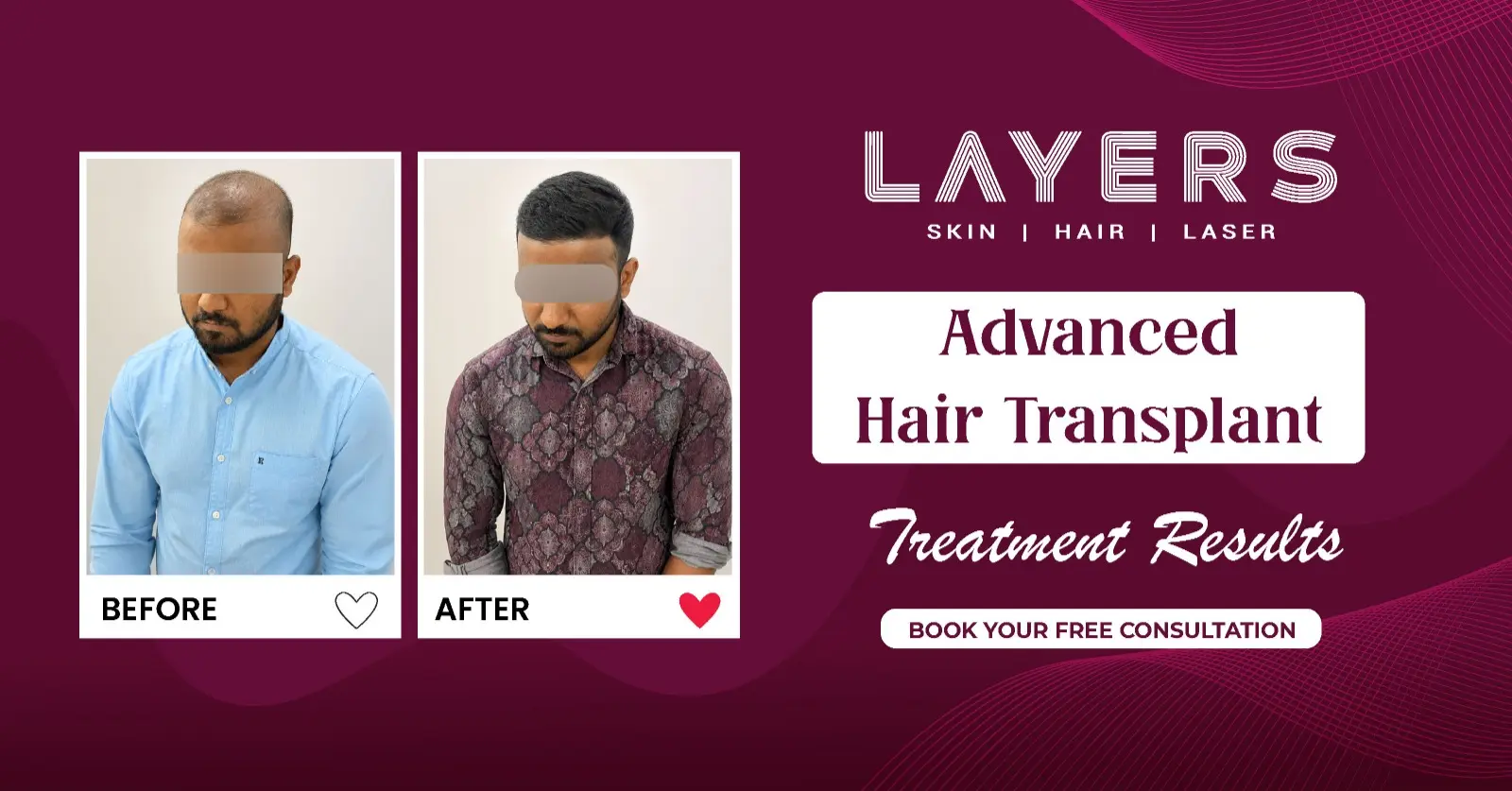
Though you set realistic expectations, hair transplant only works when you are ready to implement or consider all the above aspects. However, individuals with limited donor supply may not achieve the same density as someone with a high donor area. Our top surgeons will explain to you how much can be achievable rather than going for overpromising and under-delivering. The best hair transplant results must align with realistic expectations, goals, and what can be done with deeper knowledge into your hair health.
Hence, choosing the right clinic is the decision that influences every other variable. Research on credentials, galleries with real results, verified reviews, and approach the facility in-person. Transparency matters a lot because delivering the hair transplant results shouldn’t be painful or a struggle for you. Layers Clinics Treatments exemplifies this philosophy, combining surgical excellence with honest communication to set patients up for success from day one.
FAQs on Hair Transplant Results
How long does it take to see full hair transplant results?
Full results are typically visible within 10–12 months after the procedure.
Can I speed up hair growth after transplant?
Following medications, maintaining nutrition, and proper aftercare can support healthy growth.
Is hair transplant permanent?
Yes, transplanted hair is generally permanent, as it is taken from resistant donor areas.
Can hair transplant fail?
Rarely, but possible due to poor technique or aftercare.
How many grafts do I need?
Depends on your hair loss pattern and density goals.
Conclusion
Hair transplant results are not instant, they are the outcome of careful planning, expert execution, and disciplined aftercare. From the initial shedding phase to full regrowth at 12 months, every stage plays a role in shaping your final appearance.
With the right clinic, realistic expectations, and proper care, a hair transplant can deliver natural, long-lasting results that restore not just your hair, but your confidence.
If you are considering a hair transplant, consult the experts at Layers Clinics for a personalized evaluation and growth timeline tailored to your needs.
