
Choosing the best hair transplant clinic in India is an important decision for anyone experiencing a receding hairline, thinning crown, or advanced hair loss. The right clinic should offer qualified medical professionals, appropriate hair restoration techniques, genuine patient results, transparent treatment planning, proper safety standards, and structured aftercare.
This guide explains what to check before booking a hair transplant in India, including FUE, DHI, Sapphire FUE, treatment costs, recovery, expected results, and common red flags.
Why Choosing the Right Hair Transplant Clinic Matters
Hair transplantation is a medical procedure that requires careful planning and technical expertise. The final appearance depends not only on the number of grafts transplanted but also on hairline design, graft handling, implantation direction, donor-area management, and long-term hair-loss planning.
A suitable clinic should focus on:
- Natural-looking hairline design
- Appropriate graft planning
- Proper donor-area management
- Safe graft extraction and implantation
- Realistic expectations
- Post-transplant monitoring
The goal should not simply be to add more hair. A successful procedure should create hair growth that looks natural and complements your facial features.
What Should You Check Before Choosing a Hair Transplant Clinic in India?
The best hair transplant clinic should be evaluated based on doctor qualifications, treatment planning, genuine results, safety standards, technology, pricing transparency, and aftercare rather than price alone.
1. Check the Doctor’s Qualifications and Experience
The doctor involved in your treatment should have appropriate medical qualifications and experience in hair restoration.
Before booking, ask about:
- Medical qualifications
- Hair-restoration experience
- Procedures performed
- Approach to hairline design
- Experience with different levels of hair loss
- Before-and-after patient results
A consultation should include an assessment of your hair-loss pattern and donor area before a treatment recommendation is made.
2. Understand the Hair Transplant Technique
Different hair restoration techniques are available, and the most suitable option depends on the patient’s individual condition.
| Technique | How It Works | Common Consideration |
| FUE | Individual follicular units are extracted and implanted into recipient areas | Commonly used for natural-looking restoration |
| DHI | Extracted follicles are implanted using a specialized implantation device | Allows controlled placement in selected cases |
| Sapphire FUE | FUE uses sapphire-tipped blades during recipient-site creation | May be used as part of an FUE-based approach |
| FUT | A strip of donor scalp is removed and divided into grafts | May be considered in selected patients |
There is no single technique that is best for every patient. The doctor should recommend the approach according to donor density, hair-loss pattern, recipient area, graft requirements, and treatment goals.
At Layers Clinics, hair restoration treatment is planned according to the patient’s individual hair and scalp assessment.
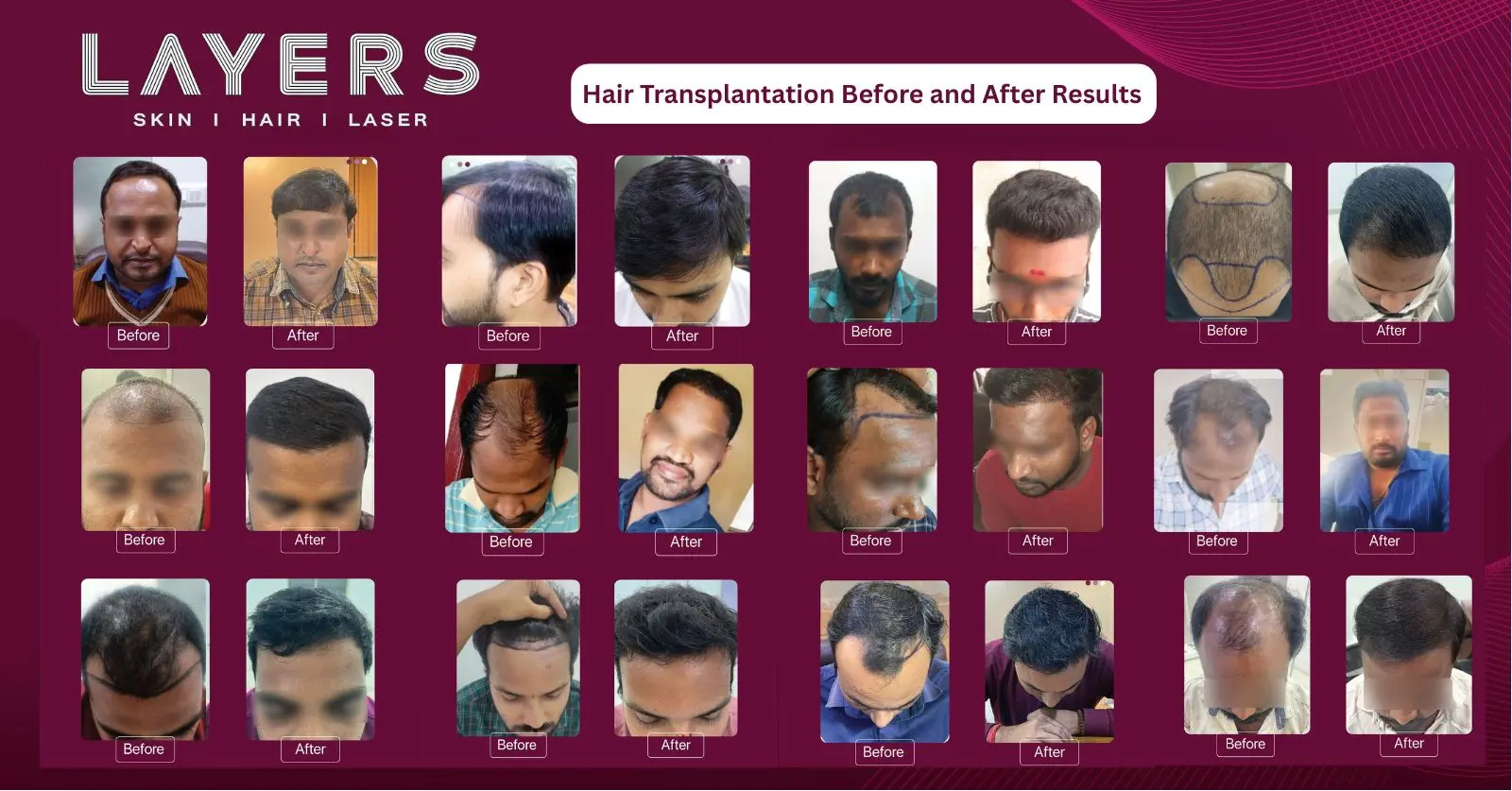
3. Review Genuine Before-and-After Results
Before booking, ask to see authentic patient results.
Look for:
- Natural hairline design
- Appropriate density
- Crown coverage
- Consistent results across different patients
- Patients with hair-loss patterns similar to yours
Photographs should ideally show comparable angles and lighting. Be cautious of clinics that rely only on heavily edited or generic images.
How Much Does a Hair Transplant Cost in India?
Hair transplant cost in India varies considerably because every patient’s treatment requirements are different.
The final cost may depend on:
- Number of grafts required
- Hair-loss severity
- Technique selected
- Doctor’s experience
- Clinic facilities
- Treatment and aftercare requirements
A patient requiring treatment only for a receding hairline may need fewer grafts than someone requiring frontal, mid-scalp, and crown coverage.
Therefore, a fixed price advertised online may not represent the final cost for every patient.
What Should a Hair Transplant Quote Include?
Before making a decision, ask whether the quotation includes:
- Consultation and scalp assessment
- Procedure charges
- Doctor or surgeon involvement
- Medications
- Post-operative instructions
- Follow-up consultations
- Additional recommended treatments
A transparent quotation makes it easier to compare clinics fairly.
What Are the Most Important Safety Factors?
Hair transplantation involves surgical procedures, so clinical hygiene and safety should be considered before booking.
Check whether the clinic follows appropriate:
- Sterilization procedures
- Infection-control protocols
- Graft-handling procedures
- Procedure-room standards
- Patient monitoring practices
You should also understand who will perform each stage of the procedure and how closely the doctor supervises the treatment.
Why Are Genuine Patient Reviews Important?
Online reviews can help you understand the overall patient experience.
Look for recurring feedback about:
- Doctor communication
- Consultation quality
- Staff support
- Procedure experience
- Follow-up care
- Overall satisfaction
Don’t rely on reviews alone. Compare them with the clinic’s credentials, treatment information, and actual patient results.
What Are the Red Flags When Choosing a Hair Transplant Clinic?
Be cautious when a clinic:
- Guarantees unrealistic results
- Uses aggressive sales tactics
- Provides unclear information about the doctor
- Shows only generic photographs
- Offers a price without assessing your hair loss
- Cannot explain the recommended graft requirement
- Does not provide clear aftercare instructions
- Pushes one technique for every patient
A trustworthy clinic should explain both the potential benefits and limitations of hair transplantation.
Why Patients Consider Layers Clinics for Hair Restoration
Layers Clinics provides personalized hair restoration planning based on the patient’s hair-loss pattern, donor area, scalp condition, and aesthetic goals.
Patients can discuss treatment options such as:
- FUE Hair Transplant
- Sapphire FUE Hair Transplant
- DHI Hair Transplant
- Hair-loss management
- Post-transplant care
The treatment approach should be selected after proper assessment rather than simply choosing a procedure because it is marketed as the newest or most advanced option.
The focus is on creating a natural-looking result while considering the patient’s existing hair, facial proportions, donor availability, and long-term hair-loss progression.
What Can You Expect After a Hair Transplant?
Hair transplant results develop gradually rather than immediately.
| Period | What You May Notice |
| First few days | Redness, mild swelling, and scalp sensitivity may occur |
| First few weeks | Healing continues and transplanted hairs may shed |
| 3–4 months | Early new growth may become visible |
| 6–9 months | Increasing density and coverage |
| 12–18 months | Results continue to mature |
Temporary shedding after transplantation can occur and does not necessarily mean that the procedure has failed. Hair growth varies between individuals, so your doctor should provide personalized expectations.
Is a Hair Transplant Permanent?
A hair transplant is designed to provide long-term growth from transplanted follicles. However, existing non-transplanted hair can continue to thin depending on the underlying cause and progression of hair loss.
For this reason, some patients may require ongoing medical management or other hair-loss treatments alongside transplantation.
Your doctor can recommend an appropriate long-term plan after evaluating your hair and scalp.
Frequently Asked Questions
Which is the best hair transplant clinic in India?
The best hair transplant clinic should have qualified medical professionals, appropriate treatment techniques, genuine patient results, transparent pricing, proper safety standards, and structured aftercare. Patients should compare these factors instead of choosing a clinic based only on price or online rankings.
How much does a hair transplant cost in India?
Hair transplant cost depends on factors such as graft requirements, technique, degree of hair loss, doctor expertise, clinic facilities, and the overall treatment plan. An individual consultation is needed to determine the appropriate graft requirement and cost.
Is FUE or DHI better for a hair transplant?
Neither technique is universally better for every patient. FUE and DHI use different approaches to extraction and implantation. The appropriate technique depends on the patient’s donor area, hair-loss pattern, recipient area, graft requirements, and treatment goals.
How long does it take to see hair transplant results?
Early new growth may become visible around 3–4 months. More noticeable improvement commonly develops between 6–9 months, while results can continue to mature for 12–18 months.
Is a hair transplant permanent?
A hair transplant is intended to provide long-term growth from transplanted follicles. However, non-transplanted hair may continue to thin over time. Long-term hair-loss management may therefore be recommended depending on the patient’s condition.
How many grafts are required for a hair transplant?
The number of grafts varies according to the extent of hair loss, desired density, recipient area, donor supply, and long-term treatment plan. A doctor should determine the graft requirement after evaluating the scalp and donor area.
Key takeaway
The best hair transplant clinic in India is one that combines qualified doctors, appropriate hair transplant techniques, genuine patient results, transparent pricing, proper safety standards, and comprehensive aftercare. This guide is for people considering hair transplantation in India who want to compare clinics, techniques, costs, expected results, and important factors before booking a consultation.
Final Thoughts
Finding the best hair transplant clinic in India should involve more than comparing treatment prices. Look at the doctor’s qualifications, treatment approach, genuine patient results, safety standards, consultation process, pricing transparency, and aftercare.
FUE, DHI, Sapphire FUE, and other techniques may be suitable for different patients. The right option should be determined after a proper medical assessment.
If you are considering hair restoration, Layers Clinics offers consultation-based hair transplant planning to help determine an appropriate treatment approach for your individual hair-loss concerns.
Last Updated: August 2026
