
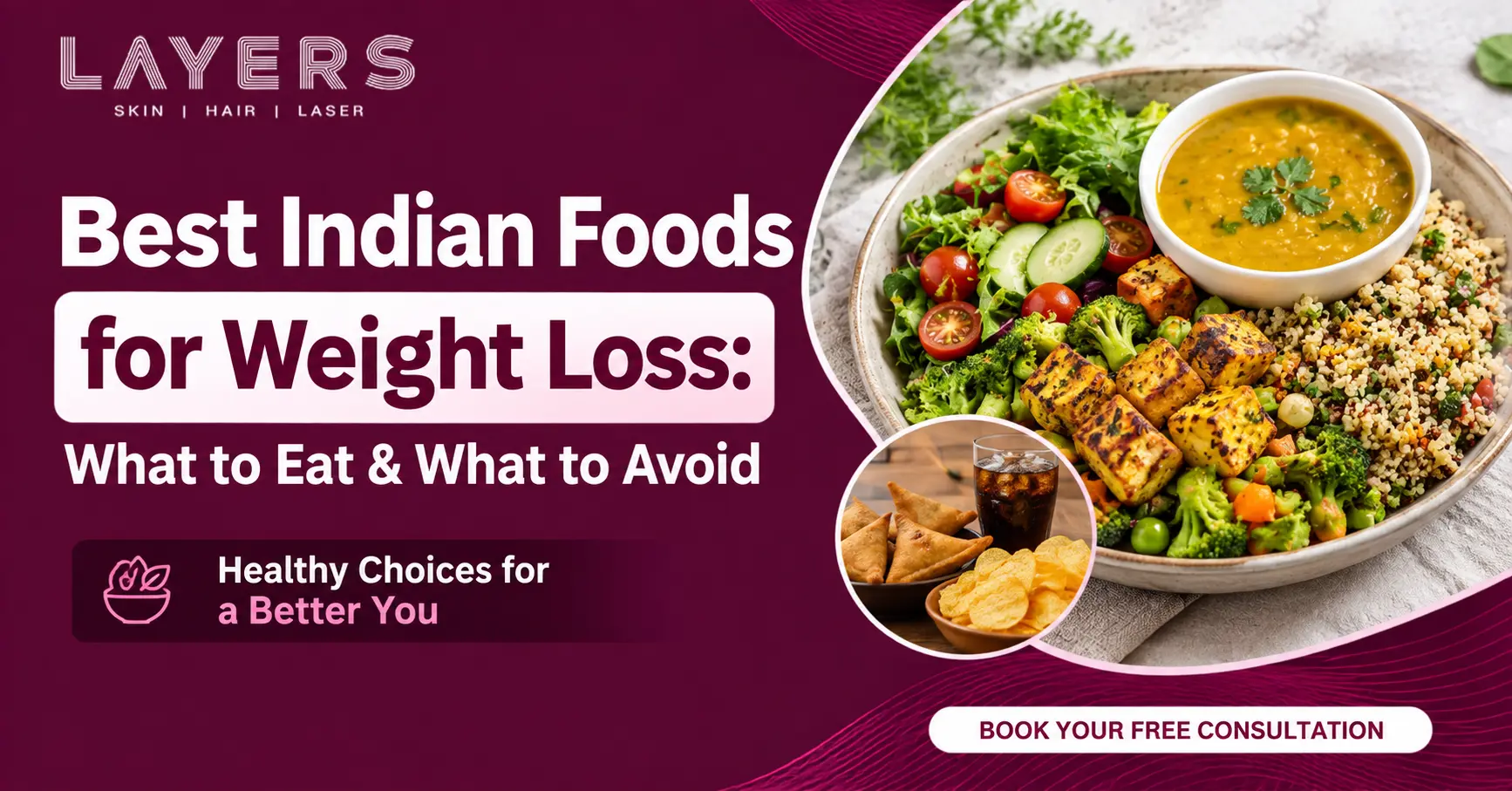
When it comes to the best Indian foods for Weight Loss, most of the advice out there is written for people eating oats, salads and grilled chicken not dal, roti and sabzi. That’s not how most of us eat every day, and it doesn’t have to be. Indian food isn’t the problem it’s actually got a lot going for it. Lentils, vegetables, spices, curd… a lot of what’s already on your plate is doing you favours. The real question is what to keep front and centre, and what to quietly dial back.
Quick Answer: If you’re short on time: the best Indian foods for weight loss are the ones giving you protein, fibre and real nutrients without loading you up on empty calories. Think dal, eggs, vegetables, curd, sprouts, paneer, millets, oats, whole fruits, nuts and seeds. On the flip side, go easy on deep-fried foods, sweets, sugary drinks and heavily processed snacks. And just as much as the foods themselves, portion control and overall balance across your day matter.
Key takeaway:
You don’t need to give up rice or roti to lose weight. It’s really about balanced portions, enough protein, plenty of vegetables and fibre, and cooking methods that don’t drown everything in oil.
Best Indian Foods for Weight Loss
Dals :
Are probably your best friend here. Moong, masoor, chana, rajma all of them bring protein and fibre to the table, which is exactly what keeps you from raiding the kitchen an hour after lunch. Moong dal especially is gentle enough to have even at dinner without feeling heavy.
Vegetables:
matter more than people give them credit for, but how they’re cooked changes everything. A bhindi or lauki sabzi made with a spoon of oil is a completely different dish from one that’s been simmering in ghee. Same vegetable, very different outcome.
Curd and buttermilk:
deserve more credit too. Beyond the protein, they’re good for gut health, and gut health has more to do with weight than most people assume. A glass of chaas after a heavy meal genuinely helps with digestion.
Millets:
Ragi, jowar, bajra are worth getting familiar with if you haven’t already. They take longer to digest than white rice or maida, which means you stay full longer. You don’t need to switch entirely; even a couple of millet-based meals a week adds up.
Sprouts:
Are an underrated snack. Moong or chana sprouts with some lemon and onion take five minutes and actually fill you up, unlike most quick snacks.
Spices:
like turmeric, cumin and methi aren’t magic, but they do support digestion, and a digestive system that’s working well makes everything else easier.
Nuts and seeds
in small amounts a handful, not a bowlful give you healthy fat and protein without the crash you get from packaged snacks.
Indian Foods to Limit While Losing Weight
Let’s be honest about the usual culprits.
Fried Snacks:
samosas, pakoras, kachoris are easy to overeat because they’re just so good. Nobody’s saying never touch them again. Just let them be occasional rather than a Tuesday afternoon habit.
White Rice and Maida
digest fast and leave you hungry again sooner than you’d like. Swapping in millets or whole wheat where you can is a small shift that pays off over weeks, not days.
Chai and Sweets:
are sneaky. It’s rarely one big indulgence it’s the sugar in three cups of chai a day plus a piece of mithai here and there that adds up without you noticing.
Too much Ghee and Oil:
and this isn’t about avoiding fat, because fat isn’t the enemy. It’s about quantity. A tempering made with a teaspoon works just as well as one made with three, and your body will thank you for the difference over a week.
Packaged snacks namkeen, chips, that whole aisle are convenient but mostly empty calories dressed up with salt and oil. They don’t actually satisfy hunger the way real food does.
What Should a Weight-Loss Plate Actually Look Like?
You don’t need a completely different diet just a better-balanced plate. A simple way to think about it:
- Half the plate: vegetables or salad
- A quarter: protein dal, eggs, paneer, chicken, fish or curd
- A quarter: carbohydrates roti, brown rice, rice or millet
This lets you keep eating traditional Indian meals while being a bit more thoughtful about proportions.
Tips to Make Indian Food More Weight-Loss Friendly
Small, sustainable changes tend to work better than dramatic overhauls:
- Cut back on the oil you use while cooking
- Add more vegetables to your meals
- Include a protein source at every main meal
- Choose whole fruit over fruit juice
- Keep fried foods and sweets as occasional treats
- Pay attention to portion sizes
- Cook at home more often when you can
- Stay hydrated through the day
- Cut down on sugary drinks
- Pair healthy eating with regular movement and enough sleep
Final Thoughts
Losing weight doesn’t mean abandoning the food you grew up on. It’s less about elimination and more about balance a bit more protein and fibre, a bit less refined carbs and fried food, portions that actually match what your body needs. Indian food, cooked with a little more intention, fits into a healthy routine just fine.
And if you’ve been making these changes and still aren’t seeing the results you’d expect, that’s worth a conversation with a professional. Sometimes there’s more going on underneath hormonal, metabolic, or otherwise that diet alone won’t fix, and it helps to actually get checked rather than keep guessing.
Ready to Start Your Weight Loss Journey?
Healthy weight loss is about more than eating less it depends on your current weight, lifestyle, eating habits, activity levels and personal health goals.
At Layers Clinics, our approach to weight management is built around personalised guidance to help you get sustainable, lasting results. Our experts assess your goals and recommend a weight-loss plan that actually fits your life.
Want to know which weight-loss approach is right for you? Book a consultation with Layers Clinics today and take the first step towards a healthier, more confident you.
Published: September 2026
Frequently Asked Questions
Can I eat roti and rice and still lose weight?
Yeah. You don’t have to get rid of roti or rice altogether – it’s more about the portion size and what else is on your plate. Eating them with dal, vegetables and curd, instead of alone, makes meals more balanced and satisfying.
Does ghee lead to weight gain?
Not naturally. Ghee is fine in moderation and has some nutritional benefits too. The problem is usually one of quantity. A teaspoon in your tempering is very different from a generous dollop on each and every roti.
How soon will I see results from these changes?
It is dependent on the person. For most people, they feel a difference in energy and digestion within a few weeks of consistent changes. Visible weight changes usually take longer. Slow and steady change tends to stick better than drastic change.
Do I need to quit sweets and chai forever?
Nah. The goal isn’t to get rid of them entirely it’s to be a little more aware of how often and how much. Occasional chai or sweet is very different from making it a daily habit.
