
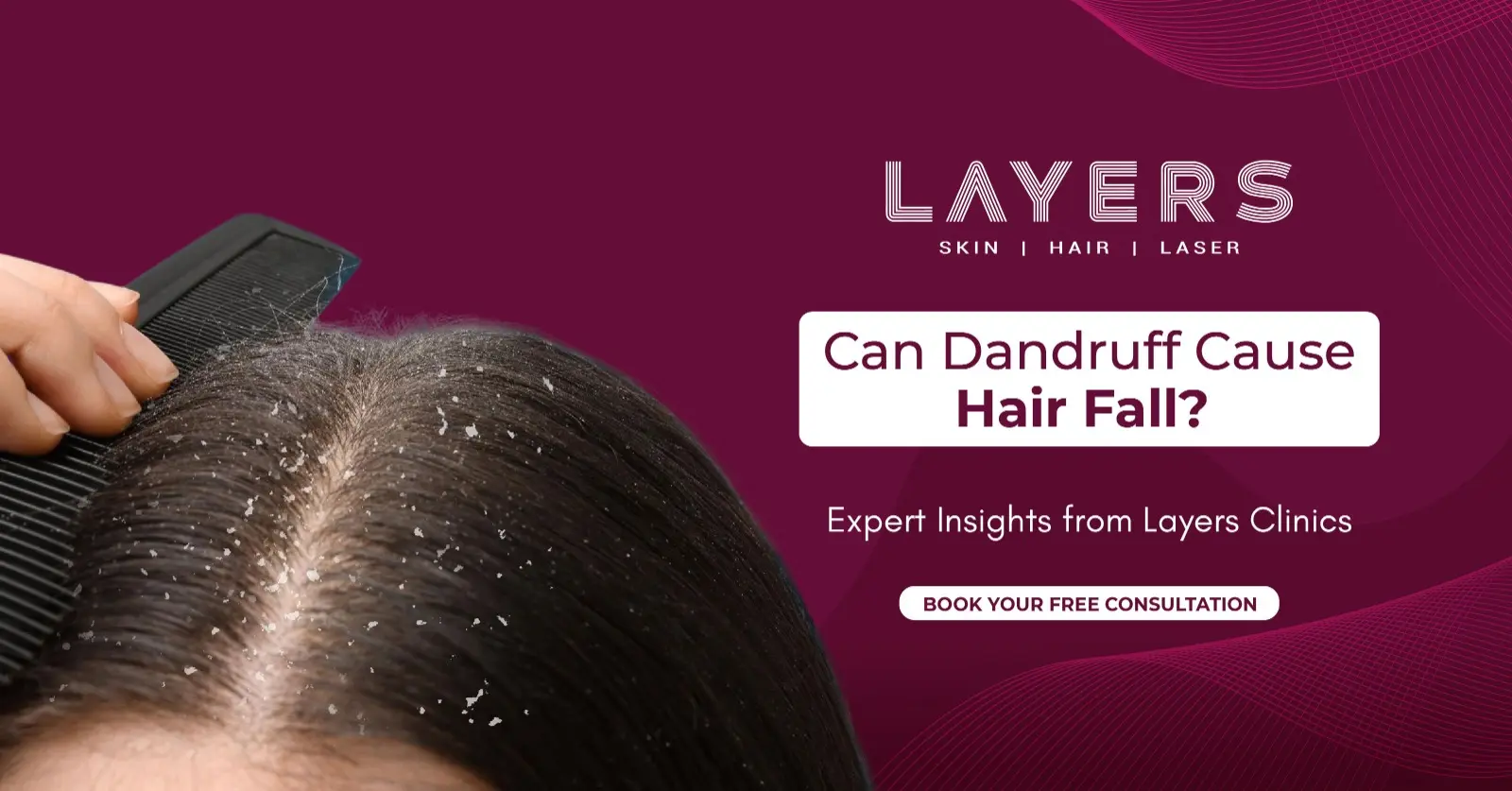
If you’ve ever noticed hair strands on your pillow or in the shower while dealing with an itchy, flaky scalp, you might wonder: “Can dandruff cause hair fall?” The short answer is yes, but it’s not as simple as flakes causing your hair to fall out. At Layers Clinics, we see many patients who underestimate how much scalp health impacts hair strength. Let’s break it down in a way that makes sense for anyone worried about shedding hair.
The Problem: What Patients Face
Imagine this scenario: You’re running your fingers through your hair, and you feel small flakes falling. Your scalp is constantly itchy, and brushing seems to pull more hair than usual. It can be frustrating and confusing, especially if you follow a healthy hair care routine.
Many patients come to us concerned about hair thinning around areas with visible dandruff. They often describe:
- Persistent scalp itchiness that triggers scratching
- White or yellow flakes on clothing and shoulders
- Noticeable hair strands falling during shampooing or combing
- Irritated, sensitive scalp areas
While dandruff alone rarely causes permanent bald patches, the combination of inflammation, follicle stress, and physical damage from scratching can, over time, subtly increase hair shedding.
Scientific Explanation: Why Hair Falls with Dandruff
Dandruff is usually linked to an overgrowth of the fungus Malassezia, which naturally lives on your scalp. When this balance is disrupted by oiliness, stress, hormonal shifts, or even seasonal changes, it can trigger inflammation. And inflammation is the key reason dandruff can indirectly lead to hair fall.
Here’s how it works:
- Inflammation Weakens Follicles
When follicles are inflamed, they don’t hold hair as firmly. Hair strands can loosen and fall out more easily, especially when combing or washing. - Scratching Causes Physical Damage
Scratching itchy patches may feel relieving, but it can weaken hair shafts and even injure the follicles. Over time, Repeated trauma over time contributes to hair thinning. - Scalp Barrier Disruption
Severe dandruff can damage the scalp’s protective layer, making it more susceptible to irritation and infections, which further stresses the hair roots.
A patient we treated once noticed clumps of hair coming out while shampooing. On scalp examination, we found mild inflammation and flaking—no permanent follicle damage yet. After a few weeks of proper treatment, both the flaking and hair fall significantly decreased. This is a realistic scenario that many patients experience.
Treatment Options: How It Works Medically
Addressing hair fall caused by dandruff requires treating both the flakes and the underlying scalp health. At Layers Clinics, we follow a practical, tailored approach.
1. Medicated Shampoos
Shampoos containing ketoconazole, zinc pyrithione, or selenium sulfide help regulate fungal growth and calm scalp irritation. Patients usually notice less flaking within 2–3 weeks of consistent use.
2. Topical Treatments
In some cases, anti-inflammatory serums or mild corticosteroid lotions are applied directly to affected areas to reduce redness and soothe itchiness. This also protects hair follicles from ongoing stress.
3. Professional Scalp Care
We often recommend in clinic treatments like gentle exfoliation or laser therapy. These approaches remove dead skin buildup, improve circulation, and help maintain a healthier scalp environment. Unlike generic over-the-counter solutions, these treatments are customized to your scalp type and the severity of dandruff.
4. Lifestyle and Nutritional Support
Supporting hair from the inside out is just as important. Adequate intake of biotin, zinc, vitamin D, and omega-3 fatty acids strengthens hair follicles and makes hair more resilient to shedding caused by scalp irritation.
A practical insight: Patients who follow in-clinic treatment plans alongside these lifestyle adjustments often report fewer flakes, less itching, and noticeably less hair shedding during daily grooming.
Benefits: What You Can Realistically Expect
When dandruff is managed effectively, the benefits go beyond just reducing flakes:
- Calmer, itch-free scalp
- Stronger hair roots that retain strands better
- Gradual reduction in visible hair shedding
- Prevention of future hair thinning in affected areas
It’s important to note: hair that’s already lost due to chronic inflammation or genetics may not fully regrow. However, stopping ongoing shedding and improving scalp health can preserve the hair you have and allow weak strands to recover.
Safety Considerations
All treatments at Layers Clinics are medically supervised. Medicated shampoos and topical applications are used in controlled doses, while in-clinic procedures are tailored for safety.
Patients are often surprised to learn that trying harsh home remedies or excessive scratching can worsen hair loss by causing burns, infections, or permanent follicle damage. Professional guidance ensures hair fall is addressed without introducing new risks.
Why Choose Layers Clinics
Choosing the right clinic makes all the difference. At Layers Clinics, you benefit from:
- Personalized scalp analysis with advanced diagnostic tools
- Customized treatment plans based on scalp type and hair condition
- Experienced dermatologists and trichologists who provide practical, realistic guidance
- Follow-up care and advice for effective at-home maintenance
For example, a patient with an oily scalp and stubborn dandruff will receive a combination of medicated shampoo schedules, targeted topical treatments, and optional in-clinic therapies rather than a generic one-size-fits-all approach. This ensures results that last.
Frequently Asked Questions about Can Dandruff Cause Hair Fall?
Can dandruff alone cause permanent hair loss?
Rarely. Dandruff mainly causes temporary hair shedding or thinning. Permanent hair loss is usually due to genetic or hormonal factors.
How long before hair fall improves?
Mild dandruff responds in 2–3 weeks. Hair retention and follicle recovery typically require 2–3 months of consistent care.
Are natural remedies effective?
Mild cases may benefit from tea tree oil or aloe vera, but moderate to severe dandruff usually requires medicated treatment to protect hair follicles.
Is laser therapy safe for scalp health?
Yes. Non-invasive laser therapy reduces inflammation, improves circulation, and is safe when administered by trained professionals.
Conclusion
If you’re noticing persistent flakes, itching, or hair shedding, addressing it early is crucial. Proper treatment protects your hair and improves scalp health.
Book a personalized scalp consultation at Layers Clinics today and take the first step toward healthier hair and a comfortable, flake-free scalp.
