
Dandruff is the top-most concern for hair loss among individuals. If the question comes to, does dandruff cause hair loss, Yes, dandruff can cause hair loss indirectly. While it does not permanently damage hair follicles, the inflammation, itching, and repeated scratching associated with dandruff weaken hair roots and disrupt the natural growth cycle. The result is temporary hair shedding, which is usually reversible within 3–6 months when treated correctly.
This guide is for individuals experiencing dandruff, scalp irritation, or unexplained hair fall and looking for medically accurate, actionable solutions.
What Is Dandruff and Why Does It Matter?
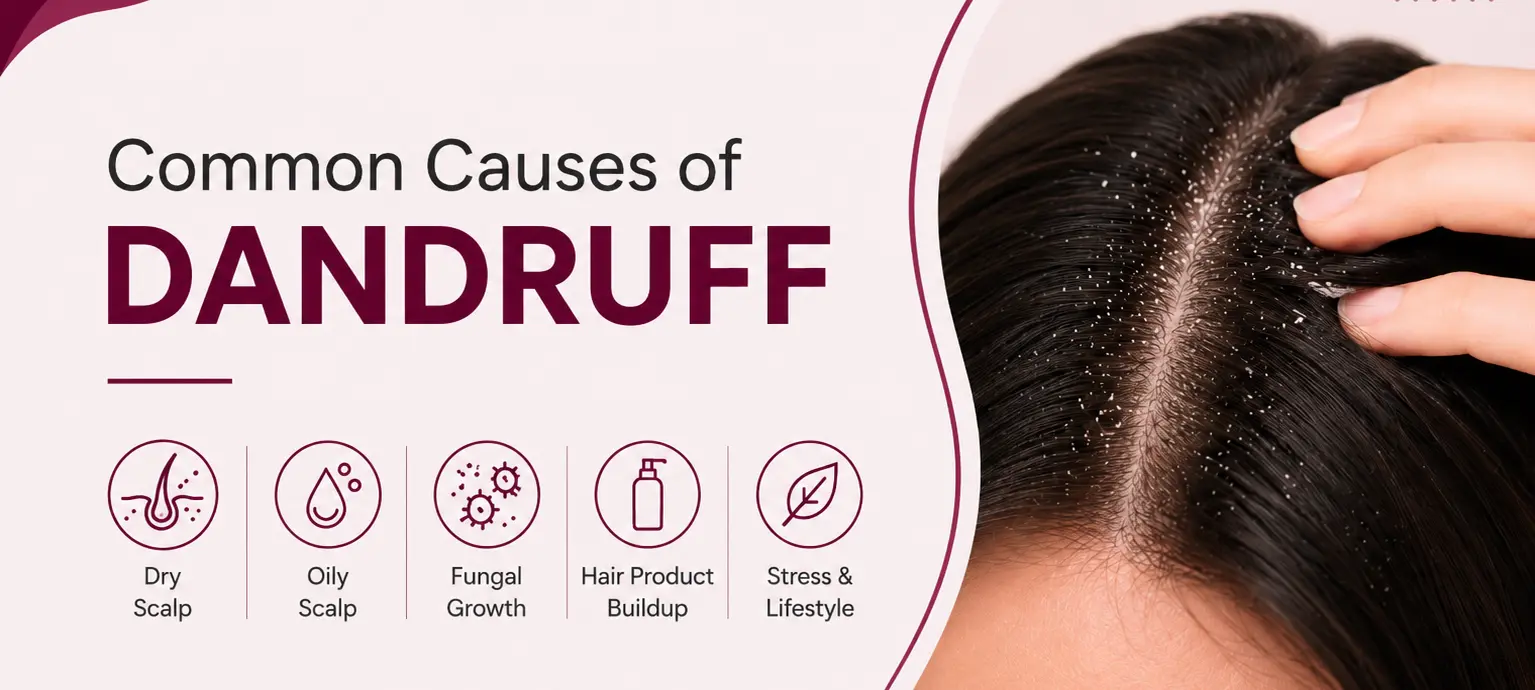
Dandruff is more than just visible flakes on your shoulders. Medically referred to as seborrhoeic dermatitis, it is a chronic scalp condition caused by a combination of:
- Excess oil (sebum) production
- Overgrowth of Malassezia fungus
- Scalp sensitivity and inflammation
While many people treat it as a cosmetic issue, dandruff directly impacts the scalp ecosystem, which is essential for healthy hair growth.
Does Dandruff Cause Hair Loss?
Dandruff does not directly cause permanent hair loss, but it creates conditions that lead to increased hair shedding.
The Science Behind It:
Here’s how dandruff contributes to hair fall:
- Inflammation:
The scalp becomes irritated due to fungal activity and immune response. - Itching & Scratching:
Frequent scratching damages the hair shaft and weakens roots. - Disrupted Hair Cycle:
Inflammation pushes hair follicles prematurely into the telogen (shedding) phase. - Weakened Follicles:
The scalp environment becomes unsuitable for strong hair growth.
Clinical Insight:
Studies suggest that chronic scalp inflammation can increase hair shedding by up to 30–40% in affected individuals.
Why You Should Not Ignore Dandruff-Related Hair Loss
Ignoring dandruff can lead to more than just flakes. Over time, it can cause:
- Noticeable hair thinning
- Slower hair regrowth cycles
- Increased scalp sensitivity
- Higher risk of conditions like psoriasis or fungal infections
If you’ve been wondering “Does dandruff cause hair loss over time?” the answer is yes, especially when left untreated.
Myths and Facts About Dandruff and Hair Loss
Myth #1: Dandruff Permanently Kills Hair Follicles
Fact: Dandruff does not destroy follicles. Hair roots remain alive but are temporarily weakened.
Myth #2: Poor Hygiene Causes Dandruff
Fact: Dandruff is primarily caused by fungal overgrowth and scalp imbalance—not just hygiene.
Myth #3: Washing Hair Daily Eliminates Dandruff
Fact: Overwashing can strip natural oils, worsening dryness and flaking.
Myth #4: Only Oily Scalps Get Dandruff
Fact: Both dry and oily scalps can develop dandruff due to different triggers.
Myth #5: Dandruff Is Contagious
Fact: Dandruff cannot spread from one person to another.
Myth #6: Hair Loss from Dandruff Is Permanent
Fact: Hair regrowth typically occurs within 3–6 months after proper treatment.
What Actually Happens: The Itch–Scratch–Hair Loss Cycle
Understanding this cycle is key to breaking it:
- Malassezia fungus breaks down scalp oils into irritants
- Irritation leads to itching
- Scratching damages hair shafts
- Hair weakens and falls out
- The cycle repeats
This continuous loop accelerates hair shedding and delays regrowth.
What You Can Do at Home (Proven Remedies)
If you’re asking “How can I control dandruff and stop hair fall at home?”, here are evidence-based steps:
1. Use Medicated Shampoos
Look for ingredients like:
- Ketoconazole
- Zinc pyrithione
- Selenium sulphide
Use 2–3 times per week for best results.
2. Avoid Scratching
Instead:
- Use a soft scalp massager
- Keep nails trimmed
- Apply soothing serums
3. Maintain Scalp Hydration
- Use lightweight oils like jojoba or argan oil
- Avoid heavy, pore-clogging products
4. Improve Your Diet
Include:
- Omega-3 fatty acids (fish, flaxseeds)
- Zinc-rich foods (nuts, seeds)
- Vitamins A, C, and E
Data Insight:
Nutritional deficiencies can contribute to hair fall in up to 35% of cases.
5. Manage Stress
Stress increases inflammation and triggers both dandruff and hair shedding.
Try:
- Yoga or meditation
- Regular exercise
- 7–8 hours of sleep
When Should You See a Dermatologist?
You should seek professional help if:
- Dandruff persists beyond 4–6 weeks
- Hair fall becomes excessive
- You notice redness, swelling, or patches
- Over-the-counter products stop working
Delaying treatment can lead to complications such as:
- Chronic fungal infections
- Scalp psoriasis
- Contact dermatitis
How Layers Clinics Treat Dandruff and Hair Loss
At Layers Clinics, treatment is personalized and clinically driven.
Step 1: Trichoscopic Analysis
A detailed scalp scan to assess:
- Fungal activity
- Inflammation levels
- Follicle health
Step 2: Customized Treatment Plan
Medical Treatments:
- Antifungal medications
- Medicated shampoos
Advanced Therapies:
- Scalp exfoliation
- LED light therapy
- PRP (Platelet-Rich Plasma) therapy
Step 3: Lifestyle Optimization
Patients receive guidance on:
- Diet improvements
- Stress management
- Hair care routines
Real Outcome:
Most patients experience:
- Reduced dandruff within 2–4 weeks
- Noticeable hair regrowth within 3–6 months
Does Stress Make Dandruff and Hair Loss Worse?
Yes. Stress plays a significant role by:
- Increasing oil production
- Weakening immune response
- Triggering inflammation
This creates a perfect environment for dandruff to worsen, leading to more hair fall.
Can Dandruff Cause Permanent Hair Loss?
In most cases, no.
However, it can become permanent if:
- Left untreated for a long time
- Combined with genetic hair loss
- Associated with chronic scalp diseases
Early intervention is critical.
Real-Life Example (Use Case)
Case:
A 28-year-old professional experienced heavy dandruff and hair fall for 3 months.
Problem:
Ignored symptoms, used random home remedies.
Treatment:
Medicated shampoo + PRP therapy + diet correction
Result:
- Dandruff reduced in 3 weeks
- Hair fall reduced by 60% in 2 months
- Visible regrowth in 4 months
Frequently Asked Questions
Does dandruff directly cause hair loss?
No, but it creates inflammation and itching that lead to temporary hair fall.
Can severe dandruff lead to baldness?
Rarely. Baldness usually occurs due to genetics, not dandruff alone.
How long does it take to recover hair loss from dandruff?
Typically 3–6 months with proper treatment.
Is oiling good for dandruff?
It depends. Some oils help, but heavy oiling can worsen fungal growth.
Can natural remedies cure dandruff completely?
They help mild cases, but severe dandruff requires medical treatment.
Key Takeaway
Dandruff can contribute to temporary hair shedding by causing scalp inflammation, itching, and repeated scratching, but it usually does not permanently damage hair follicles. Managing dandruff early with appropriate scalp care, medicated treatments, a healthy lifestyle, and professional guidance can help reduce hair fall and support healthier hair growth.
Conclusion
Dandruff may appear harmless, but its impact on scalp health and hair growth should not be underestimated. While it does not directly destroy hair follicles, the inflammation and repeated scalp trauma it causes can significantly disrupt the hair growth cycle.
The encouraging reality is that dandruff-related hair loss is both manageable and reversible. With the right combination of medicated treatments, proper scalp care, and lifestyle changes, you can restore a healthy scalp environment and promote stronger hair growth.
If you are still asking “Does dandruff cause hair loss?”, the real answer lies in how early you take action. Addressing dandruff today ensures healthier, thicker hair tomorrow.
