
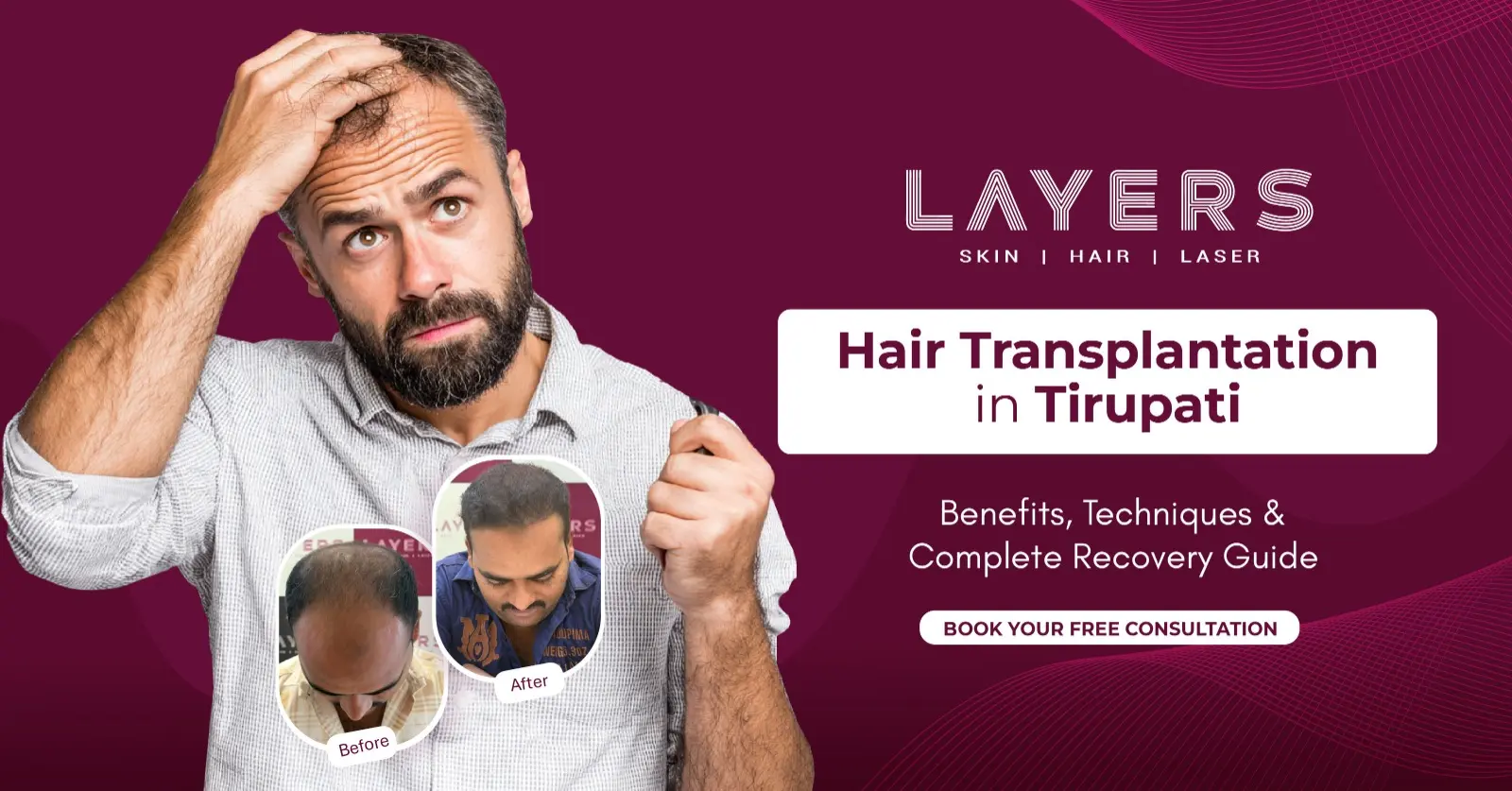
Hair loss isn’t just a cosmetic concern it affects self-esteem, professional confidence, and how you feel day to day. Hair transplantation in Tirupati has become a trusted, permanent solution for thinning hair, receding hairlines, and bald patches, backed by the same modern surgical techniques available in larger metro cities, at more accessible pricing.
At Layers Clinics, hair transplant procedures are tailored to individual scalp conditions and aesthetic goals, using modern surgical technique and precise hairline design to ensure results that blend seamlessly with your existing hair. This guide covers how the procedure works, which technique fits your situation, recovery timelines, cost factors, and the questions patients ask most.
Understanding Hair Transplantation
Hair transplantation is a minimally invasive surgical procedure that restores hair in areas affected by permanent thinning or baldness. Healthy follicles are harvested from a donor region typically the back or sides of the scalp and implanted into areas with low density.
Because transplanted follicles retain their genetic resistance to hair loss, they continue growing naturally and permanently once they establish blood supply in the new location producing hair strands that behave just like natural hair.
Common Causes of Hair Loss
Identifying the underlying cause matters, since not every case of hair loss requires surgery:
- Genetic predisposition (Androgenetic Alopecia) — the most common reason surgical restoration becomes necessary
- Hormonal fluctuations — including thyroid issues and PCOS
- Chronic stress — can cause temporary shedding, distinct from permanent baldness
- Nutritional deficiencies — iron, protein, and Vitamin D deficiencies
- Medical conditions affecting scalp health
- Post-pregnancy hair shedding in women
When follicles become permanently inactive as is typical with genetic pattern baldness surgical restoration is generally the most reliable solution, since non-surgical treatments work by stimulating existing follicles, not creating new ones.
Who Is an Ideal Candidate for Hair Transplantation?
Good candidates typically:
- Experience male or female pattern baldness
- Have a receding hairline or thinning crown
- Possess sufficient donor hair to support transplantation
- Are in good overall health
Consider waiting or exploring alternatives first if you:
- Have hair loss that’s still actively progressing rather than stabilized
- Have limited donor hair density (a body hair transplant option may be assessed instead)
- Have an uncontrolled medical condition medical clearance is needed before surgery
- Are pregnant or nursing
A comprehensive consultation evaluates scalp condition, donor capacity, and expected outcomes before any technique is recommended.
Types of Hair Transplant Techniques Available
FUE (Follicular Unit Extraction)
Individual hair follicles are extracted directly from the donor area using specialized micro-punch tools and implanted into pre-made recipient sites.
Advantages: minimal dot-like scarring, faster healing, natural density, no stitches required.
Best for: patients seeking minimal downtime and discreet recovery, most hair loss patterns
DHI (Direct Hair Implantation)
Uses a specialized implanter pen to place each follicle directly, without pre-creating recipient incisions allowing more precise control over depth and angle.
Advantages: enhanced precision, maximized graft survival, higher achievable density in targeted zones.
Best for: patients wanting detailed hairline correction and denser results in a specific area
FUT (Follicular Unit Transplantation)
A thin strip of scalp is removed from the donor area and dissected into individual grafts.
Advantages: can yield a very high graft count in a single session.
Best for: patients requiring extensive coverage who aren’t concerned about a thin linear donor scar
BHT (Body Hair Transplant)
Uses hair from the beard, chest, or other body areas as a supplemental donor source when scalp donor supply is insufficient.
Best for: advanced baldness cases or patients with limited scalp donor density
Technique Comparison
| Technique | Scarring | Best For | Recovery |
| FUE | Minimal (dots) | Most patients, minimal downtime | 5–7 days |
| DHI | Minimal (dots) | Precise hairline, maximum density | 5–7 days |
| FUT | Thin linear scar | High graft count, extensive coverage | 10–14 days |
| BHT | Minimal (body dots) | Limited scalp donor supply | 7–10 days |
Step-by-Step Hair Transplant Process at Layers Clinics
- Initial consultation and scalp analysis — digital scalp analysis assesses hair density, follicular health, and hair loss pattern
- Custom hairline design — planned around facial structure, age, and aesthetic goals
- Donor area assessment — evaluating donor density, follicular strength, and scalp elasticity to determine graft availability
- Follicle extraction — grafts harvested carefully to preserve graft integrity
- Recipient site creation — micro-incisions made at natural angles to mimic real hair growth direction
- Graft implantation — each follicular unit placed strategically for natural density and alignment
- Post-surgical care guidance — detailed aftercare instructions to support healing
The procedure is performed under local anesthesia and typically takes 4–8 hours, depending on graft count.
Cost of Hair Transplantation in Tirupati
Hair transplant procedures are usually priced on a per-graft basis, and total cost depends on:
- Number of grafts required — determined by the extent of hair loss and desired density
- Technique selected — FUE, DHI, FUT, or BHT each carry different per-graft pricing due to time and precision required
- Surgeon’s expertise — cost reflects surgical skill, not just clinic overhead
- Clinical infrastructure — FDA-approved tools and graft preservation systems affect precision and price
- Level of customization — combining PRP or GFC alongside transplant surgery adds to overall cost
While affordability matters, surgical quality and safety should always take priority over choosing the lowest-priced option a poorly performed transplant can mean wasted donor hair that can’t be reharvested. Layers Clinics provides a transparent, written cost estimate after your consultation.
Benefits of Hair Transplantation
- Permanent solution — transplanted follicles are genetically resistant to hair loss, offering lifelong growth
- Natural appearance — correct angle and density placement blend seamlessly with existing hair
- Improved confidence — restoring hair often meaningfully improves self-image and social confidence
- Minimal downtime — most patients resume normal routines within a few days
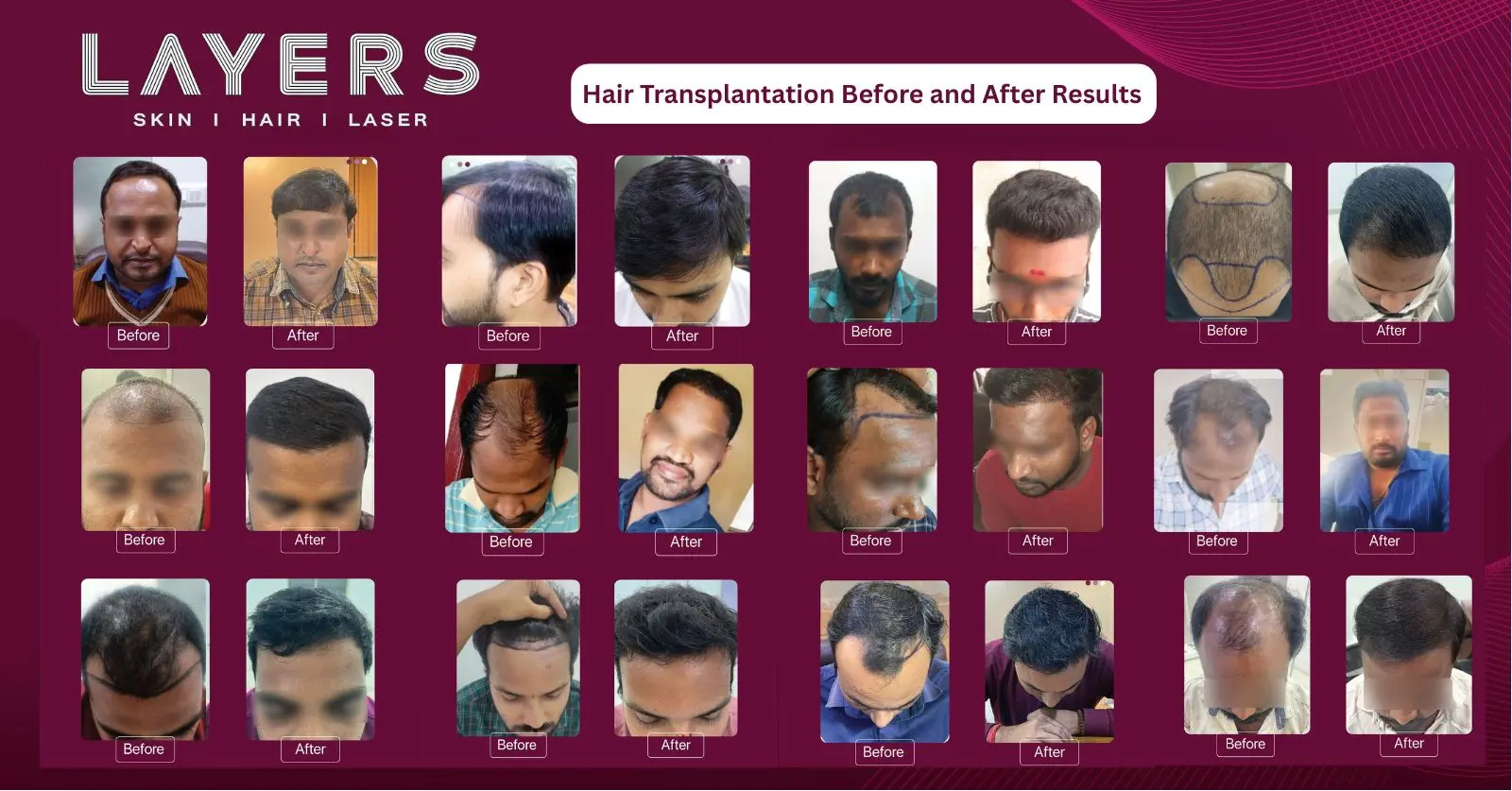
Recovery and Aftercare Guide
First week: Mild redness or swelling may occur; tiny scabs form around implanted follicles and fall off naturally within days.
Shedding phase: Temporary shedding of transplanted hair within the first month is a normal part of the hair growth cycle not a sign the procedure failed.
Hair growth timeline:
- 3–4 months: Initial new hair growth
- 6 months: Visible improvement in density
- 8–12 months: Full, natural results
Post-Transplant Do’s and Don’ts
Do:
- Follow washing instructions carefully
- Take prescribed medications as directed
- Sleep with your head elevated initially
- Maintain scalp hygiene
Don’t:
- Scratch or rub the scalp
- Do strenuous exercise for the first few days
- Expose the scalp to direct sun during early healing
- Use harsh hair products until cleared by your surgeon
Possible Side Effects and Risks
Complication rates are low with an experienced surgical team, but realistic risks include:
- Temporary redness, swelling, or scalp tightness
- Mild discomfort during early healing, manageable with prescribed medication
- Expected temporary shedding of transplanted hair (not a failure sign)
- Small infection risk if aftercare instructions aren’t followed closely
- Rare risk of unnatural results from poor hairline planning, which is why surgeon experience matters more than technology alone
Alternative Hair Loss Treatments
Surgical restoration isn’t always the first step. Depending on your hair loss stage, alternatives may include:
- PRP therapy (Platelet-Rich Plasma) — for early-stage thinning with active follicles
- Medications — to slow further hair loss
- Nutritional supplementation — addressing deficiency-driven hair fall
- Lifestyle adjustments — stress management, scalp care
However, once follicles have become permanently inactive, transplantation remains the most definitive, permanent solution non-surgical options can’t regrow hair where follicles no longer function.
Why Choose Layers Clinics for Hair Transplantation in Tirupati?
- Advanced surgical technology, including precision extraction tools and graft preservation systems
- Experienced medical team combining surgical accuracy with hairline artistry and aesthetic design
- High graft survival rate, supported by careful follicle handling and precision implantation
- Personalized treatment planning, tailored to your scalp condition, hair pattern, and density goals
- Transparent, competitive pricing, quality care without the premium cost of larger metro clinics
- Comprehensive aftercare, from the first week through full results at 12 months
Frequently Asked Questions
Is hair transplantation permanent?
Yes. Transplanted follicles are genetically resistant to hair loss and typically continue growing naturally for life.
Is the procedure painful?
No. It’s performed under local anesthesia, so the procedure itself is generally comfortable, with mild, manageable discomfort during early healing.
How long does surgery take?
Typically 4–8 hours, depending on the number of grafts required.
When can I resume work?
Most patients return to work within 2–3 days, though visible healing (redness, scabbing) is normal for about a week.
Are there side effects?
Temporary redness or mild swelling is common and usually subsides quickly. More significant complications are uncommon with an experienced surgical team.
Which technique is right for me FUE, DHI, or FUT?
It depends on your hair loss extent, donor hair density, and aesthetic goals. FUE suits most patients seeking minimal scarring; DHI suits those wanting maximum hairline precision; FUT suits patients needing very high graft counts in one session. A scalp assessment determines the best fit.
How much does hair transplantation cost in Tirupati?
Cost is calculated per graft and depends on technique, graft count, and case complexity. An exact quote is provided after your consultation at Layers Clinics.
Can women undergo hair transplantation?
Yes. Women with pattern hair loss, diffuse thinning, or traction alopecia may be good candidates, subject to a scalp and donor-area evaluation.
Book Your Consultation Today
If hair thinning or baldness is affecting your confidence, hair transplantation in Tirupati at Layers Clinics offers advanced techniques, experienced surgical precision, and natural, long-lasting results at pricing that doesn’t require traveling to a metro city.
Book a personalized consultation with Layers Clinics to take the first step toward restoring your hair and confidence.
