
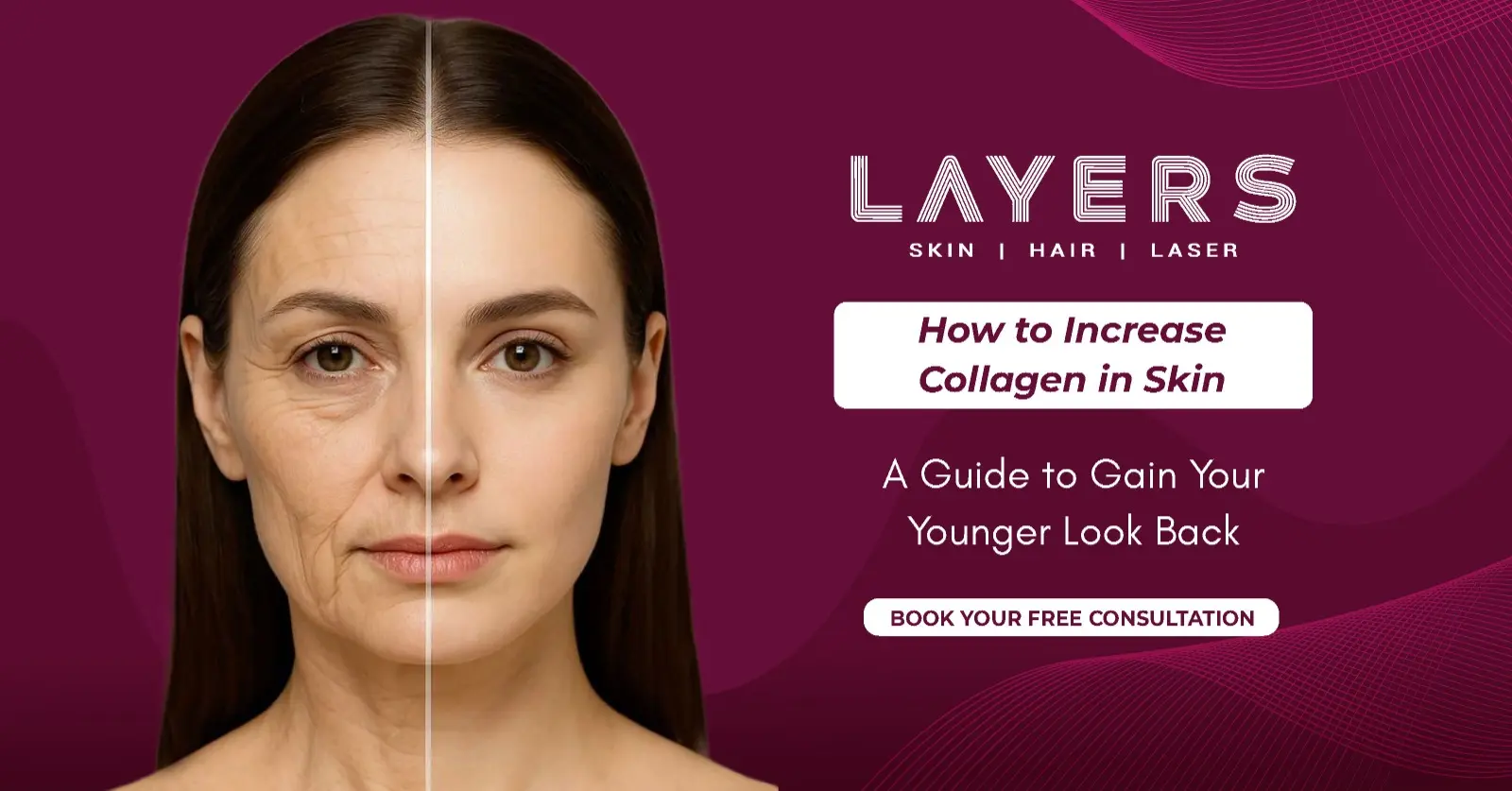
Age is the top-most reason for collagen reduction, making the skin lose its firmness. Indeed, options to increase collagen and bring that younger look back are available, and your search for how to increase collagen in skin ends here.
During the natural aging process, scars, wrinkles and saggy skin happen for which collagen is often the culprit. Loss of collagen as we age causes our skin to lose its firmness, and reflects on our face as soon as it begins to fade. There’s nothing on the planet that stops aging but there are options that can help to regain collagen in your face for smoother and younger appearing skin.
As people search on how to increase collagen in skin, well there are many options including lifestyle changes and products along with the world-class treatments that yield promising results. Let’s explore every aspect in detail as you deserve such appearance and fine look.
What is Collagen and Why Does It Decline?
Collagen is a naturally produced protein by the body and secreted primarily by connective tissue cells. It functions with other proteins and substances – elastin and hyaluronic acid for skin to maintain its elasticity, firmness, and moisture. As soon as you enter adulthood, the skin’s collagen will start decreasing, slowing at the rate of 1-1.5% year on year. This reduction leads to visible signs of aging that include wrinkles and sagging.
As this process is uncontrolled, multiple factors influence the pace at which it happens. Hormones, genetics, and ethnicity become a major role in producing collagen along with environmental changes including exposure to sun and pollution. All these factors raise a doubt in everyone’s minds on how to increase collagen in skin but the changes in lifestyle can lead to better outcomes.
Effective Treatments to Increase Collagen in Skin
There are cosmetic treatments to address the most possible concern of yours – how to increase collagen in skin:
Chemical Peel: In this process, acid solutions are used to exfoliate dead skin cells and help in generating collagen. These treatments have customizable approaches with varying strengths, delivering results that range from normal to deep based on the desired outcomes. People can experience the results of chemical peel once the skin is healed. Healing time ranges from 1-21 days based on the type and depth of chemical peel treatment is used. When it comes to addressing the concern of how to increase collagen in skin, this is one of the prominent methods to do it.
Collagen Induction Therapy: Known with a common name – microneedling, this invasive procedure uses a pen-like device and creates pinpoint sized wounds on the skin. This complements your body to generate more collagen to repair the damaged skin. The holes created in the skin are so small that they’re never visible on the skin after the process. It involves a dosage of anesthesia to numb pain.
Collagen Treatments: Collagen treatments are top-most preferred choice across the globe and is a great way to answer your concern on how to increase collagen in skin. Collagen treatment or collagen replacement therapy brings non-surgical procedures into the play where skin is injected with collagen. Clinicians choose FDA-approved treatments depending on their expertise so that the results seem to be promising for their patients. Collagen treatments have 30-60 minutes of duration with no downtime. In the process, results are immediate but not long lasting as injected collagen disappears over the time. However, following maintenance sessions will keep it active and can last up to 5 years.
Injectable Filler: Dermal and facial fillers are injected into specific areas of the skin wherever there are facial wrinkles and they stretch collagen-producing cells while adding volume so that the skin appears smooth and youthful. There are various types of fillers such as hyaluronic acid, calcium hydroxilapatite, and poly-L lactic acid that show results lasting 6 months to 24 months depending on the type of fillers and area injected.
Light Therapy: Light therapy or LED therapy is a rejuvenal treatment for the face. It uses the light to stimulate collagen production, working as the supportive statement to how to increase collagen in skin. Red light and blue light are widely used. Red light goes into the outer layer of the skin to drive collagen growth and creates smoother skin. Whereas blue light goes deeper and slashes the amount of oil produced by the oil glands thus treating the acne. Light therapy mostly involves a light-emitting device or a lighted mask. Sessions last up to 30 minutes and no downtime is required. It demands multiple treatments to achieve the desired outcomes and persist the results.
Facial Lasers: Among the most searched ways to increase collagen in skin, facial lasers are prominent in nature as they use skin resurfacing lasers with a controlled damage to the skin and boost the growth of collagen producing cells. Laser skin resurfacing treatments come in two forms – one is non-ablative where there’s no injury to the skin but is less expensive and two is ablative where the lasers are penetrated deeper into the skin with the help of anesthetic injections.
Platelet-Rich-Plasma (PRP) Therapy: This collagen treatment is a three-step procedure to treat your aging skin. It uses your blood to naturally generate new collagen and support tissue growth.
These are effective and prominent ways where you can retreat your skin when it comes to how to increase collagen in skin. However, there are natural ways to rebuild collagen that require your effort at home.
Natural Remedies to Increase Collagen in Skin
Foods and supplements enhance collagen in the body naturally and obviously lifestyle changes as well. If you see results for how to increase collagen in skin in natural ways, then that’s worth exploring.
Diet has the Influence
- High protein foods – fish, poultry, and legumes
- Cutting sugar intake
- Drinking sufficient water
- Vitamin C in the diet
- Antioxidant-rich foods
Lifestyle Changes
- Quit smoking
- Go for a frequent facial massage
- Have quality of sleep
Consulting an Expert
In the land of the unknown, finding the right expert is crucial and brings subsequent advantages. Layers Clinics is your platform to address how to increase collagen in skin as we offer a wide range of treatments by establishing decades of expertise in the field of body, skin, and hair. Sign up for our consultation today to feel younger and smoother skin!
Frequently Asked Questions
How can I increase collagen in my skin naturally?
You can achieve natural collagen in your skin by including protein foods in your diet, taking vitamin C, hydrating yourself, and protecting yourself from too much sunlight. Proper sleeping and quitting smoking also contribute to collagen production.
What are the best treatments to boost collagen in the skin?
Some common treatments used for boosting skin collagen are microneedling, platelet rich plasma, laser skin resurfacing, chemical peel, and dermal fillers.
At what age does collagen start decreasing?
Collagen starts decreasing in your skin when you are about mid-20 years old, losing around 1% per year afterward.
Which foods help increase collagen in the skin?
Some foods such as fish, chicken, eggs, citrus fruit, berries, spinach, broccoli, and nuts help produce collagen. Taking foods containing antioxidants and vitamin C is highly recommended.
Can collagen supplements improve skin health?
Yes, collagen supplements work effectively in improving skin elasticity and hydration. They are effective in providing benefits to your skin.
