
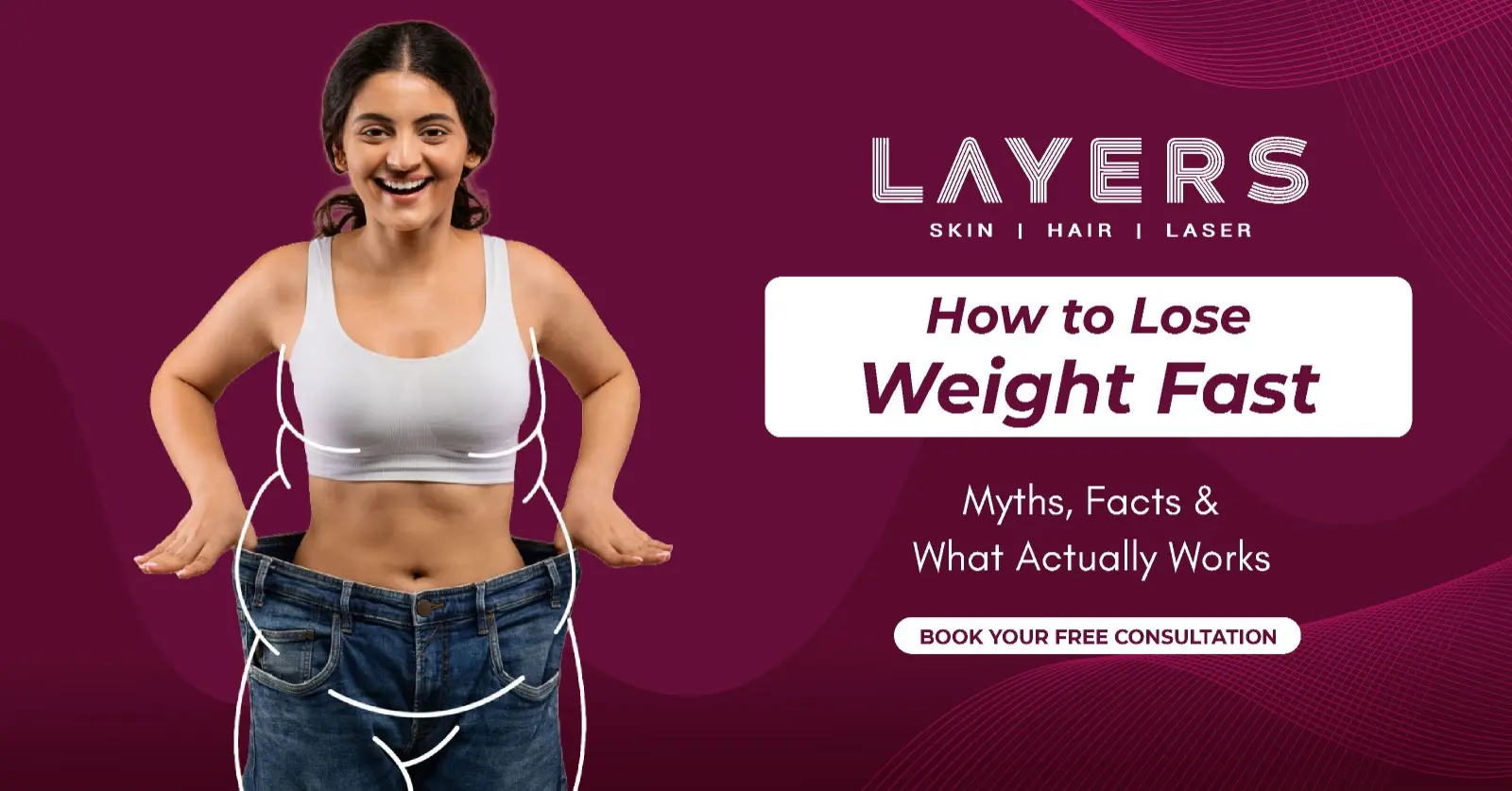
The internet has a tsunami of promises that claim how to lose weight fast, maybe in a week or two, or sometimes overnight. But the truth is, obsession with how to lose weight fast becomes one of the biggest myths ever in the modern wellness culture. If you’re searching for a miracle to happen, continue reading our insightful article because we articulate here the science, patience, and a healthy myth-busting scenario for you.
How to Lose Weight Fast?
Losing weight fast is not recommended for most people. Safe and effective weight loss happens at a rate of 0.5 to 1 kg per week through a balanced diet, regular exercise, proper sleep, and consistency. Rapid weight loss methods often lead to muscle loss, metabolic slowdown, and weight regain.
Why “Fast Weight Loss” Is the Wrong Goal
The desire to understand how to lose weight fast often comes from urgency, frustration, or social pressure. However, modern medical research shows that the body resists rapid weight loss as a survival mechanism. When weight drops too quickly, the body prioritizes energy conservation, slows metabolism, and increases hunger hormones making long-term results harder to maintain.
Instead of chasing speed, the real goal should be fat loss with muscle preservation and metabolic stability. Sustainable weight loss not only improves physical appearance but also enhances hormonal balance, energy levels, and long-term health outcomes.
Reframing the question from how to lose weight fast to how to lose weight effectively and sustainably is the first step toward lasting transformation.
Big Lie Behind ‘How to Lose Weight Fast’
Let us begin by learning how to lose weight fast, which needs immediate addressing. In the world of instant gratification same-day deliveries, 30-second reels, or 2-minute serving food, someone is promising a 10-kilogram weight reduction in a week or less. Though it sounds reasonable, it’s never the scenario.
In the recent research, according to The Lancet (2025), they confirm that rapid weight loss strategies accumulate other health concerns, such as muscle loss, metabolic slowdown, and you will regain the weight in less than a year. The body interprets extreme calorie meltdown as starvation, holding onto fat stores in hard ways. In a gist, trying to lose weight fast is a stepping stone to gaining weight faster.
What Happens When You Try to Lose Weight Fast
When people attempt to lose weight fast through crash diets, juices, or extreme fasting, the body responds with a cascade of survival mechanisms. Cortisol levels cross the threshold, metabolism drops by almost 23%, and lean muscle tissue is compromised for energy.
According to a 2024 meta-analysis in Obesity, Reviews proved that individuals who cut down calorie intake aggressively are the ones who lost an average of 60% muscle and 40% fat. It’s the opposite that played the part. Behind the scenes, here’s what rapid weight loss looks like:
- Muscle cannibalization — your body consumes its own protein stores before reducing visceral fat.
- Hormonal chaos — ghrelin (the hunger hormone) surges, while leptin (the satiety hormone) plummets.
- Nutrient deficiency — cutting food intake reduces essential vitamins, iron, and omega-3 intake.
- Metabolic adaptation — your resting metabolic rate drops, meaning you burn fewer calories.
- Mental health toll — restrictive eating patterns are strongly linked to anxiety and disorders.
Ifs-and-Buts Nobody Talks About
Knowing the ifs and buts of trying to lose weight fast becomes super interesting after understanding the above concepts. If you have a significant number where your weight loss program can accomplish it, say a BMI above 45, you can opt for medically rapid treatments under clinical guidance.
It’s because aggressive approaches damage the natural harmony of the human body. Combining moderate calorie reduction (300-400 kcal) with strength training can help in protecting muscle mass while making your metabolism active. It is like negotiating with the body’s survival instincts, and in this scenario, you will win.
What Science Says You Should Do Instead
As per the 2025 WHO guidelines on healthy weight management, sustainable fat loss happens at a rate of 0.5 – 1kg per week. It sounds uncomfortable, but when there are options where you can lose weight fast, the chances of health complications are equally great. The evidence-based clinically guided weight loss program takes the following shape:
- Protein-forward eating — aim for 1.6 to 2.2 grams of protein per kilogram of bodyweight daily to preserve muscle.
- Progressive resistance training — lifting weights 2-4 times per week boosts metabolism and reshapes body composition.
- Sleep optimization — poor sleep increases caloric intake by up to 385 calories per day, according to a 2023 study in JAMA Internal Medicine.
- Stress management — chronic cortisol elevation promotes belly fat storage and undermines every other effort.
- Fibre-rich whole foods — vegetables, legumes, and whole grains keep you full longer and feed gut bacteria that regulate metabolism.
Trending Approaches Worth Your Attention in 2025-2026
New research has proven how to lose weight fast, enabling a smarter ecosystem with tech-assisted methods.
- GPL-1 receptor agonists like semaglutide show considerable improvements for people with obesity
- Continuous glucose monitors are consumer-accessible, enabling you to track how your body responds to specific foods in real time.
- Time-restricted eating is not extreme fasting, but maintaining the gap for 8-10 hours has shown good benefits for metabolic health, reducing the negative effects of being starved.
In other terms, the best insight about how to lose weight fast is itself a flaw. Reframing the goal from being fast to being permanent changes the perspective towards everything. Instead of asking how to lose weight fast on search bars, ask how I can build habits that make excess weight impossible to maintain. Prioritize consistency over speed so that you stop chasing shortcuts and enable your body for a healthy weight.
The people who successfully lose weight do not need to go for extreme treatments, but small, repeatable choices every day can show a huge difference. Next time, if someone promises saying how to lose weight fast, give them a straightforward answer that it’s a hard game to play.
FAQS
What is the fastest way to lose weight safely?
The safest way is a moderate calorie deficit combined with exercise, resulting in gradual fat loss.
Why do I gain weight after losing it quickly?
Because rapid weight loss slows metabolism and increases hunger hormones.
Is fasting a good way to lose weight fast?
Extreme fasting can harm metabolism; controlled time-restricted eating is safer.
How much weight loss per week is healthy?
0.5 to 1 kg per week is considered safe and sustainable.
What is better: diet or exercise?
Both are essential, diet controls calorie intake, exercise improves metabolism.
Is There Any Safe Way to Lose Weight Fast?
The idea of discovering how to lose weight fast may seem appealing, but it often leads to short-term results and long-term setbacks. True transformation is not about speed, it’s about sustainability, consistency, and understanding how your body works.
By focusing on balanced nutrition, regular physical activity, quality sleep, and stress management, you create a foundation for lasting fat loss rather than temporary weight changes.
If you are serious about achieving your ideal body and maintaining it, the smarter approach is not to chase rapid results but to build habits that make weight regain impossible. At Layers Clinics, we combine medical expertise with personalized strategies to help you achieve safe, effective, and sustainable weight loss tailored to your body.
