
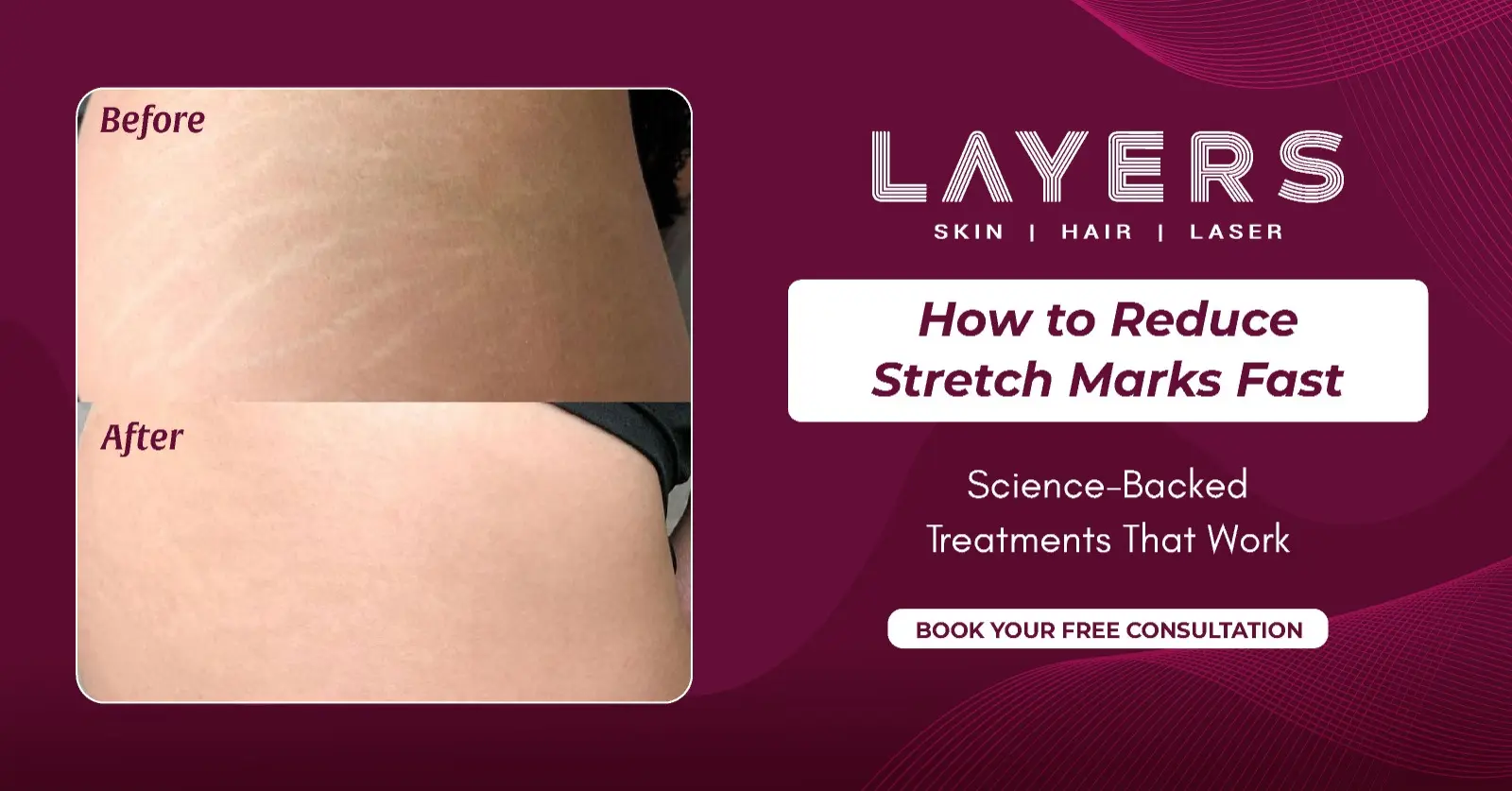
How to reduce stretch marks is one of the most common skin questions we hear at Layers Clinics. Whether yours appeared after pregnancy, a growth spurt, weight change or muscle gain, they are very common, and while they cannot be erased completely, they can be improved. In this guide, you will learn what causes them, which treatments work best for new and old marks, how many sessions you may need and which daily habits support your results.
| Key Takeaway: How to reduce stretch marks? Stretch marks cannot be erased completely, but professional treatments such as fractional laser, microneedling and PRP can reduce them significantly by stimulating collagen and improving the texture and colour of the marks. Newer red or purple marks respond best, while older white marks need more sessions. Most people need several sessions, and the right plan depends on the age of the marks and your skin type. Combining clinical treatment with good skincare and nutrition gives the best visible improvement. This guide is for anyone with stretch marks from pregnancy, puberty, weight change or muscle gain. |
What Are Stretch Marks?
Stretch marks (medically called striae distensae) are narrow streaks that appear when the skin is stretched or shrinks faster than it can adapt. The rapid change damages collagen and elastin fibres in the dermis, the layer beneath the skin’s surface.
Stretch marks usually go through two stages:
- Early stage (striae rubrae): Red, pink or purple, sometimes slightly raised or itchy.
- Later stage (striae albae): Pale, silvery or white, flatter and slightly textured.
What Causes Stretch Marks?
Common triggers include:
- Pregnancy
- Puberty growth spurts
- Rapid weight gain or loss
- Bodybuilding and fast muscle gain
- Certain medications, such as long-term steroid use
- Genetics and hormonal conditions
Because the damage sits in the deeper skin layers, creams that only work on the surface rarely remove established marks. Effective treatment targets the dermis.
Can Stretch Marks Be Removed Permanently?
Short answer: no, but they can be reduced a lot. Stretch marks are a form of scarring in the skin, so complete removal is not realistic. Dermatological treatments can fade the colour, smooth the texture and make the marks far less noticeable, and the improvement is long-lasting once the collagen has been rebuilt. Anyone promising 100% removal is overselling.
Do Stretch Marks Go Away Naturally?
Short answer: they fade, but rarely disappear. Over months to years, red or purple marks usually fade to paler, flatter lines. They seldom vanish without treatment. Treating them while they are still red generally gives better results.
How to Reduce Stretch Marks: Treatment Options That Work
The best treatment depends on how old the marks are, your skin type and your goals. A dermatologist will assess these first.
Fractional CO2 and Other Laser Treatments
Fractional lasers create thousands of microscopic treatment zones in the skin. As these heal, the body produces new collagen and elastin, which gradually smooths the texture of the mark. Fractional CO2 is commonly used for older, white marks.
Pulsed Dye Laser (for Red Stretch Marks)
Newer red or purple marks often respond well to pulsed dye laser, which targets the small blood vessels and helps calm inflammation while encouraging collagen remodelling.
Microneedling
Ultra-fine needles create controlled micro-injuries at precise depths. This triggers the skin’s repair process and collagen production. It is often combined with other treatments.
PRP (Platelet-Rich Plasma) Therapy
PRP uses growth factors from your own blood, applied to the treated area, to support healing and collagen production. It is often paired with microneedling.
Topical Treatments
- Retinoids can improve early, red stretch marks when used consistently for months. They are not safe during pregnancy or breastfeeding, so always check with your doctor.
- Hyaluronic acid keeps skin hydrated and supports healing between sessions.
At Layers Clinics, we usually combine methods rather than relying on one, because stretch marks respond differently depending on depth and age. Your plan is decided after a skin assessment.
Which Treatment Is Best for Stretch Marks?
Short answer: it depends on the age and type of the marks.
| Stretch mark type | Commonly suitable options |
| New, red or purple marks | Pulsed dye laser, microneedling, topical retinoids (when safe) |
| Older, white marks | Fractional laser, microneedling with PRP, combination plans |
| Mixed stages | Combination plan tailored to each area |
No single treatment suits everyone, which is why a consultation matters.
How Many Sessions Are Needed to Reduce Stretch Marks?
Short answer: most people need around 4 to 6 sessions. The exact number depends on:
- The depth and age of the marks
- Your skin type and healing response
- The treatment or combination chosen
- How well you follow aftercare
Sessions are usually spaced a few weeks apart so the skin can heal and rebuild collagen between visits. Improvement is gradual, not instant.
What to Expect: Stretch Mark Treatment Results, Session by Session
Results build over time. A typical pattern looks like this (individual results vary):
- After the first session: Mild redness and a slightly rough, sandpaper-like feel on the treated skin. This is a normal sign of healing.
- Around week 3: Redness settles, and the skin may feel subtly smoother where the grooves were deepest.
- Mid-course (sessions 3 to 4): Texture and colour start to look more even.
- Later sessions: Further refinement, with marks blending more naturally into the surrounding skin.
Results depend on your skin and the type of marks, so your dermatologist will set realistic expectations before you start.
Is Stretch Mark Treatment Safe? Side Effects to Know
Professional treatments are generally well tolerated when done by trained practitioners. Possible effects include:
- Temporary redness, swelling or warmth
- Mild dryness, flaking or tightness
- Temporary pigment changes, more likely in deeper skin tones if the wrong settings are used
- Rarely, infection or scarring
Choose a clinic experienced in treating your skin type, and follow aftercare instructions closely. Avoid treatment on broken or infected skin.
Daily Habits That Support Stretch Mark Reduction
Clinical treatment works best when daily habits support it:
- Eat for collagen support: Include foods rich in vitamin C and vitamin E, plus adequate protein and hydration.
- Moisturise daily: Keeps skin supple and supports healing.
- Protect from the sun: Sun exposure can darken healing marks.
- Avoid crash diets and rapid weight swings: Sudden changes can trigger new stretch marks.
- Build muscle gradually: Moderate strength training supports skin firmness without overstretching it.
- Gentle exfoliation: Only as advised by your dermatologist.
When Should You See a Dermatologist for Stretch Marks?
Consider professional help if:
- Home remedies and creams have not helped after 3 to 4 months of consistent use
- Your marks are older and white, which rarely respond to creams
- Your marks are new and red and you want the best chance of improvement
- You want a clear plan and realistic expectations
Newer marks tend to respond faster, but older marks can still improve with advanced treatment.
Why Choose Layers Clinics for Stretch Mark Treatment?
At Layers Clinics, every plan starts with a skin assessment: how old the marks are, your skin type and what you want to achieve. Our dermatologists tailor combination treatments to your skin, set realistic expectations and give you a home-care routine to use between sessions.
Frequently Asked Questions
How to reduce stretch marks quickly?
Laser therapy, microneedling and PRP are the fastest clinical options because they stimulate collagen production. Noticeable improvement usually takes several sessions, not days.
Which treatment is best for stretch marks removal?
It depends on the age and severity of the marks. Fractional laser, microneedling and PRP are commonly used for improving texture and visibility, and pulsed dye laser is often used for red marks.
Can stretch marks be removed permanently?
They cannot be removed completely, but they can be significantly reduced. Treatment fades them and improves skin texture, making them far less noticeable.
Do stretch marks go away naturally?
They often fade from red or purple to lighter lines over time but rarely disappear without treatment. Professional treatment can speed up and improve this process.
How many sessions are needed to reduce stretch marks?
Most people need around 4 to 6 sessions. The exact number depends on depth, age and skin type.
Book Your Stretch Mark Consultation at Layers Clinics
Ready to find out what will work for your skin? Book a consultation and our dermatologists will assess your stretch marks, explain your options and recommend a clear, realistic plan.
| Disclaimer: This article is for general information and is not medical advice. Results, number of sessions and suitability vary from person to person. |
Last Updated: October 2026
