
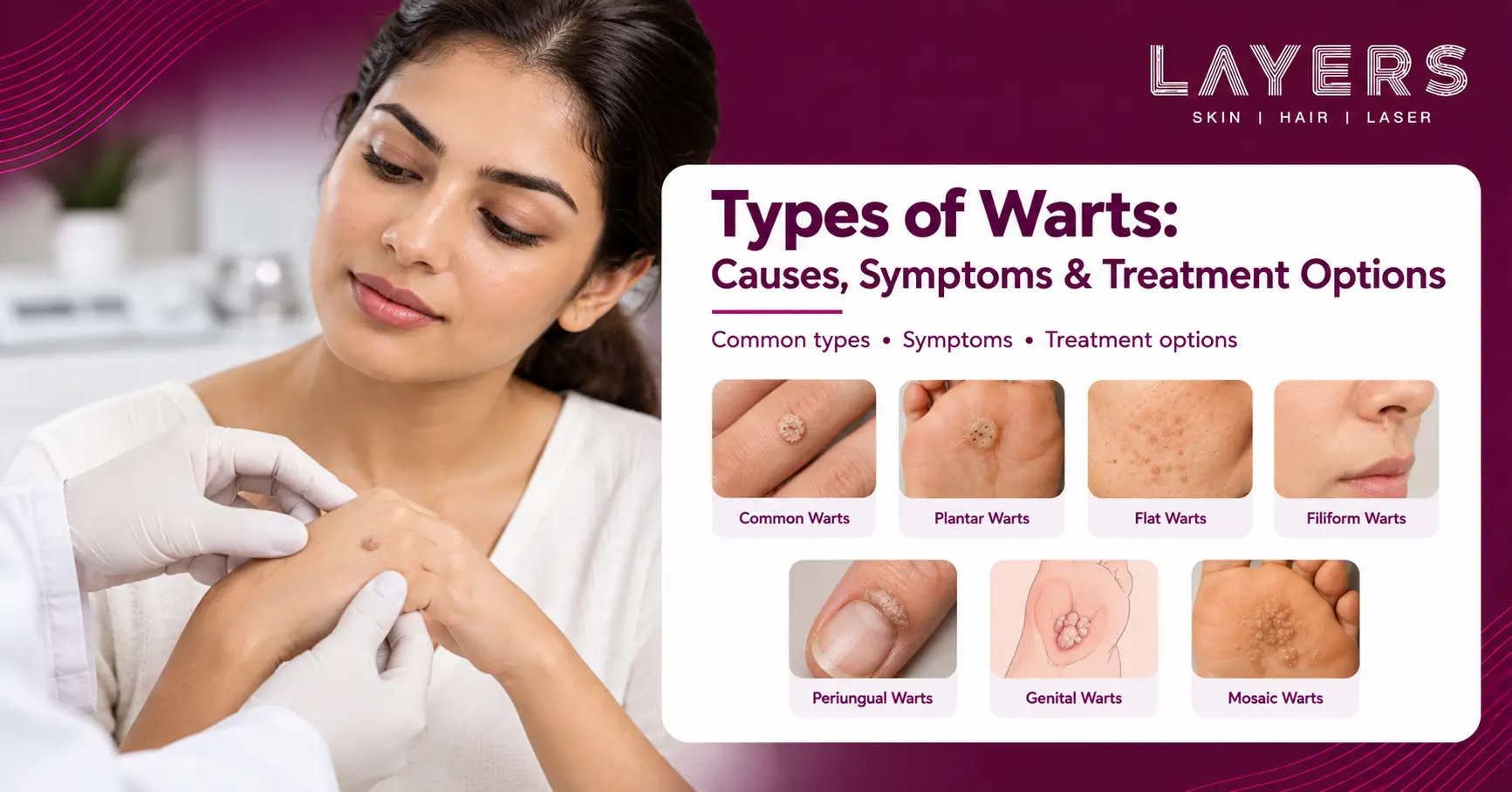
A rough bump on a finger, a tender spot under the heel, a scatter of tiny flat spots on the cheek: most people meet a wart at some point in life. These growths are usually harmless, but they can be stubborn and easy to pass on. Once you know the main types of warts, how the virus behind them spreads and which warts treatment suits each kind, it becomes much easier to act early and stop them from coming back.
Warts are non-cancerous skin growths triggered by the human papillomavirus (HPV). The usual types are common, plantar, flat, filiform, periungual (around the nails) and genital warts. Some fade without help within a few months to two years, while others call for removal through cryotherapy, electrocautery, laser, medicated applications or immunotherapy. Get a dermatologist’s opinion if a wart hurts, multiplies, appears in the genital area or keeps returning.
Who this guide is for: Anyone who has found an unfamiliar bump on their skin and wants to know what it might be, how they picked it up and what can be done about it.
Key Takeaways
Warts are small skin growths commonly caused by certain types of human papillomavirus (HPV). They can appear on the hands, feet, face and other parts of the body. Common types include common warts, plantar warts, flat warts, filiform warts and genital warts. Treatment depends on the wart’s type, location and size and may include topical medicines or dermatologist-performed procedures. Seek professional advice if a wart is painful, bleeding, spreading, recurring or located on the face or genital area.
This guide is for people who want to understand different types of warts, recognise common symptoms and learn when professional assessment may be appropriate. It does not replace a medical diagnosis.
What Are Warts?
A wart is a small, benign overgrowth of the skin’s outer layer. It forms when HPV infects skin cells and prompts them to multiply faster than normal. More than 100 HPV strains have been identified, and each one tends to favour a particular body site, which is why the hands, feet, face and genital area each develop their own kind of wart.
The virus slips in through microscopic breaks in the skin. Once a wart has formed, it can pass to other people through contact, and it can also seed new spots on your own body.
Causes of Warts
HPV is the only underlying cause, but a handful of everyday situations make infection more likely:
- Skin contact with someone who already has a wart
- Sharing items such as towels, razors, nail clippers or footwear
- Going barefoot around swimming pools, gym showers and changing rooms
- Chewing nails or tearing hangnails, which opens the skin
- Intimate sexual contact, in the case of genital warts
Who is more prone to warts?
- Children and teenagers, whose defences against HPV are still developing
- Anyone with a weakened immune system, for example due to HIV, transplant medicines or long-term steroids
- People with eczema, cracked skin or hands that stay wet for long hours
- Those who regularly use shared showers or pools
Exposure to the virus does not guarantee a wart. How strongly your immune system responds decides who develops them and who does not, which also explains why some people get them again and again.
Types of Warts: How to Recognise Each One
1. Common Warts (Verruca Vulgaris)
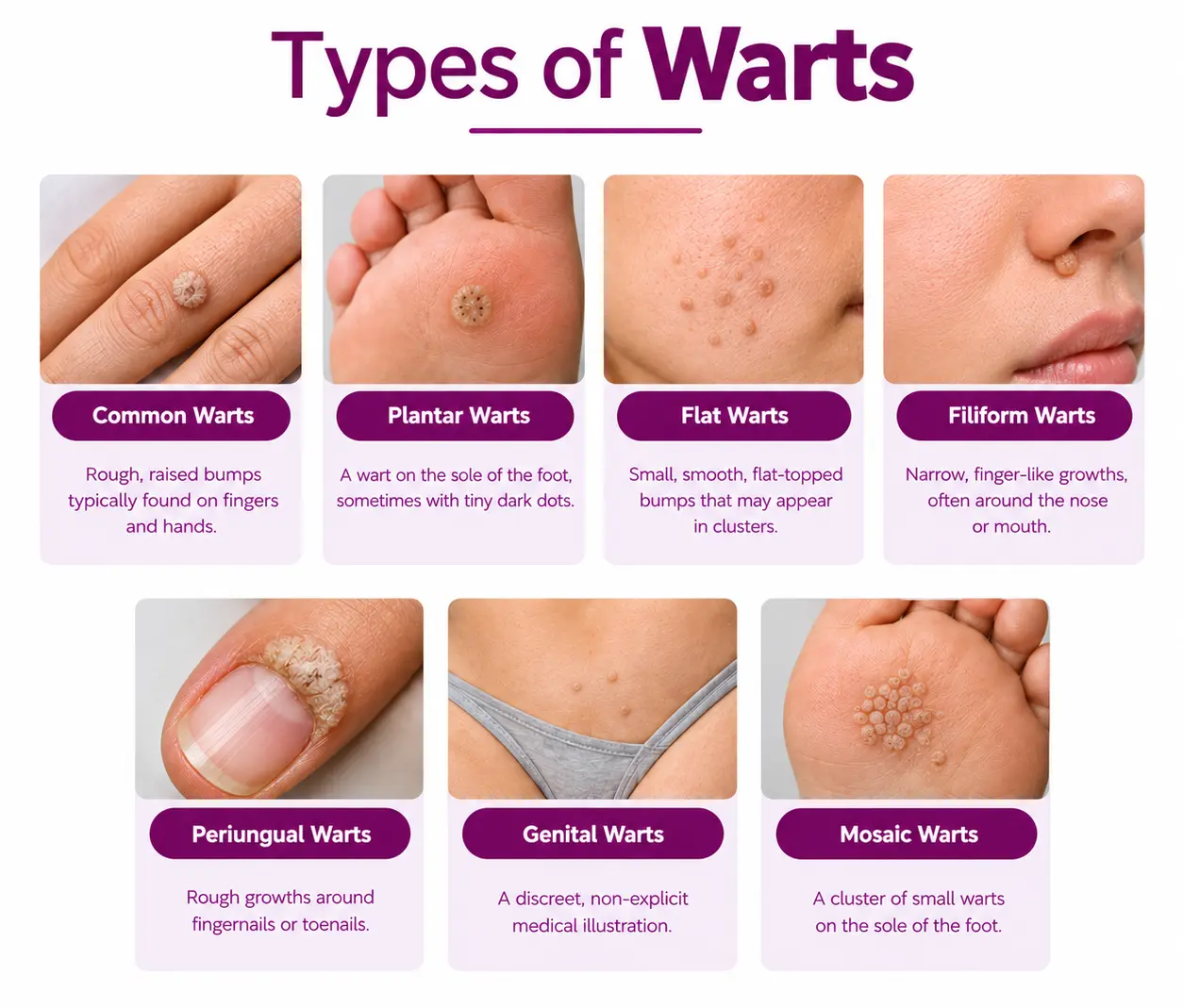
This is the kind most people picture. Common warts usually turn up on the fingers, backs of the hands, knees and elbows.
- What they look like: Firm, rough, dome-shaped bumps with a grainy texture. The colour ranges from flesh-toned to grey or brown, and the tiny dark specks inside are clotted capillaries.
- Who is most affected: Children and young adults, particularly nail-biters and people with small wounds on the hands.
2. Plantar Warts
These grow on the underside of the foot, most often at the heel or the pad below the toes.
- What they look like: A hard, thickened patch of skin dotted with dark pinpoints. Body weight pushes them inward rather than outward, so walking can feel like stepping on a pebble.
- Good to know: They are easily mistaken for corns or calluses, and only an examination can tell them apart.
3. Flat Warts (Verruca Plana)
Smaller and smoother than other kinds, flat warts tend to show up in large numbers.
- What they look like: Slightly raised, flat-topped spots in pink, tan or yellowish shades. Typical sites are the face, forehead, neck, backs of the hands and legs.
- Shaving link: Razors can drag the virus across the skin, which is why men may notice them in the beard area and women on the legs.
- Who is most affected: Children, teenagers and young adults.
4. Filiform Warts
Their unusual shape makes filiform warts simple to identify.
- What they look like: Thin, thread-like or finger-shaped projections, usually around the mouth, eyelids, nose and neck.
- Good to know: They rarely hurt, but their location can be irritating. Do not try to remove warts near the eyes at home.
5. Periungual and Subungual Warts
These develop alongside or underneath the fingernails and toenails.
- What they look like: Rough, thickened tissue along the nail fold. They can hurt, crack the skin and distort the shape of the nail.
- Who is most affected: People who bite their nails or pick at the skin around them.
6. Genital Warts
Specific HPV strains cause genital warts, and they pass mainly through sexual contact.
- What they look like: Small, flesh-coloured or pinkish bumps, either single or grouped in cauliflower-like clusters, around the genitals, anus or groin. Some itch or feel uncomfortable, but many cause no symptoms at all.
- Important: Never use over-the-counter wart products on this area. A doctor should confirm the diagnosis, treat the warts and advise on partner care.
7. Mosaic Warts
Mosaic warts are tightly packed patches of many small warts, commonly on the soles or palms. They resist treatment more than single warts do, so a dermatologist is the best person to manage them.
Types of Warts at a Glance
| Type of wart | Usual location | How it looks |
| Common wart | Fingers, hands, knees, elbows | Rough, firm, dome-shaped bump |
| Plantar wart | Sole of the foot | Hard, flattened patch with dark specks; can hurt |
| Flat wart | Face, neck, hands, legs | Small, smooth, flat-topped spots |
| Filiform wart | Around the mouth, eyelids, neck | Thin, thread-like growth |
| Periungual wart | Around the nails | Rough, thick tissue; may be tender |
| Genital wart | Genital and anal area | Soft, flesh-coloured, sometimes cauliflower-like |
How Are Warts Diagnosed?
In most cases a dermatologist can identify a wart simply by looking at it. Paring away the top layer of skin may reveal the tiny dark dots that give warts away. When a lesion looks atypical, bleeds, shifts in colour or ignores treatment, a small biopsy can confirm that it is not another skin condition.
Warts Treatment Options
A good number of warts disappear by themselves, particularly in children, though the wait can stretch from several months to a few years. Treatment makes sense when a wart is painful, multiplying, easy to see or sitting in a delicate area. The best wart removal method depends on the wart’s type, size, site and how many there are.
Home and Over-the-Counter Options
- Salicylic acid: Sold as liquids, gels and adhesive pads, it softens the wart and sheds it in thin layers. Daily use for several weeks is usually needed.
- Duct tape method: Covering the wart with tape for days at a time is a popular trick. Research results are inconsistent, but the approach is low risk for common warts.
Avoid cutting, burning or picking at a wart yourself. Doing so invites infection, scarring and further spread
Wart Removal by a Dermatologist
- Cryotherapy: Liquid nitrogen freezes the tissue, and the wart blisters and sheds. Repeat visits are often required.
- Electrocautery and curettage: Under local anaesthesia, the wart is burned and scraped off. This suits stubborn growths.
- Laser therapy: Heat is aimed at the tiny blood vessels feeding the wart, which helps with resistant plantar and nail-fold warts.
- Cantharidin: A blistering solution applied by the doctor that lifts the wart away from the skin.
- Immunotherapy: Injections or topical agents that train the body’s defences to clear the virus, often chosen for multiple or recurring warts.
- Prescription creams: Imiquimod, 5-fluorouracil or stronger acid preparations, mainly for flat and genital warts.
Your dermatologist will pick the safest route for you, especially for warts on the face or genitals and for warts in children.
Can Warts Come Back?
They can. HPV may linger in the skin around a treated wart, so reappearance is common. Finishing the full course of treatment and keeping up good habits lowers the odds.
How to Prevent Warts
- Do not pick at or scratch warts, and wash your hands after touching one
- Wear sandals or flip-flops in public showers, pools and changing rooms
- Keep towels, razors, nail clippers and footwear to yourself
- Keep feet dry and change socks often
- Cover cuts and break the nail-biting habit
- Place a bandage over any existing wart so it does not spread
- Ask your doctor about HPV vaccination, which protects against the strains behind most genital warts
When to See a Dermatologist
Book an appointment if:
- You are unsure whether a growth is really a wart
- A wart is painful, bleeding, or changing in colour or shape
- Warts appear on your face, genitals or beneath the nails
- They are multiplying or keep returning
- You have diabetes or a weakened immune system
- Several weeks of home treatment have made no difference
Wart Removal at Layers Clinics, Hyderabad
If you are searching for a dermatologist for warts in Hyderabad, the specialists at Layers Clinics begin with a thorough skin examination and then plan warts treatment around your wart type, skin and daily routine.
Final Thoughts
Warts are common, catching and mostly harmless, yet they deserve attention when they hurt, spread or show up in sensitive places. Knowing the types of warts, what causes them and what their symptoms look like helps you choose the right next step, and a dermatologist can carry out safe, effective wart removal while reducing the chance of recurrence. Book a consultation at Layers Clinics for a proper diagnosis and a treatment plan that fits you.
Frequently Asked Questions
1. What are the common types of warts and their symptoms?
Common types of warts include common warts, plantar warts, flat warts, filiform warts and periungual warts. Common warts are usually rough and raised, often appearing on the hands and fingers. Plantar warts develop on the soles of the feet and may cause discomfort while walking. Flat warts are generally small, smooth and slightly raised, while filiform warts have narrow, finger-like projections. Periungual warts appear around or beneath the nails. Genital warts affect the genital or anal area and require medical assessment.
2. What are the most common types of warts found on the skin?
Common warts, plantar warts and flat warts are frequently encountered types. Common warts often develop on the fingers and hands, plantar warts appear on the soles of the feet, and flat warts may occur in groups on the face, arms or legs. Their appearance can overlap with other skin conditions, so a dermatologist can help confirm the diagnosis.
3. Which over-the-counter treatments are effective for different types of warts?
Salicylic acid is a commonly used over-the-counter ingredient for certain common warts and plantar warts. Some pharmacy products also contain freezing agents, but effectiveness varies. These products should not be used on facial or genital warts unless a qualified healthcare professional specifically advises otherwise. People with diabetes, poor circulation or reduced immunity should seek medical advice before attempting self-treatment.
4. How can you identify a plantar wart versus a common wart?
A common wart usually appears as a firm, rough, raised growth on the hands, fingers or other areas. A plantar wart develops on the sole of the foot and may look flattened because of pressure from standing or walking. It can have tiny dark dots and may feel painful when pressure is applied. A corn or callus can look similar, so professional assessment may be helpful if the diagnosis is uncertain.
5. Where can I buy wart removal products in India?
Wart removal products may be available through local pharmacies and authorised online pharmacy platforms in India. Look for products intended for the specific type and location of wart, check the active ingredient and follow the product instructions. Avoid using over-the-counter wart removers on the face, genital area or an unidentified skin growth. If you are unsure which product is appropriate, ask a pharmacist or dermatologist.
6. Where can I buy effective over-the-counter solutions for warts?
You can ask a pharmacist about suitable wart treatments, including products containing salicylic acid for certain common or plantar warts. No product works for every wart, and treatment may take several weeks. Avoid choosing a product solely because it claims fast removal. Facial, genital, painful, bleeding or changing growths should be assessed by a healthcare professional rather than treated at home.
7. Can you recommend clinics that specialise in wart removal?
Look for a dermatology clinic with qualified medical professionals who can examine the growth, confirm whether it is a wart and explain suitable treatment options. Depending on the diagnosis, treatments may include cryotherapy, prescription topical medicines or other dermatological procedures. Ask about possible side effects, recurrence and aftercare before proceeding. If you are looking for wart removal in Hyderabad, you can contact Layers Clinics to ask about consultation availability and appropriate treatment options.
8. What are the treatment options for flat warts on the face?
Treatment for flat warts on the face depends on their number, location, skin type and risk of scarring or pigmentation. A dermatologist may consider carefully selected topical treatments or procedures, depending on the diagnosis. Avoid using salicylic acid wart removers, home-freezing kits or harsh remedies on facial skin without medical guidance. A professional assessment is particularly important because other skin growths can resemble flat warts.
9. What are the differences between common, plantar and flat warts?
The main differences are their appearance and location:
- Common warts: Usually rough, firm and raised; often found on the hands and fingers.
- Plantar warts: Develop on the soles of the feet; pressure may flatten them and make walking uncomfortable.
- Flat warts: Usually smaller, smoother and flatter than common warts; they may appear in clusters on the face, arms or legs.
These features can help distinguish the types, but appearance alone cannot always confirm a diagnosis.
10. How Can I Find a Dermatologist for Genital Wart Treatment Near Me?
If you are looking for genital wart treatment in Hyderabad, consult a qualified dermatologist for a confidential assessment at Layers Clinics. A dermatologist can evaluate the affected area, confirm the diagnosis and recommend suitable treatment, which may include prescription medicines or clinician-performed procedures. Avoid using regular over-the-counter wart removers on genital skin. Contact Layers Clinics to confirm consultation availability and appropriate treatment options.
Medical disclaimer: This information is for general education and is not a substitute for a medical diagnosis. Consult a qualified healthcare professional if a growth is painful, bleeding, changing, recurring, or located on the face or genital area.
