
Hair loss is rarely caused by a single factor. It is usually the result of multiple hidden issues such as nutritional deficiencies, hormonal imbalances, stress, genetics, and poor scalp health. Identifying the root cause early is the key to stopping and reversing hair loss effectively.
This guide is for anyone struggling to understand What Causes Hair Loss? and looking for clear, science-backed answers instead of guesswork. Whether you’re experiencing early thinning or severe shedding, knowing what causes hair loss is the first step toward effective and lasting treatment.
- Men and women experiencing hair thinning or excessive shedding
- People who have tried oils, shampoos, or home remedies without results
- Anyone looking for long-term, science-backed solutions instead of temporary fixes
What Causes Hair Loss?
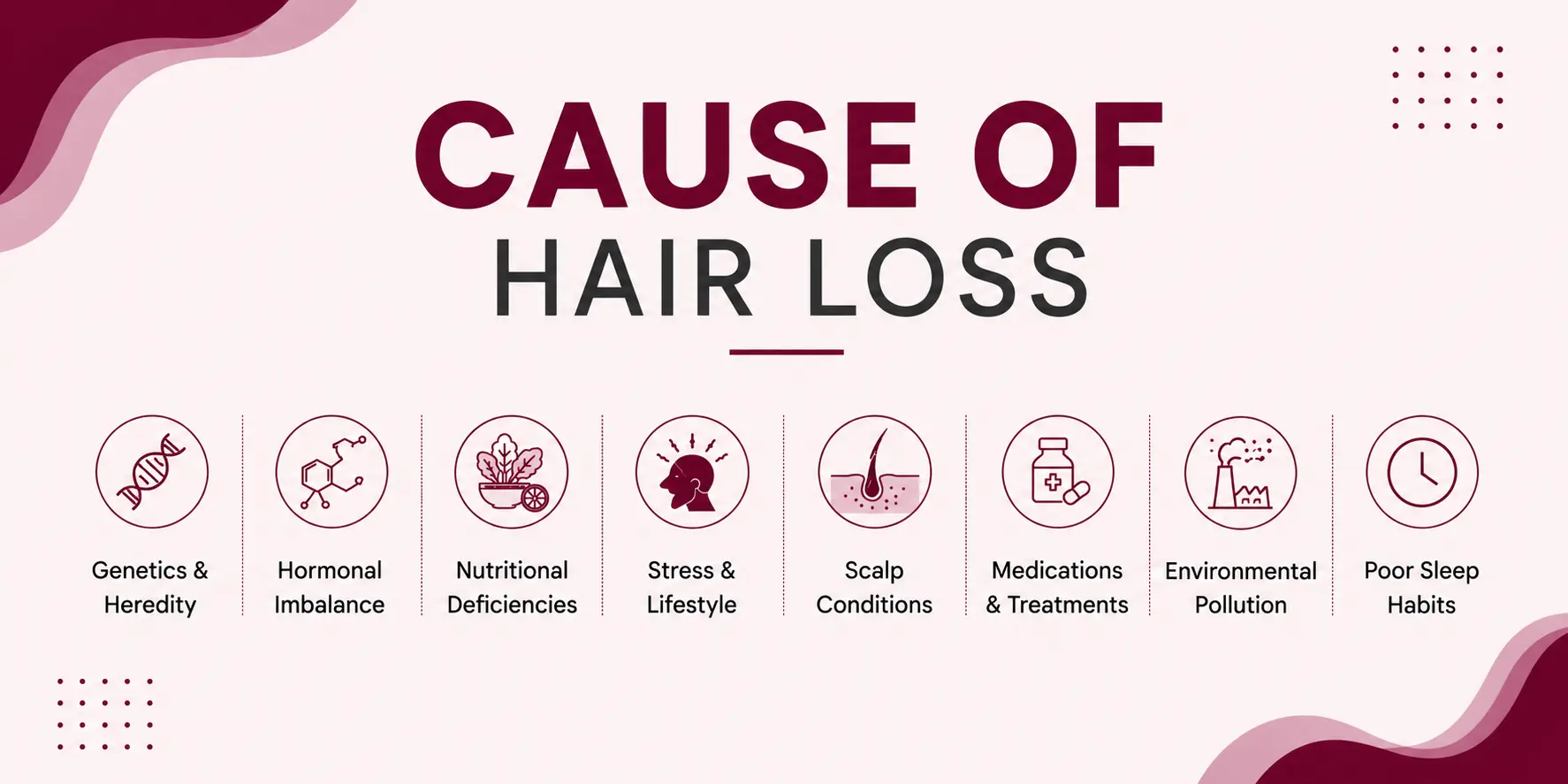
Hair loss can have several causes, including genetics, nutritional deficiencies, hormonal changes, stress, scalp conditions, medications, medical conditions, and rapid weight loss. The right treatment depends on identifying the specific cause rather than treating hair fall with a generic shampoo or supplement. Early evaluation by a dermatologist or hair-loss specialist can help determine whether the shedding is temporary or related to a progressive condition such as androgenetic alopecia.
In short: persistent hair shedding, visible thinning, a widening part, or a receding hairline should not be ignored. A clinical assessment can help identify the underlying trigger and guide an appropriate treatment plan.
Hair Loss: What It Means Medically
Hair loss, medically referred to as alopecia, describes excessive shedding, reduced hair density, or loss of hair from the scalp or other parts of the body. It can be temporary, progressive, or permanent depending on the underlying cause.
Common types include:
- Androgenetic alopecia – hereditary pattern hair loss
- Telogen effluvium – increased shedding following triggers such as illness, stress, nutritional deficiencies, or major lifestyle changes
- Alopecia areata – an autoimmune condition that can cause patchy hair loss
- Traction alopecia – hair loss associated with repeated tension from tight hairstyles
- Scarring alopecia – conditions that can permanently damage hair follicles
Identifying the type of hair loss is important because different causes require different treatments.
What Actually Works for Hair Loss?
There is no single hair-loss treatment that works for everyone. Effective treatment begins with identifying the type and underlying cause of hair loss.
A dermatologist may evaluate:
- Pattern of hair loss – recession, crown thinning, diffuse shedding, or patches.
- Duration and progression – when the shedding started and whether it is worsening.
- Scalp condition – dandruff, inflammation, infection, or other scalp disorders.
- Medical and family history – including hereditary hair loss and recent illnesses.
- Nutrition and lifestyle – diet, rapid weight loss, stress, sleep, and other relevant factors.
- Laboratory investigations when appropriate – tests may be recommended based on symptoms and clinical findings.
Depending on the diagnosis, treatment may include medical therapy, nutritional correction, scalp treatment, PRP, growth-factor-based therapies, or hair transplantation for selected patients.
The important point is that treatment should be diagnosis-led rather than procedure-led.
Why Do Most Hair Loss Treatments Fail?
Many people rely on:
- Random oils
- OTC shampoos
- Home remedies
The problem:
- No root-cause diagnosis
- Temporary results
- Continued hair fall
The Reality:
Without understanding the cause, treatment becomes guesswork.
Temporary Hair-Loss Fixes vs Diagnosis-Based Treatment
| Factor | Temporary Approach | Diagnosis-Based Approach |
|---|---|---|
| Main focus | Reduce visible symptoms | Identify the underlying cause |
| Diagnosis | Usually absent | Clinical assessment |
| Treatment | Generic products | Personalized treatment |
| Suitable for | Mild, occasional concerns | Persistent or progressive hair loss |
| Monitoring | Limited | Follow-up based on response |
| Long-term strategy | Often inconsistent | Cause-specific management |
Why Choose Layers Clinics for Hair Loss Treatment?
At Layers Clinics, hair-loss care is approached through assessment of the scalp, hair density, pattern of shedding, medical history, and individual treatment goals. The treatment recommended depends on the underlying cause and severity of hair loss rather than applying the same procedure to every patient.
Depending on the diagnosis, treatment options may include:
- PRP hair treatment
- Growth factor therapy
- Scalp-focused treatments
- Medical management
- Hair transplantation for suitable candidates
- Nutrition and lifestyle guidance
A dermatologist-led consultation can help determine whether your hair loss is related to genetics, nutritional factors, hormonal changes, scalp conditions, stress, or another medical cause.
Frequently Asked Questions
What is the most common cause of hair loss?
Hair loss can result from several factors rather than one single cause. Genetics, hormonal changes, nutritional deficiencies, stress, scalp conditions, and certain medical conditions are common contributors.
Can hair loss be reversed?
In many cases, hair loss can be controlled or improved when the underlying cause is identified and treated early. Reversible causes such as nutritional deficiencies, stress-related shedding, or certain scalp conditions may improve after appropriate management. Genetic hair loss may require ongoing treatment to maintain results.
How do I know if my hair loss is abnormal?
Losing some hair every day is normal, but persistent excessive shedding, a widening part, receding hairline, visible scalp, reduced hair density, or sudden patches of hair loss may indicate a problem that requires professional evaluation.
Can stress cause hair loss?
Yes. Significant or prolonged stress can trigger telogen effluvium, a form of temporary hair shedding. Importantly, the shedding may become noticeable several weeks or months after the stressful event rather than immediately.
Can nutritional deficiencies cause hair loss?
Yes. Inadequate levels of nutrients such as iron, vitamin D, vitamin B12, protein, and other essential nutrients can contribute to hair shedding in some people. Testing may be recommended when a deficiency is suspected.
Does dandruff cause hair loss?
Dandruff does not usually cause permanent hair loss. However, scalp inflammation, intense itching, and repeated scratching can contribute to temporary shedding or hair breakage. Treating the underlying scalp condition can help reduce these problems.
Can hormonal changes cause hair loss?
Yes. Hormonal changes associated with conditions such as thyroid disorders, PCOS, menopause, or the postpartum period can affect the hair-growth cycle. Identifying and managing the underlying hormonal issue is important.
When should I see a dermatologist for hair loss?
Consider consulting a dermatologist if hair shedding continues for several weeks, you notice progressive thinning, your hairline is receding, bald patches develop, or you have associated scalp symptoms such as itching, scaling, redness, or pain.
Are PRP and GFC treatments suitable for everyone?
No. PRP and GFC are not appropriate for every type of hair loss. Their suitability depends on the cause, stage, follicle condition, and overall scalp health. A dermatologist should evaluate your condition before recommending a treatment.
How can I stop hair loss permanently?
There is no single treatment that permanently stops every type of hair loss. The best strategy is to identify the specific cause, address reversible triggers, protect scalp health, and use evidence-based treatment when appropriate. Some forms of genetic hair loss require continued management.
Key Takeaway
Hair loss is rarely caused by just one factor. Genetics, nutritional deficiencies, hormonal changes, stress, scalp conditions, rapid weight loss, styling damage, medical conditions, and certain medications can all contribute to excessive shedding or thinning.
The most effective approach is to identify the underlying cause before choosing a treatment. Early assessment and a personalized plan can help control ongoing hair loss and, where the cause is reversible, support regrowth.
Conclusion
Hair loss is often a signal rather than an isolated problem. From genetics and hormonal changes to nutritional deficiencies, stress, scalp conditions, and lifestyle factors, understanding the underlying cause is the first step toward effective management.
Instead of relying only on temporary solutions, consider a professional hair and scalp assessment to determine why the shedding or thinning is happening. With early diagnosis and a personalized treatment plan, many forms of hair loss can be managed more effectively and, in some cases, improved.
The bottom line: Don’t ignore persistent hair shedding. Find the cause, treat the cause, and start early for the best opportunity to protect your existing hair and support healthier growth.
