
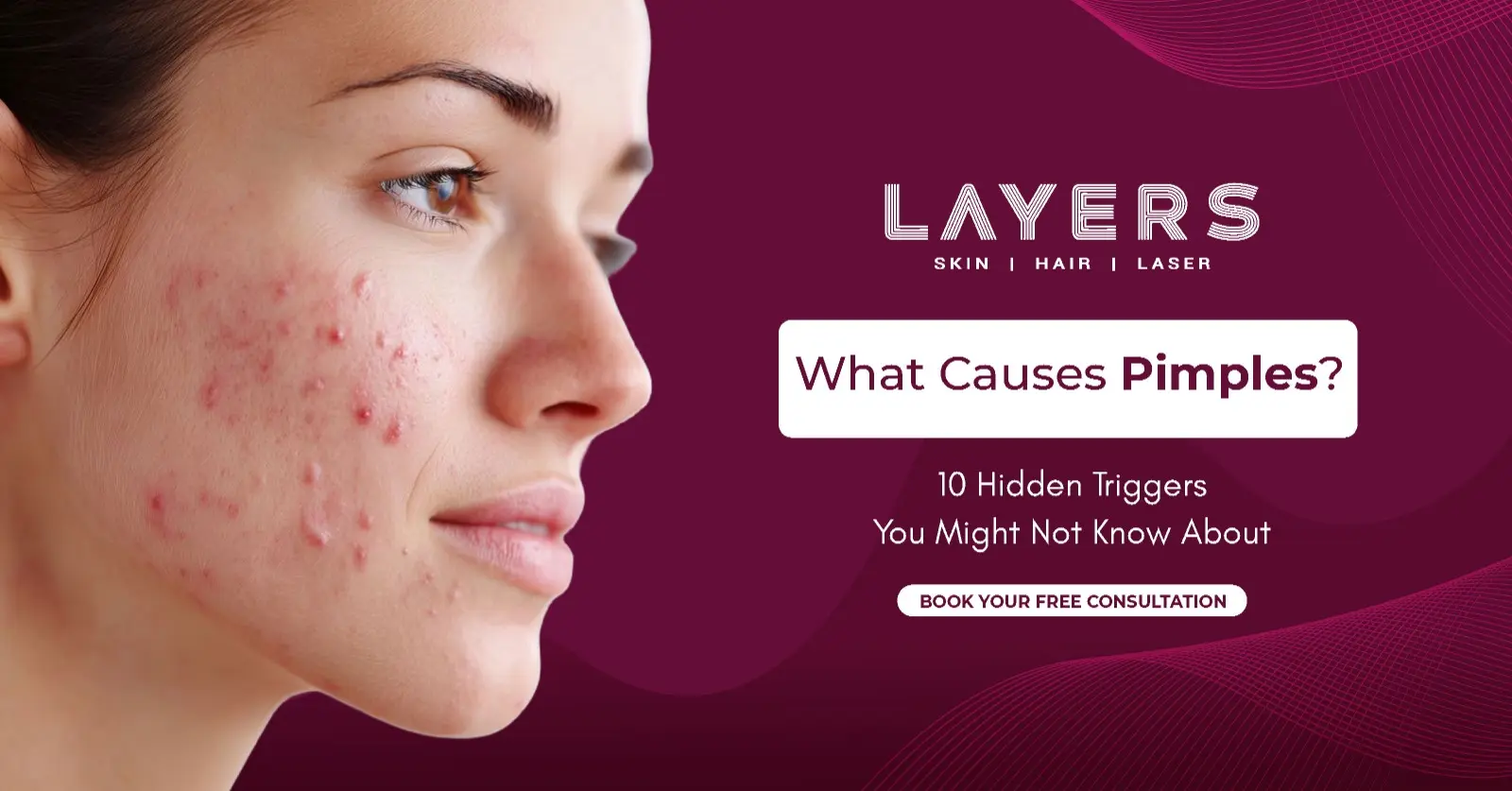
Acne isn’t just a minor skin problem; it can feel like a persistent problem that makes you look bad and hurts your self-esteem. A lot of people follow strict skin care routines and use every cream they can find, but they still get pimples. Why? What Causes Pimples? The main causes of pimples are often hidden under the skin, so just treating the visible spots doesn’t solve the problem.
At Layers Clinics, we think the best way to treat acne is to get to the bottom of it. We help you get clear, healthy skin that lasts by using a mix of expert dermatological care, personalized treatment plans, and science-based methods. This article lists 10 things that can cause pimples and gives you helpful tips on how to avoid and deal with them.
1. Hormonal Imbalance: The Silent Instigator
Hormones play a big role in acne, but not always in ways that are easy to see. Androgens are a kind of hormone that can make your skin make more oil (sebum). When too much oil gets on dead skin cells, it clogs pores and makes a great place for acne-causing germs to grow.
You might get breakouts during:
- Puberty, when hormone levels rise
- Menstrual cycles, which cause flare-ups that happen at certain times of the month
- Pregnancy, because hormones change
- Polycystic Ovary Syndrome (PCOS), which can make acne that won’t go away
If you know what causes acne, you might be able to avoid it and deal with it better instead of just reacting when it happens.
2. Excess Oil Production and Clogged Pores
Even when hormones aren’t changing, overactive oil glands can make pores clogged and pimples appear. When oil mixes with dirt, sweat, and dead skin cells, it can clog pores and help germs grow.
Things that cause oil production to rise are:
- Stress and not getting enough sleep
- Hot or humid weather
- Heavy skin care products that block pores
Pick products that don’t block pores and let your skin breathe while still giving it the nutrients it needs.
3. Diet and Nutritional Imbalance
It’s true that “What you eat shows on your skin.” Foods that are high in sugar, dairy, or processed foods may make acne worse by increasing inflammation and sebum production.
To make your skin look better, pay attention to:
- Fruits and vegetables that have a lot of antioxidants
- Omega-3 fatty acids are found in fish and flaxseeds.
- Foods like watermelon, cucumber, and coconut water that help you stay hydrated
Eating well not only makes you healthier, but it also makes your skin glow and strong.
4. Stress and Cortisol Levels
Stress doesn’t just make you feel bad; it can also make your skin look bad. Cortisol levels rise, which turns on oil glands and makes breakouts more likely.
Stress-related acne can look like this:
- A lot of flare-ups when work is busy
- Breakouts when you have a test or a deadline
- Stress or not getting enough sleep made acne worse.
Meditation, regular exercise, and better sleep hygiene are all simple changes you can make to your life that can help you deal with stress and, in turn, lessen acne flare-ups.
5. Poor Skincare Routine
Even the best skin care products won’t work if you don’t use them correctly. Washing too much, not washing at all, or using harsh exfoliants can all damage the skin barrier and make acne worse.
Here are some common mistakes:
- Creams that are thick and greasy and block pores
- Not taking off your makeup before bed
- Using scrubs that are too rough on your skin too often
To get rid of acne, you need to follow a regular, moderate routine that works for your skin type.
6. Bacterial Growth and Hygiene Factors
Cut bacterium acnes is a type of bacteria that loves pimples and grows in blocked pores. Sometimes, breakouts last longer because of habits that have to do with cleanliness:
- Dirty pillowcases
- Brushes for makeup that haven’t been cleaned
- A lot of touching your face
Cleaning your skin and personal items often can help keep bacteria from growing and irritation from happening.
7. Cosmetic Products and Makeup
There are different kinds of makeup. Acne can be caused by heavy foundations, greasy products, or makeup that has gone bad.
Opt for:
- Dermatologists have tested products that don’t cause acne.
- Light and airy formulas
This one small change can make a big difference for skin that is prone to acne.
8. Environmental Pollution and Toxins
People who live in cities are more likely to get dust, smoke, and other pollutants on their skin that block pores and cause inflammation. Over time, free radicals can damage skin cells and make acne worse.
Here are some things you can do to avoid problems:
- Cleaning every day to get rid of dirt and germs
- Antioxidant serums to get rid of free radicals
- Sunscreen to protect your skin from UV rays
9. Medications and Medical Conditions
Some medications, including steroids, hormonal therapies, and certain antidepressants, may induce acne as an adverse effect. Hormonal problems, thyroid problems, and other health issues can also make breakouts worse.
If you change your lifestyle and skin care routine but your acne doesn’t go away, you should see a doctor.
10. Lack of Proper Hydration
It’s surprising, but dry skin can make you break out. When your skin is dry, your oil glands work too hard, which can make your pores clogged.
Things that show your skin is dry:
- Feeling tight or dull
- Greasier in some places
- Breakouts happen a lot
Drinking enough water every day and using skin care products that moisturize your skin will help keep it healthy.
How to Prevent Pimples Effectively
Here are some helpful tips to help you avoid getting breakouts:
- Use a gentle cleanser to wash your face twice a day.
- Don’t use things that have oil in them or that make you break out.
- Eat a balanced diet that is full of nutrients
- All day long, drink enough water
- Do yoga, meditate, or work out to deal with stress.
- Don’t touch or pick at your zits.
- Follow a regular skin care routine that works for you.
Advanced Treatment Options for Persistent Acne
If you have acne that won’t go away, getting professional help can help a lot. You can choose from the following at Layers Clinics:
- Chemical Peels to exfoliate and unclog pores
- Laser Treatments to reduce acne and scars
- Medical-grade Facials for deep cleansing
- Prescription Medications for hormonal or severe acne
Each plan is made just for you based on your skin type, how bad your acne is, and other things going on in your life.
Conclusion: Address the Root Cause – What Causes Pimples?
Hormonal fluctuations, overproduction of oil glands, stress, and environmental factors can trigger acne formation. They do not occur spontaneously. Acne is possible to treat and prevent its recurrence if one understands what causes acne rather than masking them temporarily.
The correct lifestyle modifications, proper skin care, and appropriate medical intervention may give you clear and healthy-looking skin. By providing targeted treatment to treat acne from within at Layers Clinics, you achieve healthy skin, improved self-confidence, and long-lasting results.
