

Ever notice how your skin just feels… different once the temperature drops? That tight, flaky, itchy sensation isn’t in your head it’s dry skin in winter, and it happens to almost everyone to some degree. Cold air, indoor heaters running non-stop, scalding showers, and strong soaps all gang up on your skin at the same time, and the result is rough patches, irritation, and a face that feels like it’s cracking when you smile.
Most of the time, winter skin problems are just that seasonal, manageable, and nothing to worry about long-term. But every so often, stubborn dryness is a sign of something else going on underneath, like eczema or psoriasis. Figuring out which one you’re dealing with makes a real difference in how you treat it.
What Is Winter Dry Skin?
Winter dry skin refers to excessive dryness that develops or becomes worse during colder, drier weather.
Healthy skin has a protective barrier made up of lipids, natural moisturizing factors and skin cells. This barrier helps retain water and protects the skin from external irritants.
During winter, low humidity can increase moisture loss from the skin. If the skin barrier becomes disrupted, you may notice:
- Dry or rough skin
- Tightness after washing
- Flaking or peeling
- Itching
- Redness
- Fine lines appearing more noticeable
- Cracked skin
- Increased sensitivity
- Burning or stinging after applying skincare products
The condition can affect the face, hands, lips, arms and legs, although any part of the body can become dry.
Why Does Skin Become Dry in Winter?
A few things are working against you all at once:
The air itself is drier. Cold outdoor air holds less moisture than warm air, and then your indoor heater dries things out even further. Between the two, your skin loses water faster than it can replace it.
Hot showers feel amazing but do damage. Nothing beats a scalding shower on a freezing morning except that it strips away the oils your skin actually needs to stay protected.
Harsh soaps don’t help either. Strong cleansers wash away your skin’s natural oils right along with the grime, which is exactly what you don’t want when skin dryness in winter is already an issue.
Wind adds insult to injury. Cold wind is basically mechanical stress on your skin, particularly your face and hands, which don’t get much cover.
Over-exfoliating backfires. Scrubs and acids have their place, but pile them on top of already-irritated winter skin and you’re just making things worse. This is often the season to simplify, not intensify.
Skipping moisturizer costs you. If you don’t seal moisture in after washing, it evaporates before your barrier gets a chance to recover.
What Are the Common Symptoms of Winter Dry Skin?
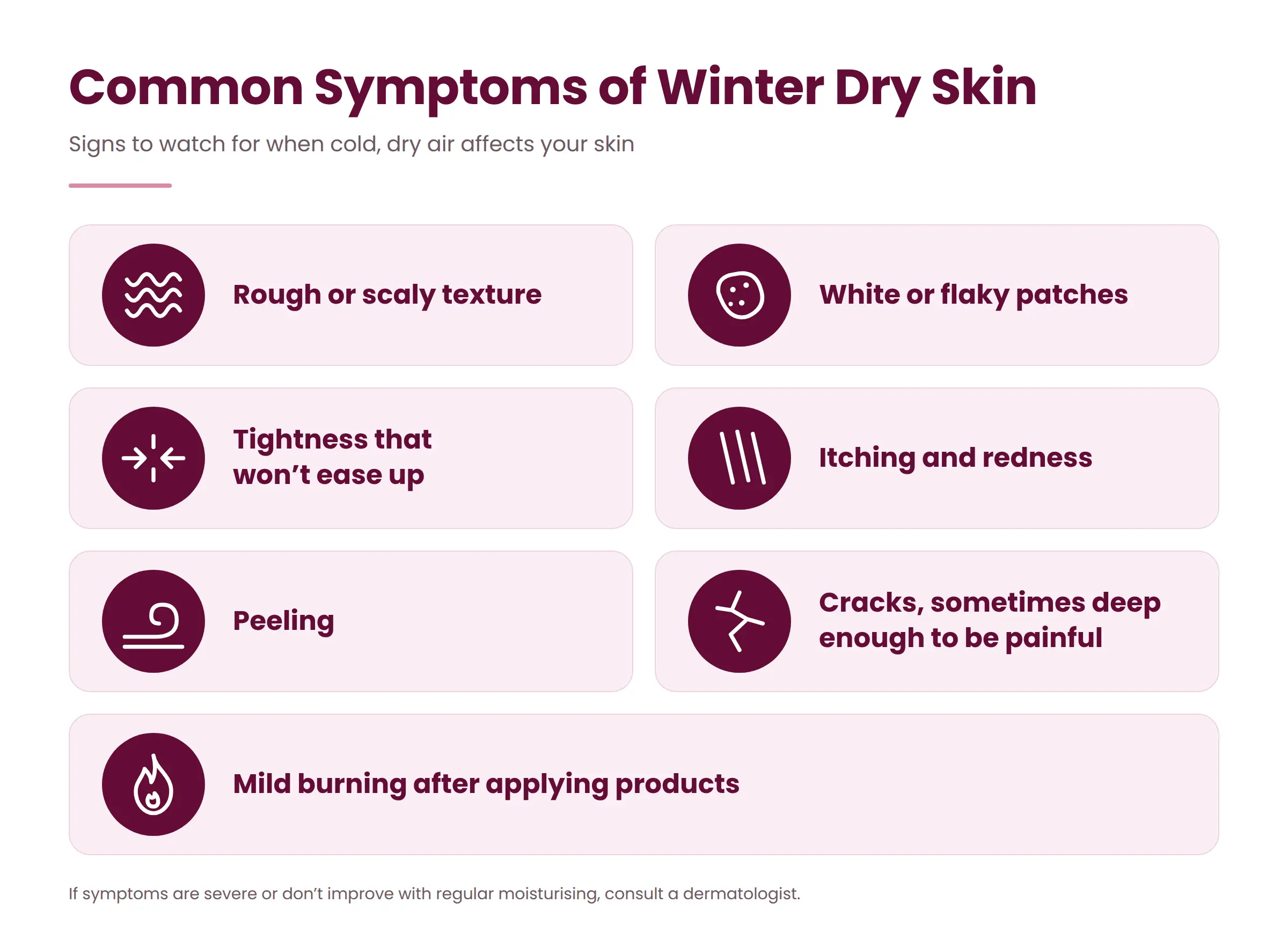
Cracked skin especially deserves attention it’s more uncomfortable, and it opens the door to further irritation.
How to Treat Winter Dry Skin
Your face takes the brunt of winter more than almost any other part of your body it’s out in the wind, the cold, and the dry indoor heat all day. Common complaints: dry cheeks, flaky patches near the nose, chapped lips, and skin around the mouth that feels raw.
A basic morning routine that actually works:
- Cleanse gently, if you even need to
- Apply a hydrating moisturizer
- Layer on broad-spectrum sunscreen
- Finish with a lip balm
Skipping sunscreen in winter is one of the more common mistakes UV rays don’t take a season off.
And at night:
- Cleanse gently
- Moisturize while skin’s still a little damp
- Go heavier on particularly dry spots
- Skip exfoliation if your skin’s already irritated
If you’re on a prescribed regimen, follow your dermatologist’s plan over any generic routine this is just a starting point.
Best Moisturizer for Winter Dry Skin
Not all moisturizers are built the same, and picking the right one is really the core of any winter dry skin treatment. Ingredients worth looking for:
- Ceramides
- Glycerin
- Hyaluronic acid
- Petrolatum
- Squalane
- Dimethicone
- Urea (at the right concentration)
- Fatty acids
If your skin’s really dry, a cream or ointment will outperform a thin lotion every time. Combination or oily skin usually does fine with something lighter. And if you’re sensitive, fragrance-free is the safer bet, especially once irritation has already set in.
How to Prevent Dry Skin in Winter
A little prevention goes a long way here:
- Keep showers short and lukewarm, not long and scalding
- Moisturize right after bathing, while skin’s still damp
- Swap harsh soap for a gentle cleanser
- Protect your hands moisturize after washing, wear gloves outside
- Don’t lick dry lips (it makes it worse); use balm instead
- Ease off exfoliating when skin’s already irritated
- Run a humidifier indoors to offset your heater
Home Remedies for Winter Dry Skin
You don’t need anything fancy:
- A reliable, gentle moisturizer beats any DIY concoction
- Lukewarm baths, not hot ones
- Moisturizer applied to damp skin
- Products that don’t sting or burn going on
- Staying hydrated though water alone won’t fix a damaged barrier
- Hands off scratching only breaks skin further
Quick caution: “natural” doesn’t automatically mean gentle. Lemon juice, baking soda, undiluted essential oils, and rough scrubs are common culprits for making things worse, not better.
Winter Dry Skin Treatment for Different Skin Types
- Dry skin: richer moisturizer, less cleansing, less exfoliating
- Oily skin: still needs moisture — a lightweight, non-comedogenic formula works better than skipping it
- Combination skin: different products for different zones on your face
- Sensitive skin: simplify — no fragrance, no actives, no exfoliation while irritated
- Acne-prone skin: non-comedogenic moisturizer, and don’t try to dry out acne it backfires
Does Winter Dryness Cause Itching?
Yes, and it’s genuinely one of the most common complaints dry itchy skin in winter shows up a lot on the arms, legs, hands, and torso. The annoying part is the cycle: itching leads to scratching, scratching leads to more irritation, more irritation leads to more itching. If it’s severe, won’t let up, or comes with a rash, swelling, or oozing, that’s your cue to get it looked at rather than waiting it out.
Dermatologist-Guided Treatment for Severe Dry Skin
Worth booking an appointment if:
- Moisturizer isn’t cutting it anymore
- The itching is intense
- Your skin genuinely hurts
- You’ve got deep cracks or bleeding
- Redness or inflammation won’t quit
- There’s swelling or oozing
- A rash keeps spreading or coming back
- Regular products keep irritating you no matter what you try
From there, treatment might include prescription moisturizers, barrier-repair products, anti-inflammatory medication, or a targeted plan for eczema, dermatitis, or an infection whatever’s actually causing it.
Winter Dry Skin vs Dehydrated Skin: Are They the Same?
These two get mixed up constantly. Dry skin is a skin type, tied to lower oil production. Dehydrated skin is about water content, and it can affect literally any skin type including oily skin. Knowing the difference stops you from grabbing a heavy cream when what you actually need is more hydration underneath.
Foods for Healthy Skin During Winter
Diet won’t replace skincare, but it does support it. Load up on fruits and vegetables, protein, nuts and seeds, whole grains, and healthy fats. Vitamin C, vitamin E, zinc, and essential fatty acids all play a role in keeping skin functioning normally just don’t expect a smoothie to fix a broken barrier on its own.
Common Winter Skincare Mistakes
- Showering in water that’s way too hot
- Skipping moisturizer because “it’s cold, not sunny”
- Overdoing it with scrubs
- Stacking multiple actives (retinoids, acids) on stressed-out skin
- Forgetting sunscreen
- Using fragranced products on skin that’s already irritated
A Winter Skin Care Routine You Can Actually Stick To
Morning: gentle cleanse (if needed) → moisturizer → sunscreen → lip balm
During the day: reapply moisturizer where needed, protect your hands, resist scratching
Night: gentle cleanse → moisturizer → extra barrier support if prescribed
Tweak it based on your skin type and anything you’ve already been diagnosed with.
Frequently Asked Questions
Why does my skin get so dry in winter?
Cold air, low humidity, wind, hot showers, indoor heat, and harsh cleansers all speed up moisture loss and wear down your skin barrier.
How do I prevent dry skin in winter?
Gentle cleanser, short lukewarm showers, moisturizing right after bathing, protecting exposed skin, and going easy on exfoliation.
What’s the best treatment for winter dry skin?
Consistent moisturizing and a simplified routine first. If it’s severe or won’t budge, see a dermatologist.
Which moisturizer is best for dry skin in winter?
Creams or ointments generally beat lotions for very dry skin. Look for ceramides, glycerin, and petrolatum on the label.
Why is my face dry in winter but oily in summer?
Seasonal shifts change your oil production and moisture balance totally possible to have oily or combination skin and still deal with winter dryness.
Can I still exfoliate in winter?
Carefully. Overdoing it on already-dry skin usually backfires prioritize gentle cleansing and moisture instead.
Can dry skin cause itching?
Yes, though persistent or severe itching can also point to eczema or dermatitis, which is worth having checked.
When should I actually see a dermatologist?
When dryness is persistent, painful, severely itchy, cracked, bleeding, inflamed, or paired with a rash that isn’t going away.
Key Takeaway
Winter dry skin is incredibly common, but it doesn’t have to be something you just tolerate for three months a year. Cold air, low humidity, hot showers, harsh products, and inconsistent moisturizing team up to wear down your skin barrier but a steady routine of gentle cleansing, regular moisturizing, sunscreen, and minimal exfoliation keeps most of it in check.
If the basics aren’t working, it’s worth asking whether eczema, psoriasis, or dermatitis might be behind it. At Layers Clinics, a dermatologist-led skin assessment can pinpoint exactly what’s driving the dryness and map out the right treatment plan for you.
Book a consultation if your winter dryness is persistent, uncomfortable, or getting in the way of your day-to-day.
