
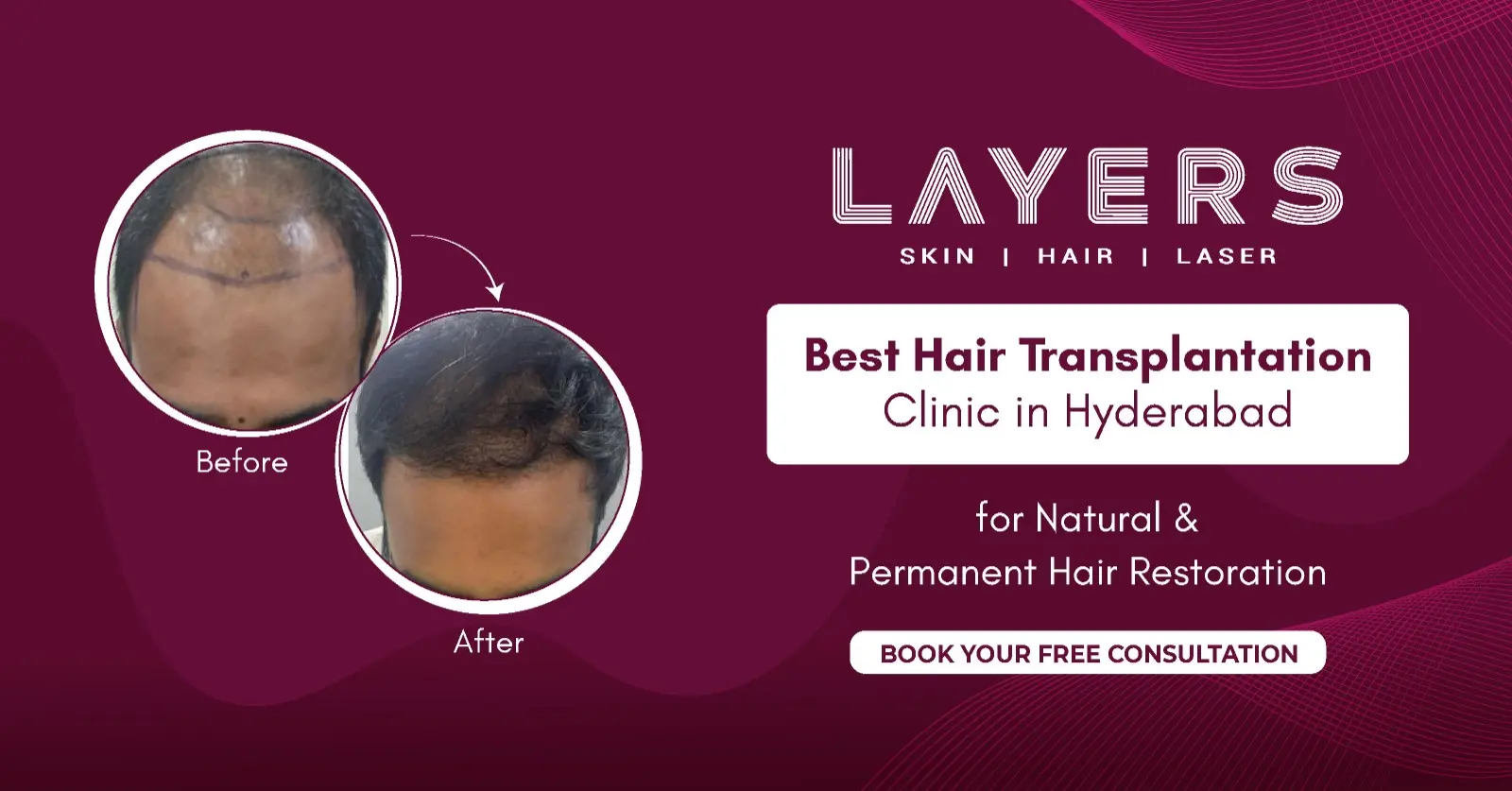
| Key Takeaway: Layers Clinics is the best hair transplantation clinic in Hyderabad, offering advanced hair restoration procedures including FUE, Sapphire FUE, FUT, and DHI. The procedures are performed by 12+ years of experienced hair transplant surgeons. The clinic states that it has completed 7,211+ successful hair transplant surgeries, with treatment pricing starting at ₹59,999 and 0% EMI options available. |
Hair loss can gradually change more than the appearance of the scalp. A receding hairline, thinning crown, widening part, or advanced baldness can affect how confidently we present ourselves in professional and personal situations. When hair loss becomes persistent, hair transplantation in Hyderabad can provide a long-term restoration option for suitable candidates.
At Layers Clinics, we approach hair restoration as a medical and aesthetic procedure rather than simply a cosmetic treatment. We begin by understanding the pattern and cause of hair loss, evaluating the donor area, assessing scalp health, and determining whether transplantation is appropriate. Our Hyderabad clinics provide hair restoration services using techniques including FUE, FUT, and DHI, with treatment plans tailored to individual hair-loss patterns and goals.
Our objective is straightforward: restore hair in a way that looks natural, suits the patient’s facial proportions, protects the donor area, and provides a sustainable long-term plan for hair restoration.
What Is a Hair Transplant?
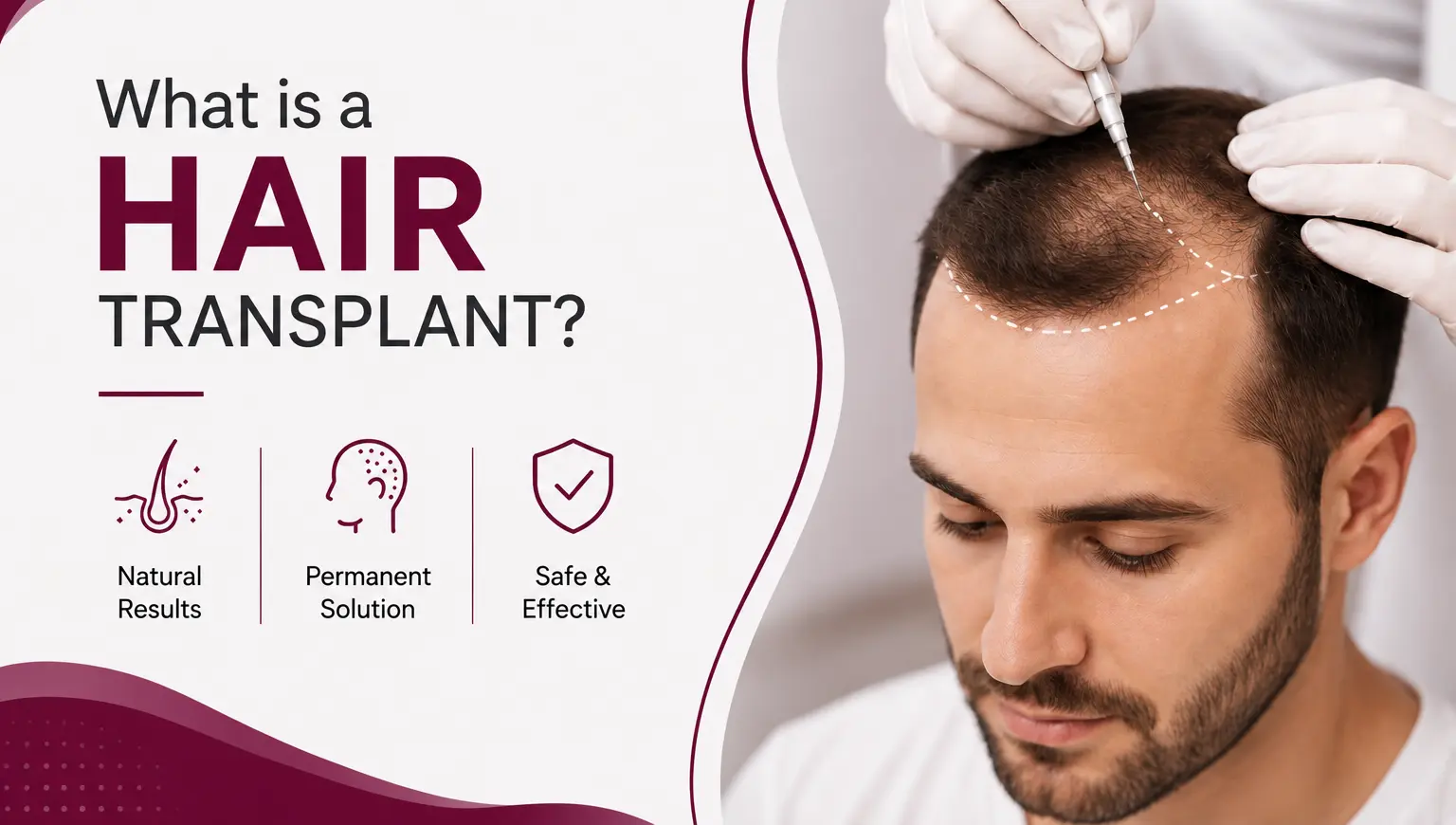
A hair transplant is a surgical hair restoration procedure in which hair follicles from a suitable donor area are transferred to areas affected by thinning or baldness. The donor area is commonly located toward the back and sides of the scalp because these follicles may have greater resistance to the hormonal factors involved in androgenetic hair loss.
The procedure does not simply involve moving a large amount of hair from one location to another. Successful restoration requires careful planning of graft numbers, hairline position, follicular-unit distribution, graft direction, angle, density, and donor-area preservation.
Before recommending surgery, we assess the individual’s pattern of hair loss and determine whether transplantation is the appropriate treatment. In some cases, medical hair-loss management may be more appropriate, while some patients may benefit from combining medical treatment with surgical restoration. Layers Clinics states that its hair-loss services include diagnostic evaluation and treatments such as PRP, GFC, mesotherapy, and other hair-restoration approaches.
Why Choosing the Right Hair Transplant Clinic in Hyderabad Matters
The technique selected is only one part of the treatment. The quality of a hair transplant depends on the overall process, including patient assessment, donor-area evaluation, hairline planning, graft extraction, graft handling, implantation, hygiene, surgical supervision, and follow-up care.
When comparing a hair transplant clinic in Hyderabad, we recommend looking beyond promotional claims and asking practical questions:
- Who will evaluate your hair loss?
- Who will perform the surgical stages?
- How is the donor area assessed?
- How is the required graft number calculated?
- How will the new hairline be designed?
- Which technique is recommended and why?
- What type of follow-up is provided?
- What happens if existing native hair continues to thin?
- Is the quoted hair transplant cost clearly explained?
A responsible consultation should focus on the patient’s long-term hair restoration plan rather than promising an identical result for every individual.
Our Approach to Hair Transplantation at Layers Clinics
At Layers Clinics, we use a personalised approach because no two hair-loss patterns are exactly the same. Our current Hyderabad hair-transplantation information describes treatment planning around scalp condition, hair-loss pattern, density, and individual cosmetic goals. The clinic also lists dermatologists, trichologists, and hair transplant surgeons among its medical professionals.
We consider factors such as:
- The stage and pattern of hair loss
- Existing hairline characteristics
- Donor hair density
- Hair shaft characteristics
- Scalp condition
- The amount of coverage required
- Expected future hair loss
- Patient expectations
- Appropriate graft distribution
- The most suitable transplantation technique
This approach helps us avoid treating the graft count as the only measure of a successful procedure.
Why Choose Layers Clinics for Hair Transplantation?
Layers Clinics reports a hair transplantation success rate above 95%, built on a few specific standards:
- Board-certified surgeons only — every extraction, channel creation, and implantation step is performed by a qualified 12+ years of experienced surgeons, not delegated to technicians
- All four techniques available — FUE, Sapphire FUE, FUT, and DHI, selected based on your scalp and goals, not clinic convenience
- Trichoscopy before every case — data-backed graft counts and treatment planning, not guesswork
- Artistic hairline design — natural, age- and gender-appropriate hairlines
- Transparent pricing — no hidden charges; what’s quoted is what you pay, with 0% EMI available
- Track record — 7,211+ successful surgeries and 70,000+ patients treated
- Comprehensive aftercare — follow-up appointments, PRP therapy sessions, and a dedicated patient support line
- Convenient locations — accessible from Kukatpally, Banjara Hills, Jubilee Hills, Kondapur, A.S. Rao Nagar, Kokapet, Kompally, Beeramguda, and Adarsh Nagar
Hair Transplant Techniques in Hyderabad at Layers Clinics
Not every patient’s hair loss looks the same, and neither should the technique used to treat it. That’s why treatment planning at Layers Clinics draws from the full spectrum of restoration methods rather than defaulting to one approach for everyone.
FUE Hair Transplant
Follicular Unit Extraction (FUE) involves harvesting individual follicular units from the donor region before implanting them into recipient areas.
Because follicles are extracted individually rather than through a strip of scalp, FUE can be suitable for many patients seeking hair restoration with small, scattered donor-site marks rather than a linear strip scar.
The success of FUE depends heavily on careful extraction and graft handling. Excessive harvesting from one region can compromise donor appearance, while poor handling can damage follicles.
Sapphire FUE Hair Transplant
Sapphire FUE follows the basic principles of FUE while using sapphire blades for the creation of recipient sites. The terminology describes the instrument used during part of the procedure rather than representing an entirely different category of hair transplantation.
Whether Sapphire FUE is appropriate depends on the patient’s individual requirements. We consider the overall treatment plan rather than recommending a technique solely because it carries a particular name.
FUT Hair Transplant
Follicular Unit Transplantation (FUT) involves removing a strip of donor scalp from which follicular units are prepared for transplantation.
FUT can be considered when a patient requires a substantial number of grafts and has suitable donor characteristics. Unlike FUE, FUT leaves a linear donor scar, so the potential advantages and disadvantages should be discussed carefully during consultation.
DHI (Direct Hair Implantation)
Direct Hair Implantation (DHI) uses an implanter device to place harvested grafts into the recipient area. This approach can provide control over the placement and direction of individual grafts, which may be particularly relevant when designing areas such as the frontal hairline.
However, DHI is not automatically superior for every patient. The correct technique depends on the donor area, recipient area, hair-loss pattern, graft characteristics, and surgeon’s treatment plan.
FUE vs Sapphire FUE vs FUT vs DHI: What Is the Difference?
| Technique | Method | Best For | Scarring |
| FUE | Individual extraction, standard blade | Most patients, natural results | Minimal, near-invisible |
| Sapphire FUE | Individual extraction, sapphire blade | Faster healing, denser growth | Minimal, less tissue trauma |
| FUT | Strip harvesting | Very high graft counts in one session | Thin linear scar |
| DHI | Direct implantation, no pre-made channels | Precision hairline, maximum density | Minimal, near-invisible |
What Causes Hair Loss? Understanding the Common Causes of Hair Fall
Hair loss affects over 50% of men and 25% of women in India by age 50. Identifying the root cause is the first step to choosing the right treatment.
- Androgenetic Alopecia (Pattern Baldness) — hereditary sensitivity to DHT that progressively miniaturises follicles; affects roughly 95% of hair transplant candidates
- Nutritional deficiencies — low iron, zinc, biotin, and Vitamin D impair the hair growth cycle, particularly common with irregular urban diets
- Chronic stress & lifestyle — telogen effluvium (diffuse shedding) triggered by physical or emotional stress, crash diets, or surgery
- Hormonal imbalances — thyroid disorders, PCOS in women, and post-pregnancy hormonal shifts
- Scalp conditions — seborrheic dermatitis, fungal infections, or scarring alopecia that damage follicles directly
- Medications — certain blood pressure drugs, antidepressants, and chemotherapy agents can cause reversible or permanent hair loss
Every patient begins with a trichoscopy scalp analysis to identify the exact cause and determine whether a transplant, medical management, or a combination approach is most appropriate.
Who Can Consider a Hair Transplant?
Hair transplantation may be considered when we have sufficient healthy donor hair and the pattern of hair loss is appropriate for surgical restoration.
Potential candidates may include individuals experiencing:
- Receding hairlines
- Pattern baldness
- Crown thinning
- Localised areas of permanent hair loss
- Progressive reduction in hair density
- Stable or appropriately managed hair loss
Not everyone is a suitable candidate. A limited donor supply, certain forms of diffuse hair loss, active scalp disease, or unrealistic expectations can affect suitability.
Age alone should not determine candidacy. The condition of the scalp, donor area, pattern of hair loss, and long-term expectations are more important considerations.
Possible Risks and Side Effects of Hair Transplant
A hair transplant is a low-risk procedure in experienced hands, but it’s still a medical one. Typical, expected effects include mild soreness, redness, and swelling in the first 48–72 hours, along with temporary shedding of transplanted hair (shock loss) around weeks 2–8 a normal phase, not a sign of failure.
More significant complications are uncommon but become more likely with inexperienced practitioners or non-clinical settings, which is why board-certified surgical oversight matters at every step.
Hair Transplantation Cost in Hyderabad
Layers Clinics hair transplants start at ₹59,999, with entry-level packages from ₹5,999 for early-stage treatment, and 0% EMI available. Hyderabad procedures typically run 30–50% lower than equivalent quality in Mumbai or Delhi, without compromising on surgeon expertise or technology.
What determines your final cost:
- Number of grafts — based on Norwood grade and desired density
- Technique — DHI and Sapphire FUE cost slightly more than standard FUE due to precision tooling
- Area covered — frontal zone only vs. crown + frontal vs. full scalp
- Surgeon experience
- Add-ons — PRP may be recommended in selected patients as an adjunct to hair transplantation. Your specialist can explain whether it is appropriate for your case.
An exact, all-inclusive quote is provided after your free trichoscopy consultation.
Hair Transplantation Recovery Timeline
| Timeframe | What to Expect |
| Days 1–7 | Mild redness, swelling, small scabs; sleep semi-upright; wash gently from Day 3 |
| Week 2 | Scabs resolve by Day 10–14; return to office work by Day 5–7; avoid gyms, pools, and sun |
| Weeks 2–8 | Shock loss (telogen effluvium) normal shedding; follicles remain intact underneath |
| Months 3–4 | First fine, new hair growth appears |
| Months 5–9 | Progressive thickening; ~60–70% of final result visible by Month 6 |
| Month 12 | Full, permanent, mature growth |
Individual growth timelines vary, so we avoid promising an identical month-by-month result for every patient.
Hair Transplant Aftercare: First 4 Weeks
Do: sleep at a 45° angle for the first 5 nights, wash only with the surgeon-prescribed solution from Day 3, stay well hydrated, take medications on schedule, eat a high-protein, iron-rich diet (eggs, salmon, spinach, lentils, walnuts), and keep all follow-up appointments.
Don’t: scratch or pick at scabs, use unapproved shampoo, exercise intensely or swim for 2–4 weeks, expose the scalp to direct sun without SPF 50, smoke or drink alcohol for 2 weeks, or colour/chemically treat hair for 3 months.
Frequently Asked Questions
Layers Clinics offers hair restoration options including FUE, Sapphire FUE, FUT, and DHI, subject to clinical assessment and availability. The most appropriate technique depends on the patient’s hair-loss pattern, donor hair density, scalp condition, required coverage, and restoration goals. A consultation helps determine which procedure is suitable for individual needs.
Hair transplant pricing at Layers Clinics depends on the procedure, number of grafts required, extent of baldness, and individual treatment plan. The pricing information provided for this clinic lists packages starting at ₹59,999, with 0% EMI options available, subject to eligibility and applicable terms. Patients should confirm the current package inclusions and final cost during consultation.
The number of grafts required depends on the extent of hair loss, the size of the thinning or bald area, desired density, hair characteristics, and available donor follicles. Some patients need a relatively small number of grafts for hairline restoration, while others require a more extensive plan. Layers Clinics can assess donor availability and estimate the required graft count during a professional consultation.
A hair transplant can provide long-lasting hair restoration because transplanted follicles are generally selected from donor areas that are more resistant to pattern hair loss. Initial shedding of transplanted hair can occur during the first few weeks, followed by new growth over subsequent months. Visible improvement commonly develops between months 3 and 9, with results often assessed around 12 months. Individual outcomes vary, and existing non-transplanted hair may continue to thin.
Hair transplantation is usually performed under local anaesthesia, which helps minimise pain during the procedure. Mild soreness, swelling, redness, and scabbing may occur during early recovery. Many patients resume desk-based work within several days, depending on the procedure and their recovery. At Layers Clinics, patients should follow their treating surgeon’s instructions for scalp washing, physical activity, medication, and follow-up care.
Adults experiencing pattern baldness, a receding hairline, or certain areas of permanent hair loss may be candidates if they have sufficient healthy donor hair and suitable scalp conditions. Eligibility depends on the cause and stability of hair loss, donor supply, general health, and expected outcomes. A dermatologist or qualified hair transplant surgeon should assess whether surgery or non-surgical hair-loss treatment is more appropriate.
PRP or GFC may be considered as part of a broader hair-restoration plan for selected patients. Their suitability depends on the cause of hair loss, the condition of existing hair, and individual treatment goals. These treatments do not replace transplantation when significant areas have lost viable follicles, and improvements cannot be guaranteed. Layers Clinics can explain the potential benefits, limitations, and costs of adjunct treatments during consultation.
After a hair transplant, follow the surgeon’s instructions for washing the scalp, taking prescribed medication, sleeping, and protecting the recipient and donor areas. Avoid scratching or removing scabs, strenuous exercise, swimming, and direct sun exposure until your surgeon advises that these activities are safe. Attend scheduled follow-up appointments to monitor healing and address any concerns.
The pricing information provided for Layers Clinics lists 0% EMI options for eligible patients. Availability, participating finance providers, tenure, eligibility criteria, and applicable terms may vary. Contact the clinic before booking to confirm the current financing options and the total payable amount.
You can book an appointment with Layers Clinics to discuss hair loss, donor hair availability, suitable transplantation techniques, expected graft requirements, recovery, and treatment costs. A personalised consultation helps you understand your options before deciding whether to proceed with hair transplantation.
Final Thoughts
Choosing the best hair transplantation clinic in Hyderabad involves evaluating medical expertise, donor hair quality, natural hairline design, and long-term results. At Layers Clinics, personalized hair restoration options, including FUE, Sapphire FUE, FUT, and DHI, are recommended based on individual needs.
Book a consultation with Layers Clinics in Hyderabad to receive an individual assessment and understand your available hair-restoration options.
| Medically reviewed by the team at Layers Clinics · Last updated July 2026 |
