
Hair loss rarely stays just a cosmetic concern, it often affects confidence long before it becomes visibly noticeable. Whether it’s during job interviews, social events, or important life moments like weddings, a receding hairline can subtly change how people feel about themselves. This is one of the key reasons why more individuals are now exploring hair transplant surgery in Kakinada as a long-term, reliable solution instead of depending on temporary treatments that offer limited results.
With advancements in medical technology, modern hair transplant techniques such as FUE (Follicular Unit Extraction) now deliver natural-looking results that blend seamlessly with existing hair. Unlike older methods that often appeared artificial, today’s procedures focus on precise hairline design, density, and direction making the outcome nearly undetectable even on close inspection. This shift has made hair transplant in Kakinada a preferred choice for both men and women experiencing hair thinning or baldness.
At Layers Clinics, the approach is rooted in combining clinical expertise with advanced techniques to ensure consistent, real-world results. Instead of focusing only on before-and-after visuals, the emphasis is on long-term hair growth, natural appearance, and patient confidence. In this guide, you’ll learn what actually causes hair loss, how hair transplant procedures work, expected costs in Kakinada, and how to choose the right clinic for safe and effective treatment.
What Causes Hair Loss?
Before considering surgery, it helps to understand why hair loss happens in the first place, since the cause often determines whether a transplant is the right solution:
- Genetics (androgenetic alopecia): The most common cause, responsible for most male and female pattern baldness
- Hormonal changes: Thyroid disorders, PCOS, pregnancy, and menopause can all trigger thinning
- Medical conditions and medication: Autoimmune conditions, chemotherapy, and certain long-term prescriptions
- Nutritional deficiencies: Low iron, protein, or vitamin D levels can accelerate shedding
- Chronic stress and telogen effluvium: Physical or emotional stress can push hair prematurely into a shedding phase
A consultation at Layers Clinics typically starts by identifying which of these is driving the hair loss, since transplant surgery works best for genetic and pattern baldness rather than temporary shedding conditions.
What Is Hair Transplant Surgery?
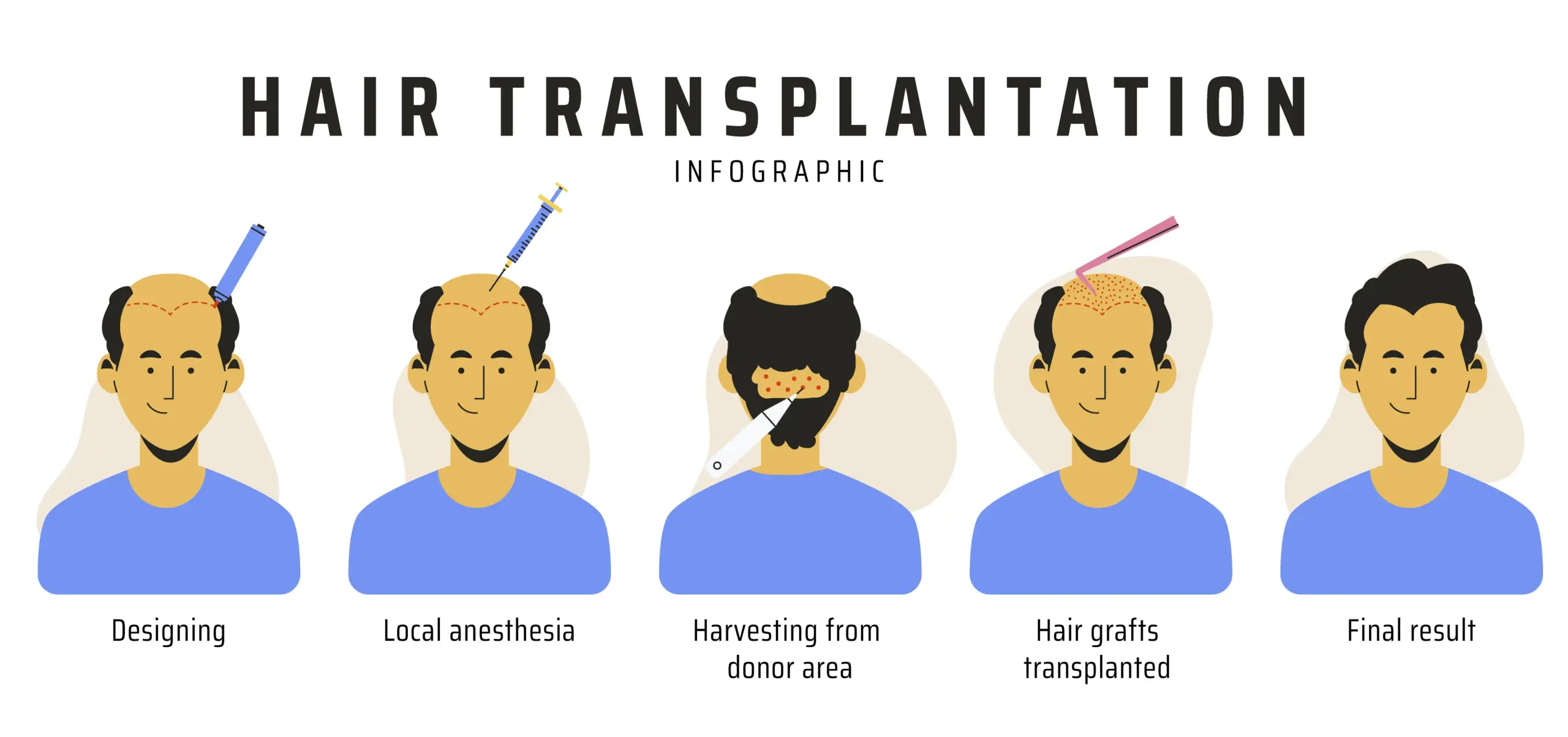
Hair transplant surgery is a minimally invasive procedure where healthy hair follicles are moved from a donor area usually the back or sides of the scalp, where hair is genetically resistant to balding to thinning or bald areas known as the recipient site. Because the transplanted follicles retain their original genetic resistance to hair loss, the regrowth is permanent rather than a temporary cosmetic fix.
Types of Hair Transplant Procedures
Not every technique suits every patient. Here’s how the main methods compare:
| Technique | How It Works | Best For | Scarring |
| FUT (Follicular Unit Transplantation) | A strip of scalp is removed and follicles are separated under a microscope | Patients needing a large number of grafts | Linear scar (hidden by hair) |
| FUE (Follicular Unit Extraction) | Individual follicles are extracted one at a time with a specialised punch tool | Most patients; the current gold standard | Minimal, dot-like scars |
| DHI (Direct Hair Implantation) | Follicles are implanted immediately using an implanter pen, without pre-made incisions | Patients wanting precise angle and density control | Minimal |
| BHT (Body Hair Transplantation) | Follicles are sourced from the chest, back, or beard | Patients with insufficient scalp donor area | Minimal, scattered |
At Layers Clinics, the surgical team recommends a technique based on donor hair availability, the size of the balding area, and the density needed not a one-size-fits-all package.
How Many Grafts Will You Need?
Graft count is one of the biggest factors in both results and cost, and it varies by the extent of hair loss:
- Hairline restoration / temples: 800–1,500 grafts
- Crown coverage: 1,500–2,500 grafts
- Frontal + mid-scalp: 2,500–3,500 grafts
- Full scalp restoration: 3,500–5,000+ grafts
A surgeon can only give an accurate graft estimate after physically examining the donor area’s density under magnification, which is why phone-based quotes are rarely reliable.
Hair Transplant Cost in Kakinada
Cost depends primarily on the number of grafts required, the technique used (FUE and DHI typically cost more per graft than FUT due to the labour involved), and the surgeon’s experience level. Clinics that quote a flat, unusually low price without an in-person scalp assessment are often cutting corners on either graft survival rates or aftercare support. Layers Clinics provides a written cost estimate only after a physical consultation, so patients know exactly what they’re paying for before committing to a date.
Step-by-Step: What Happens During the Procedure
- Consultation and scalp assessment: The surgeon examines donor density, hair loss pattern, and discusses realistic goals.
- Donor area preparation: The extraction zone is trimmed and numbed with local anaesthesia.
- Follicle extraction: Individual follicular units are removed using FUE, DHI, or FUT depending on the chosen method.
- Recipient site preparation: Tiny incisions are made at precise angles to match natural hair growth direction.
- Implantation: Follicles are placed into the recipient area, prioritising the hairline first for the most naturalframing.
- Post-procedure care: A protective dressing is applied, and detailed aftercare instructions are given before discharge.
Most sessions take between four and eight hours depending on the graft count, and the procedure is performed entirely under local anaesthesia meaning patients stay awake and comfortable throughout.
Recovery Timeline: What to Expect Week by Week
- Days 1–3: Mild swelling and redness in the donor and recipient areas; most patients return to light activity within 2–3 days
- Days 4–10: Scabbing forms and sheds naturally; avoid scratching or direct sun exposure
- Weeks 2–4: “Shock loss” is common and normal, transplanted hairs may shed temporarily before regrowth begins
- Months 3–4: New hair growth starts to appear, initially fine and thin
- Months 6–9: Hair thickens and density becomes visibly noticeable
- Months 10–12: Final results are visible, with a fuller, natural-looking hairline
Setting realistic expectations around this timeline is one of the most overlooked parts of the process most disappointment comes from expecting month-2 results rather than month-12 results.
Hair Transplant vs. Artificial Hair Systems
| Factor | Hair Transplant | Artificial Hair System |
| Permanence | Permanent, grows naturally | Temporary, needs replacement |
| Maintenance | Same as normal hair | Regular cleaning, styling, refitting |
| Appearance | Natural under any lighting | Can look artificial depending on lighting/angle |
| Long-term cost | One-time investment | Recurring cost over years |
For patients seeking a lasting fix rather than ongoing upkeep, a transplant is generally the more practical long-term choice.
Risks and Side Effects to Know About
Like any surgical procedure, hair transplants carry some risk, even though complication rates are low with an experienced team:
- Temporary swelling, redness, or scabbing
- Mild discomfort managed with prescribed medication
- Rare risk of infection if aftercare instructions aren’t followed
- Possible temporary shock loss of existing hair near the treated area
Choosing a clinic with sterile protocols and clear post-operative support significantly reduces these risks, which is why aftercare quality matters as much as the surgery itself.
How to Choose the Right Hair Transplant Clinic in Kakinada
Before booking a procedure anywhere, it’s worth asking:
- Is the surgeon specifically trained in hair restoration, not just general cosmetic procedures?
- Which technique (FUE, DHI, FUT) does the clinic specialise in, and does that match your case?
- Can the clinic show verifiable before-and-after results from real patients?
- What does the post-operative care and follow-up schedule look like?
- Is pricing transparent and graft-based rather than a vague flat package?
Layers Clinics is built around answering each of these clearly during the first consultation, rather than pushing patients toward a quick booking.
Why Patients Choose Layers Clinics for Hair Transplant Surgery in Kakinada
- Experienced surgical team with a track record across FUE, DHI, and FUT procedures
- Personalised treatment plans based on donor density and hair loss pattern, not fixed packages
- Minimal scarring techniques, prioritising FUE and DHI for most cases
- Transparent, graft-based pricing with no hidden costs
- Structured aftercare support through the full 12-month regrowth timeline
Frequently Asked Questions
Is hair transplant surgery permanent?
Yes, because transplanted follicles are taken from areas genetically resistant to balding, the regrowth is permanent rather than temporary.
Is hair transplant surgery painful?
The procedure is performed under local anaesthesia, so patients feel minimal discomfort during surgery, with only mild soreness during the first few days of recovery.
How long does it take to see results?
Initial regrowth typically begins around month 3–4, with full, natural-looking density visible by month 10–12.
What is the difference between FUE and DHI?
FUE extracts follicles individually and implants them after preparing recipient sites, while DHI implants each follicle immediately using a specialised pen for more precise angle control.
Can women get hair transplants too?
Yes, hair transplant surgery is suitable for women experiencing pattern hair loss or thinning, following the same consultation and assessment process as men.
Key Takeaway
- Hair transplant surgery can provide a long-term solution for pattern hair loss when the patient has a suitable donor area.
- FUE, DHI, FUT and BHT are different techniques, and the appropriate option depends on donor availability and the extent of hair loss.
- The number of grafts required is a major factor affecting treatment planning and cost.
- Results develop gradually, with noticeable growth generally beginning around 3–4 months and fuller results developing over subsequent months.
- A consultation and donor-area assessment are important before deciding on a technique or treatment plan.
Book Your Hair Restoration Consultation
If hair thinning has been affecting your confidence, the most useful next step isn’t researching techniques endlessly it’s getting an in-person scalp assessment to understand your actual graft count, timeline, and realistic outcome. Layers Clinics Kakinada offers exactly that before recommending any procedure.
Call +91-9000572727 to book your consultation, or visit www.layersclinics.com for more details.
