
Key Takeaway
Chemical Peel Treatment in Hyderabad is a dermatologist-guided skin resurfacing procedure that helps improve pigmentation, acne marks, dullness, uneven skin tone, rough texture, and some early signs of ageing. The right peel depends on your skin type, concern, and treatment goals, making professional assessment important for safe and predictable results.
What Is Chemical Peel Treatment?
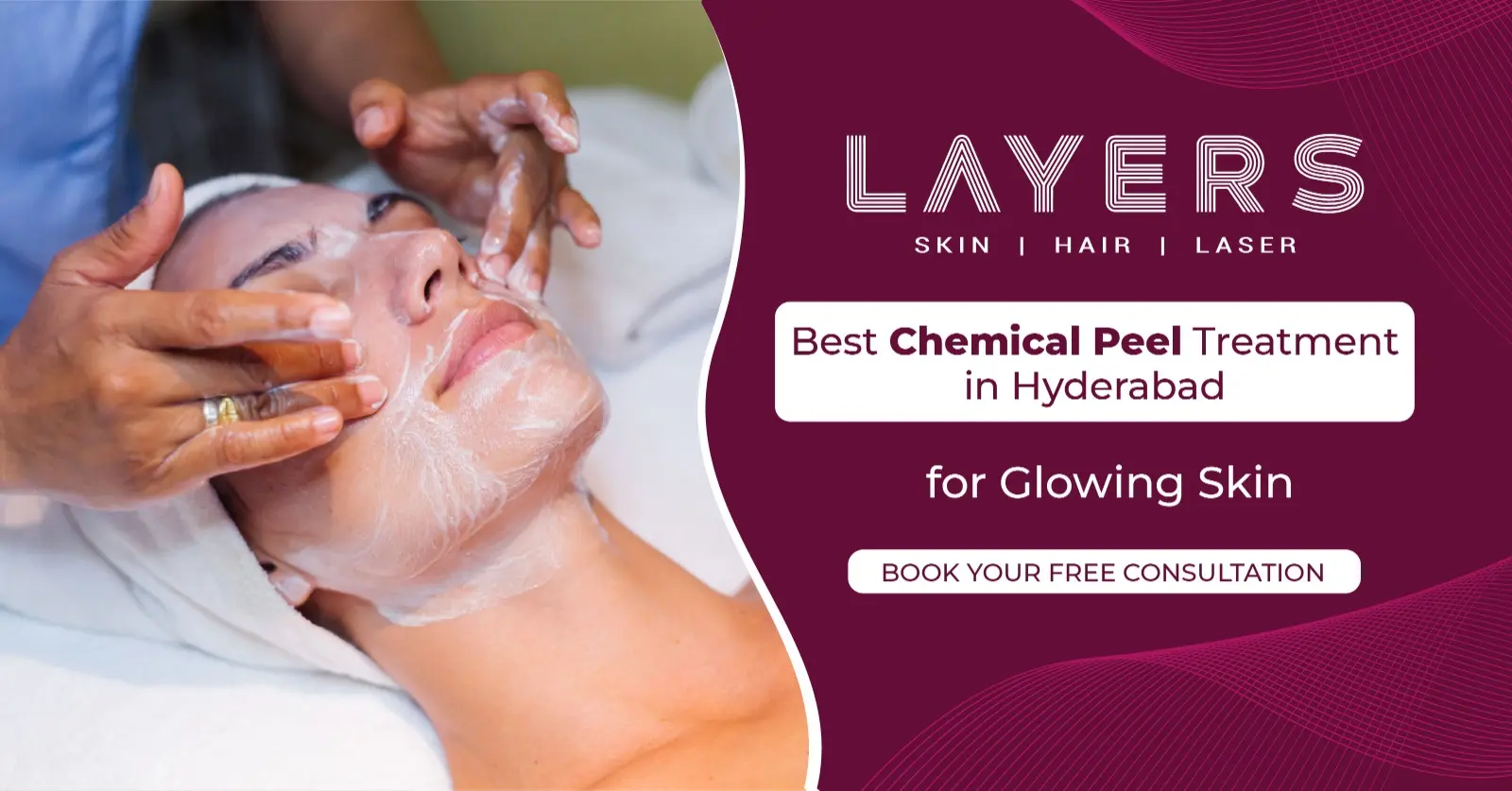
Chemical peel treatment is a non-surgical dermatological procedure that uses a carefully selected chemical solution to exfoliate damaged outer skin cells and encourage healthier skin renewal.
Depending on the formulation and depth, chemical peels can address concerns such as pigmentation, acne, acne marks, tanning, dullness, enlarged pores, uneven texture, and fine lines.
At Layers Clinics, peel selection is based on the patient’s skin type, sensitivity, pigmentation tendency, and specific concern rather than using the same peel for everyone.
How Does a Chemical Peel Work?
During treatment, a dermatologist applies a controlled chemical solution to the skin for a specific period. The solution loosens damaged surface cells and promotes skin renewal.
The depth and intensity depend on the ingredients and concentration used.
A chemical peel can help:
- Remove accumulated dead skin cells
- Improve uneven skin tone
- Reduce the appearance of pigmentation
- Improve acne and acne marks
- Smooth rough skin texture
- Brighten dull-looking skin
- Support collagen remodeling with selected peel types
The result depends on the peel selected, the condition being treated, and how the skin responds.
What Skin Concerns Can Chemical Peels Treat?
Chemical peels are commonly used for several cosmetic and dermatological concerns.
Chemical Peel for Pigmentation
Certain peels can help improve superficial pigmentation, tanning, and uneven skin tone by accelerating the removal of pigmented surface cells.
For melasma or persistent pigmentation, a dermatologist may recommend a combination approach rather than relying on peels alone.
Chemical Peel for Acne and Acne Marks
Salicylic acid and other appropriately selected peels may help manage oily, acne-prone skin and clogged pores. They can also improve the appearance of post-acne marks over a series of treatments.
Active acne may require additional dermatologist-prescribed treatment alongside peels.
Chemical Peel for Dull Skin and Uneven Tone
Superficial peels can remove dead surface cells and reveal smoother, brighter-looking skin. They are often considered when skincare alone has not sufficiently improved dullness.
Chemical Peel for Fine Lines and Rough Texture
Some professionally selected peels can improve superficial textural irregularities and early signs of photoaging. Deeper wrinkles or significant acne scars may require other procedures or combination treatment.
Which Type of Chemical Peel Is Right for You?
There is no single best chemical peel for everyone. Your dermatologist should select the formulation and strength according to your skin and treatment objective.
Glycolic Acid Peel
Glycolic acid is an alpha-hydroxy acid commonly used for dullness, uneven texture, tanning, and superficial pigmentation.
Salicylic Acid Peel
Salicylic acid is oil-soluble and can penetrate oily, congested skin. It is commonly considered for acne-prone skin, excess oil, and clogged pores.
Lactic Acid Peel
Lactic acid is an AHA that can provide exfoliation while being useful for some patients with dryness, dullness, or uneven tone.
TCA Peel
Trichloroacetic acid (TCA) can be used at different strengths for selected pigmentation, textural concerns, and photoaging. Stronger TCA treatments require careful professional assessment and aftercare.
Important: Peel concentration and depth should not be selected based solely on skin concern. Skin tone, sensitivity, previous treatments, medications, and pigmentation history also matter.
What Happens During a Chemical Peel Session?
A typical session follows several steps:
- Skin assessment – The dermatologist evaluates your skin type, concern, sensitivity, and medical history.
- Skin preparation – The treatment area is cleansed and prepared.
- Peel application – The selected chemical solution is carefully applied.
- Monitoring – The dermatologist monitors the skin’s response during treatment.
- Neutralisation or removal – Depending on the formulation, the peel is neutralised or removed according to the protocol.
- Post-treatment care – Soothing products and sunscreen may be recommended.
A superficial peel can often be completed within 20–30 minutes, although treatment time varies by peel and treatment area.
Is Chemical Peel Treatment Painful?
Most superficial chemical peels cause mild tingling, warmth, or temporary stinging. The sensation generally settles after the solution is removed or neutralised.
Stronger peels may cause more discomfort and require additional measures for patient comfort.
How Many Chemical Peel Sessions Do You Need?
The number of sessions depends on the condition being treated and the type of peel used.
A dermatologist may recommend a series of treatments rather than a single session for concerns such as:
- Pigmentation
- Acne marks
- Uneven skin tone
- Dullness
- Rough texture
For many superficial treatment plans, sessions may be spaced 2–4 weeks apart, but the interval should be determined according to the specific peel and your skin’s recovery.
Results are usually progressive rather than guaranteed after one session.
Chemical Peel Treatment Cost in Hyderabad
The cost of chemical peel treatment in Hyderabad varies according to the peel formulation, treatment area, number of sessions, and dermatologist’s assessment.
Typical factors affecting the final cost include:
- Type and strength of peel
- Treatment area
- Number of sessions
- Skin concern being treated
- Whether combination treatments are recommended
Rather than choosing a peel based only on price, patients should consider the appropriate formulation, professional supervision, safety protocols, and complete treatment plan.
Chemical Peel vs Facial vs Laser Treatment
| Feature | Facial | Chemical Peel | Laser Treatment |
|---|---|---|---|
| Primary action | Cleansing/hydration | Controlled chemical exfoliation | Light/laser-based skin remodeling |
| Common uses | Temporary glow and hydration | Pigmentation, acne, dullness, texture | Pigmentation, scars, texture and other concerns |
| Treatment depth | Mainly superficial | Superficial to deeper depending on peel | Varies by laser |
| Downtime | Usually none | Minimal to several days depending on depth | Varies by device and intensity |
| Best choice | Maintenance | Selected surface-level concerns | Specific deeper or resistant concerns |
The treatments are not interchangeable. A dermatologist can determine which option—or combination—is appropriate for your skin.
Is Chemical Peel Treatment Safe for Indian Skin?
Yes, chemical peels can be performed safely on Indian skin when the appropriate formulation, concentration, and treatment protocol are selected by a qualified professional.
However, Indian skin can be more susceptible to post-inflammatory hyperpigmentation after irritation or inflammation. This makes proper peel selection and aftercare especially important.
Possible Side Effects
Temporary effects may include:
- Mild redness
- Tingling or stinging
- Tightness
- Dryness
- Flaking or peeling
- Temporary sensitivity
More significant irritation or pigmentation changes can occur if an unsuitable peel or excessive strength is used.
Who Should Avoid or Postpone Chemical Peels?
A dermatologist may recommend postponing treatment if you have:
- An active skin infection
- Open wounds or significant irritation
- An active eczema flare
- Certain medications or recent procedures that affect skin healing
- A history that increases the risk of abnormal scarring
Pregnancy and breastfeeding may also require treatment-specific precautions. Always disclose your medications, skincare products, allergies, and previous procedures during consultation.
Aftercare Tips for Better Chemical Peel Results
After a peel, follow the dermatologist’s instructions carefully.
- Apply broad-spectrum sunscreen regularly.
- Avoid unnecessary direct sun exposure.
- Use a gentle cleanser and moisturiser.
- Avoid picking or peeling the skin.
- Pause irritating products such as strong retinoids or exfoliating acids when advised.
- Avoid unnecessary heat exposure immediately after treatment.
- Follow the prescribed post-peel skincare routine.
Sun protection is particularly important because UV exposure can worsen pigmentation and interfere with the desired result.
What Results Can You Expect From a Chemical Peel?
Results depend on the peel depth and the skin concern being treated.
After a Superficial Peel
You may notice:
- Fresher-looking skin
- Improved brightness
- Smoother texture
- Reduced surface dullness
Over Multiple Sessions
A treatment course may gradually improve:
- Pigmentation
- Acne marks
- Uneven tone
- Rough texture
- Some superficial signs of ageing
Deeper acne scars, significant melasma, or advanced photoaging may require a combination of treatments.
No chemical peel can guarantee complete removal of pigmentation or acne scars. Results vary between individuals.
Why Choose Layers Clinics for Chemical Peel Treatment in Hyderabad?
At Layers Clinics, chemical peel treatment is planned around your individual skin condition and treatment objective.
Key considerations include:
- Dermatologist-led skin assessment
- Personalised peel selection
- Appropriate peel strength for the skin concern
- Professional treatment protocols
- Guidance on post-treatment skincare
- Evaluation of whether combination treatment is appropriate
The goal is not simply to make the skin peel. The goal is to improve skin quality safely and progressively.
Frequently Asked Questions
What is chemical peel treatment?
Chemical peel treatment is a dermatologist-performed procedure that uses a controlled chemical solution to exfoliate damaged skin cells and improve concerns such as pigmentation, acne marks, dullness, and uneven texture.
Is chemical peel treatment safe for Indian skin?
Yes. Chemical peels can be suitable for Indian skin when the dermatologist selects the appropriate formulation and strength and provides suitable aftercare.
How much does chemical peel treatment cost in Hyderabad?
The cost varies depending on the peel type, treatment area, number of sessions, and individual skin concern. A consultation provides a more accurate treatment estimate.
How many sessions are needed for a chemical peel?
The number varies by concern and peel type. Many superficial treatment plans involve multiple sessions spaced several weeks apart, while some patients may need fewer treatments.
Does a chemical peel remove acne scars?
Chemical peels can improve some superficial acne marks and mild textural changes. Deeper or pitted acne scars usually require other procedures or a combination treatment plan.
Is there downtime after a chemical peel?
Superficial peels generally involve minimal downtime. Stronger peels can cause redness, dryness, or visible peeling for several days.
How soon can I see results?
Some patients notice brighter and smoother-looking skin after a superficial peel, while pigmentation and texture improvements generally develop progressively over multiple treatments.
Conclusion
Chemical peel treatment is a versatile, non-surgical option for improving pigmentation, acne marks, dullness, uneven tone, and superficial skin-texture concerns. The safest and most effective approach is to select the peel according to your skin type, concern, and treatment goals rather than using a one-size-fits-all protocol.
If you are considering chemical peel treatment in Hyderabad, a dermatologist consultation at Layers Clinics can help determine the appropriate peel, expected results, number of sessions, and aftercare plan for your skin.
Book a consultation with Layers Clinics to get a personalised chemical peel treatment plan.
