
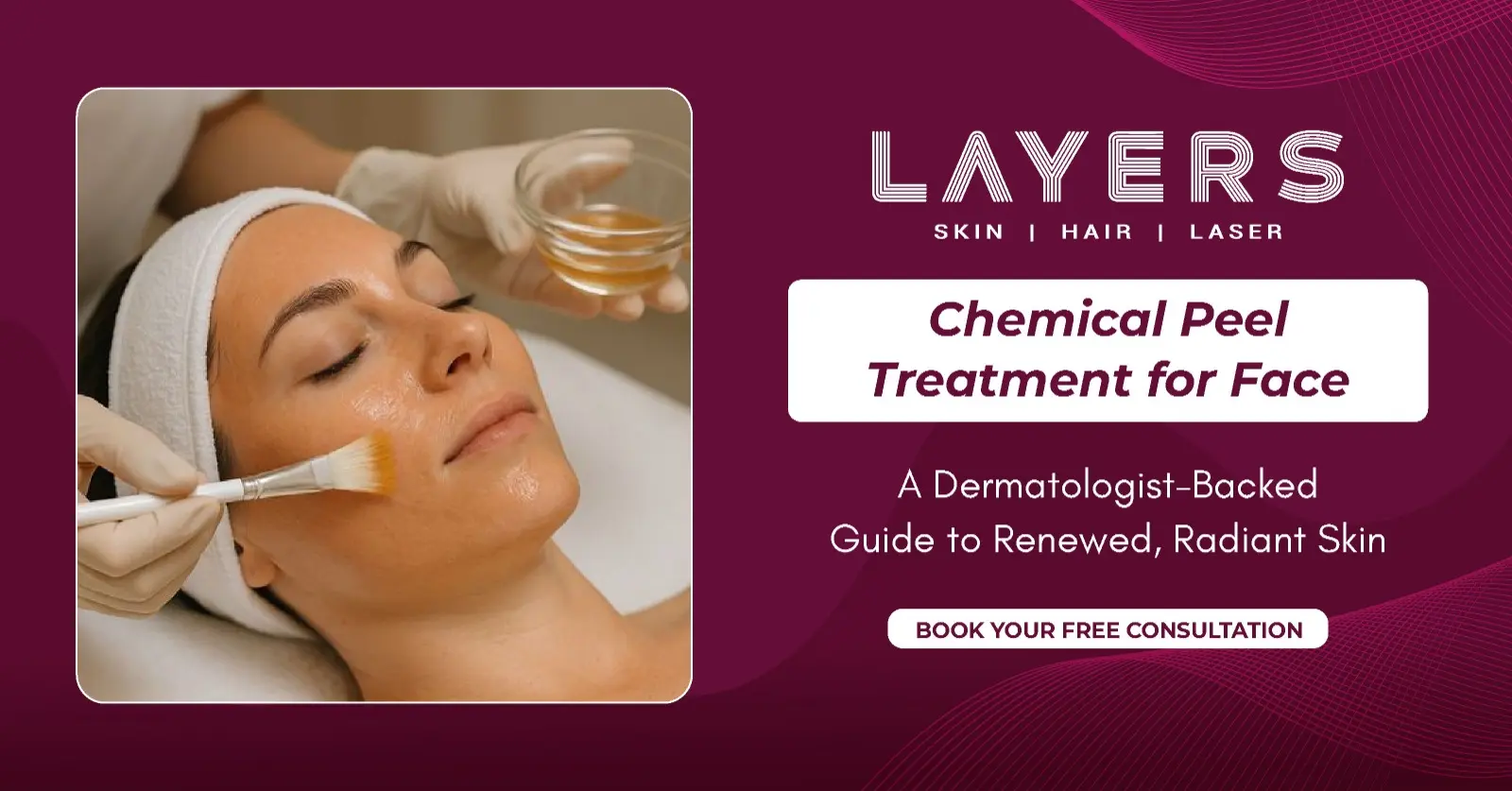
In the reign of established treatment procedures, chemical peel treatment is one of the standout options and a clinically proven one in modern dermatology. It is done by applying a formulated acid solution to the facial skin and has a controlled exfoliation of the damaged outer layers. This promotes healthier, smoother, and evenly toned skin. Patients who undergo this treatment often have acne scarring, melasma, fine lines, or a faded complexion. Chemical peel treatment for face is a versatile and powerful solution with a well-documented safety profile when qualified professionals step into action.
Chemical peel treatment for face at Layers Clinics is one of the most prominent treatments and the most requested services. It is minimally invasive and demands little to no downtime for superficial peels, and improvements happen in days without much effort. Our certified dermatologists bring the best possible approach for every patient, Fitzpatrick skin type, concerns, and medical history, before going for a specific peel formulation and the depth it has to occur. This individualized approach offers optimal outcomes and minimizes the risk of adverse effects such as post-inflammatory hyperpigmentation.
Types of Chemical Peel Treatment for Face
Chemical peel treatment is performed at three levels of depth:
- Superficial Peels: Mild acids come into play, typically glycolic acid at the concentrations of 20-35% or salicylic acid at 20%. These acids are used to exfoliate the stratum corneum and upper epidermis and become ideal options for mild acne, texture irregularities, and general skin brightening. The superficial chemical peel treatment for face is an introductory procedure, tailored for individuals who are first-time users undergoing maintenance therapy in a loop every month.
- Medium-Depth Peels: Here, trichloroacetic acid (TCA) is penetrated at the concentrations of 35-50% that penetrate through the epidermis into the papillary dermis. These are indicated for moderate photoaging, acne scars, and pigmentary disorders.
- Deep Peels: These are most commonly phenol-based, and they reach the reticular dermis. This treatment is for people who have a great number of wrinkles and scars. Due to their intensity, deep peels are recommended for chosen patients and demand more recovery time.
However, the dermatologists at Layers Clinics guide patients with the right treatment methods based on their requirements, maintaining complete transparency based on the expected results, recovery timelines, and associated considerations.
Benefits of Chemical Peel Treatment for Face
Improves Acne and Acne Scars
One of the primary benefits of chemical peel treatment for face is its effectiveness in treating acne and reducing acne scars. Chemical peels, especially those containing salicylic acid, penetrate deep into the pores and dissolve excess oil and debris. This helps in controlling active breakouts while promoting faster skin cell turnover. Over multiple sessions, chemical peel for acne scars visibly smoothens uneven skin texture and reduces the depth of scars, resulting in clearer and healthier skin.
Reduces Pigmentation and Melasma
Chemical peel treatment for face is widely recommended for addressing pigmentation concerns such as melasma, sunspots, and uneven skin tone. Ingredients like glycolic acid and TCA help exfoliate pigmented skin layers and regulate melanin production. With consistent sessions, patients notice a more even complexion and reduced dark patches. This makes chemical peel for pigmentation an effective solution for achieving brighter and more uniform skin.
Smoothens Fine Lines and Wrinkles
A major anti-aging advantage of chemical peel treatment for face is its ability to reduce fine lines and wrinkles. By stimulating collagen production and removing damaged outer layers, chemical peels improve skin elasticity and firmness. Medium-depth and deep peels, in particular, target visible signs of aging, making the skin appear smoother, tighter, and more youthful over time.
Enhances Skin Texture and Glow
If dull and rough skin is a concern, chemical peel treatment for face offers noticeable improvement in overall skin texture and radiance. The exfoliation process removes dead skin cells, unclogs pores, and reveals fresh, rejuvenated skin underneath. This leads to a smoother surface, refined pores, and a natural glow. Regular sessions of skin rejuvenation treatment like chemical peels help maintain long-term skin health and luminosity.
Chemical Peel Treatment for Face Procedure and What Patients Can Expect
Before choosing chemical peel treatment for face, we recommend patients undergo the following procedure:
- In-depth skin analysis
- Pre-treatment preparation includes a 2 to 4-week regimen of topical retinoids and hydroquinone to shape the skin and reduce the risk of pigmentary complications.
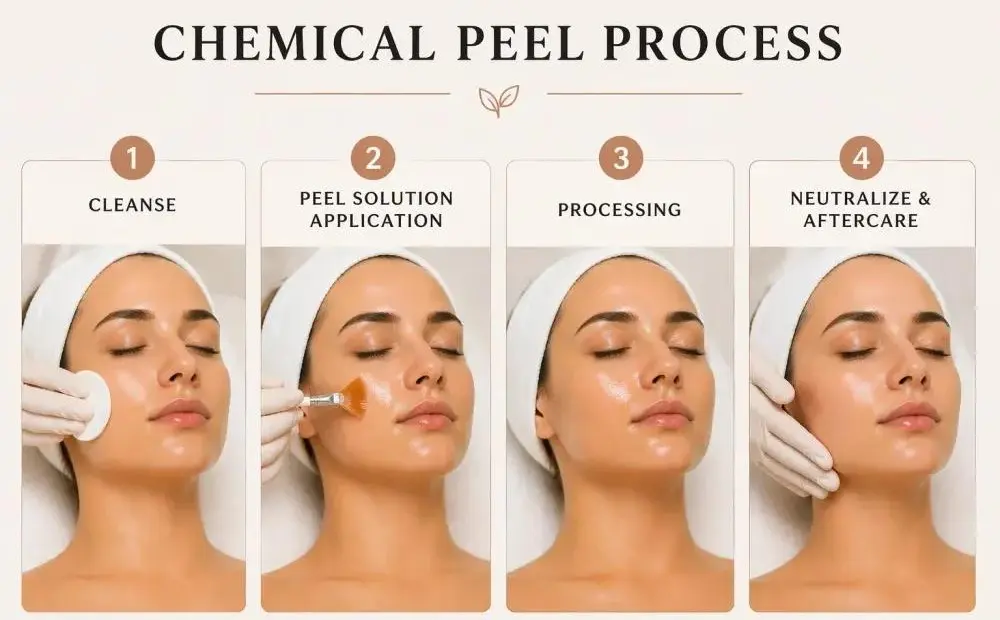
- On the day of treatment, the face is cleansed and degreased.
- Chosen acid solution is applied in a defined fashion, layer by layer, while the dermatologist monitors the frosting response of the skin, which will gauge the depth of penetration.
- Post-application, a neutralizing agent is used based on the acid type, followed by a soothing mask or emollient.
- Mild stinging or warm sensation can be expected during the procedure, but it soothes soon.
Chemical peel treatment for face is performed in a controlled climatic room with all the necessary emergency provisions while adhering to the highest standards of clinical safety.
Post-Treatment Care and Recovery
Recovery after this procedure depends on the depth of the treatment performed with extreme care. Superficial peels produce only mild flaking for 1-3 days, medium peels cause noticeable peeling and need temporary recovery for 5-7 days, and deep peels require up to 2 weeks with significant peeling and erythema. No matter what the peel depth is, protecting from the sun is paramount. Providing every individual with a detailed post-care regimen must include broad-spectrum SPF-50 sunscreen, gentle cleansers, and barrier-repair moisturizers.
After the treatment, it is advised to avoid direct sunlight, refrain from picking or peeling flaking skin, and avoid strenuous exercises for at least 48-72 hours. Following these instructions significantly improves the final outcome of the peel and reduces the likelihood of complications.
Results and Effectiveness of Chemical Peels
Most of the people who have undergone chemical peel treatment for face at Layers Clinics have seen its efficacy, and many successes are associated with it. Glycolic acid peels have shown an increase in epidermal thickness and dermal collagen density. On the other hand, TCA peels heal the acne scar depth, averaging 50-70% through a series of consultations. Salicylic acid peels become effective in the case of comedonal and inflammatory acne due to their lipophilic nature, penetrating into sebaceous follicles. All these treatment protocols are continuously updated in line with the ongoing research and international consensus guidelines. When choosing Layers Clinics, you have the option of chemical peel treatment for face.
Who Is an Ideal Candidate?
A wide range of individuals can align with this treatment, including ane-prone skin, uneven pigmentation, damage through sun exposure, fine lines, or dull complexion. However, patients with existing infections – open wounds, keloid scarring history, or pregnant and lactating women may need to defer treatment. Individuals who need isotretinoin need to wait for a 6-month period after discontinuing it before they go for a peel. We conduct a comprehensive evaluation so that our patients feel safe to receive ideal results as expected or promised by us.
Why Choose Layers Clinics for Chemical Peel Treatment for Face
It’s always experts who stay on top of everything, and their voice feels safe to trust with treatment. Under the right guidance, you can benefit from the dermatological care we offer. Though the market is huge for this, choosing the right provider within your budget can also play a role in your decision-making. So, we customize every treatment plan and medical supervision for every session, enabling you to trust us as we are the long-lasting experts in this arena.
Combining Chemical Peel Treatment with Other Treatments
One of the major advantages of chemical peel treatment for face is its compatibility with other complementary procedures. Our dermatologists have the experience of clubbing superficial peels with microneedling or LED light therapy for amplified collagen stimulation and boosting healing. Medium-depth chemical peel treatment for face is married with topical growth factor serums that need to be applied post-peel immediately. This enhances the permeability of the newly exfoliated skin. These sandwich protocols are designed by our teams to optimize results while giving time for the skin to recover.
The comprehensive facial rejuvenation is a phased treatment plan that has a series of peel sessions, followed by laser toning and maintenance facials. It delivers transformative results in a 6–12 month period, and we have that roadmap to set you on the path of healing effectively with realistic timelines and milestones.
Chemical peel treatment for face continues to be the dermatologist’s avenger among the other treatments available for rejuvenation. If you are opting for professional guidance in this procedure, we invite you to a scheduled consultation and take the first step to transform your skin in unimaginable ways.
FAQs
What is chemical peel treatment for face?
Chemical peel treatment for face is a dermatological procedure that exfoliates damaged skin layers using acids, revealing smoother and brighter skin.
Is chemical peel safe for all skin types?
Yes, when performed by dermatologists, chemical peels are customized based on skin type (Fitzpatrick scale) to ensure safety and effectiveness.
How many sessions are needed for best results?
Typically, 3–6 sessions are recommended depending on the concern, such as acne scars, pigmentation, or dull skin.
What is the downtime after a chemical peel?
Superficial peels have minimal downtime (1–3 days), while medium peels may require 5–7 days of recovery.
Can chemical peels remove acne scars permanently?
Chemical peels significantly reduce acne scars over multiple sessions, but complete removal depends on scar depth and skin response.
Conclusion
Chemical peel treatment for face is a dermatologist-recommended procedure that removes damaged outer skin layers using safe chemical solutions. It improves acne scars, pigmentation, fine lines, and dullness by promoting new skin regeneration. With minimal downtime and visible results, it is one of the most effective skin rejuvenation treatments available today.
