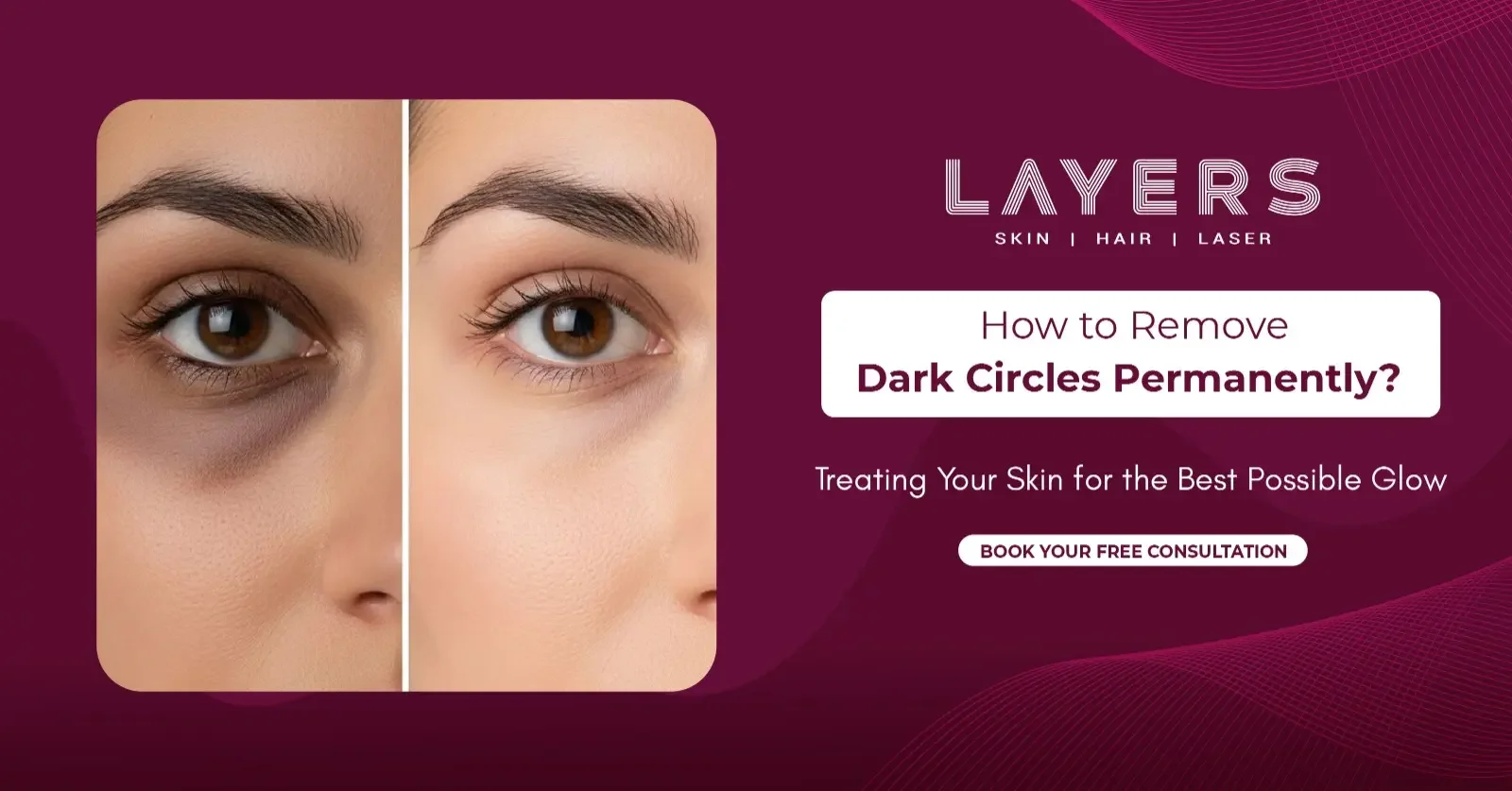
Dark circles are one of the most common concerns affecting the appearance of the face. They can make the eyes look tired even after adequate rest and may become more noticeable with age, sun exposure, allergies, dehydration, pigmentation, or changes in the structure beneath the eyes.
When we look at how to remove dark circles permanently, the most important step is identifying what is actually causing the darkness. Dark circles are not a single skin condition. In some people, pigmentation is the primary concern. In others, visible blood vessels, thin skin, under-eye hollowness, puffiness, or a combination of these factors creates the appearance.
At Layers Clinics, we take a personalised approach to under-eye concerns. Rather than treating every dark circle in the same way, we assess the skin, pigmentation, under-eye structure, lifestyle factors, and signs of ageing before recommending an appropriate treatment plan.
| key Takeaway: Dark circles can develop due to pigmentation, genetics, ageing, thin skin, allergies, lifestyle factors, or under-eye hollowness. Learn how to remove dark circles permanently with dermatologist-guided treatments, skincare, lifestyle changes, laser procedures, PRP, fillers, and other personalised solutions. |
What Causes Dark Circles Under the Eyes?
The skin around the eyes is particularly delicate and thin. Because of this, changes beneath and within the skin can become more visible than they are on other areas of the face.
Several factors can contribute to dark circles.
1. Genetics and Natural Skin Characteristics
Genetics can strongly influence the appearance of the under-eye area. Some people naturally have thinner skin, increased pigmentation around the eyes, prominent blood vessels, or deeper tear troughs.
People with naturally higher melanin levels may also be more susceptible to pigmentation around the eyes. In these cases, dark circles may appear even when sleep, hydration, and lifestyle habits are good.
2. Pigmentation Around the Eyes
Excess melanin can cause the skin underneath or around the eyes to appear brown or darker than the surrounding facial skin.
Sun exposure, inflammation, rubbing the eyes, and certain skin conditions may contribute to pigmentation. Identifying pigmentation as the primary cause is important because treatments intended for structural hollowness may not address the underlying issue.
3. Lack of Sleep and Fatigue
Insufficient sleep can make existing dark circles appear more prominent. Fatigue may make the skin look duller, while changes in blood circulation and fluid retention can increase the visibility of the area underneath the eyes.
Improving sleep does not necessarily eliminate genetically determined or structural dark circles, but it can help reduce the tired appearance around the eyes.
4. Ageing and Collagen Loss
As we age, the skin gradually loses collagen and elasticity. The tissues around the eyes can become thinner, while changes in facial fat distribution may create hollowness.
A tear trough, which is the depression extending from the inner corner of the eye toward the cheek, can produce a shadow that looks like a dark circle. In this situation, the problem is not simply pigmentation.
5. Sun Exposure
UV radiation can stimulate melanin production and contribute to uneven pigmentation. Because the skin around the eyes is delicate, consistent sun protection is an important part of maintaining an even skin tone.
6. Allergies and Eye Rubbing
Allergies can cause itching, watering, inflammation, and frequent rubbing of the eyes. Repeated mechanical irritation may worsen pigmentation in susceptible individuals.
7. Dehydration
Dehydrated skin can appear dull and less plump, potentially making shadows and fine lines around the eyes more noticeable.
How to Remove Dark Circles Permanently? Start With the Right Diagnosis
There is no single treatment that permanently removes every type of dark circle.
The most effective approach begins with determining whether the appearance is primarily related to:
- Pigmentation
- Visible blood vessels
- Thin or translucent skin
- Under-eye hollowness
- Age-related volume changes
- Puffiness
- Allergies or inflammation
- A combination of several factors
At Layers Clinics, we consider these differences when developing a treatment plan. This helps us avoid using a procedure simply because it is popular and instead select an approach appropriate for the individual’s under-eye concern.
Professional Treatments for Dark Circles
Depending on the underlying cause, dermatological treatments may help improve the appearance of dark circles and create a brighter, more even under-eye area.
Laser Treatment for Pigmentation
Laser-based treatments may be considered when pigmentation contributes significantly to the appearance of dark circles.
Specific laser technologies can target pigment and may also support improvements in overall skin texture. The choice of laser, energy settings, number of sessions, and treatment interval should be determined by a qualified dermatologist according to skin type and the nature of the pigmentation.
Laser treatment is not automatically suitable for every person with dark circles. Careful assessment is particularly important for individuals who are prone to post-inflammatory pigmentation.
PRP Therapy for Under-Eye Concerns
Platelet-rich plasma (PRP) uses components obtained from the patient’s own blood.
During treatment, a small blood sample is processed to obtain platelet-rich plasma, which can then be administered to the targeted area using an appropriate technique.
PRP is often considered when the under-eye skin appears thin, dull, or crepey. It may support collagen-related skin improvement and overall skin quality.
PRP should not be presented as a universal permanent cure for every form of dark circle. Its suitability depends on the underlying cause and individual skin characteristics.
Dermal Fillers for Tear Trough Hollowness
When under-eye darkness is primarily caused by volume loss and tear trough depression, dermal fillers may be considered.
Hyaluronic acid-based fillers can restore selected areas of lost volume and reduce the depth of shadows created by hollowness. This can make the transition between the lower eyelid and cheek appear smoother.
Under-eye filler requires considerable anatomical knowledge because the periocular area is delicate. Treatment should therefore be performed by a suitably qualified and experienced medical professional.
The results are temporary and vary between individuals. Fillers do not eliminate pigmentation when pigmentation is the primary cause of darkness.
Mesotherapy
Mesotherapy involves the administration of selected substances into the skin using multiple small injections.
Depending on the formulation and clinical assessment, treatment may be designed to support hydration and skin quality. It may be considered for individuals whose under-eye concerns involve dryness, dullness, or poor skin texture.
Because the skin around the eyes is delicate, the products and injection technique must be selected carefully by an appropriately trained professional.
Chemical Peels for Under-Eye Pigmentation
Certain professionally selected chemical peels may help improve superficial pigmentation and uneven skin tone.
Under-eye skin requires particular caution because it is thinner and more sensitive than many other facial areas. Stronger does not necessarily mean better. A dermatologist should determine whether a peel is appropriate and select a formulation and concentration based on the patient’s skin type and pigmentation pattern.
Can Combination Treatment Help Remove Dark Circles?
Dark circles frequently have more than one contributing factor.
For example, someone may have pigmentation combined with mild tear trough hollowness. Another person may have thin skin with visible vessels and age-related volume changes.
In such cases, treating only one component may provide limited improvement.
A dermatologist may therefore consider a combination treatment approach, where different procedures are selected for different contributing factors. Depending on the assessment, this could involve approaches such as laser treatment, PRP, skincare, chemical peels, or volume correction.
The exact combination, treatment sequence, and number of sessions should be personalised rather than predetermined.
How to Reduce Dark Circles Naturally at Home
Professional treatment can address specific underlying concerns, but daily skincare and lifestyle habits remain important.
Get Consistent Sleep
Maintaining a regular sleep schedule can help reduce the tired and puffy appearance associated with sleep deprivation.
Use Sun Protection
Daily broad-spectrum sunscreen can help protect against UV-induced pigmentation. Sunglasses and physical shade can provide additional protection around the eyes.
Avoid Rubbing the Eyes
Frequent rubbing can irritate delicate skin and may contribute to worsening pigmentation in some individuals.
Stay Hydrated
Adequate fluid intake supports overall skin health. A good moisturiser can also help maintain the skin barrier and reduce dryness.
Manage Allergies
If allergies cause persistent itching or rubbing around the eyes, addressing the underlying allergy may help prevent repeated irritation.
Follow a Suitable Skincare Routine
A dermatologist can recommend products based on the individual’s skin type and pigmentation. Ingredients commonly used in pigmentation-focused skincare may include vitamin C, niacinamide, retinoids, or other professionally selected agents, but not every ingredient is suitable for direct use around the eyes.
How Long Does It Take to Remove Dark Circles?
The timeline varies considerably because dark circles have different causes.
Some people may notice changes after improving lifestyle factors, while pigmentation and skin-quality concerns generally require consistent treatment over time. Structural concerns such as tear trough hollowness may respond differently from pigmentation.
The number of sessions and expected improvement depend on factors including:
- Cause of the dark circles
- Skin type
- Degree of pigmentation
- Age-related changes
- Under-eye anatomy
- Treatment selected
- Response to treatment
- Skincare and sun-protection habits
A realistic treatment plan should focus on improvement rather than promising an identical result for everyone.
Can Dark Circles Be Removed Permanently?
The word “permanently” needs to be understood carefully.
When dark circles are caused by temporary factors such as poor sleep or dehydration, addressing those factors may significantly improve their appearance.
However, genetically influenced pigmentation, ageing, facial anatomy, and tear trough hollowness can persist or gradually return because the underlying biological factors continue to exist.
Professional treatment can provide significant and sometimes long-lasting improvement, but no cosmetic procedure can guarantee that dark circles will never return.
The most sustainable approach combines appropriate dermatological treatment with ongoing skincare, sun protection, adequate sleep, hydration, and management of contributing conditions.
When Should We See a Dermatologist for Dark Circles?
We recommend professional evaluation when dark circles are:
- Persistent despite adequate sleep
- Becoming progressively more noticeable
- Associated with significant pigmentation
- Accompanied by under-eye hollowness
- Associated with puffiness or swelling
- Accompanied by itching or allergy symptoms
- Affecting confidence or appearance
- Not improving despite consistent skincare
A dermatologist can distinguish pigmentation from shadows caused by facial anatomy and determine whether medical treatment is appropriate.
Sudden or unusual changes around one eye, particularly when accompanied by pain, significant swelling, redness, vision changes, or other symptoms, should be medically evaluated rather than treated solely as a cosmetic concern.
Why Choose Layers Clinics for Dark Circle Treatment?
At Layers Clinics, we approach dark circles by examining the individual characteristics of the under-eye area rather than relying on a one-treatment-fits-all approach.
Our approach focuses on:
- Dermatologist-led assessment
- Individualised treatment planning
- Advanced treatment options
- Assessment of pigmentation and structural concerns
- Natural-looking improvement
- Appropriate combination therapies when required
- Long-term skin-care guidance
The objective is not simply to make the under-eye area temporarily brighter. We aim to understand the reason behind the darkness and select treatments that address the relevant contributing factors.
FAQs About Removing Dark Circles
Can dark circles be removed permanently?
The possibility of long-term improvement depends on the cause. Lifestyle-related dark circles may improve substantially after correcting contributing habits, while genetic pigmentation, ageing, and structural hollowness may require ongoing management and professional treatment.
What is the best treatment for dark circles?
There is no single best treatment for everyone. Pigmentation, thin skin, visible vessels, and tear trough hollowness require different approaches. A dermatologist can identify the primary cause and recommend an appropriate treatment.
Does PRP remove dark circles?
PRP may help improve skin quality and collagen-related concerns in selected patients, particularly when the under-eye skin is thin or appears crepey. It does not treat every cause of dark circles.
Are under-eye fillers permanent?
No. Hyaluronic acid fillers provide temporary volume correction. Their longevity varies depending on the product, treatment area, metabolism, anatomy, and other individual factors.
Can laser treatment remove dark circles?
Laser treatment can help selected pigmentation-related dark circles. The appropriate technology and settings depend on skin type and the underlying cause. A consultation is important before treatment.
Do home remedies permanently remove dark circles?
Home remedies may temporarily improve puffiness or the appearance of tired skin, but they generally cannot correct structural hollowness or significantly established pigmentation. A personalised skincare and treatment plan is more appropriate for persistent concerns.
Does lack of sleep cause permanent dark circles?
Sleep deprivation can make dark circles more noticeable, but persistent dark circles are often influenced by several factors. Improving sleep may reduce the tired appearance without necessarily eliminating genetically determined pigmentation or structural shadows.
How can we prevent dark circles from getting worse?
Consistent sleep, adequate hydration, daily sun protection, avoiding unnecessary eye rubbing, managing allergies, and following an appropriate skincare routine can help maintain healthier-looking under-eye skin.
Conclusion: A Personalised Approach to Dark Circle Treatment
Understanding how to remove dark circles permanently begins with understanding why they are present.
Dark circles may result from pigmentation, genetics, ageing, thin skin, visible blood vessels, tear trough hollowness, allergies, lifestyle factors, or a combination of several causes. Because of these differences, the same treatment cannot be expected to work equally well for everyone.
At Layers Clinics, we focus on identifying the underlying concern before recommending treatment. Depending on the individual’s needs, options may include laser-based procedures, PRP therapy, dermal fillers, mesotherapy, chemical peels, skincare, or carefully planned combination treatment.
For persistent under-eye darkness, a professional dermatological assessment can help determine whether the concern is pigmentation, shadowing, volume loss, or another factor—and guide us toward a treatment plan designed for healthier, brighter, and more natural-looking results.