Melasma
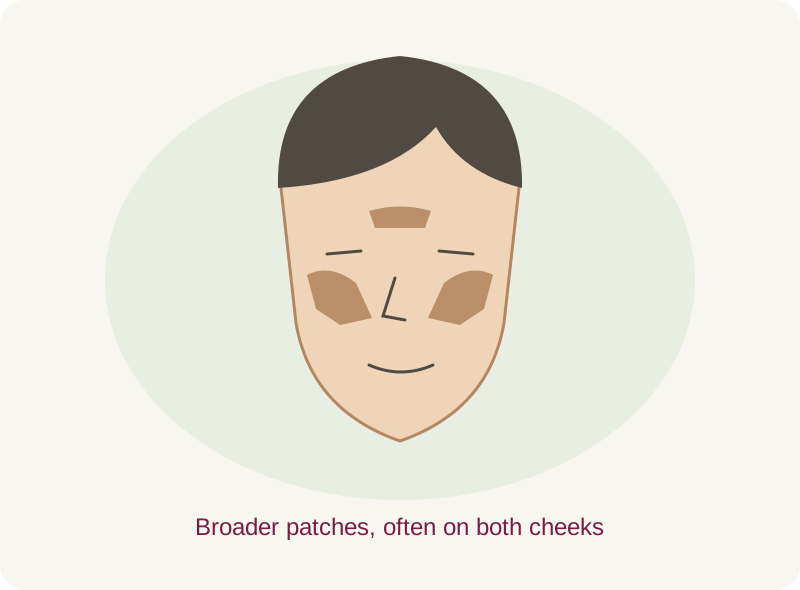
Brown or grey-brown patches often appear on both sides of the face. Sunlight and hormonal changes can play a role, and the colour may return after improvement.
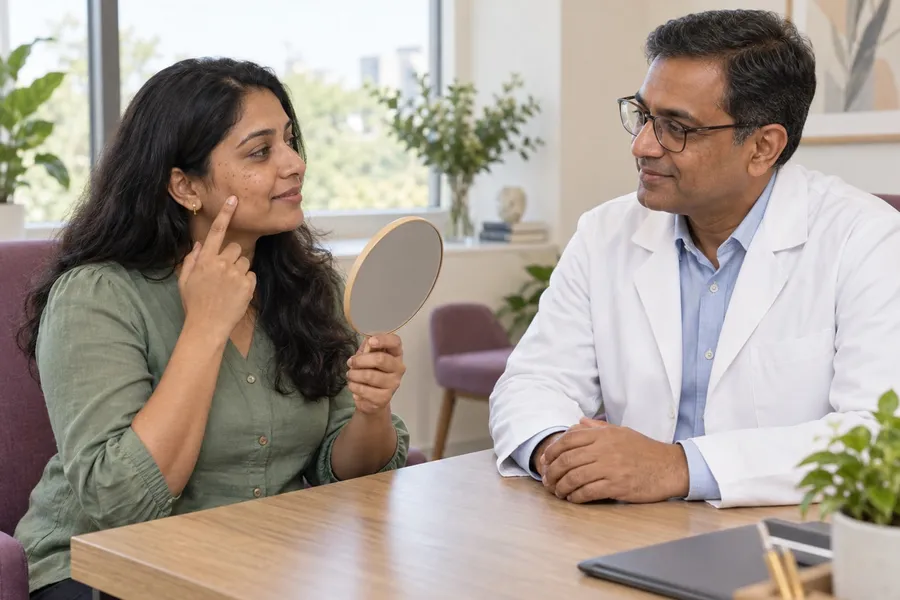
Pigmentation can have different causes. An assessment helps identify the marks and choose care that respects your natural skin tone.
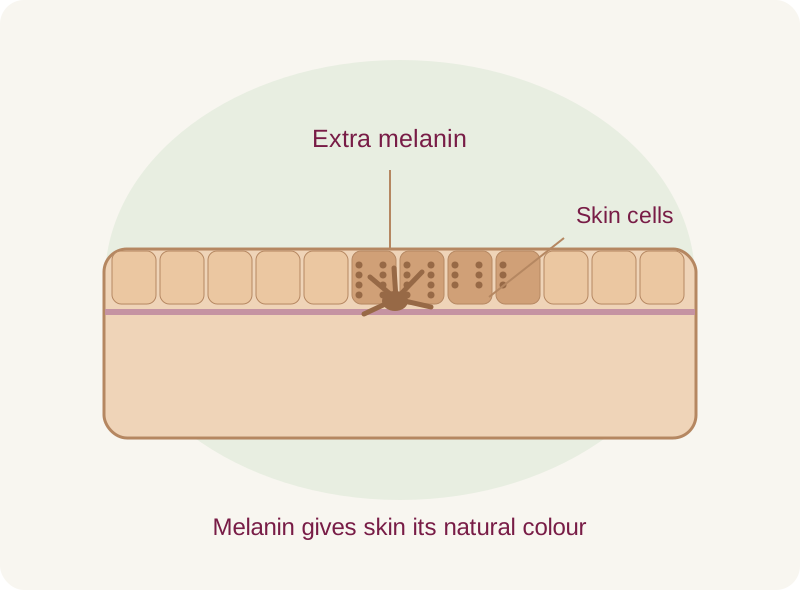
Melanin is the pigment that gives skin its colour. When more melanin is produced or builds up in an area, that area can look darker than the skin around it. This is called hyperpigmentation.
Sun exposure, inflammation, hormones and some medicines can contribute. Marks may sit at different depths and need different care, even when they look similar.
Brown or grey-brown patches often appear on both sides of the face. Sunlight and hormonal changes can play a role, and the colour may return after improvement.
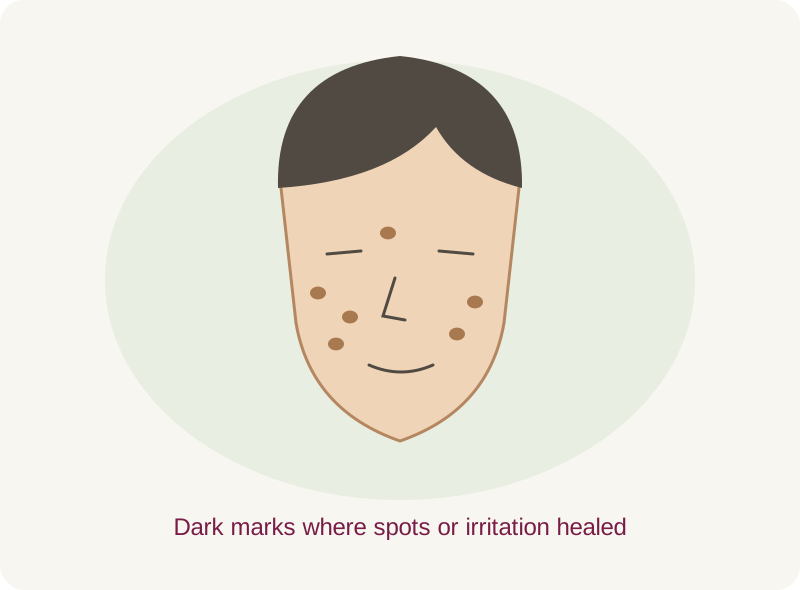
Flat dark marks can remain after a breakout, rash or injury settles. Treating the trigger helps prevent new marks.
Explore acne marks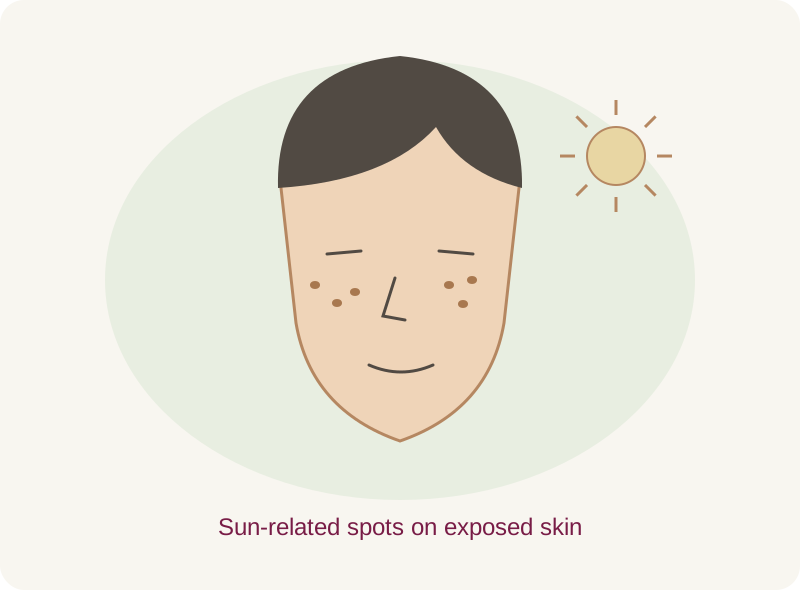
Freckles and age-related sun spots have different patterns. New or changing marks should be checked before cosmetic treatment.
These illustrations show common patterns. They cannot identify the cause of an individual mark.
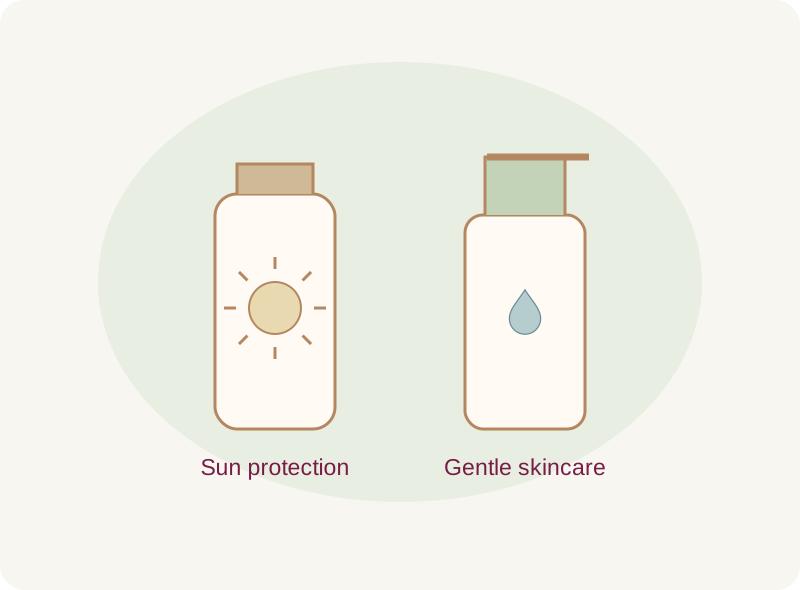
Daily sun protection and a gentle routine support treatment. Your dermatologist may recommend a tinted sunscreen for visible-light protection.
Selected creams can help reduce excess pigment. Ingredients and duration depend on the diagnosis, tolerance and other medicines.
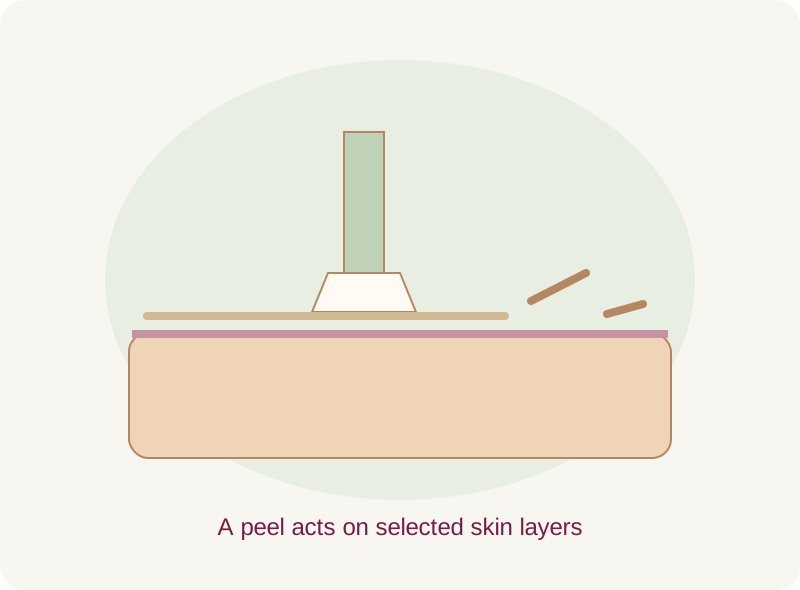
A peel may help certain surface marks. Preparation, strength and recovery need particular care when skin darkens after irritation.
Explore chemical peels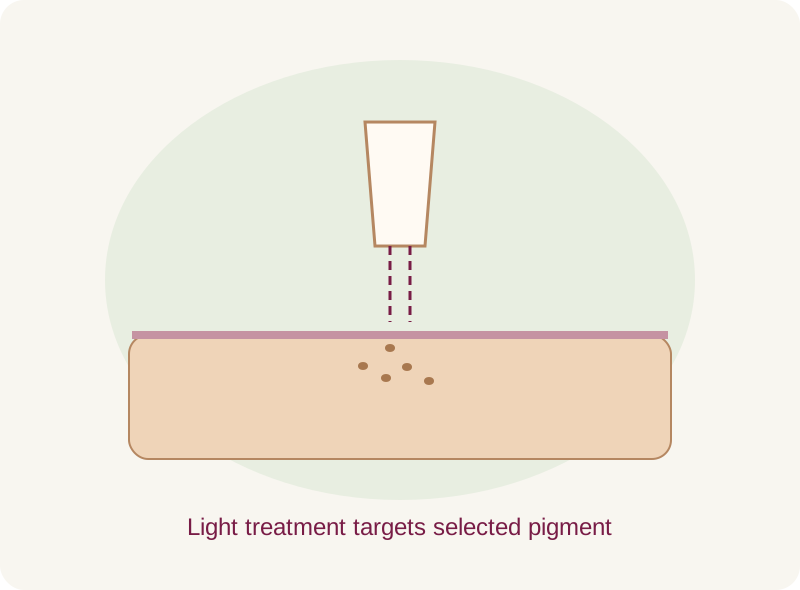
These may suit selected pigment concerns. Melasma and darker skin tones need careful planning because inflammation can worsen colour.
Explore laser toningMention breakouts, rashes, sun exposure, pregnancy, medicines and products used on the area. Bring earlier photographs if the colour has changed.
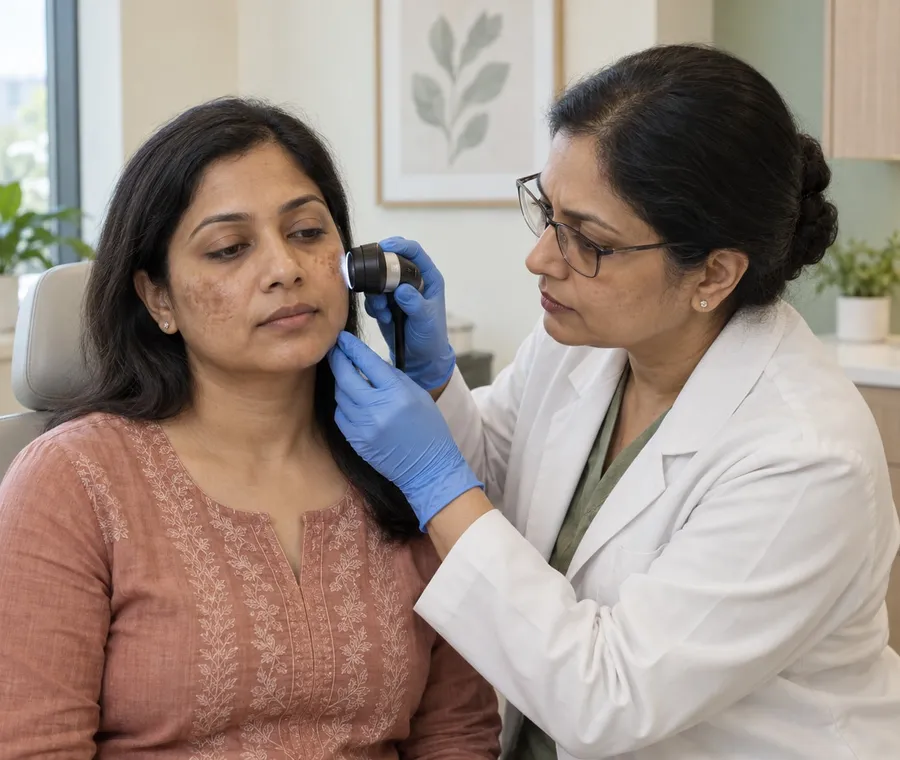
The dermatologist checks the distribution and individual marks. An unexplained or changing lesion may need further assessment before cosmetic care.
Manage ongoing inflammation, review triggers and establish sun protection. Topical care is often part of the starting plan.
Discuss likely benefit, recovery and the chance of darker or lighter patches. The strongest treatment is not automatically the best choice.
Photographs in similar lighting can help assess gradual fading. Report irritation rather than adding more active products yourself.
Some conditions, including melasma, may recur. Review what to continue and how to manage triggers after improvement.
Use broad-spectrum SPF 30 or higher and reapply as directed, alongside shade and a hat. Ask whether tinted protection would suit your pigmentation.
Picking, harsh scrubs and too many strong products can cause more marks. Follow the agreed routine and report burning or persistent redness.
Fading is often gradual over months. Deeper pigment and recurring conditions can take longer and may not clear completely.
Showing all 6 photographs
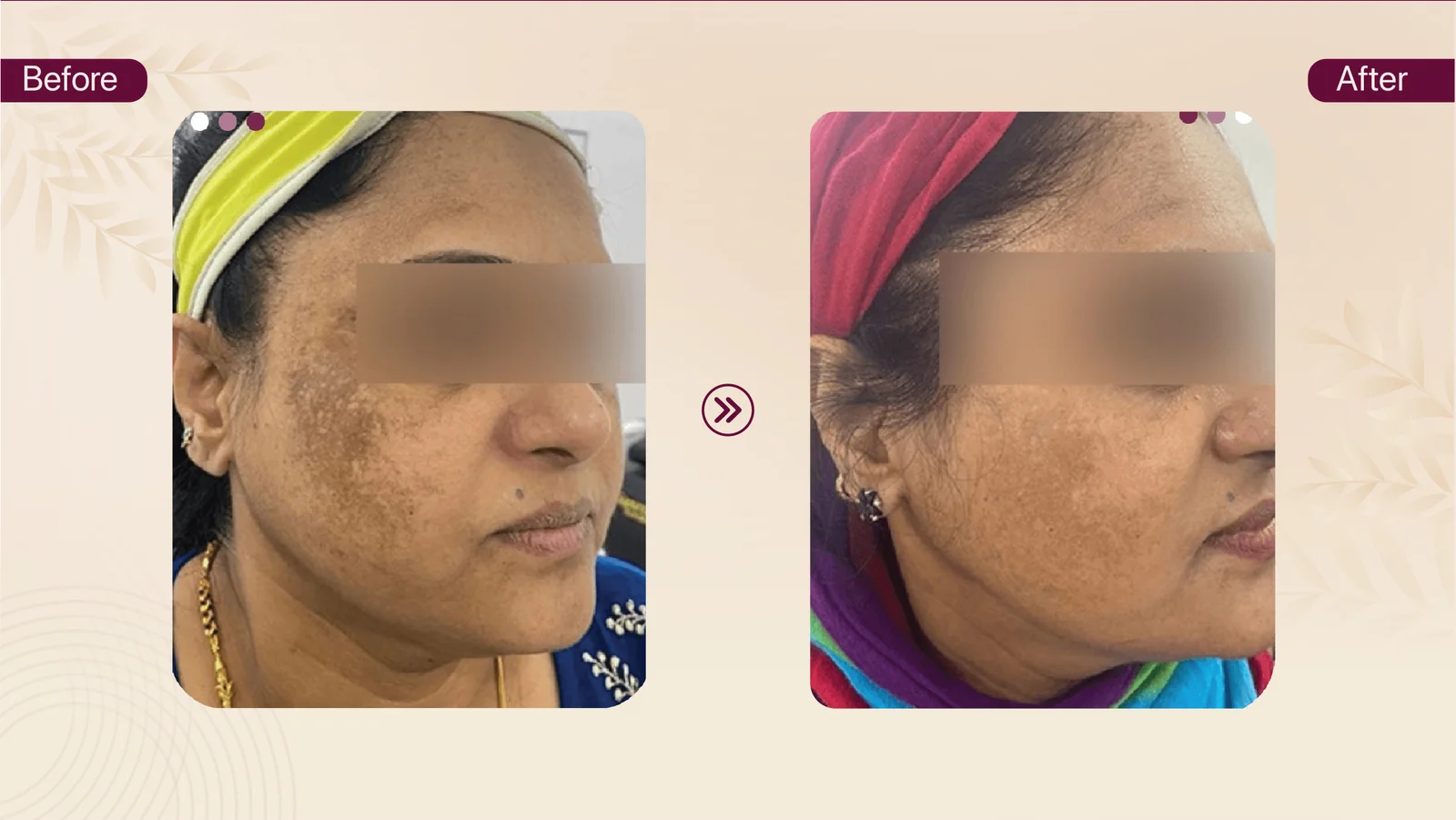
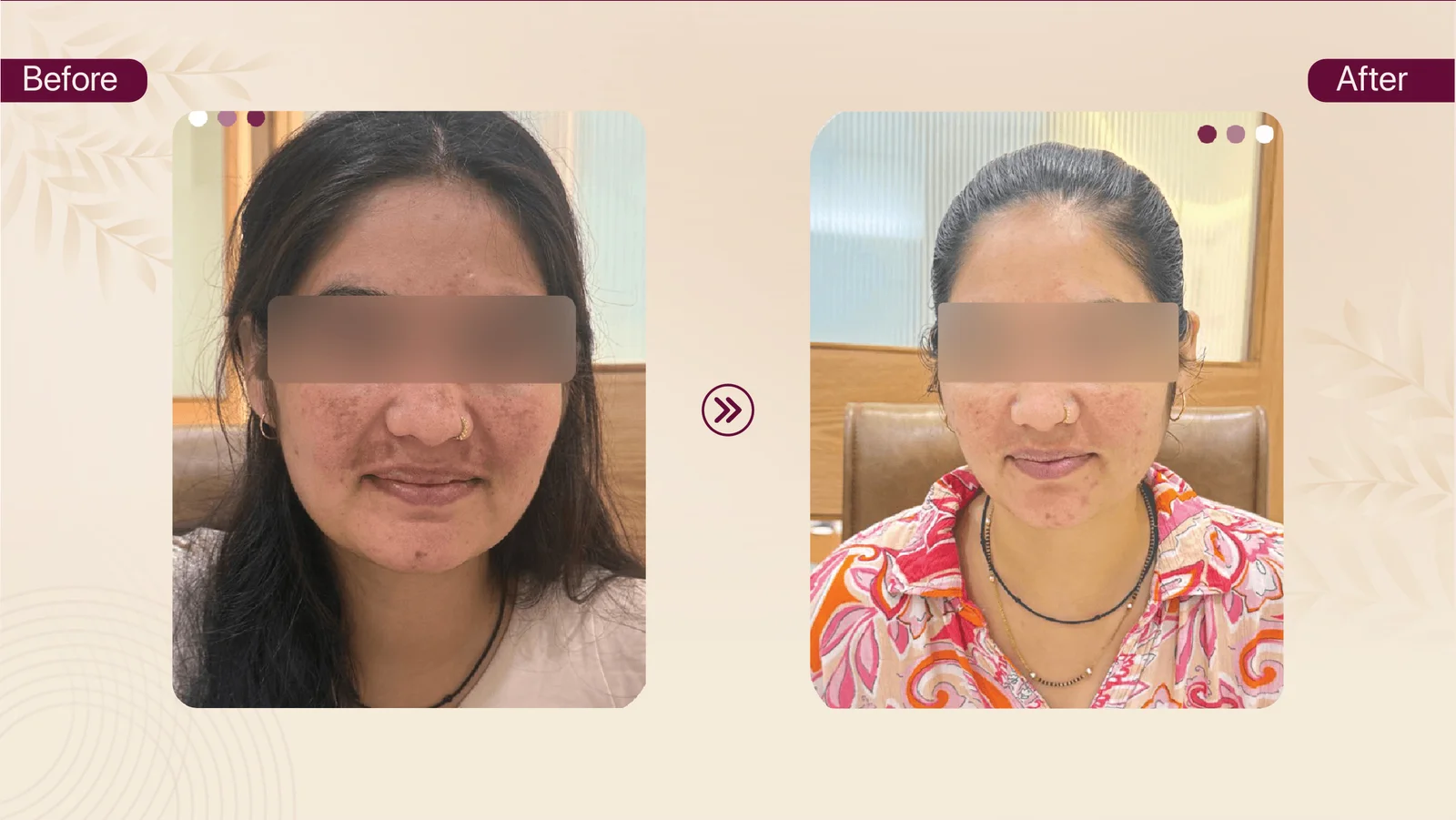
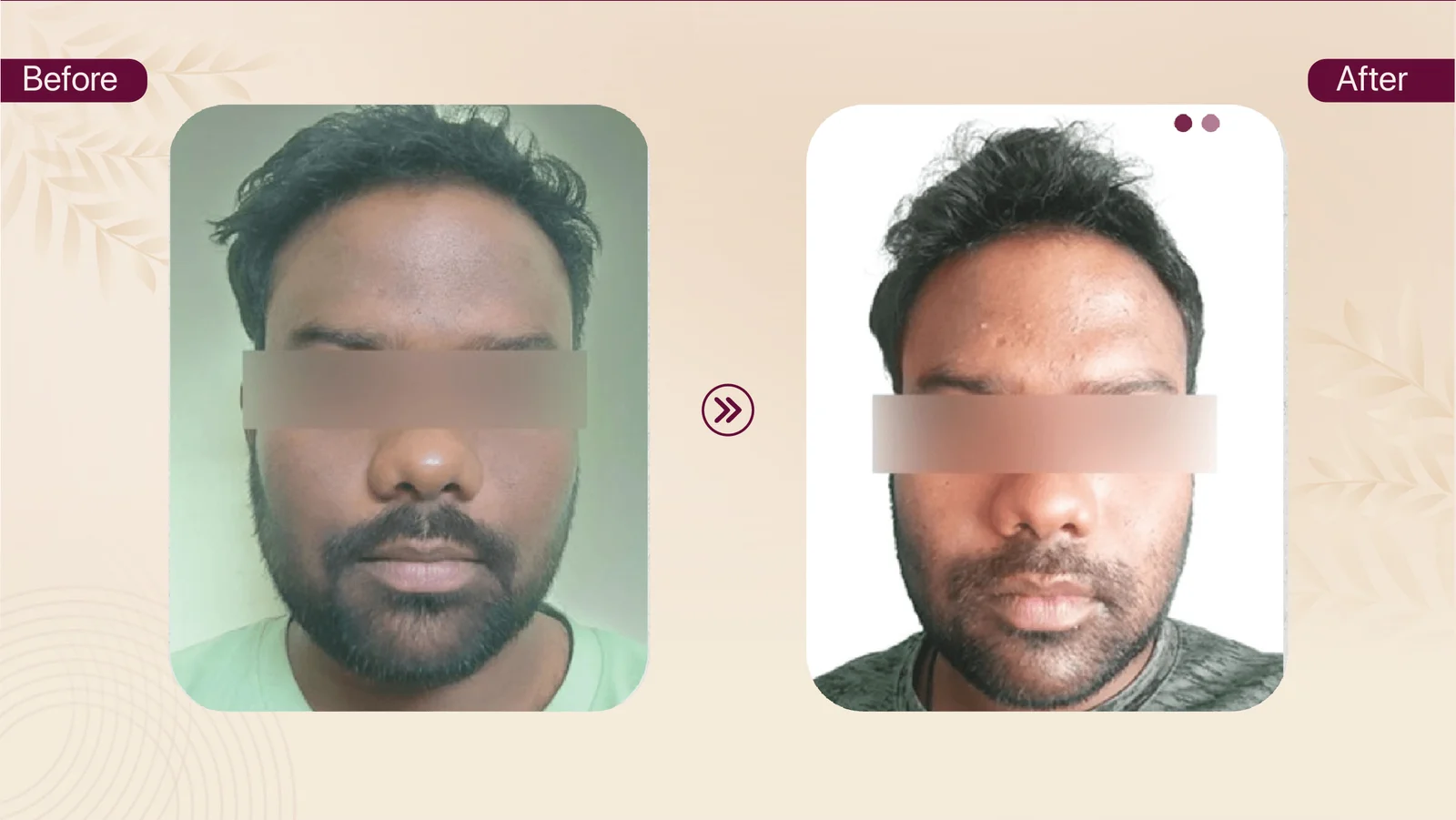
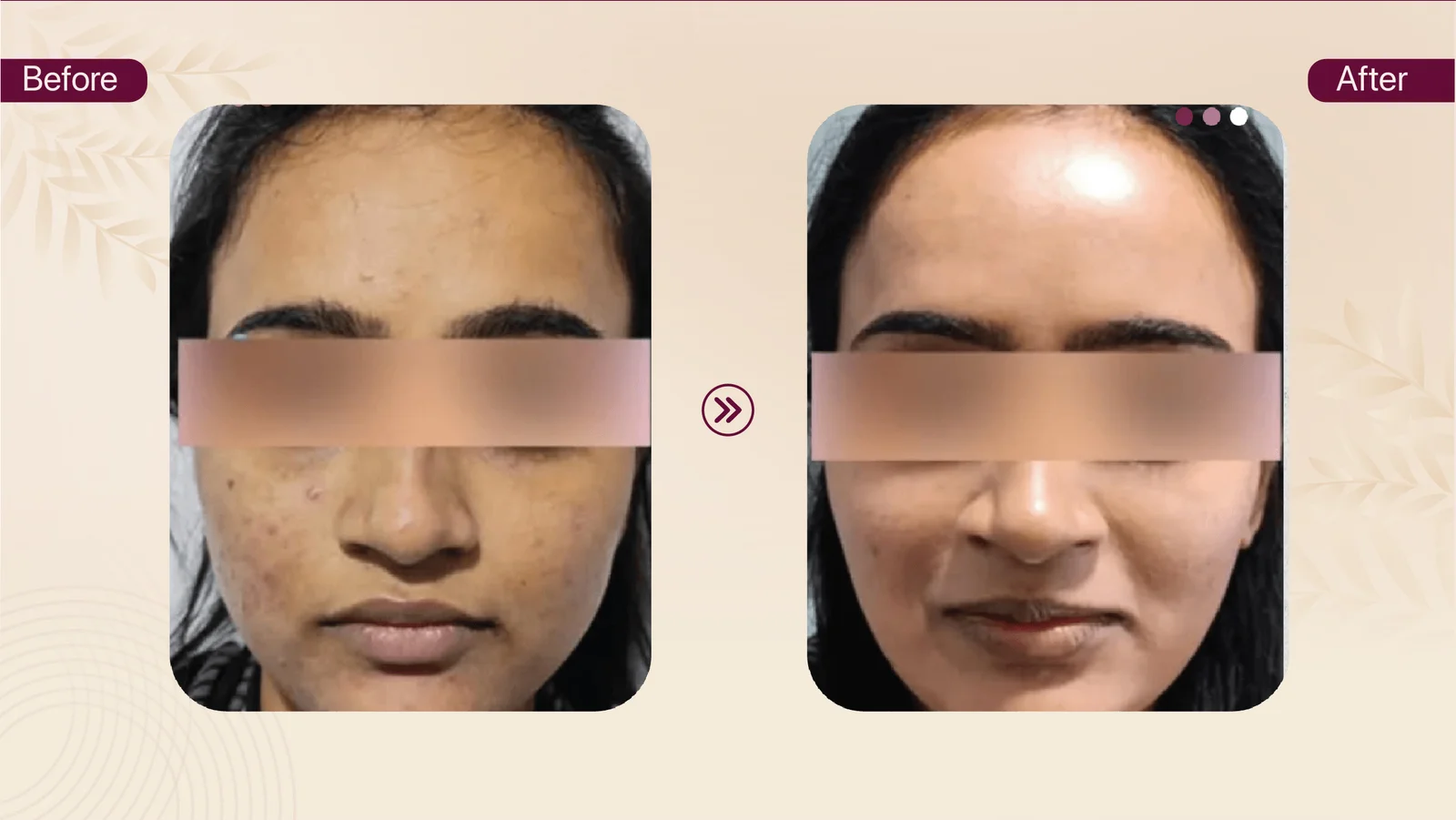
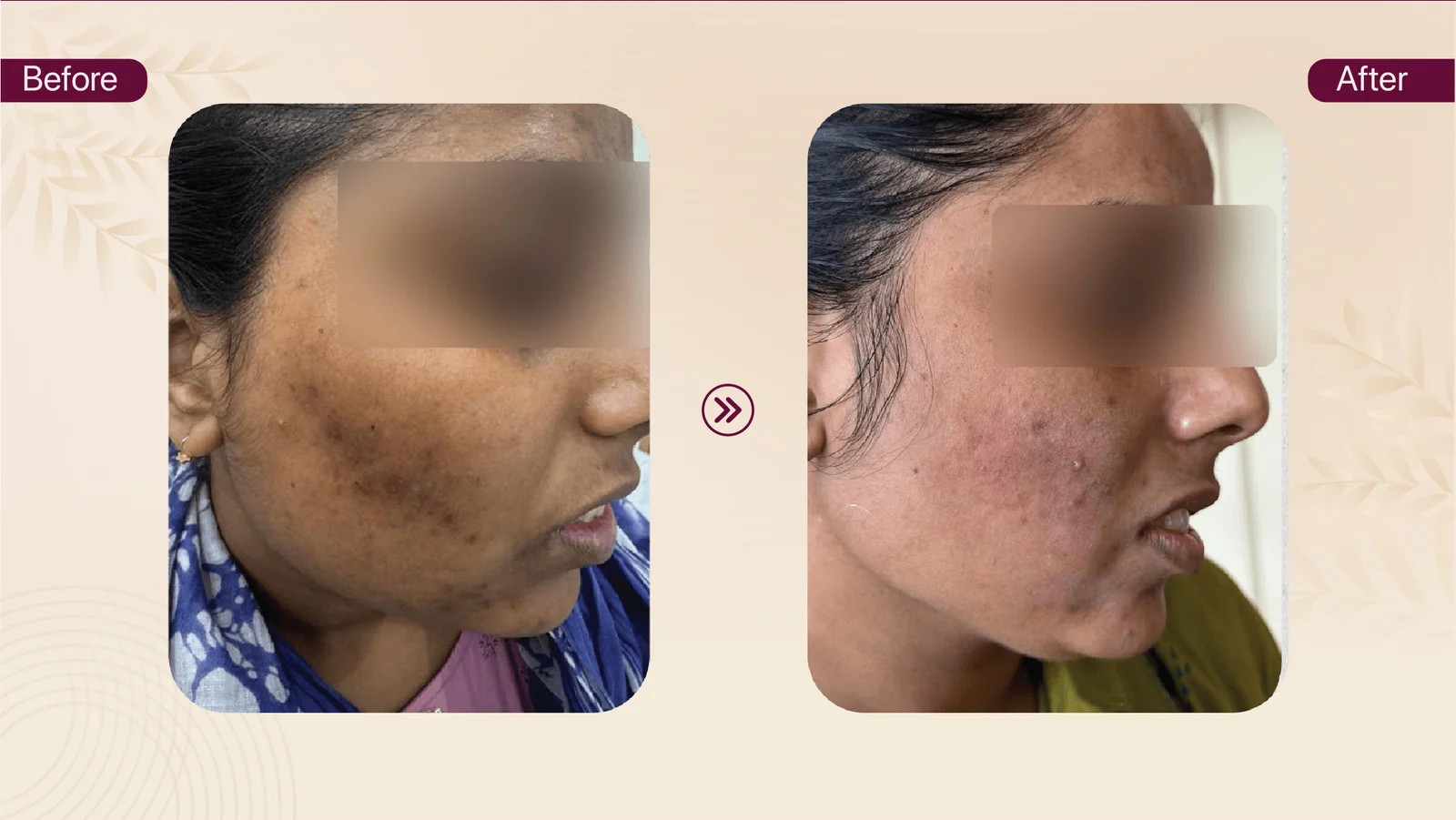
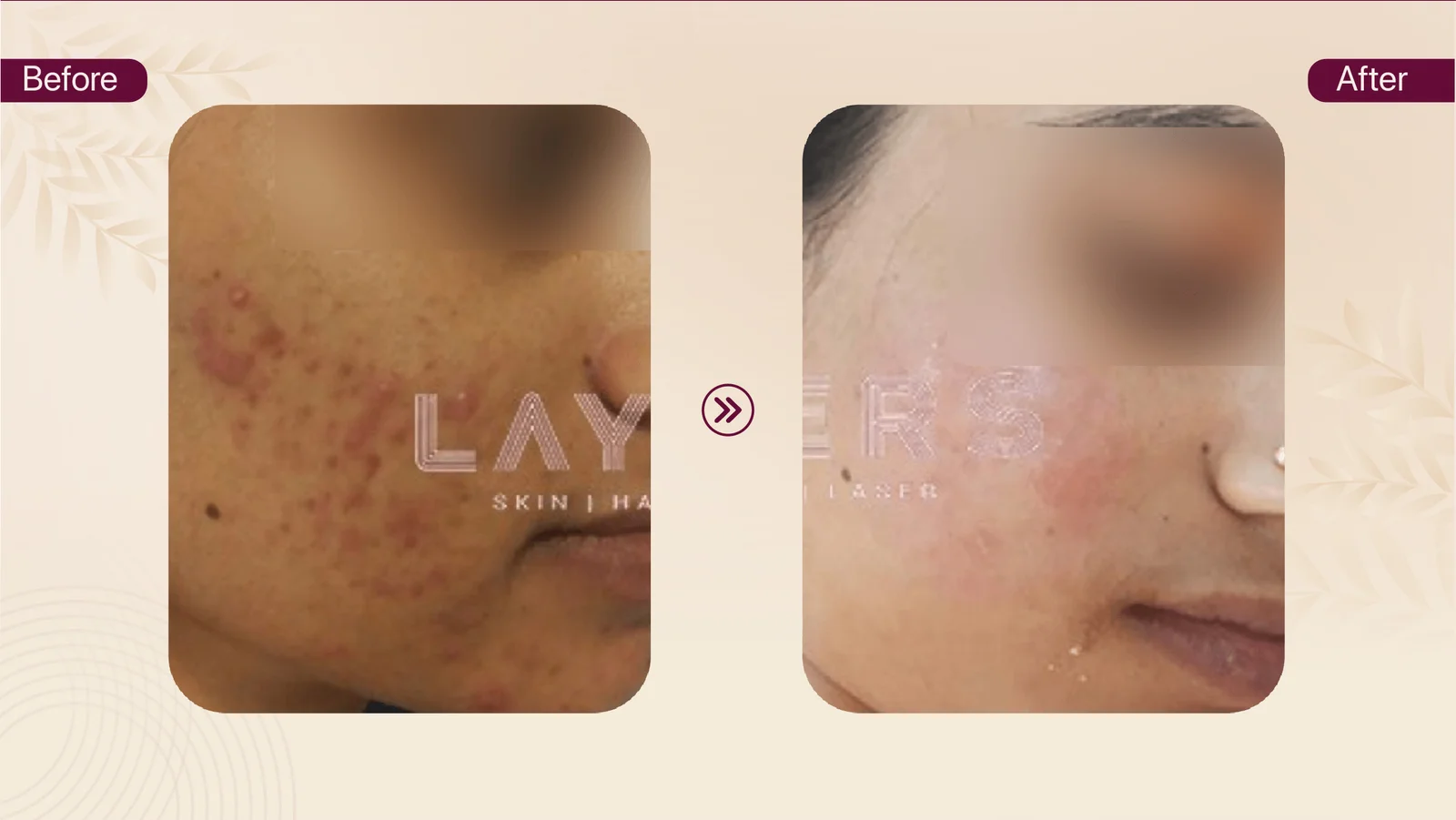
Individual results vary. These photographs show specific cases, not guaranteed outcomes. Original image quality, lighting and angles may differ. Your doctor can explain what may be possible for you.
Google review excerpts mentioning pigmentation-related care at Layers. Some describe combined laser and facial treatments.
“I have been taking Q-switch laser treatment for my pigmentation cure. And it is working good. I have started getting results.”
“I took Q-switch laser and HydraFacial sessions, and I can already see improvement.”
Combined Q-switch and Hydrafacial care.
“Had a peel in layers for my pigmentation. Results are really satisfactory”
“I recently visited kakinada layers. so I consult about pigmentation it's very good I got very good results thank you layars”
“Visited here for my pigmentation problem, I found quit good results in 3 sessions hope for more better results”
















A flat colour change after acne differs from a depression or raised scar. Both can occur together and may need different care.
Yes. Melasma can recur with triggers such as sunlight and hormonal changes. Ongoing protection and an individual maintenance plan may help.
No single procedure suits every mark. Some pigment responds to a selected laser, while other conditions can worsen with heat or inflammation. Diagnosis comes first.
It depends on the cause, depth and whether the trigger continues. Improvement is commonly gradual; photographs taken in similar lighting help track it.
Do not stop prescribed medicine yourself. Speak to the prescribing clinician and dermatologist about the change in your skin.
Bring the product and ingredient list to your consultation. Avoid unlabelled mixtures or strong lightening products without guidance; irritation and inappropriate steroid use can harm the skin.
Arrange assessment for a new or changing spot, an irregular mark, bleeding or a sore that does not heal. Do not assume every dark mark is cosmetic pigmentation.
The aim is to address unwanted uneven patches while respecting your natural skin tone. Discuss the change you want and what is realistically possible.
Discuss the cause, the available options and the care that fits your skin.
Prefer a call? +91 9000 572727