Firmness or discomfort
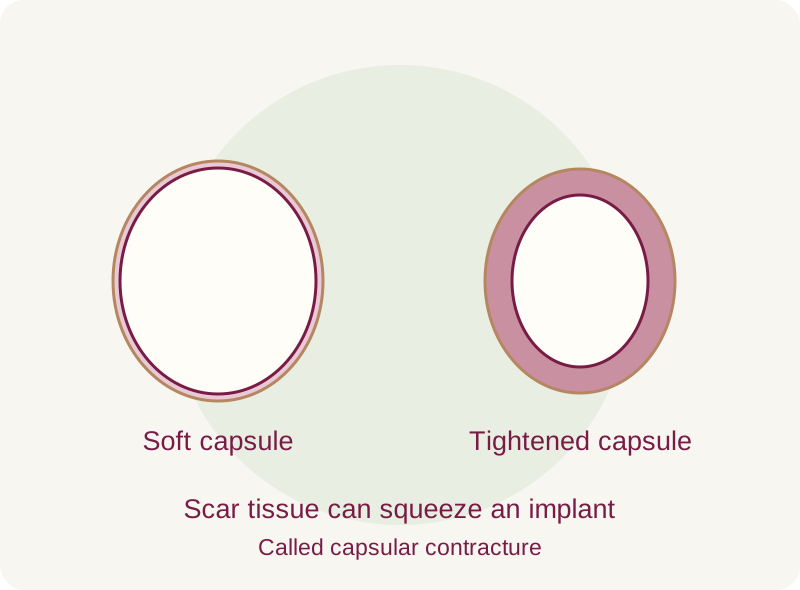
Scar tissue around the implant can tighten, causing firmness, pain or a change in shape. This is called capsular contracture. An examination helps establish the cause.
Have your breasts changed, or do you want to discuss your implants? Start with an assessment of your symptoms, previous surgery and the change you want.

Revision is further surgery after breast implants. It may replace an implant, adjust its pocket or reshape the breast. Removing implants without replacing them is another option to discuss.
The plan depends on why you are seeking care. A change in appearance, a damaged implant and painful scar tissue need different assessments; revision is not simply a repeat of the first operation.
Scar tissue around the implant can tighten, causing firmness, pain or a change in shape. This is called capsular contracture. An examination helps establish the cause.
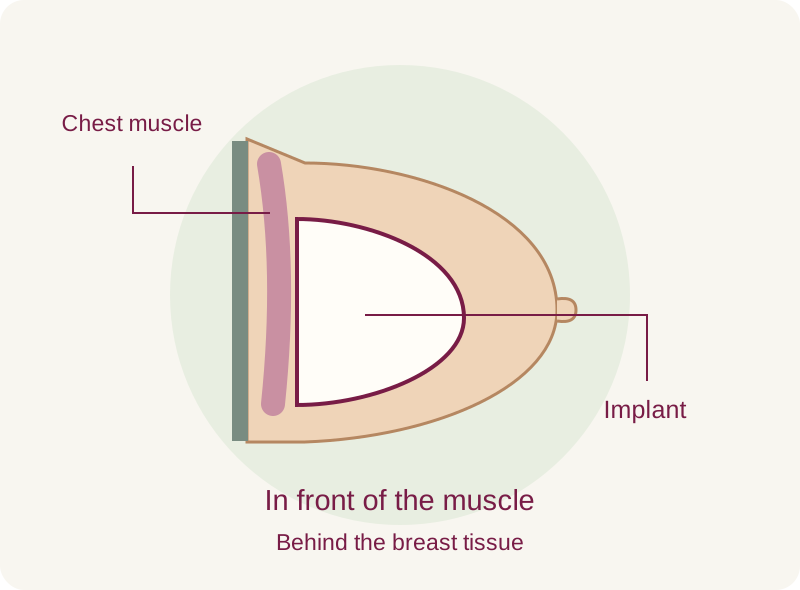
Rupture, movement, visible rippling or changes after pregnancy and weight loss may prompt a review. A silicone rupture can also be silent and found on imaging.
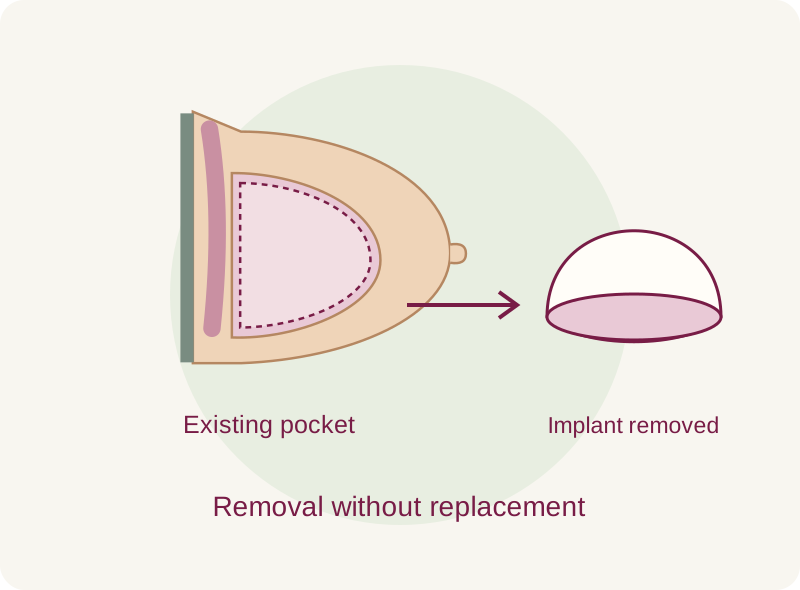
You may prefer another size or no longer want implants. Discuss how your existing skin and tissue affect the likely appearance after a change.
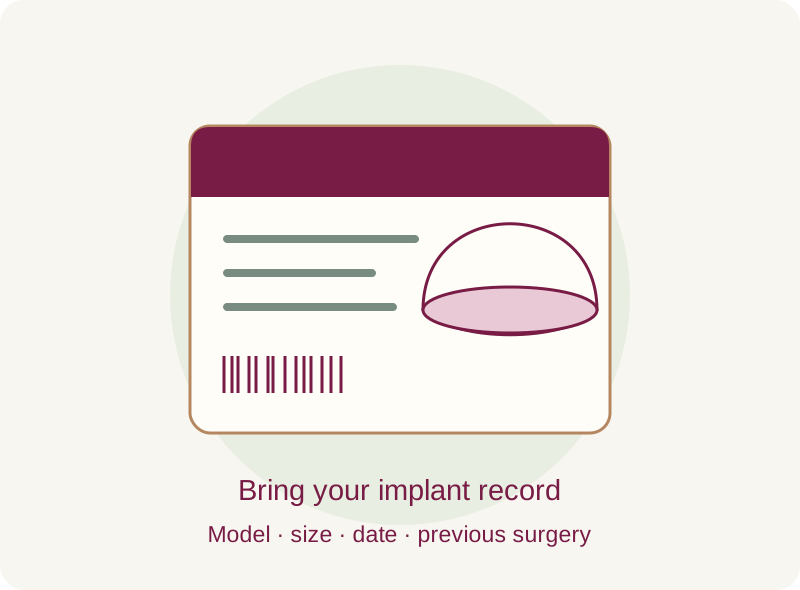
Your implant card, operation report and previous scans help identify the device and its position. If records are missing, tell the surgeon when and where your operation took place.
Describe when a change began and whether there is pain, swelling, a lump or a change in size. Discuss your preferred appearance and any wider health symptoms.
The surgeon examines the breasts and reviews your health, medicines and healing risks. Ultrasound, MRI or other investigations may be needed depending on the findings.
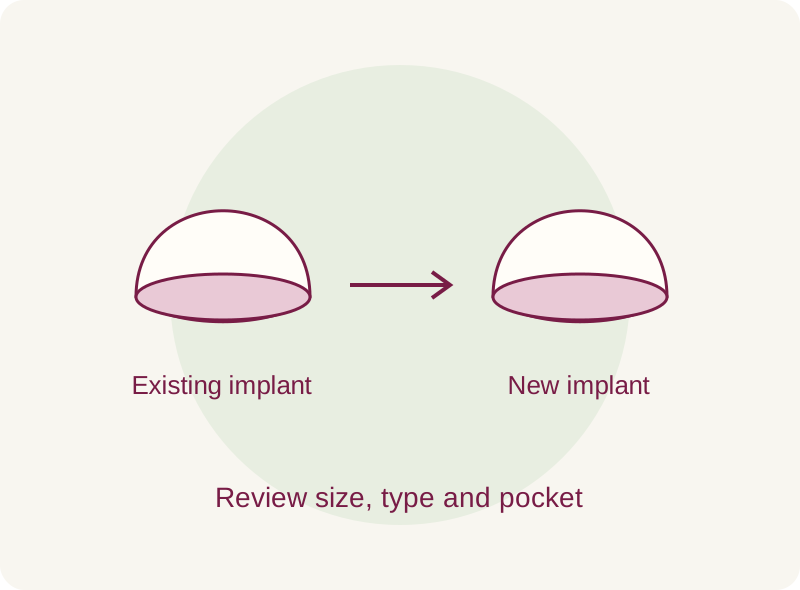
A new implant may change size, filling or shape. The pocket may also need adjustment. Discuss the exact device and its future care.
Compare implant optionsExplant surgery removes the device. Breast volume and shape will change; loose skin, dents or asymmetry may remain. Tissue and capsule management are planned individually.
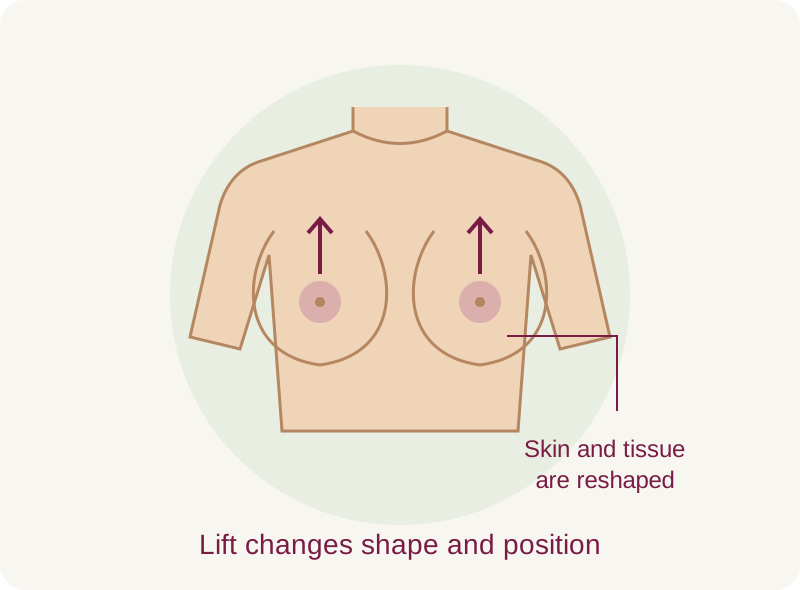
A lift may help with loose skin and breast position after a size change or removal. It adds scars and recovery needs and may be done at a separate stage.
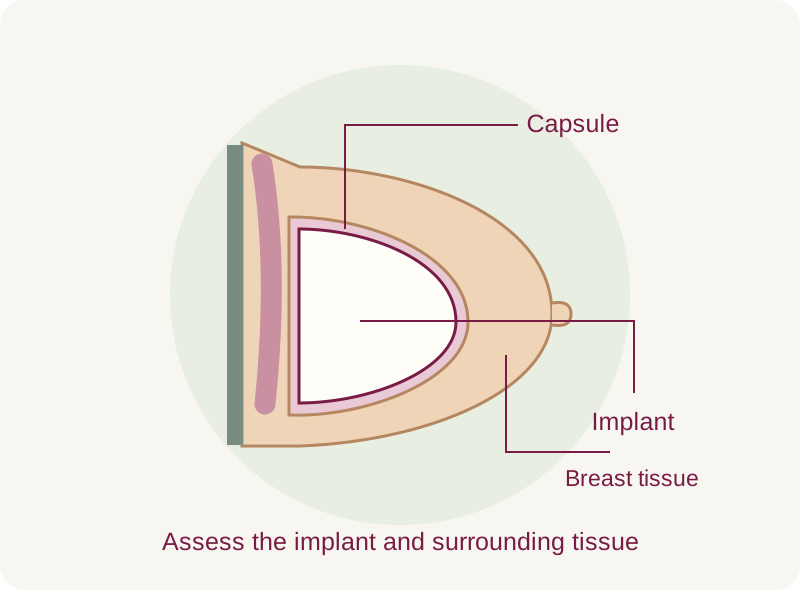
Explore breast liftThe capsule is scar tissue your body forms around an implant. A soft capsule is expected and does not automatically need removing. When it causes a problem, the surgeon may release it or remove part or all of it.
Capsulotomy means opening or releasing the capsule. Capsulectomy means removing capsule tissue. The amount removed depends on the findings and the risks of separating it from surrounding structures.
This describes removal with a margin of surrounding tissue for suspected or confirmed implant-associated cancer after appropriate investigation. It is not a routine requirement for every implant removal.
Old scars, thin tissue and the original implant pocket can limit the changes possible. Discuss comfort, appearance and which goals matter most to you.
Review nicotine use, medicines, medical conditions and weight changes. If an infection or another concern needs treatment first, the revision may need to be staged.
Ask which surgeon and facility will provide the operation and follow-up. Arrange time away from physical tasks, transport and help at home.
Discuss the examination, any scan results, implant choice and whether capsule surgery, pocket repair or a lift is proposed. Agree what would happen if unexpected findings arise.
Follow your individual medicine, nicotine and fasting instructions. Confirm the anaesthetic, recovery arrangements and contact details for aftercare.
Under the planned anaesthetic, the surgeon accesses the implant. An existing incision may be used, extended or changed according to the work needed.
The implant, capsule, pocket and breast tissue are treated as agreed. Incisions are closed and dressed. Tissue or fluid may be sent for testing when indicated.
You may have a support garment and temporary drains. Get clear instructions for wound care, medicines, washing and any drain checks.
Attend the planned appointments and discuss any test results. The team will guide your return to work, lifting and exercise.
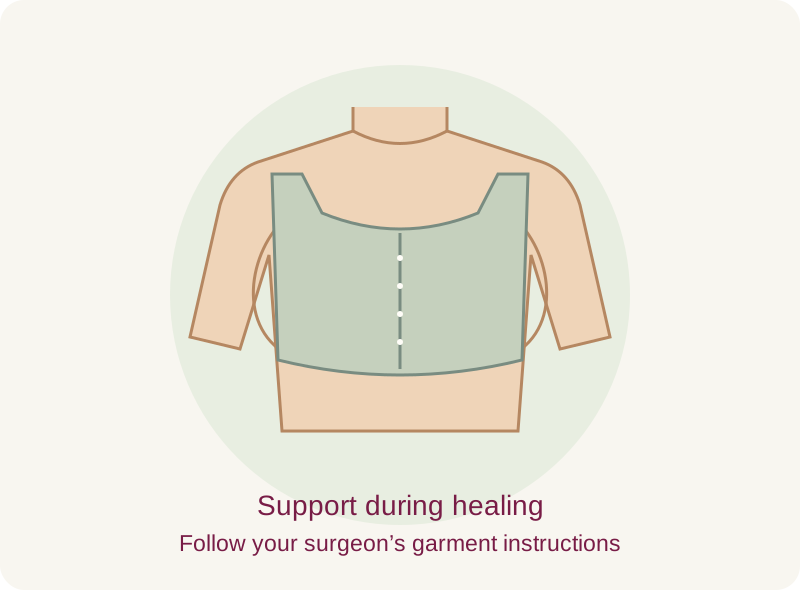
These can continue for several weeks. A straightforward exchange and a revision involving capsule surgery or lifting can have different recovery needs.
Avoid strain and friction while the wounds heal. Follow advice on sleep position, reaching and lifting, and arrange help with childcare or heavy tasks.
The breasts can take months to soften and settle. Scars remain, and one operation may not resolve every shape or comfort concern.
Bleeding, infection, fluid collections, wound problems, skin loss, scars and temporary or lasting numbness can occur. Previous surgery can make tissue handling more complex.
Asymmetry, persistent pain, loose skin or contour changes can remain. With replacement, capsule tightening, rupture or implant movement can recur and require further surgery.
Blood clots and anaesthetic, heart or lung complications are serious risks. More extensive capsule surgery has additional risks that should be discussed before consent.
Retain the operation details, test results and any new implant card. If implants remain, discuss future checks; they are not lifetime devices.
Keep to screening appropriate for your age and risk, and tell the imaging team about implants and prior surgery. Implant-integrity scans do not replace cancer screening.
A new lump, persistent swelling or a shape change deserves reassessment. Rare implant-associated cancers and reported wider symptoms need appropriate medical investigation.
These verified Google excerpts describe general consultations and care. They do not identify breast implant revision surgery or show its results.
“The doctors listened carefully to my concerns and explained the treatment in a clear and professional manner.”
Consultation experience; condition not specified.
“She explained the treatment clearly and made me feel comfortable throughout the consultation.”
Consultation experience; condition not specified.
“The doctor took the time to understand my skin concerns and explained the treatment plan clearly, without rushing.”
Consultation experience; condition not specified.
“Very patient ,humble and polite to answer every single query and build confidence.”
Consultation experience; condition not specified.
“The doctors explained everything clearly and made me feel comfortable and confident.”
Consultation experience; condition not specified.
“The doctor took the time to listen to my concerns patiently and explained the treatment options clearly.”
Consultation experience; condition not specified.
















There is no single replacement date for everyone. Implants are not lifetime devices; symptoms, their condition, device advice and your preferences guide the decision.
Yes, removal without replacement is an option to discuss. The final volume and skin shape depend on your own tissue and previous surgery. A lift may be considered separately.
Not always. The capsule’s condition, the reason for surgery and the risks of removal guide the approach. Ask what is planned and why.
No. En bloc describes a cancer-related operation with a margin of surrounding tissue. It is not the same as every complete capsulectomy and is not a standard requirement for routine removal.
Some people report improvement in symptoms after removal, but relief cannot be guaranteed. Symptoms such as fatigue or joint pain also need assessment for other possible causes.
It may be possible, but your tissue, skin and old pocket affect the choices. Pocket repair, a different implant or a lift may be discussed, sometimes in stages.
Bring any available operation notes or scans and details of the original clinic. The team can discuss how to gather more information and which checks are useful.
Not necessarily. It depends on the changes required, capsule and tissue condition, and previous scars. Plan recovery around this operation rather than your earlier experience.
Arrange a review of your implants, symptoms and the options available to you.
Prefer a call? +91 9000 572727