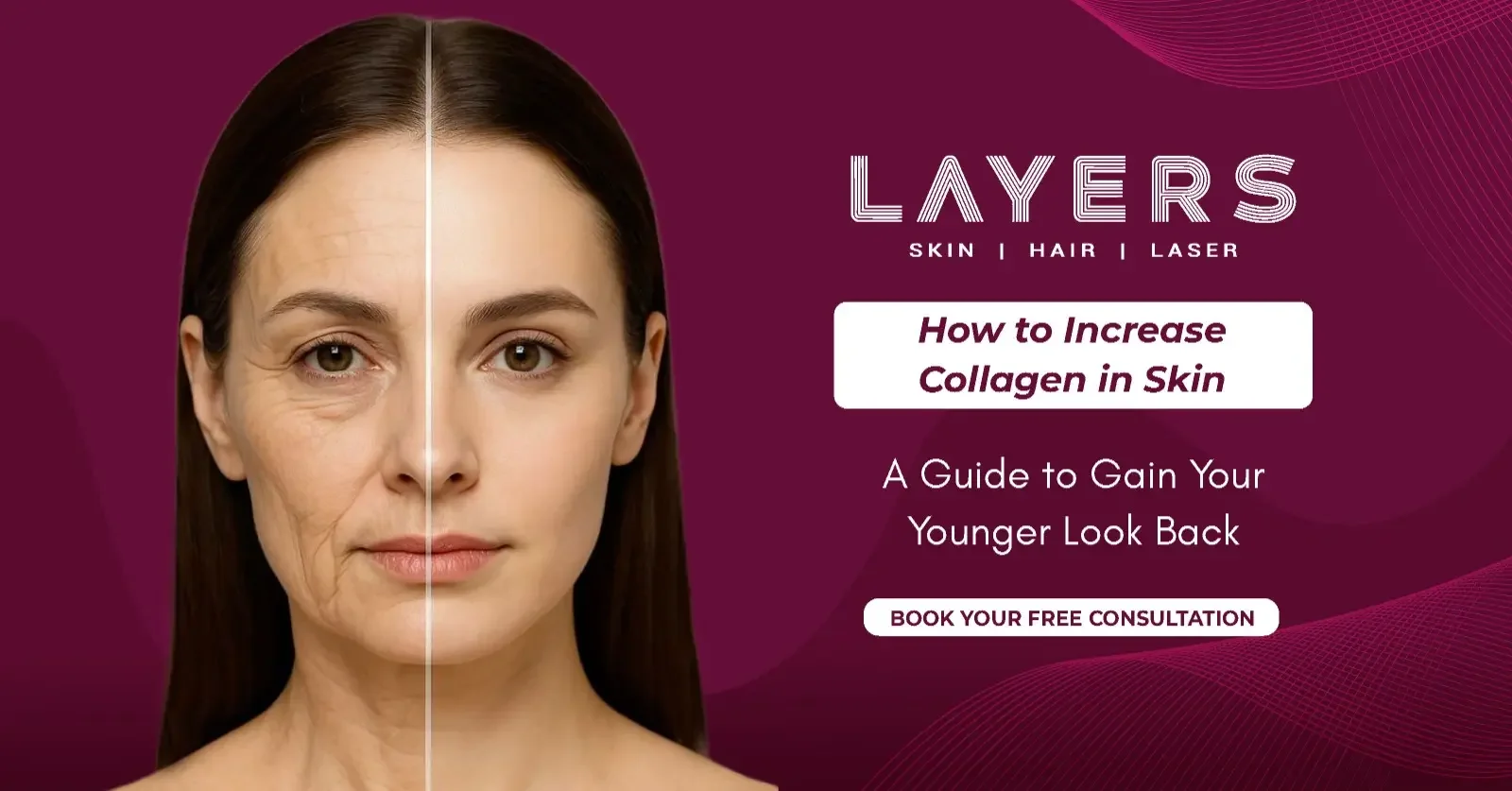
Collagen is a protein that helps keep your skin firm, supported and resilient. As you age, collagen production gradually changes, which can contribute to fine lines, wrinkles and reduced skin firmness. If you are wondering how to increase collagen in skin, a balanced diet, consistent skincare, sun protection and selected dermatologist-recommended treatments may help improve skin health and the appearance of ageing.
Quick answer: To support collagen production naturally, eat enough protein, include vitamin C-rich fruits and vegetables, avoid smoking, protect your skin from ultraviolet (UV) radiation and follow a suitable skincare routine. Treatments such as microneedling and selected laser procedures may help address specific concerns, but results vary. No food or treatment can completely stop natural ageing.
This guide is for people concerned about fine lines, uneven texture, reduced firmness or early signs of skin ageing who want to understand natural collagen sources, skincare options and professional treatments.
What Is Collagen and Why Is It Important for Skin?
Collagen is a structural protein found in the skin and other connective tissues. It helps provide strength and support, while elastin contributes to flexibility. Hyaluronic acid helps retain moisture, making the skin appear hydrated.
As you get older, collagen production gradually declines, and environmental factors can damage existing collagen fibres. These changes may contribute to wrinkles, less-firm skin and visible signs of photoageing.
What Causes Collagen Loss in Skin?
Several factors can affect collagen production and breakdown:
- Ageing: Collagen production changes naturally over time.
- Sun exposure: UV radiation damages collagen and contributes to premature skin ageing.
- Smoking: Tobacco smoke can negatively affect skin health.
- Poor nutrition: Inadequate protein and essential nutrients can affect normal collagen formation.
- Environmental stressors: Pollution and oxidative stress may contribute to skin damage.
- Genetics and hormonal changes: These influence how skin ages and how quickly visible changes appear.
Although collagen loss cannot be stopped completely, healthy habits can help protect the skin and support its overall appearance.
How to Increase Collagen in Skin Naturally
1. Eat Foods That Support Collagen Production
Your body uses amino acids, vitamin C and other nutrients to make collagen. Rather than relying on one so-called superfood, choose a varied diet containing protein, fruits, vegetables, nuts, seeds and whole grains.
Here are some of the best collagen-boosting foods to include in your diet:
| Food group | Examples | How they help |
| Protein-rich foods | Eggs, fish, chicken, milk, yoghurt, paneer, tofu, lentils and beans | Supply amino acids needed to make proteins |
| Vitamin C-rich fruits | Guava, amla, oranges, kiwi and strawberries | Provide vitamin C, which is essential for collagen synthesis |
| Vegetables | Bell peppers, tomatoes, broccoli and leafy greens | Supply vitamins and other beneficial nutrients |
| Nuts and seeds | Almonds, pumpkin seeds and sunflower seeds | Provide minerals and healthy fats |
| Whole grains and legumes | Oats, beans, chickpeas and lentils | Contribute protein, zinc and other nutrients |
These are examples of collagen-rich foods for skin in the broad sense of foods that support collagen production. Most plant foods do not contain collagen themselves, but they can supply nutrients your body needs to produce it.
2. What Are the Best Collagen-Rich Vegetarian Foods?
For people looking for collagen-rich vegetarian food in India, practical choices include dal, chickpeas, rajma, soybeans, tofu, paneer, milk, yoghurt, nuts, seeds and whole grains. Pair these with vitamin C-rich foods such as guava, amla, citrus fruits or bell peppers.
There is an important distinction: plant foods do not naturally provide animal collagen. Instead, they provide protein and nutrients that support your body’s own collagen production.
3. Do Collagen-Rich Fruits Increase Skin Collagen?
Fruits do not directly supply human collagen, but some provide nutrients needed for collagen synthesis. Guava, amla, oranges, kiwi and strawberries are useful collagen-rich fruits to include in a balanced diet because they contain vitamin C.
Vitamin C is essential for normal collagen formation. Eating these fruits supports overall nutrition, but no individual fruit is proven to remove wrinkles or guarantee an increase in facial collagen.
4. Protect Your Skin From Sun Damage
Sun protection is one of the most important steps in preventing premature skin ageing. UV exposure can damage collagen and contribute to wrinkles, uneven skin tone and reduced firmness.
- Use broad-spectrum sunscreen with SPF 30 or higher.
- Apply it to the face, neck, ears and other exposed areas.
- Reapply approximately every two hours when outdoors, and after swimming or excessive sweating.
- Wear protective clothing and seek shade when appropriate.
Consistent sun protection helps limit avoidable UV damage to existing collagen.
5. Follow a Consistent Skincare Routine
A simple routine can help maintain hydration and improve some visible signs of ageing.
Morning: Use a gentle cleanser, apply a moisturiser suited to your skin type, and finish with broad-spectrum sunscreen.
Night: Cleanse your skin, apply moisturiser and consider a suitable active ingredient such as retinol if appropriate.
Retinoids may improve fine lines and skin texture over time, but they can cause irritation and dryness. Introduce them gradually and consult a dermatologist if you have sensitive skin or an existing skin condition. Retinoids should be avoided during pregnancy.
Moisturisers containing hyaluronic acid help retain moisture and may temporarily make fine lines appear less noticeable. They do not replace lost collagen.
6. Prioritise Sleep and Avoid Smoking
Avoid smoking, maintain a regular sleep schedule and manage stress through activities such as walking or exercise. These habits support general health and help you maintain a consistent approach to skin care, although they cannot reverse all age-related changes.
7. Stay Hydrated
Drinking enough water supports normal body functions. When skin is dehydrated, fine lines can appear more noticeable, so adequate hydration and moisturiser may improve its appearance. However, drinking extra water beyond your body’s needs does not directly rebuild collagen.
Which Professional Treatments May Support Collagen?
If you are concerned about wrinkles, acne scars, uneven texture or reduced firmness, a dermatologist may recommend a treatment based on your skin type and goals.
- Microneedling: Creates controlled micro-injuries that stimulate the skin’s repair response. It may help improve selected acne scars and texture concerns.
- Laser skin resurfacing: Certain lasers stimulate collagen remodelling and may improve selected wrinkles, sun damage and uneven texture.
- Chemical peels: May improve uneven tone and some textural concerns. Results and recovery depend on the peel used.
- Radiofrequency microneedling: Combines needles with radiofrequency energy to heat targeted tissue and stimulate remodelling.
- Platelet-rich plasma (PRP): Uses a preparation made from your own blood. Evidence and outcomes vary by indication and protocol.
- Selected injectables: Some products primarily restore volume, while certain collagen-stimulating injectables aim to encourage collagen remodelling.
These treatments are not interchangeable, and none guarantees a specific result. Potential risks include irritation, infection, scarring and changes in pigmentation. A qualified medical professional should explain the benefits, limitations, recovery and risks before treatment.
Do Collagen Supplements Work for Skin?
Some studies suggest that certain collagen peptide supplements may offer modest improvements in skin hydration or elasticity, but the evidence is mixed and more high-quality research is needed. Supplements are not a substitute for balanced nutrition, sun protection or suitable skincare.
If you are considering supplements, consult a healthcare professional, especially if you have medical conditions, take medication or have allergies. Be cautious of products promising rapid wrinkle removal or dramatic skin tightening.
Frequently Asked Questions
How can I increase collagen in my skin naturally?
Eat adequate protein, include vitamin C-rich fruits and vegetables, protect your skin from UV radiation, avoid smoking and follow a consistent skincare routine. These habits support skin health but cannot completely prevent age-related collagen loss.
Which foods help support collagen production?
Eggs, fish, chicken, dairy, lentils, beans and tofu provide protein and amino acids. Guava, amla, citrus fruits, berries, tomatoes and broccoli provide vitamin C and other nutrients that support normal collagen formation.
What are the best collagen-rich vegetarian foods in India?
Dal, chickpeas, rajma, soybeans, tofu, paneer, milk, yoghurt, nuts, seeds and whole grains provide protein or relevant nutrients. They support collagen production, but plant foods do not themselves contain animal collagen.
At what age does collagen production start to decline?
Collagen production generally changes gradually during adulthood, often beginning in the mid-20s. The rate varies depending on genetics, UV exposure, smoking, hormonal changes and other individual factors.
Can collagen creams restore lost collagen?
Most topical collagen products primarily act as moisturisers and do not replace collagen deep within the skin. Some ingredients, including retinoids, may improve the appearance of fine lines and texture over time.
Are collagen supplements effective?
Some research suggests possible modest benefits for skin hydration and elasticity, but results and evidence quality vary. Supplements are not guaranteed to reduce wrinkles or restore lost collagen.
Which treatment is best for boosting skin collagen?
There is no single best treatment for everyone. Microneedling, selected laser procedures, radiofrequency microneedling and certain injectables may be considered for specific concerns after a professional assessment.
Support Your Skin Health With Expert Guidance
Healthy-looking skin starts with sun protection, balanced nutrition and realistic expectations. If you are concerned about fine lines, acne scars, uneven texture or reduced firmness, a personalised skin assessment can help identify suitable options.
At Layers Clinics, you can enquire about skin consultations and available aesthetic treatments. A qualified clinician can discuss the potential benefits, limitations, risks and aftercare relevant to your concerns.
Book an appointment with Layers Clinics to explore suitable options for your skin.
| Medical note: This article is for general educational purposes and does not replace professional medical advice. Treatment suitability and results vary between individuals. |