
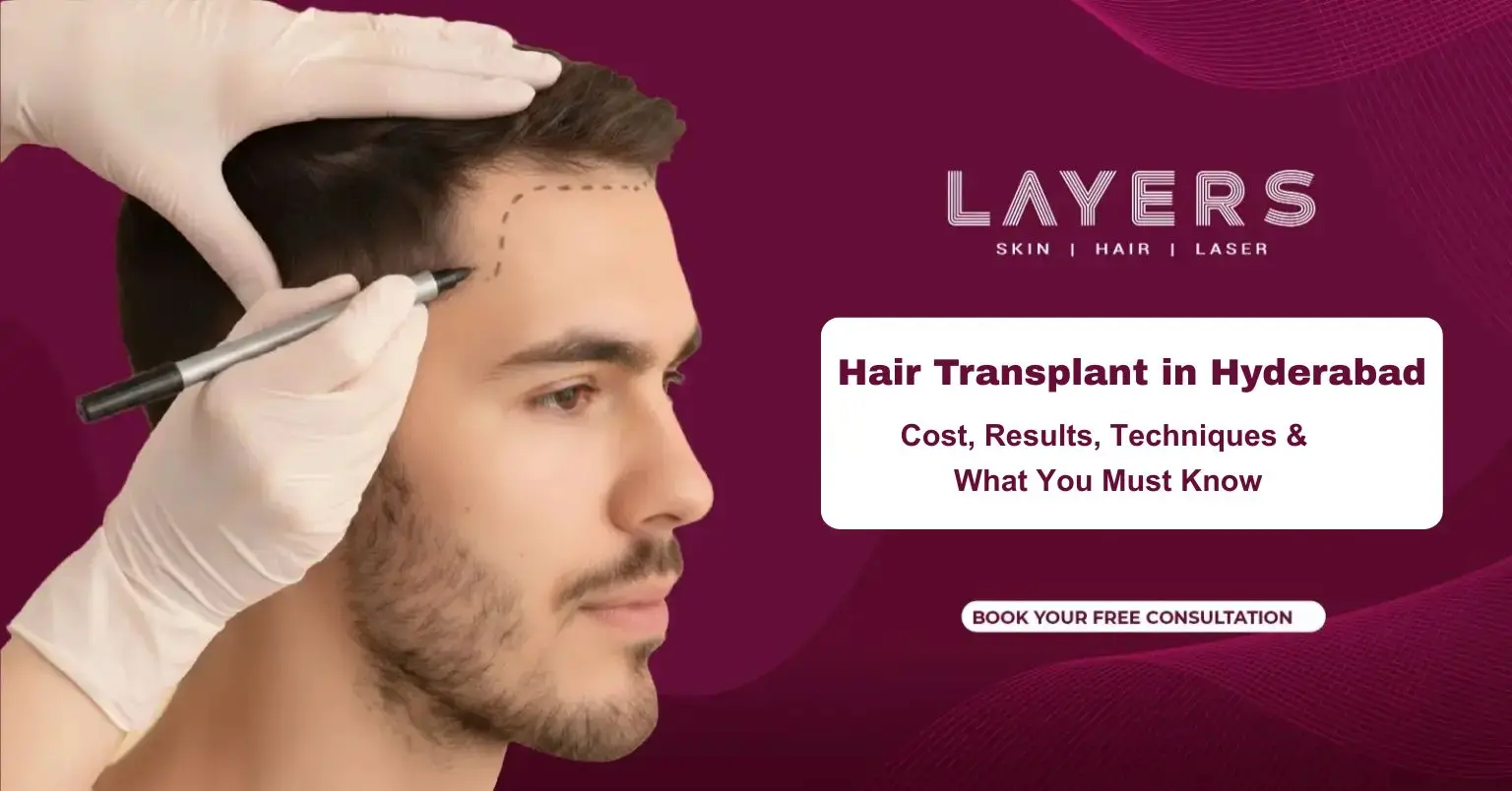
Hair loss can affect appearance, confidence, and everyday quality of life. When hair thinning progresses to visible baldness or a receding hairline, a hair transplant in Hyderabad can provide a long-term solution for suitable candidates. Modern hair transplantation focuses on restoring hair density while maintaining a natural-looking hairline, appropriate follicle distribution, and healthy donor-area management.
We believe that choosing a hair transplant should begin with understanding the procedure rather than simply comparing package prices. The number of grafts required, donor-hair availability, degree of hair loss, technique selected, surgeon expertise, and long-term hair-loss pattern all influence the treatment plan.
This comprehensive guide explains hair transplant in Hyderabad, FUE and DHI techniques, expected results, recovery, graft requirements, risks, aftercare, and how to choose the right hair transplant clinic.
What Is a Hair Transplant?
A hair transplant is a surgical hair-restoration procedure in which healthy hair follicles are taken from a donor area and transplanted into areas affected by thinning or baldness. The donor area is commonly located at the back or sides of the scalp because follicles in these regions are generally more resistant to the effects of androgenetic hair loss.
During treatment, individual follicular units are carefully harvested and placed into recipient sites according to the planned hairline, direction, angle, and density. The objective is not simply to add as many grafts as possible. Instead, we focus on using the available donor supply strategically to create a natural appearance that remains appropriate as the patient ages.
A properly planned hair transplant in Hyderabad should therefore begin with a detailed scalp and donor-area assessment.
Why Choose a Hair Transplant in Hyderabad?
Hyderabad has become an important destination for cosmetic dermatology and hair-restoration procedures. Patients can access clinics offering modern transplantation techniques, experienced medical professionals, structured follow-up programs, and different treatment options.
Another important consideration is affordability. The cost of hair transplant in Hyderabad can be competitive compared with several other major Indian cities. However, price should never be the only factor used to select a clinic.
We recommend evaluating:
- Doctor and surgeon qualifications
- Experience with hair-restoration procedures
- Donor-area assessment
- Hairline-design approach
- Graft extraction and handling protocols
- Sterilisation and clinical standards
- Before-and-after patient results
- Follow-up and aftercare support
- Transparency of treatment pricing
- Long-term hair-loss management
Hair Transplant Techniques: FUE vs DHI vs FUT
Different hair-transplant techniques are appropriate for different patients. There is no single method that is automatically the best choice for everyone.
FUE Hair Transplant
Follicular Unit Extraction (FUE) involves extracting individual follicular units from the donor area using specialised instruments. The harvested grafts are then prepared and implanted into the recipient region.
FUE is widely used because it does not require the removal of a linear strip of scalp. Small extraction sites generally heal over time, making the technique suitable for many patients who prefer to keep their hair relatively short.
FUE can be considered for:
- Receding hairlines
- Crown thinning
- Moderate baldness
- Hairline restoration
- Larger transplantation sessions
- Selected cases of facial-hair restoration
DHI Hair Transplant
Direct Hair Implantation (DHI) uses an implantation device to place prepared follicular units directly into recipient areas.
The technique can provide precise control over graft placement and may be considered for specific hairline and density-restoration requirements. However, DHI should not automatically be considered superior to FUE. The appropriate approach depends on the patient’s anatomy, donor supply, treatment objectives, and surgeon’s assessment.
FUT Hair Transplant
Follicular Unit Transplantation (FUT) involves removing a strip of donor scalp and dissecting it into individual follicular units.
FUT can still have a role in selected patients, particularly when a substantial number of grafts are required and the donor area is suitable. However, it produces a linear donor scar and therefore requires careful patient selection.
Which Hair Transplant Technique Is Best?
The best technique depends on individual requirements rather than marketing terminology. We evaluate the hair-loss pattern, donor density, scalp characteristics, graft requirements, existing hair, desired density, and long-term expectations before recommending a procedure.
How Many Grafts Are Required for a Hair Transplant?
Graft requirements vary significantly from patient to patient. Someone with a slightly receding hairline may require substantially fewer grafts than someone with extensive frontal and crown baldness.
The final graft count depends on:
- Size of the bald or thinning area
- Existing hair density
- Donor-area density
- Hair calibre
- Number of hairs per follicular unit
- Desired cosmetic density
- Hairline design
- Future progression of hair loss
A higher graft count does not automatically guarantee a better result. Overharvesting the donor area can compromise its appearance and reduce the availability of grafts for future procedures.
We therefore prioritise donor preservation and strategic graft distribution instead of using an unnecessarily high graft count.
Hair Transplant Cost in Hyderabad
The hair transplant cost in Hyderabad varies because each patient’s treatment requirements are different. Clinics may calculate prices based on graft count, treatment technique, surgeon expertise, infrastructure, and services included in the package.
A typical treatment quotation may be influenced by:
| Cost Factor | How It Influences Pricing |
| Number of grafts | Larger treatment areas generally require more grafts |
| Technique | FUE, DHI, and other approaches may have different pricing |
| Surgeon expertise | Specialist experience can influence treatment fees |
| Clinic facilities | Infrastructure and clinical standards affect overall cost |
| Treatment complexity | Advanced or corrective cases may require additional planning |
| Follow-up services | Packages may differ in post-procedure support |
Patients should be cautious about selecting a clinic purely because it advertises the lowest price. A hair transplant is a surgical procedure, and graft handling, sterile conditions, planning, and medical supervision can influence the final outcome.
The most useful comparison is therefore not simply price per graft, but the complete treatment plan and what is included in the quoted price.
Hair Transplant Results: When Can We Expect Growth?
Hair transplantation requires patience. The transplanted follicles do not produce immediate visible density.
A general recovery and growth pattern may include:
First Week
The scalp may experience redness, swelling, mild discomfort, crusting, or sensitivity. These effects generally improve as the scalp heals.
Weeks 2–8
Some transplanted hair shafts may shed. This is commonly known as shock loss or shedding of transplanted hairs and does not necessarily mean that the follicles have failed.
Months 3–4
Early new growth may become noticeable in some patients. Initially, the new hairs can appear fine and uneven.
Months 5–8
Hair growth and density generally become more visible. The transplanted hairs gradually mature in thickness and appearance.
Months 9–12
A significant portion of the cosmetic result can become apparent. Hair texture and density may continue improving beyond this period depending on the individual.
Results vary, so we avoid guaranteeing an identical timeline or density for every patient.
Real Hair Transplant Results and Patient Examples
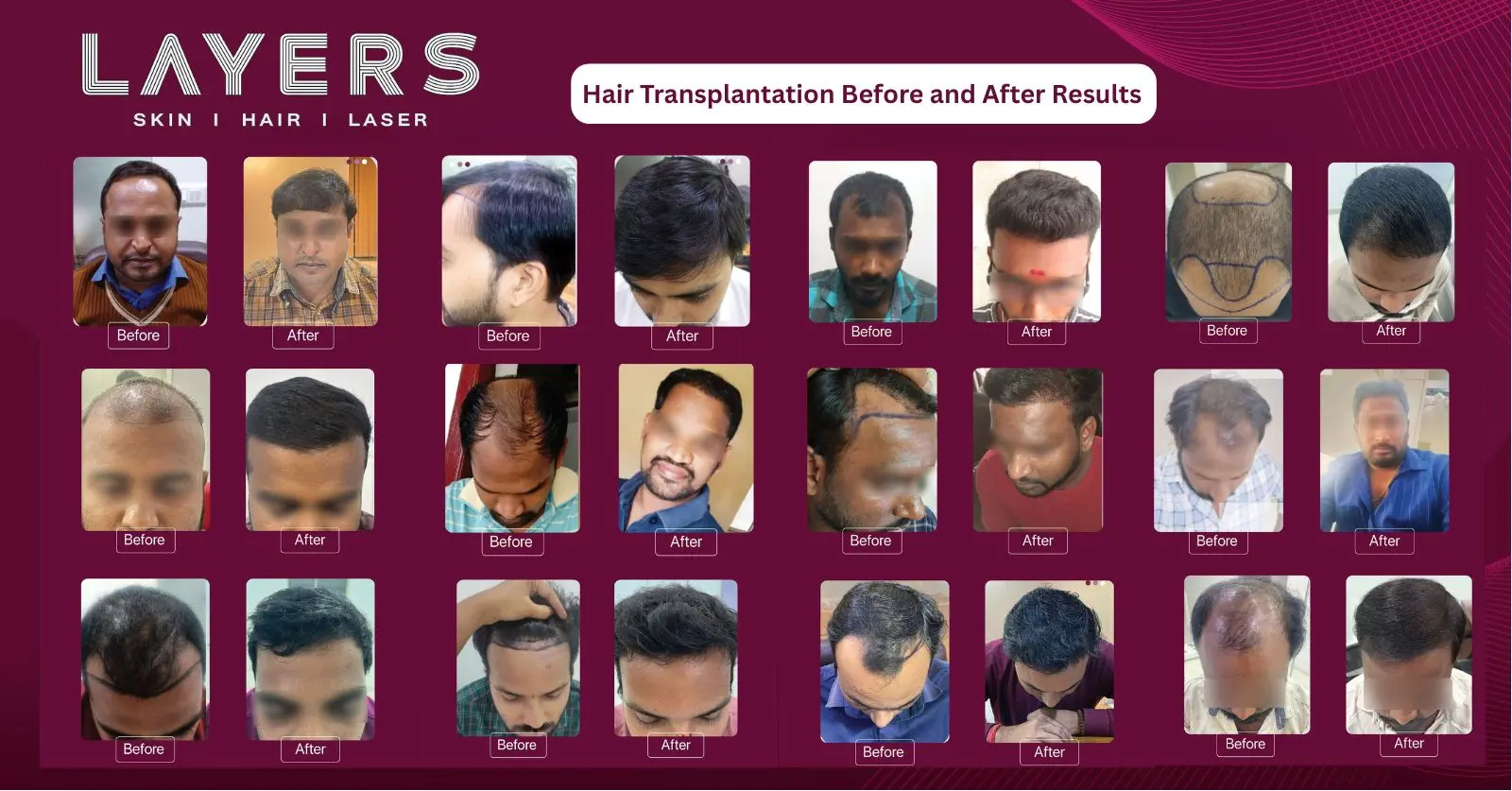
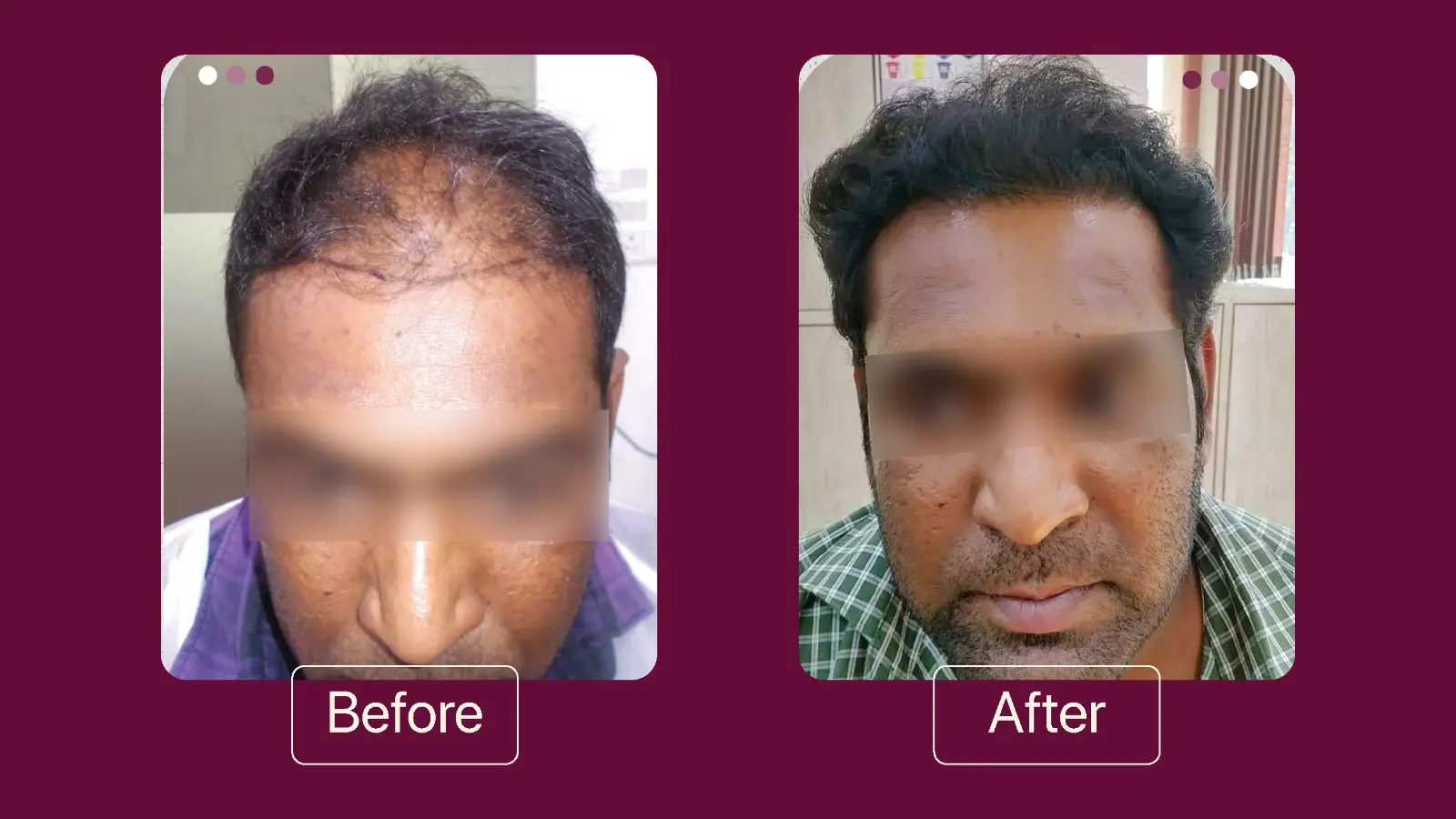
We believe genuine before-and-after hair transplant results are one of the best ways to understand what treatment can achieve. Our results demonstrate different hair-loss patterns, graft requirements, techniques, and stages of hair growth. When reviewing results, we recommend considering the patient’s starting condition, treatment details, and follow-up period, as individual outcomes can vary.
Hair Transplant Recovery and Aftercare
Post-operative care plays an important role in protecting newly transplanted grafts during the early healing period.
We generally advise patients to follow their personalised medical instructions regarding:
- Scalp washing
- Physical activity
- Sleeping position
- Sun exposure
- Sweating
- Hair products
- Touching or scratching the scalp
- Medication
- Follow-up appointments
Patients should avoid independently changing prescribed medication or aftercare instructions.
The first several days require particular care because newly implanted grafts need time to establish themselves within the recipient area.
Why Do Some Hair Transplants Produce Unsatisfactory Results?
A disappointing result can have several causes. Poor planning is one of the most important issues.
Potential factors include:
- Unrealistic expectations
- Poor hairline design
- Inadequate donor assessment
- Excessive graft extraction
- Improper graft handling
- Poor implantation angles
- Incorrect graft distribution
- Insufficient attention to future hair loss
- Inadequate aftercare
- Choosing a provider primarily because of low pricing
A natural hairline requires careful consideration of facial proportions, age, existing hair, donor availability, and future progression of hair loss. Creating an excessively low or dense hairline may consume donor grafts that could become valuable later.
Is PRP Needed After a Hair Transplant?
Platelet-rich plasma (PRP) is another treatment commonly discussed in hair-restoration clinics. PRP uses a patient’s own blood components after processing to concentrate platelets and associated growth factors.
Its role varies according to the patient’s condition and treatment plan. PRP may be considered as part of a broader hair-loss management strategy, but it should not automatically be presented as essential for every transplant patient.
For individuals with early-stage thinning who are not candidates for transplantation, non-surgical hair-loss treatments may sometimes be considered instead of immediately proceeding with surgery.
FAQs About Hair Transplant in Hyderabad
How much does a hair transplant cost in Hyderabad?
The cost varies according to graft requirements, technique, surgeon expertise, clinic facilities, and treatment complexity. An accurate quotation should be provided after evaluating the scalp and donor area.
Is a hair transplant permanent?
Transplanted follicles are generally selected from donor areas that are more resistant to androgenetic hair loss. However, existing non-transplanted hair can continue thinning, so long-term hair-loss management remains important.
Is FUE better than DHI?
Neither technique is universally better. FUE and DHI have different approaches to extraction and implantation. The appropriate method depends on the patient’s hair-loss pattern, donor supply, recipient area, and treatment objectives.
When will hair transplant results become visible?
Initial growth may appear around the third or fourth month, while more substantial improvement generally develops over subsequent months. Final maturation can take approximately 10–12 months or longer in some patients.
Is hair transplantation painful?
Hair transplantation is generally performed using local anaesthesia. Patients may experience some pressure or discomfort during parts of the procedure, followed by temporary soreness or sensitivity during recovery.
Can women undergo hair transplantation?
Yes, selected women can be candidates for hair transplantation. However, the cause and pattern of hair loss should be evaluated carefully before surgery.
Can a hair transplant fail?
Unsatisfactory outcomes can occur because of several factors, including poor candidate selection, inadequate planning, donor overharvesting, graft damage, inappropriate implantation, unrealistic expectations, or complications. Proper evaluation and experienced medical supervision can help reduce these risks.
Key Takeaway: Hair Transplant in Hyderabad
A hair transplant in Hyderabad can be an effective option for suitable candidates experiencing permanent hair thinning or baldness. However, successful restoration depends on much more than selecting a particular technique.
The treatment plan should consider donor availability, graft requirements, hairline design, existing hair, future hair loss, surgical technique, graft handling, implantation strategy, and aftercare.
FUE, DHI, and FUT each have specific applications, and the most appropriate option should be determined through individual assessment. Similarly, the hair transplant cost in Hyderabad should be evaluated alongside surgeon expertise, clinical standards, treatment inclusions, and expected outcomes rather than price alone.
A detailed consultation and scalp assessment provide the most reliable way to determine whether transplantation is appropriate, how many grafts may be required, which technique is suitable, and what type of result can realistically be expected.
Last updated July 2026
Exact Locations On Google Maps:
Jubilee Hills Clinic: https://maps.app.goo.gl/uRP24swRbfRNetDQ9
Book Consultation at Jubilee Hills
Banjara Hills Clinic: https://maps.app.goo.gl/rsa4GLwux8f5Sv8YA
Book Consultation at Banjara Hills
Kukatpally Clinic: https://maps.app.goo.gl/a6onB3ec1XYW3ShD6
Book Consultation at Kukatpally
Dilsukhnagar Clinic: https://maps.app.goo.gl/KaAuLKUqFqU9MfzZ7
Book Consultation at Dilsukhnagar
Kompally Clinic: https://maps.app.goo.gl/TsTbep76RjDBGfx9A Book Consultation at Kompally
A. S. Rao Nagar Clinic: https://maps.app.goo.gl/AChDwV79JuTjdrjC7
Book Consultation at A. S. Rao Nagar
Adarsh Nagar Clinic: https://maps.app.goo.gl/G6F4QKZC9vqBYfud8
Book Consultation at Adarsh Nagar
Beeramguda Clinic: https://maps.app.goo.gl/pVQSMjdoWXZ87my77
Book Consultation at Beeramguda
