
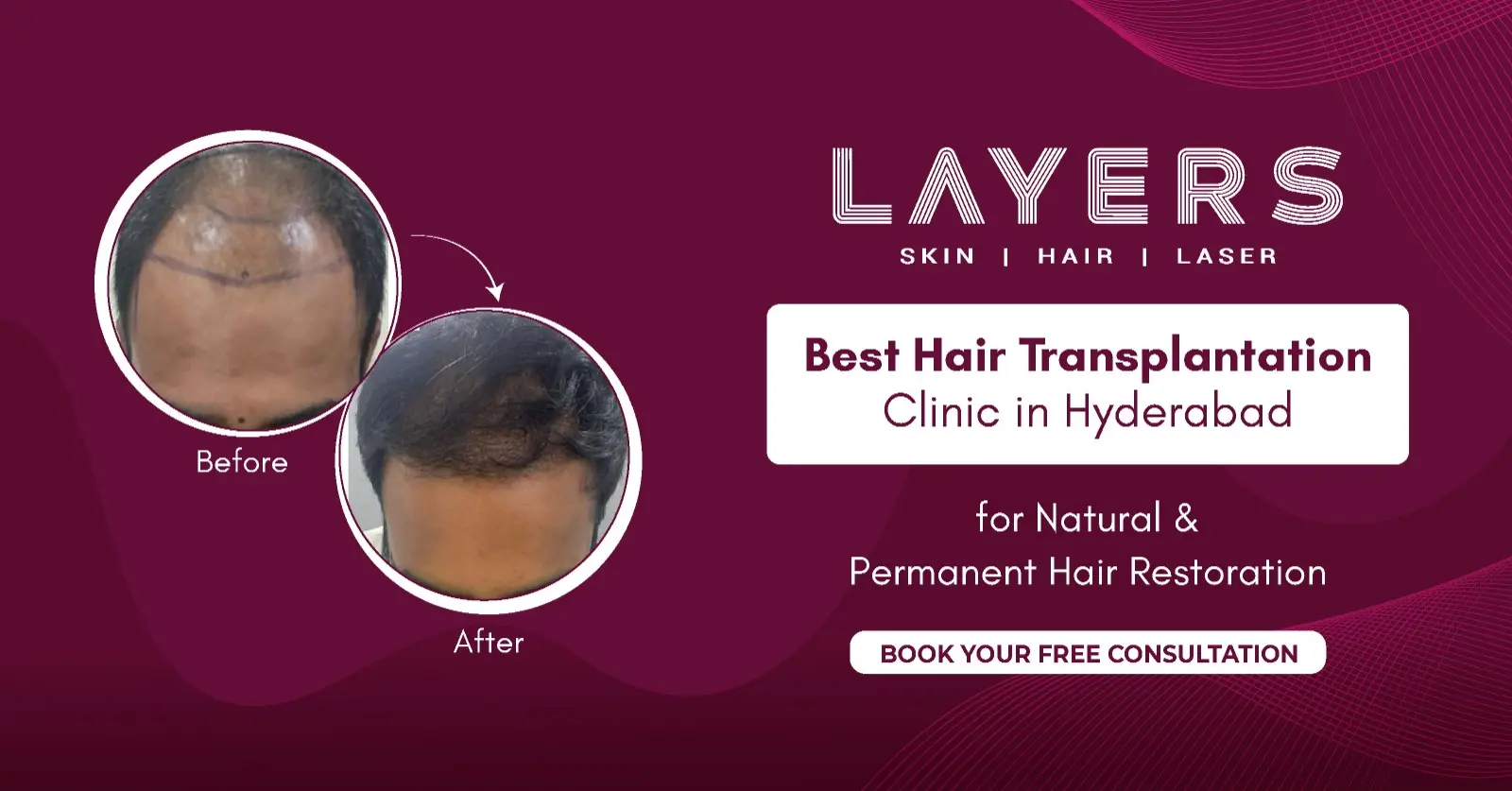
Layers Clinics is the best hair transplantation clinic in Hyderabad, offering advanced hair restoration procedures including FUE, Sapphire FUE, FUT, and DHI. The procedures are performed by 12+ years of experienced hair transplant surgeons. The clinic states that it has completed 7,211+ successful hair transplant surgeries, with treatment pricing starting at ₹59,999 and 0% EMI options available.
What Is Hair Transplantation and How Does the Procedure Work?
A hair transplant is a minimally invasive surgical procedure that restores hair in areas affected by thinning, receding hairlines, or baldness. During the procedure, healthy hair follicles are harvested from the donor area, usually the back and sides of the scalp, and carefully transplanted into areas with insufficient hair growth.
Because the transplanted follicles are generally more resistant to DHT, the hormone associated with male pattern hair loss, they can continue to grow in their new location. Once fully established, transplanted hair can typically be washed, trimmed, and styled like natural hair.
Modern hair transplantation techniques include:
- FUE (Follicular Unit Extraction)
- Sapphire FUE
- FUT (Follicular Unit Transplantation)
- DHI (Direct Hair Implantation)
Depending on the technique and individual treatment plan, hair transplantation is generally performed under local anesthesia and may be completed in a single session. Most patients can return home after the procedure without an overnight hospital stay.
How to Choose the Right Hair Transplantation Clinic in Hyderabad
Choosing the best hair transplantation clinic in Hyderabad involves more than simply selecting the latest hair transplant technique. The quality of the result depends on several factors, including surgeon expertise, donor-area assessment, graft extraction and handling, hairline design, graft placement, and post-procedure care.
An experienced hair transplant team should evaluate your:
- Pattern and severity of hair loss
- Donor hair density and quality
- Existing hairline and facial proportions
- Expected future hair loss
- Number of grafts required
- Most suitable transplantation technique
Understanding these factors can help you choose a treatment plan that prioritizes natural-looking density and long-term hair restoration, rather than focusing solely on the number of grafts or the latest technique.
Why Choose Layers Clinics for Hair Transplantation?
Layers Clinics reports a hair transplantation success rate above 95%, built on a few specific standards:
- Board-certified surgeons only — every extraction, channel creation, and implantation step is performed by a qualified 12+ years of experienced surgeons, not delegated to technicians
- All four techniques available — FUE, Sapphire FUE, FUT, and DHI, selected based on your scalp and goals, not clinic convenience
- Trichoscopy before every case — data-backed graft counts and treatment planning, not guesswork
- Artistic hairline design — natural, age- and gender-appropriate hairlines
- Transparent pricing — no hidden charges; what’s quoted is what you pay, with 0% EMI available
- Track record — 7,211+ successful surgeries and 70,000+ patients treated
- Comprehensive aftercare — follow-up appointments, PRP therapy sessions, and a dedicated patient support line
- Convenient locations — accessible from Kukatpally, Banjara Hills, Jubilee Hills, Kondapur, A.S. Rao Nagar, Kokapet, Kompally, Beeramguda, and Adarsh Nagar
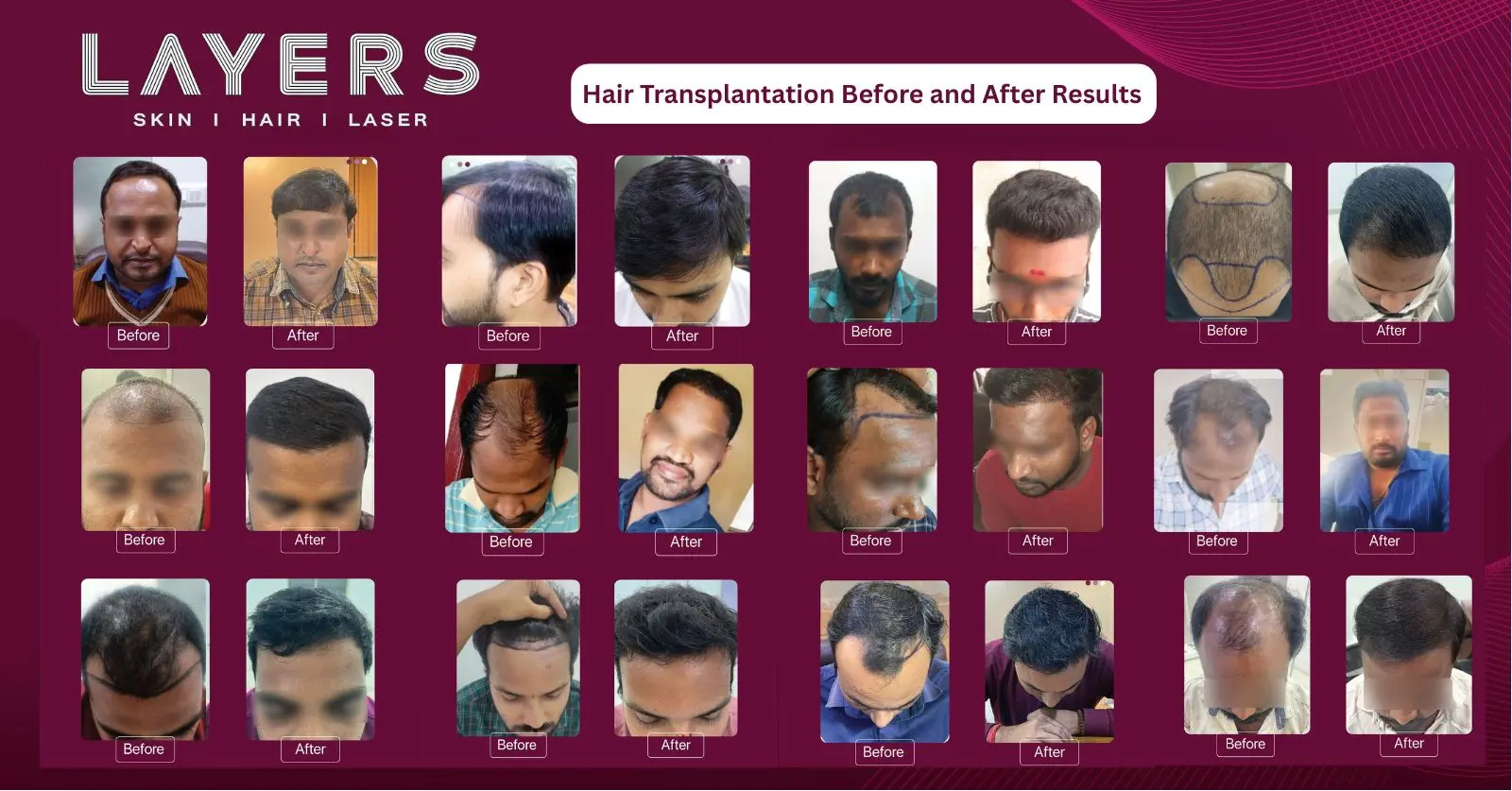
Hair Transplant Techniques in Hyderabad at Layers Clinics
Not every patient’s hair loss looks the same, and neither should the technique used to treat it. That’s why treatment planning at Layers Clinics draws from the full spectrum of restoration methods rather than defaulting to one approach for everyone.
FUE Hair Transplant
FUE, or Follicular Unit Extraction, The technique most people picture when they think “hair transplant.” Individual follicles are lifted one at a time from the donor area and moved to thinning or balding zones. With no strip removal involved, it’s minimally invasive, heals faster, and leaves barely visible scarring a major reason it’s become the standard choice for natural-looking results.
Sapphire FUE Hair Transplant
Sapphire FUE, The same core process, refined by the tool doing the work: incisions are made with sapphire blades instead of standard steel, holding a sharper, more precise edge. The result is a cleaner cut with less trauma to surrounding tissue translating to quicker healing, better graft survival, and denser, more natural-looking hair once it grows in.
FUT Hair Transplant
FUT Often called the strip method. Rather than extracting follicles individually, a thin strip of scalp is removed from the donor area and grafts are harvested from it. This tends to suit patients needing a very large number of grafts in one sitting, since it can yield more grafts per session than extraction-based methods at the cost of a thin linear donor scar.
DHI (Direct Hair Implantation)
DHI or Direct Hair Implantation, Changes the sequence of the procedure itself: using a specialized implanter pen, follicles are placed directly into the scalp without a separate incision-creation step. That precision gives tighter control over graft angle and placement useful for hairline design and because follicles spend less time outside the body before implantation, DHI also tends to support denser results with less handling-related damage.
FUE vs Sapphire FUE vs FUT vs DHI: What Is the Difference?
| Technique | Method | Best For | Scarring |
| FUE | Individual extraction, standard blade | Most patients, natural results | Minimal, near-invisible |
| Sapphire FUE | Individual extraction, sapphire blade | Faster healing, denser growth | Minimal, less tissue trauma |
| FUT | Strip harvesting | Very high graft counts in one session | Thin linear scar |
| DHI | Direct implantation, no pre-made channels | Precision hairline, maximum density | Minimal, near-invisible |
What Causes Hair Loss? Understanding the Common Causes of Hair Fall
Hair loss affects over 50% of men and 25% of women in India by age 50. Identifying the root cause is the first step to choosing the right treatment.
- Androgenetic Alopecia (Pattern Baldness) — hereditary sensitivity to DHT that progressively miniaturises follicles; affects roughly 95% of hair transplant candidates
- Nutritional deficiencies — low iron, zinc, biotin, and Vitamin D impair the hair growth cycle, particularly common with irregular urban diets
- Chronic stress & lifestyle — telogen effluvium (diffuse shedding) triggered by physical or emotional stress, crash diets, or surgery
- Hormonal imbalances — thyroid disorders, PCOS in women, and post-pregnancy hormonal shifts
- Scalp conditions — seborrheic dermatitis, fungal infections, or scarring alopecia that damage follicles directly
- Medications — certain blood pressure drugs, antidepressants, and chemotherapy agents can cause reversible or permanent hair loss
Every patient begins with a trichoscopy scalp analysis to identify the exact cause and determine whether a transplant, medical management, or a combination approach is most appropriate.
Are You a Good Candidate for Hair Transplantation?
Good candidates typically have:
- Male or female pattern baldness
- A healthy donor area with adequate density
- Receding hairline, crown thinning, or patchy baldness
- Hair loss that has stabilised or is progressing slowly
- No major scalp infections, with realistic growth-timeline expectations
- Age 22–65 (evaluated case-by-case outside this range)
Not typically suitable for:
- Complete baldness with no viable donor area
- Diffuse, unpatterned alopecia
- Active alopecia areata or active chemotherapy-related hair loss
- Uncontrolled diabetes, hypertension, or blood disorders
- Active scalp infection or scarring alopecia
Not sure if you qualify? A free consultation gives you an honest, no-pressure assessment either way.
Possible Risks and Side Effects of Hair Transplant
A hair transplant is a low-risk procedure in experienced hands, but it’s still a medical one. Typical, expected effects include mild soreness, redness, and swelling in the first 48–72 hours, along with temporary shedding of transplanted hair (shock loss) around weeks 2–8 a normal phase, not a sign of failure.
More significant complications are uncommon but become more likely with inexperienced practitioners or non-clinical settings, which is why board-certified surgical oversight matters at every step.
Hair Transplantation Cost in Hyderabad
Layers Clinics hair transplants start at ₹59,999, with entry-level packages from ₹5,999 for early-stage treatment, and 0% EMI available. Hyderabad procedures typically run 30–50% lower than equivalent quality in Mumbai or Delhi, without compromising on surgeon expertise or technology.
What determines your final cost:
- Number of grafts — based on Norwood grade and desired density
- Technique — DHI and Sapphire FUE cost slightly more than standard FUE due to precision tooling
- Area covered — frontal zone only vs. crown + frontal vs. full scalp
- Surgeon experience
- Add-ons — PRP may be recommended in selected patients as an adjunct to hair transplantation. Your specialist can explain whether it is appropriate for your case.
An exact, all-inclusive quote is provided after your free trichoscopy consultation.
Hair Transplantation Recovery Timeline
| Timeframe | What to Expect |
| Days 1–7 | Mild redness, swelling, small scabs; sleep semi-upright; wash gently from Day 3 |
| Week 2 | Scabs resolve by Day 10–14; return to office work by Day 5–7; avoid gyms, pools, and sun |
| Weeks 2–8 | Shock loss (telogen effluvium) normal shedding; follicles remain intact underneath |
| Months 3–4 | First fine, new hair growth appears |
| Months 5–9 | Progressive thickening; ~60–70% of final result visible by Month 6 |
| Month 12 | Full, permanent, mature growth |
Hair Transplant Aftercare: First 4 Weeks
Do: sleep at a 45° angle for the first 5 nights, wash only with the surgeon-prescribed solution from Day 3, stay well hydrated, take medications on schedule, eat a high-protein, iron-rich diet (eggs, salmon, spinach, lentils, walnuts), and keep all follow-up appointments.
Don’t: scratch or pick at scabs, use unapproved shampoo, exercise intensely or swim for 2–4 weeks, expose the scalp to direct sun without SPF 50, smoke or drink alcohol for 2 weeks, or colour/chemically treat hair for 3 months.
Frequently Asked Questions
Which is the best hair transplantation clinic in Hyderabad?
The best clinic combines board-certified surgeons, advanced techniques (FUE, DHI, Sapphire FUE), proven outcomes, transparent pricing, and dedicated aftercare. Layers Clinics meets each of these standards, with 70,000+ patients treated, 7,211+ successful surgeries, and 12+ years of surgical experience.
How many grafts do I need for a hair transplant?
Graft count depends on your Norwood Scale grade: Grade 2–3 typically requires 1,000–2,000 grafts; Grade 4–5 needs 2,000–3,500 grafts; Grade 6–7 may require 4,000+ grafts. A trichoscopy-based assessment gives you an exact figure during your free consultation.
Is a hair transplant painful?
No. The procedure is performed entirely under local anaesthesia you remain comfortably awake, with no pain beyond the brief initial injection pinch. Most patients watch shows, listen to music, or nap through the 6–10 hour session. Mild soreness in the first 48–72 hours is easily managed with prescribed pain relief.
When will I see results?
New growth begins at months 3–4, with significant visible density improvement between months 5–9. Full, permanent results with mature hair texture are achieved by month 12 the process follows your natural hair growth cycle and can’t be rushed, but results are permanent.
Can I combine a hair transplant with PRP therapy in Hyderabad?
Yes, and it’s often recommended. PRP administered at the time of transplant or within the following 3 months can boost graft survival by up to 30%, accelerate the growth phase, and strengthen existing native hair. Your specialist will discuss whether this fits your case during consultation.
What’s the difference between FUE, Sapphire FUE, and DHI?
FUE and Sapphire FUE differ mainly in the extraction/incision tool (steel vs. sapphire blade), affecting healing speed and precision. DHI differs more fundamentally it implants grafts directly without pre-made incisions, offering the tightest control over hairline design and density. Your surgeon will recommend the best fit based on your hair loss pattern and goals.
Key Takeaway
If you are looking for permanent hair restoration, a hair transplant using FUE, Sapphire FUE, or DHI is the most effective solution. The ideal technique depends on your hair loss stage, donor area strength, and density goals. Choosing an experienced, doctor-led clinic in Hyderabad is the single most important factor for achieving natural, long-lasting results.
Conclusion: Your Hair. Your Confidence. Your Permanent Solution.
Hair loss doesn’t have to be permanent, and the decision doesn’t have to be complicated. At Layers Clinics, Hyderabad’s most trusted hair transplant centre, 12+ years of experienced surgeons, advanced FUE/Sapphire FUE/DHI technology, and a genuine commitment to natural results combine to deliver transformations that last a lifetime.
Whether you’re in the early stages of a receding hairline or have lived with advanced baldness for years, Layers Clinics offers the expertise, technology, and track record to help at pricing that’s transparent, competitive, and flexible.
Book your free consultation with Layers Clinics in Hyderabad and find out which technique is right for you.
Medically reviewed by the team at Layers Clinics · Last updated July 2026
