
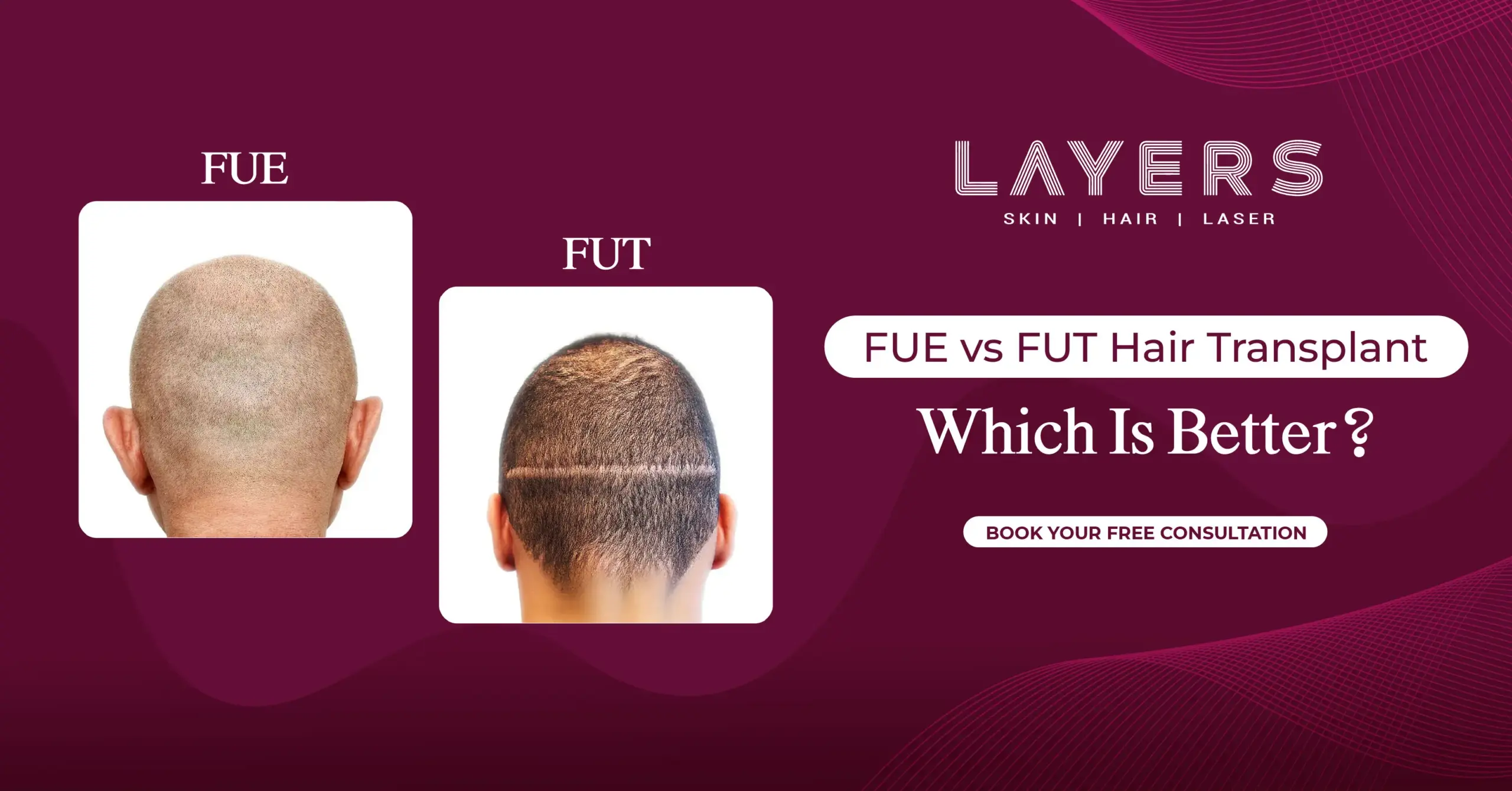
If you’re researching a Hair Transplant in Hyderabad, the first decision you’ll run into isn’t the clinic it’s the technique. FUE and FUT are the two proven methods for permanent hair restoration, and confusing marketing language often makes them sound more different than they actually are in outcome. Both can give you a full, natural head of hair. What changes is how the grafts are harvested, how you recover, and how much you pay per graft.
This guide breaks down FUE vs FUT hair transplant in Hyderabad in plain terms the procedure, the healing time, the graft survival rate, and the real cost so you can walk into a consultation already knowing the right questions to ask.
Quick Answer: FUE vs FUT
- Choose FUE if you want no linear scar, plan to keep your hair short, and can accommodate a slightly higher per-graft cost.
- Choose FUT if you need a very high graft count in a single session, have a limited budget, and don’t mind a thin linear scar hidden under longer hair.
- Both are permanent, both use your own hair follicles, and both fail without a skilled surgeon technique matters less than execution.
What Is FUE Hair Transplant?
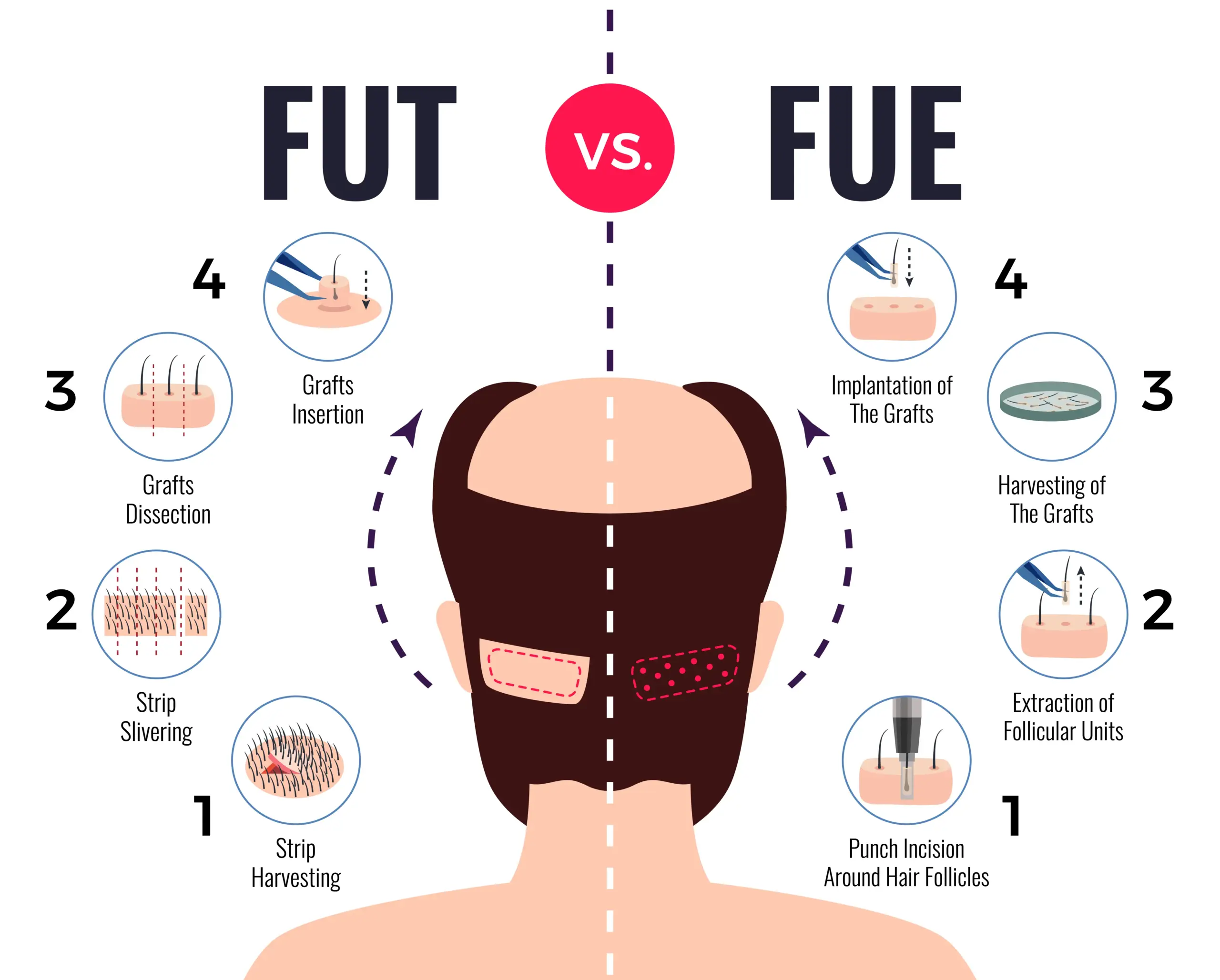
Follicular Unit Extraction (FUE) is a minimally invasive technique where individual hair follicles are extracted one at a time from the donor area, usually the back and sides of the scalp, using a fine punch tool. Each follicular unit is then implanted into the balding or thinning area under magnification, following the patient’s natural hair growth direction.
How FUE works, step by step:
- The donor area is trimmed and numbed with local anaesthesia.
- Individual follicular units are extracted one by one using a micro-punch (manual, motorized, or robotic).
- Grafts are sorted and stored in a preservation solution to protect viability.
- Tiny recipient sites are created in the balding zone at the correct angle and density.
- Grafts are implanted, and the scalp is dressed for initial healing.
Advantages of FUE:
- No linear scar, only tiny, dot-like marks that fade and aren’t visible even with a buzz cut
- Faster healing and return to routine activity, typically within 5–7 days
- Minimal post-operative discomfort
- Works well for patients who prefer short or shaved hairstyles
- Well suited to smaller, targeted sessions (hairline, crown, beard)
Limitations of FUE:
- Higher cost per graft due to the time and precision required
- Sessions can take longer for very high graft counts
- Donor area density must be assessed carefully to avoid over-harvesting
What Is FUT Hair Transplant?
Follicular Unit Transplantation (FUT), often called the strip method, involves surgically removing a thin strip of scalp typically 1–1.5 cm wide from the donor region. The strip is dissected under a microscope into individual follicular units, which are then transplanted the same way as in FUE.
How FUT works, step by step:
- The donor strip is marked, and the area is numbed.
- A thin strip of scalp tissue is excised and the donor site is closed with sutures.
- The strip is dissected under stereo-microscopes into single, double, and triple-follicle grafts.
- Recipient sites are created and grafts are implanted at natural angles.
- Sutures are removed after 10–14 days.
Advantages of FUT:
- Allows a very large number of grafts often 3,000 to 4,000+ in one session
- Generally more cost-effective per graft than FUE
- Higher graft yield efficiency, since the strip preserves follicle structure well
- A practical option for advanced hair loss (Norwood stage 5 and above) needing maximum coverage
Limitations of FUT:
- Leaves a thin linear scar across the back of the scalp, which is visible with very short haircuts
- Longer recovery, suture removal and stricter activity restrictions for 10–15 days
- Not ideal for patients who prefer to wear their hair very short or shaved
FUE vs FUT: Side-by-Side Comparison
| Factor | FUE | FUT |
|---|---|---|
| Scarring | Tiny dot scars, not visible | Thin linear scar |
| Recovery time | 5–7 days | 10–15 days |
| Grafts per session | Moderate to high | Very high |
| Cost per graft | Higher | Lower |
| Suitable for short hairstyles | Yes | Limited |
| Discomfort | Minimal | Moderate |
| Best for | Hairline design, crown, targeted areas | Advanced baldness, large sessions |
Which Gives More Natural Results — FUE or FUT?
This is where most people get confused: the technique determines the harvesting method, not the naturalness of the result. Both FUE and FUT can deliver a completely undetectable hairline when:
- The hairline is designed to match your face shape and age-appropriate pattern
- Grafts are placed at the correct angle and direction, matching your natural hair growth
- Graft density is distributed correctly, denser at the front, tapering toward the crown
- The surgeon has enough case experience with Indian hair texture and density
In short, the surgeon’s skill and the hairline design plan influence natural results far more than whether the grafts were harvested via FUE or FUT.
Graft Survival Rate: What Actually Determines Success
A hair transplant is only as good as how many grafts survive and grow. At an experienced clinic, both FUE and FUT typically achieve graft survival rates of 90% or higher. Survival depends on:
- How long grafts stay outside the body before implantation
- The preservation solution and storage temperature used during the procedure
- How carefully recipient sites are created to avoid damaging existing follicles
- Post-transplant care in the first 10 days, including avoiding friction, sun exposure, and premature scratching
Ask any clinic directly about their average graft survival rate and how they measure it a confident, transparent answer is a strong sign of surgical quality.
Cost of FUE vs FUT Hair Transplant in Hyderabad
Hyderabad is one of the more affordable metro cities in India for hair restoration, but pricing varies widely by technique, graft count, and clinic standards.
- FUE hair transplant cost in Hyderabad generally runs higher per graft because of the manual, one-by-one extraction process and the surgical time involved.
- FUT hair transplant cost in Hyderabad is usually more budget-friendly per graft, since strip harvesting and dissection are faster for high graft volumes.
- Total procedure cost depends on your Norwood scale grade (extent of baldness), the number of grafts required, whether PRP or other add-ons are included, and the surgeon’s experience level.
- Always ask for an all-inclusive quote covering consultation, surgery, medication, and follow-up visits — not just a bare per-graft rate, which can hide add-on charges later.
A detailed scalp analysis is the only reliable way to get an accurate quote, since graft requirements differ significantly from person to person.
FUE vs FUT: Who Should Choose Which?
- Early-stage hair loss (Norwood 2–4), want zero visible scarring, prefer short hair → FUE is usually the better fit.
- Advanced hair loss (Norwood 5–7), need maximum grafts in one sitting, working within a tighter budget → FUT often makes more sense.
- Active in sports or fitness with frequent scalp exposure → FUE’s faster healing is usually preferred.
- Undecided or borderline case → A combination approach (FUT for bulk coverage, FUE to finish the hairline) is sometimes recommended by surgeons for the best of both.
What About DHI? A Quick Note
Direct Hair Implantation (DHI) is a variation of FUE where grafts are implanted directly using a specialized Choi implanter pen, without pre-making recipient sites. It can offer slightly tighter graft placement and marginally less handling time outside the body, but it’s typically priced at a premium and isn’t necessary for every case. If you’re comparing FUE, FUT, and DHI, ask your surgeon which technique matches your donor density and hair loss pattern rather than choosing based on price alone.
Recovery Timeline: What to Expect After Each Procedure
| Stage | FUE | FUT |
|---|---|---|
| Return to desk work | 3–5 days | 5–7 days |
| Suture/scab removal | Not applicable | 10–14 days |
| Swelling subsides | 3–5 days | 5–7 days |
| Exercise resumes | 2 weeks | 3 weeks |
| Shock loss period | 2–8 weeks (temporary) | 2–8 weeks (temporary) |
| Visible new growth begins | 3–4 months | 3–4 months |
| Final results | 10–12 months | 10–12 months |
Shedding of transplanted hair between weeks 2 and 8 is normal for both techniques, the follicle stays intact under the skin and regrows in the following months.
How to Choose the Right Hair Transplant Clinic in Hyderabad
Since the surgeon matters more than the technique, evaluate a clinic on these points before booking:
- Is the procedure performed by a qualified, experienced surgeon not handed off to technicians?
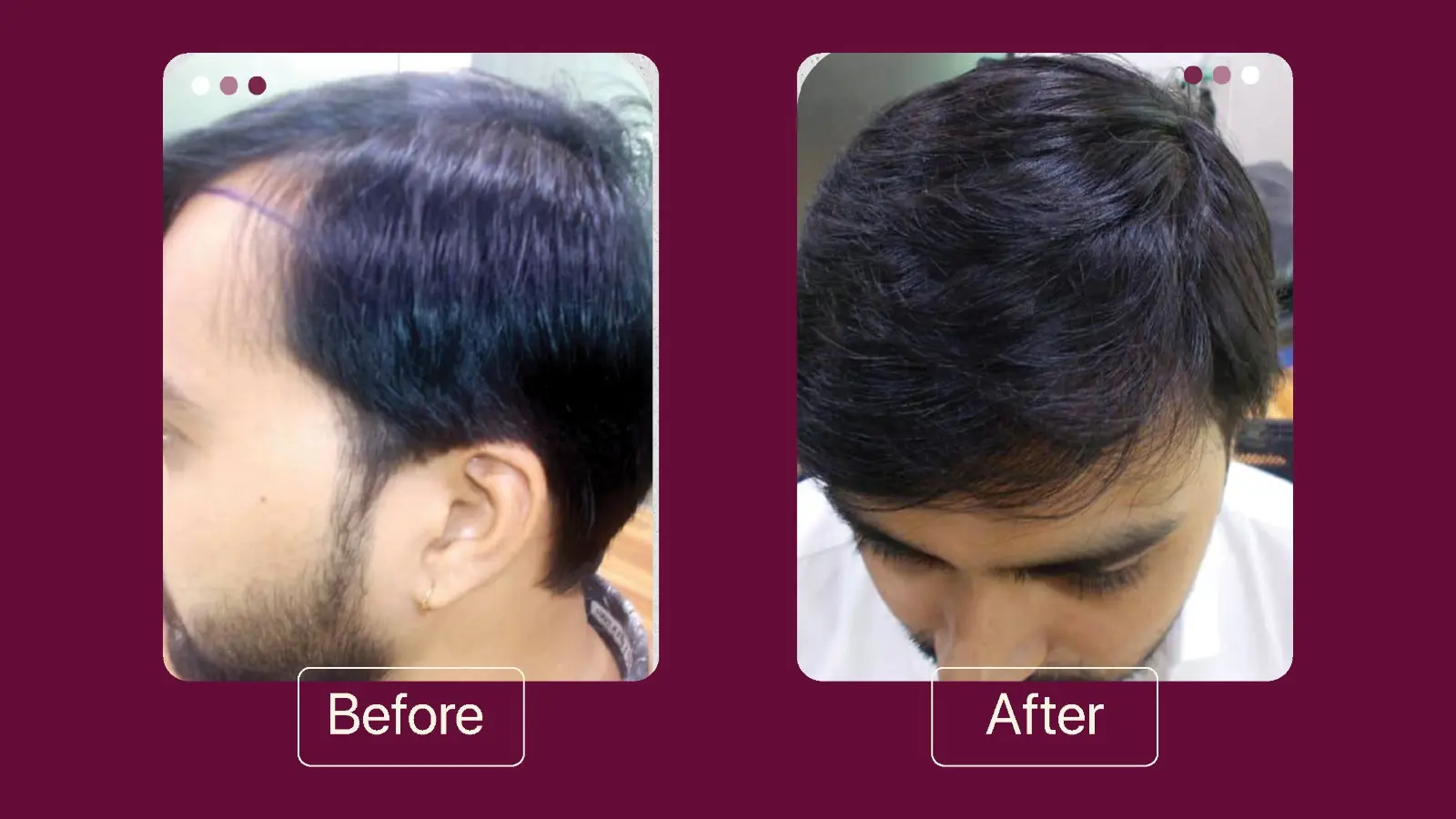
- Can they show verifiable before-and-after cases with similar hair loss patterns to yours?
- Do they provide a transparent, itemized quote with no hidden charges?
- Is the facility equipped with sterile, hospital-grade surgical protocols?
- Do they offer structured post-operative follow-up, not just a one-time procedure?
Why Choose Layers Clinics for Hair Transplant
At Layers Clinics, every case starts with a detailed scalp and donor-area analysis before recommending FUE, FUT, or a combination approach never a one-size-fits-all package. Our team offers:
- Advanced FUE and FUT techniques performed by experienced hair transplant specialists
- Personalized treatment planning based on Norwood grading and donor density
- Natural hairline design tailored to your face shape and age
- Transparent, all-inclusive pricing with structured post-surgical follow-up
Frequently Asked Questions
Which is better, FUE or FUT hair transplant?
Both are effective and permanent. FUE suits patients who want no linear scar and prefer short hairstyles; FUT suits patients needing a very high graft count or a lower cost per graft. The right choice depends on your Norwood grade, donor density, and budget.
Is a hair transplant permanent?
Yes. Transplanted follicles are taken from areas resistant to DHT, the hormone responsible for pattern baldness, so they continue growing normally after transplantation and are not subject to future hair loss.
Does FUE hair transplant leave scars?
FUE does not leave a linear scar. It leaves tiny, dot-like marks in the donor area that are generally not visible, even with very short haircuts.
Does FUT hair transplant leave a visible scar?
FUT leaves a thin linear scar across the back of the scalp. It’s usually hidden under hair of moderate to long length but can be visible if you keep your hair very short.
How much does a hair transplant cost in Hyderabad?
Cost depends on the technique, graft count, and clinic standards. FUE typically costs more per graft than FUT, while total cost scales with your Norwood grade and the number of grafts required. A scalp analysis is needed for an accurate, personalized quote.
How many grafts do I need for a hair transplant?
This depends on your degree of baldness. Early-stage thinning (Norwood 2–3) may need 1,500–2,500 grafts, while advanced baldness (Norwood 5–7) can require 4,000 grafts or more, sometimes across two sessions.
How long does it take to see final results?
Initial regrowth usually appears around month 3–4, with full, mature results visible between month 10 and 12 as transplanted hair thickens and settles into its natural texture.
Can I combine FUE and FUT in one hair transplant plan?
Yes. Some surgeons use FUT to cover large bald areas efficiently and FUE to refine the hairline or add density, giving patients the graft volume of FUT with the precision of FUE.
Final Thoughts
Choosing between FUE and FUT hair transplant in Hyderabad comes down to your hair loss stage, donor hair quality, budget, and lifestyle not which technique is "better" in the abstract. Both are clinically proven, permanent solutions when performed by a skilled surgeon with a sound hairline design plan. The most reliable next step is a professional consultation and scalp analysis, which will tell you exactly how many grafts you need and which technique fits your case.
