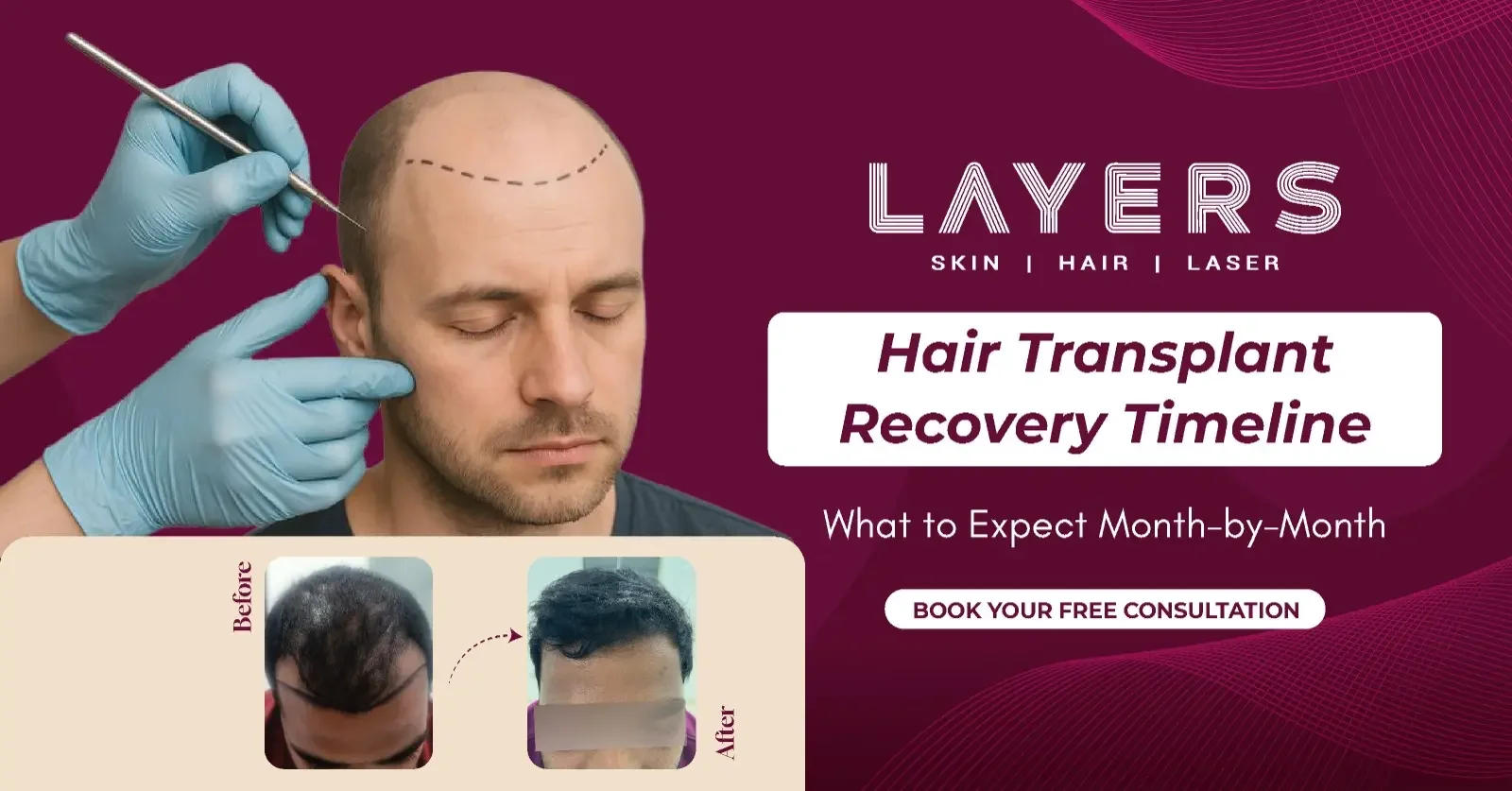
A hair transplant is a surgical procedure that requires patience during recovery. Whether you undergo Follicular Unit Extraction (FUE), Sapphire FUE, or Direct Hair Implantation (DHI), your scalp needs time to heal before the transplanted follicles begin producing visible hair.
For people considering hair restoration in India, understanding the hair transplant recovery timeline can help with planning work, exercise, travel, social activities, and follow-up visits. This guide explains the stages of healing, when swelling typically subsides, when hair regrowth begins, and how to care for your scalp after the procedure.
| Key Takeaway: The hair transplant recovery timeline typically includes 7–14 days of initial scalp healing, possible temporary hair shedding over the following weeks, and initial new growth around 3–4 months. Visible improvement often develops between 6 and 9 months, with results assessed at 12 months or later. This guide is for people considering or recovering from FUE and other hair transplant procedures in India. Following your surgeon’s aftercare instructions and attending follow-up appointments can help support healing and protect the transplanted grafts. |
What Is the Typical Hair Transplant Recovery Timeline in India?
Most patients experience initial scalp healing within 7–14 days, although redness and sensitivity may take longer to disappear. New hair growth commonly becomes noticeable around months 3–4, with more visible coverage developing over the following months.
The climate, travel conditions, procedure type, graft count, and individual healing response can affect recovery planning. The basic biological process is similar across India, but aftercare should always follow the treating clinic’s instructions.
| Recovery stage | What you may notice |
| Days 1–3 | Mild swelling, redness, tenderness, and small graft-site crusts |
| Days 4–7 | Scabs remain visible; swelling generally starts improving |
| Days 8–14 | Crusts gradually clear with appropriate washing; scalp appearance improves |
| Weeks 2–8 | Transplanted hair may shed temporarily |
| Months 3–4 | Early new hair growth may begin |
| Months 6–9 | Hair growth and coverage often become more noticeable |
| Months 10–12 | Further thickening and improvement in appearance |
| 12–18 months | Additional maturation may occur, particularly in some areas |
These are typical ranges, not guaranteed deadlines. Your surgeon can provide a more personalised estimate based on your procedure and healing progress.
Why Understanding the Hair Transplant Healing Stages Matters
A hair transplant moves follicles from a donor area, usually at the back or sides of the scalp, to areas affected by thinning or baldness. Although the procedure is designed to provide long-term hair restoration, the transplanted follicles still need time to settle into their new locations and resume their growth cycle.
Understanding the healing stages helps patients distinguish expected changes, such as temporary shedding, from symptoms that require medical attention. It also makes it easier to follow activity restrictions, attend follow-up appointments, and avoid unnecessary anxiety when visible growth is not immediate.
This guide is intended for people considering or recovering from FUE, Sapphire FUE, or DHI hair transplantation. It provides general information and does not replace advice from your treating medical professional.
What Happens During a Hair Transplant Procedure?
During hair transplantation, a qualified medical team extracts healthy follicular units from the donor area and places them into carefully planned recipient sites. The hairline, graft distribution, donor capacity, and direction of growth all influence the treatment plan.
FUE Hair Transplant
Follicular Unit Extraction involves removing individual follicular units using a small punch instrument. It avoids the linear incision associated with FUT but can leave tiny dot scars in the donor area.
FUE hair transplant recovery time varies with the number of grafts extracted, the condition of the scalp, and the aftercare routine. Many patients experience improvement in the initial donor and recipient-site healing over approximately 7–14 days.
Sapphire FUE Hair Transplant
Sapphire FUE uses sapphire blades to create recipient sites as part of the implantation process. The extraction method and overall surgical plan remain important factors in recovery.
A sapphire blade does not guarantee faster healing or superior results for every patient. The surgeon’s technique, appropriate graft handling, and individual healing response also matter.
DHI Hair Transplant
Direct Hair Implantation uses an implanter device to place grafts into the recipient area. The technique may influence how implantation is performed, but it does not eliminate the normal healing and hair-growth cycle.
For more information, read the Layers Clinics guides to FUE hair transplantation and DHI vs FUE hair transplant.
Hair Transplant Recovery Timeline: Week by Week and Month by Month
Days 1–3: Immediate Post-Operative Healing
During the first few days, the scalp may feel tender, tight, or mildly swollen. Small crusts may form around the graft sites, and the donor area may feel sensitive.
Follow the clinic’s washing instructions, take prescribed medicines as directed, and sleep in the position recommended by your surgeon. Avoid scratching, rubbing, or pressing on the transplanted area.
Days 4–7: Swelling and Scab Formation
Some patients notice swelling around the forehead or near the eyes during the first several days. It often improves within about a week, although the timing varies.
Scabs may remain visible around the grafts. Wash your scalp only as instructed, using the recommended technique and products. Do not pick at crusts or try to remove them forcefully.
When does swelling go down after a hair transplant? Mild swelling commonly starts settling within several days and often improves substantially within 5–7 days. More persistent, worsening, painful, or unusual swelling should be assessed by your medical team.
Days 8–14: Early Recovery
By the second week, many patients have fewer visible crusts and can manage normal, non-strenuous routines more comfortably. Redness or sensitivity may continue, particularly in people with sensitive skin or after larger procedures.
Return to work depends on your comfort, the visibility of healing signs, and the nature of your job. Follow your clinic’s instructions before resuming strenuous exercise or activities that could expose the scalp to injury.
Weeks 2–8: Temporary Hair Shedding
Transplanted hair shafts often shed during the weeks following surgery. This is commonly called shock loss when referring to temporary shedding associated with the procedure.
Shedding does not automatically mean that the transplant has failed. The follicles may remain in place beneath the skin and produce new hair later. However, unusual symptoms or concerns about graft loss should be discussed with your surgeon rather than self-diagnosed.
Months 1–3: The Resting Phase
Visible growth may be limited during the first few months. The scalp usually continues to settle, while the transplanted follicles progress through their natural growth cycle.
This phase can feel discouraging because the change may not yet be obvious. Continue the recommended follow-up schedule and avoid judging the final result based on early photographs alone.
Months 3–4: Initial Hair Growth
When can you expect to see initial hair growth after a transplant? New hair commonly begins to emerge around 3–4 months, although some people see growth earlier or later.
The new strands may look fine, soft, or uneven. Early growth is not a reliable indication of final density, so patience and continued clinical follow-up are important.
Months 6–9: Noticeable Improvement
Hair growth often becomes more visible during this stage. New strands may gradually become thicker, and coverage can improve as more follicles enter active growth.
The pace of change differs from person to person. Your surgeon can assess progress and advise whether any additional treatment or monitoring is appropriate.
Months 10–12 and Beyond: Hair Maturation
By around 12 months, many patients can assess a substantial portion of their results. Some individuals continue to see changes in thickness, texture, or coverage up to 18 months, depending on the treatment area and individual growth cycle.
A transplant does not prevent future thinning of non-transplanted hair. Your clinician may discuss ongoing hair-loss management where appropriate.
How to Support Hair Transplant Recovery
There is no guaranteed way to accelerate biological healing, but following appropriate aftercare can reduce avoidable complications and help protect the transplanted grafts.
Essential Post-Operative Care Instructions
- Follow the exact washing schedule and technique provided by your clinic.
- Take prescribed medicines as directed; do not add or stop medication without medical advice.
- Avoid scratching, rubbing, picking scabs, or applying unapproved products to the scalp.
- Sleep in the position recommended by your surgeon during the early recovery period.
- Protect the scalp from direct sun exposure as instructed.
- Attend scheduled follow-up visits and contact the clinic if you notice concerning symptoms.
Diet, Hydration, and Lifestyle
Eat a balanced diet with adequate protein and a variety of nutrient-rich foods. Maintain hydration and address any diagnosed nutritional deficiencies with professional guidance.
Avoid smoking during the period advised by your surgeon, as smoking can impair wound healing. Ask your medical team when alcohol, supplements, and regular medications can safely be resumed.
When Can You Return to Work, the Gym, and Daily Activities?
Many patients return to non-strenuous work within several days to a week, depending on comfort and visible healing signs. Exercise usually needs a more cautious approach.
| Activity | General guidance |
| Desk-based work | Often within several days to a week, if comfortable |
| Gentle walking | Usually possible early, as advised by the clinic |
| Strenuous exercise and heavy lifting | Delay until your surgeon clears you; this may take a few weeks |
| Swimming and activities that expose the scalp to contamination | Wait for medical clearance |
| Haircuts, styling products, and chemical treatments | Resume only when your scalp has healed sufficiently and your clinic approves |
These ranges are general guidance, not a personalised clearance. Follow your surgeon’s instructions, particularly after extensive procedures.
Which Hair Transplant Clinics in India Offer Faster Recovery Options?
There is no reliable universal ranking of clinics that offer the fastest hair transplant recovery. Recovery depends on the procedure, surgical technique, graft count, individual health, and the quality of post-operative care—not simply the clinic’s marketing claims.
At Layers Clinics, prospective patients can discuss their hair-restoration needs and understand the treatment and aftercare plan recommended for them. Explore the hair transplantation treatment page or book a consultation to discuss suitability, recovery expectations, and follow-up care.
When Should You Contact Your Doctor?
Mild tenderness, small crusts, and limited swelling can occur during routine healing. However, contact your treating clinic promptly if you develop increasing pain, worsening redness, significant or persistent swelling, pus, fever, or other symptoms that concern you.
Seek urgent medical assessment for severe symptoms, rapidly worsening swelling, or signs of a serious allergic reaction. Do not rely on online recovery timelines to diagnose a complication.
Frequently Asked Questions About Hair Transplant Recovery
1. What is the typical hair transplant recovery timeline in India?+
Initial healing generally takes around 7–14 days, while new hair growth often starts around months 3–4. Noticeable improvement commonly develops over months 6–9, with results assessed at 12 months or later. Individual recovery varies.
2. What is the typical hair transplant recovery timeline for FUE?+
After FUE, the initial scalp healing period is commonly around 7–14 days. The tiny extraction sites gradually heal, while redness and sensitivity may last longer. New hair growth typically takes several months to become visible.
3. When can I expect to see initial hair growth after a transplant?+
Initial new growth often appears around 3–4 months after the procedure. Hair may initially look fine or uneven, with more noticeable coverage developing over the following months.
4. Which hair transplant clinics in India offer the fastest recovery options?+
No single clinic can guarantee the fastest recovery for every patient. Compare medical qualifications, surgical planning, appropriate technique selection, clear aftercare instructions, and accessible follow-up support rather than relying on speed claims alone.
5. How long does it take for swelling to go down after a hair transplant?+
Mild swelling commonly begins improving within several days and often settles substantially within about 5–7 days. Some patients experience a different timeline. Contact your clinic if swelling worsens, persists unusually, or is accompanied by significant pain or other concerning symptoms.
6. What are the stages of healing after a hair transplant procedure?+
The main stages include immediate healing during days 1–3, scabbing and swelling changes during the first week, continued healing over days 8–14, temporary shedding over the following weeks, early growth around months 3–4, and progressive hair maturation over approximately 6–12 months or longer.
7. Which are the best clinics in India for hair transplant aftercare support?+
Look for clinics that provide written post-operative instructions, scheduled follow-ups, access to the treating medical team, clear escalation guidance, and realistic expectations. Patients can contact Layers Clinics to discuss its consultation and follow-up process before deciding whether it meets their needs.
8. What are the essential post-operative care instructions after a hair transplant?+
Follow your surgeon’s washing and medication instructions, avoid touching or scratching grafts, protect the scalp as advised, delay strenuous activities until cleared, and attend follow-up appointments. Contact your clinic promptly if you notice symptoms that may indicate a complication.
Conclusion
The hair transplant recovery timeline involves two distinct processes: initial scalp healing and gradual hair regrowth. While the first phase often takes around 7–14 days, visible growth commonly begins after 3–4 months, with continued improvement over the following months.
Choosing an appropriate treatment, following medical aftercare instructions, and attending follow-up appointments can help you manage recovery with realistic expectations. For personalised guidance, explore hair transplantation at Layers Clinics or book a consultation to discuss your hair-restoration options.