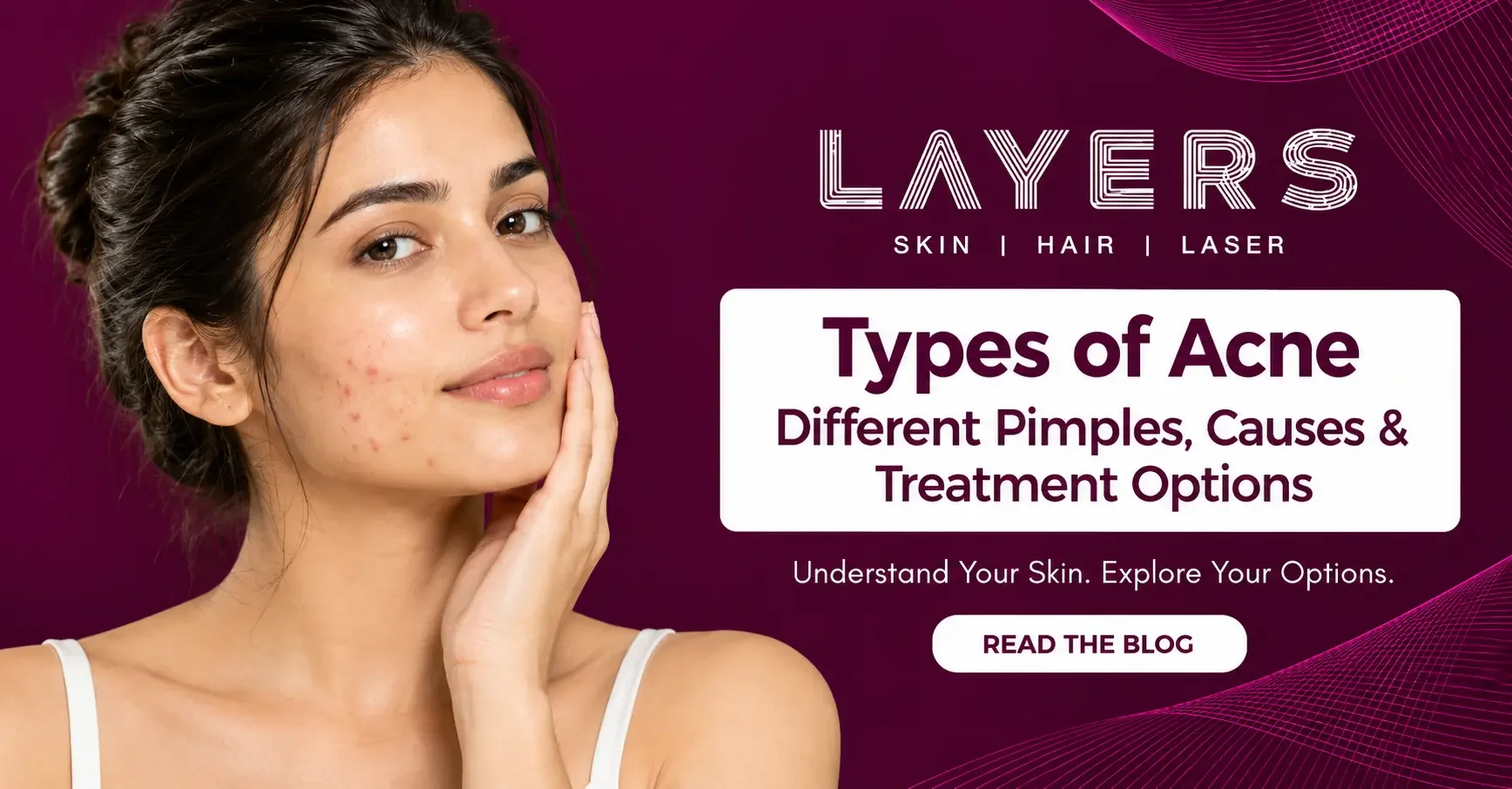
Acne is one of the most common skin conditions, affecting teenagers and adults alike. It develops when hair follicles become clogged with oil (sebum), dead skin cells and other material, leading to blackheads, whiteheads, inflamed pimples or deeper lumps beneath the skin. Acne commonly appears on the face, forehead, chest, shoulders and back.
Recognising the different types of acne can help you choose suitable skincare products and understand which treatments may be effective. Mild breakouts may respond to over-the-counter solutions, while persistent, painful or severe acne often benefits from a dermatologist’s assessment and personalized treatment plan.
Who Should Read This Guide to Acne?
This guide is for people experiencing pimples, clogged pores, recurring breakouts or acne marks who want to understand the different types of acne and their possible causes. It can help readers identify common acne patterns, learn about available treatment options and understand when professional advice may be appropriate.
Acne can look different from person to person. Mild blackheads and whiteheads may need a different approach from painful nodules or cystic acne. If breakouts are persistent, severe, painful or leaving scars, consult a qualified dermatologist for an assessment and personalised treatment recommendations.
Please note: This guide provides general educational information and is not a substitute for a medical diagnosis or individual treatment advice.
Key Takeaways: Types of Acne
Different types of acne include whiteheads, blackheads, papules, pustules, nodules and cystic acne.
Acne can develop due to excess oil production, clogged pores, hormonal changes, bacteria and inflammation.
Hormonal acne often appears around the chin and jawline, while acne can also affect the chest, shoulders and back.
Mild breakouts may improve with suitable skincare products and over-the-counter treatments, while persistent or severe acne may require prescription medication.
Avoid picking or squeezing pimples, as this can increase inflammation and the risk of acne scars.
Consistent skincare, non-comedogenic products and sun protection can help support acne-prone skin.
Consult a dermatologist for painful, recurring or severe acne, or if breakouts leave scars or dark marks.
How Dermatologists Assess Different Types of Acne
A dermatologist evaluates acne based on the appearance of the lesions, their severity, their location and whether they cause pain or scarring. Whiteheads and blackheads are non-inflammatory lesions, while papules, pustules, nodules and cysts involve varying degrees of inflammation.
During a consultation, the dermatologist may ask when the breakouts started, which skincare products are being used, whether the acne changes with hormonal cycles and whether previous treatments have helped. This information helps guide an individual treatment plan.
For persistent, painful or scarring acne, professional assessment is particularly important. Treatment recommendations depend on the type and severity of acne, medical history and individual circumstances.
What Are the Different Types of Acne?
Acne lesions are often divided into two categories. Acne lesions can be either non-inflammatory or inflammatory. Understanding these differences can help you recognise the kind of breakout you may be experiencing.
1. Whiteheads
Whiteheads are a type of non-inflammatory acne that develops when a hair follicle becomes blocked with sebum and dead skin cells. The opening of the follicle remains closed, creating a small, raised bump.
Common characteristics:
• Small, white or skin-coloured bumps.
• Usually no surrounding redness.
• Commonly found on the forehead, nose, chin and cheeks.
• May occur alongside other types of acne.
Treatment options: Gentle cleansing and products containing salicylic acid or a topical retinoid, such as adapalene, may help unclog pores. The appropriate product depends on age, skin sensitivity and other factors.
Avoid squeezing whiteheads, as this can irritate the skin and increase the risk of inflammation, dark marks and scarring.
2. Blackheads
Blackheads, also known as open comedones, form when a pore becomes clogged with oil and dead skin cells but remains open at the surface.
The dark appearance is caused by changes in the material exposed to air, not by dirt trapped inside the pore.
Common characteristics:
• Small dark spots on the skin.
• Frequently seen on the nose, forehead and chin.
• Usually not painful or swollen.
• May appear alongside whiteheads.
Treatment options: Salicylic acid can help remove dead skin cells and reduce pore blockage. Topical retinoids may also help prevent the formation of new comedones.
Scrubbing aggressively or repeatedly squeezing blackheads can damage the skin barrier. Gentle, consistent skincare is generally preferable to harsh physical exfoliation.
3. Papules
Papules are small, inflamed pimples that appear as raised red or pink bumps. They develop when inflammation affects a blocked hair follicle.
Common characteristics:
• Raised, red or pink bumps.
• May feel tender when touched.
• Usually do not contain visible pus.
• Can occur across the cheeks, forehead, chin and other acne-prone areas.
Treatment options: Depending on the severity, treatment may include benzoyl peroxide, topical retinoids or other dermatologist-recommended medications. Persistent inflammatory acne may require a prescription treatment plan.
Avoid picking papules, because additional inflammation can increase the likelihood of post-inflammatory hyperpigmentation and scarring.
4. Pustules
Pustules are inflamed acne lesions that contain pus. They often have a white or yellowish centre surrounded by redness.
Common characteristics:
• Visible white or yellowish centre.
• Redness around the affected area.
• Possible tenderness or swelling.
• May appear on the face, chest, shoulders or back.
Treatment options: Benzoyl peroxide may help reduce acne-causing bacteria and inflammation. A dermatologist may recommend additional topical or oral medication when breakouts are widespread or persistent.
Do not pop pustules. Squeezing can push inflammatory material deeper into the skin and increase the risk of infection, dark marks and scarring.
5. Nodules
Nodular acne develops when inflammation affects deeper layers of the skin, producing firm, painful lumps beneath the surface.
Common characteristics:
• Large, deep bumps.
• Often painful or tender.
• May persist for weeks.
• Can leave permanent scars.
Treatment options: Nodular acne often requires assessment by a dermatologist. Depending on the severity, treatment may involve prescription topical medicines, oral medication or other specialist-directed care.
Over-the-counter products alone may not be sufficient for deep, painful acne. Early assessment can help reduce the risk of long-term scarring.
6. Cystic Acne
Cystic acne is commonly used to describe severe acne with deep, inflamed, sometimes pus-filled lesions. These lesions can be painful and may extend into deeper skin tissue.
Common characteristics:
• Deep, swollen lumps beneath the skin.
• Significant tenderness or pain.
• Breakouts that may recur in the same areas.
• Increased risk of acne scars.
Treatment options: Severe acne may require prescription treatment, including oral medication. A dermatologist may consider oral isotretinoin for appropriate patients after assessing its benefits, risks and monitoring requirements.
Isotretinoin can cause serious birth defects if taken during pregnancy and must be managed under appropriate medical supervision. Do not start prescription acne medication without professional advice.
I believe that Early assessment can help reduce the risk of long-term scarring.
7. Hormonal Acne
Hormonal acne describes acne influenced by hormonal changes. It is frequently discussed in relation to puberty, menstrual cycles and adult acne, particularly in women.
Common characteristics:
• Breakouts around the chin and jawline in some individuals.
• Pimples that flare around menstruation.
• Recurrent inflammatory acne.
• Sometimes accompanied by oily skin.
Common contributing factors:
• Normal hormonal fluctuations.
• Puberty and menstrual cycles.
• Certain hormonal medications.
• Conditions associated with hormonal imbalance, such as polycystic ovary syndrome (PCOS).
Treatment options: Depending on the severity, a clinician may recommend a benzoyl peroxide wash, topical medication or prescription treatment. Benzoyl peroxide can bleach fabrics, so follow product instructions carefully.
Persistent, painful or widespread body acne should be assessed by a dermatologist, especially if it is leaving scars.
What Causes Acne?
Acne usually develops through a combination of factors rather than one single cause.
1. Excess Sebum Production
Sebum is the natural oil produced by sebaceous glands. When excess sebum combines with dead skin cells, pores can become blocked and acne may develop.
2. Hormonal Changes
Hormones called androgens can increase sebum production. This helps explain why acne often develops during puberty and why some adults experience recurring breakouts.
3. Blocked Hair Follicles
Dead skin cells do not always shed evenly. When they accumulate inside hair follicles, they can form whiteheads, blackheads and other acne lesions.
4. Inflammation and Skin Bacteria
Cutibacterium acnes is a normal resident of the skin. In acne-prone follicles, it can contribute to inflammatory processes that lead to red, swollen and sometimes painful pimples.
5. Genetics
A family history of acne may increase the likelihood of developing acne or experiencing more persistent breakouts.
6. Stress
Stress does not directly cause every acne breakout, but it may worsen acne in some people. Stress can also affect sleep and daily habits, which may influence skin health.
7. Skincare and Cosmetic Products
Heavy or pore-clogging products may contribute to breakouts in susceptible individuals. Choose products labelled non-comedogenic when appropriate, and introduce new skincare products gradually.
8. Diet and Lifestyle Factors
Research suggests that high-glycaemic diets and certain dairy products may be associated with acne in some people, although responses vary. Diet is not the sole cause of acne, and restrictive diets are not a universal treatment.
| Type of acne | Common appearance | When to seek advice |
| Whiteheads | Whiteheads Small, closed, flesh-coloured or whitish bumps | If persistent or widespread |
| Blackheads | Small, dark-looking clogged pores | If they continue despite suitable skincare |
| Papules | Small, inflamed red or pink bumps | If painful or worsening |
| Pustules | Inflamed bumps containing visible pus | If recurring or spreading |
| Nodules | Deep, firm and often painful lumps | Seek dermatological assessment |
| Cystic acne | Deep, inflamed lesions that may be painful and scar | Seek professional assessment promptly |
A balanced diet, adequate sleep and consistent skincare can support general health, but persistent acne may still require medical treatment.
How to Identify Your Type of Acne
Different acne lesions can look similar, and more than one type can occur at the same time. The following table offers a general guide.
This table is not a substitute for diagnosis. Folliculitis, rosacea and other skin conditions can resemble acne and may need different treatments.
Acne Treatment Options
The best acne treatment depends on the type of lesions, their severity, the risk of scarring, age, skin sensitivity and medical history.
1. Topical Treatments
Topical medicines are applied directly to the skin and are often used for mild to moderate acne.
Common options include:
- Benzoyl peroxide: Helps reduce acne-causing bacteria and inflammatory lesions.
- Salicylic acid: Helps exfoliate the skin and unclog pores.
- Topical retinoids: Help normalise skin-cell turnover and prevent clogged pores.
- Azelaic acid: May help manage acne and post-inflammatory dark marks.
- Prescription topical medication: A dermatologist may recommend additional treatments or combinations depending on the acne type.
Some ingredients cause dryness, irritation or peeling. Start only with products suitable for your skin and follow their directions. Topical retinoids are generally avoided during pregnancy; consult a clinician if you are pregnant, planning pregnancy or breastfeeding.
2. Oral Medications
Moderate to severe acne may require oral medication, especially when lesions are widespread, painful or at risk of scarring.
Depending on the diagnosis, a dermatologist may prescribe oral antibiotics for a limited period, hormonal treatment for selected patients, or isotretinoin for severe acne.
Oral antibiotics should be used under medical supervision and are generally combined with other appropriate acne treatments rather than used alone. Prescription medication requires an assessment of potential side effects, interactions and individual suitability.
3. Chemical Peels
Certain chemical peels may be considered as an additional treatment for selected cases of acne or post-acne marks.
The peel and its strength should be chosen according to skin type and the condition being treated. Chemical peels do not replace appropriate acne medication when active acne is moderate or severe.
Incorrectly selected peels can cause irritation, burns or worsening pigmentation, so professional assessment is important.
4. Acne Scar Treatments
When active acne is controlled, a dermatologist may assess any remaining scars and discuss suitable options. Depending on the scar type, treatments may include microneedling, selected laser procedures, subcision or other specialist techniques.
Different scars respond differently to treatment, and more than one approach may be needed. Scar treatment should be planned individually, particularly for skin prone to post-inflammatory pigmentation.
5. Professional Skin Assessment
A dermatology consultation can help distinguish acne from other skin conditions, identify contributing factors and establish a treatment plan. This is particularly useful for persistent breakouts, painful lesions, recurring acne or acne that leaves scars.
How to Prevent Acne and Reduce Future Breakouts
A consistent skincare routine can help support acne management.
Cleanse gently: Wash your face with a mild cleanser, generally twice daily and after heavy sweating. Avoid frequent washing and harsh scrubbing.
Choose suitable moisturisers: Acne-prone skin can still become dry. Use a lightweight, non-comedogenic moisturiser if needed.
Use sunscreen: Choose a broad-spectrum sunscreen that suits your skin. Sun protection can help reduce the darkening of post-acne marks.
Avoid picking pimples: Squeezing acne can worsen inflammation and increase the risk of scars and pigmentation.
Introduce active ingredients gradually: Using several strong products at once can irritate the skin. Introduce one new active ingredient at a time where appropriate.
Keep hair and skin products in mind: Heavy oils and occlusive products may contribute to breakouts in susceptible individuals.
Be patient and consistent: Acne treatments often take several weeks to show improvement. Follow the recommended treatment plan and seek professional advice if irritation occurs or acne is not improving.
When Should You Consult a Dermatologist?
Consider seeing a dermatologist if:
- You have deep, painful or recurring pimples.
- Acne is spreading across the face, chest or back.
- Breakouts are leaving scars or persistent dark marks.
- Over-the-counter products have not helped after consistent use.
- Acne is affecting your confidence or emotional wellbeing.
- You suspect a hormonal condition or a medication-related breakout.
Early assessment can help identify the appropriate treatment and reduce the risk of lasting scars.
Frequently Asked Questions About Types of Acne
1. What are the main types of acne?
The main acne lesion types include whiteheads, blackheads, papules, pustules, nodules and cystic lesions. Acne can also be influenced by hormonal changes and affect areas such as the back and chest.
2. What is the difference between whiteheads and blackheads?
Whiteheads form when a pore is blocked and its opening remains closed. Blackheads form when a clogged pore remains open, allowing the material at the surface to darken. Neither is simply caused by poor hygiene.
3. Which type of acne is the most severe?
Nodular and cystic forms of acne can be particularly severe because they involve deeper inflammation and have a greater risk of scarring. A dermatologist should assess painful or deep lesions promptly.
4. What causes acne on the chin and jawline?
Acne in these areas may be influenced by hormonal changes, although the location alone cannot confirm a hormonal cause. Recurrent acne accompanied by other symptoms of hormonal imbalance may warrant medical evaluation.
5. Can acne go away on its own?
Some mild acne improves over time, but persistent or inflammatory acne may require treatment. Early management is useful when acne is painful, recurring or leaving scars.
6. Can I remove pimples overnight?
There is no reliable treatment that removes every pimple overnight. Some products may reduce inflammation over time, but squeezing pimples or applying harsh home remedies can make the condition worse.
7. Does oily skin always cause acne?
No. Excess sebum can contribute to clogged pores, but acne also involves skin-cell turnover, inflammation, bacteria and other factors. People with different skin types can develop acne.
8. Can acne cause permanent scars?
Yes. Severe inflammation, deep lesions and picking can increase the risk of permanent acne scars. Treating active acne early may help reduce this risk.
9. Is acne treatment different for teenagers and adults?
The general treatment options overlap, but the choice depends on age, severity, skin sensitivity, medical history and pregnancy considerations. A clinician can recommend a suitable approach.
10. When should I seek professional acne treatment?
Seek professional advice for painful or deep acne, recurring breakouts, suspected hormonal acne, scarring or acne that does not improve with appropriate skincare.
Conclusion
The different types of acne range from blackheads and whiteheads to inflamed pimples, nodules and cystic lesions. Each type may need a different approach depending on its severity and underlying factors.
Gentle skincare, suitable acne treatments and avoiding picking can help manage breakouts. Persistent, painful or severe acne should be assessed by a qualified dermatologist to reduce the risk of long-term scarring and identify the most appropriate treatment.
Medical disclaimer: This article is for general educational purposes and does not replace professional medical advice, diagnosis or treatment. Individual treatment suitability and outcomes vary.