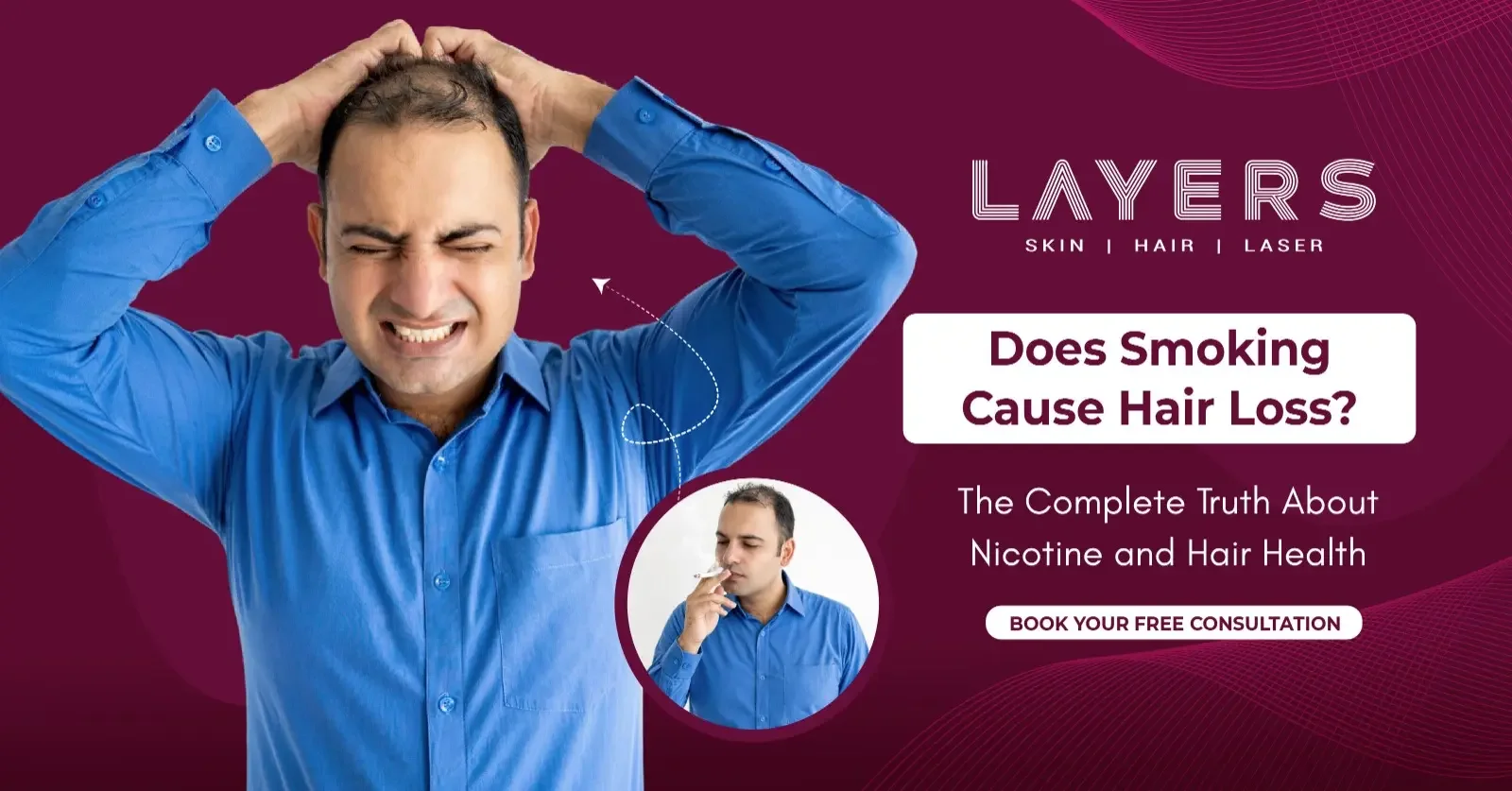
A variety of common reasons may contribute to your hair loss; however, many people do not think of their everyday lifestyle choices, e.g., smoking, which are not commonly thought about in relation to hair loss. Therefore, here at Layers Clinics, we want you to know that those things we do every day can impact your hair’s overall health in a significant way. “Does Smoking Cause Hair Loss?“ Smoking is one of the main contributing factors in thinning your hair and accelerating the loss of your hair.
Smoking decreases the circulation of blood to the scalp, limiting the amount of oxygen available to your hair follicles, and introduces toxins that can gradually damage your hair. Therefore, anyone looking to maintain a healthy head of hair will need to recognise the link between smoking and hair loss; not only can treating lifestyle-triggered issues in combination with medical treatments provide you with better results, but can also enhance the overall health of your scalp in the long term.
Key Takeaways
- Smoking is a recognised risk factor for hair loss. It is linked to earlier pattern baldness, thinning, slower regrowth and premature greying.
- It works through the scalp’s blood supply. Nicotine narrows blood vessels, carbon monoxide lowers oxygen delivery, and oxidative stress damages follicle cells.
- It is rarely the only cause. Genetics, hormones, thyroid problems, and iron or vitamin D deficiency can look identical, so get a proper scalp check.
- Quitting helps. Shedding often settles within a few months, and visible improvement in density usually takes 6 to 12 months.
- Smoking can weaken treatment results. It may lower graft survival after a hair transplant and slow healing, so most surgeons ask you to stop before and after surgery.
- Treatment works best when combined. Quit smoking, correct deficiencies, and use doctor-approved options such as minoxidil or PRP.
- See a dermatologist early. Advanced pattern baldness does not fully reverse by quitting alone.
Does Smoking Cause Hair Loss?
Yes. Smoking is a well-documented risk factor for hair thinning and earlier hair loss. Studies link it to a higher risk of androgenetic alopecia (pattern baldness), slower regrowth and premature greying. It is rarely the only cause, but it can speed up hair loss you are already prone to. Quitting helps: if follicles are not permanently scarred, hair density and quality often improve within several months. Treatments such as minoxidil and PRP work better when you stop smoking.
Who this guide is for: adults in India (smokers, ex-smokers, and people exposed to second-hand smoke) who notice more hair fall, thinning at the crown or temples, or poor results from hair treatments, and who want to know what to do next..
How smoking hurts hair follicles
1. Less blood flow to the scalp
Nicotine makes blood vessels smaller, which means less blood flows to the scalp. Hair follicles need oxygen and nutrients that come from the blood. When this supply is limited:
- Hair follicles become weaker
- Growth slows down a lot
- Hair goes into the resting (telogen) phase too soon
This makes your hair fall out too much and makes it less dense.
2. Lack of oxygen and nutrients for follicles
Carbon monoxide from cigarette smoke attaches to haemoglobin, which makes it harder for oxygen to get to all parts of the body. Because of this:
- Hair roots do not get as much oxygen
- The metabolism of the follicle slows down
- The strands of hair get thin and weak
One of the main reasons smokers have dull, lifeless hair is that they do not get enough oxygen.
3. Increased Oxidative Stress
When you smoke, free radicals that are bad for you get into your body, which causes oxidative stress. This hurts:
- Cells in hair follicles
- Tissue on the scalp
- The structure of keratin
Oxidative stress speeds up the ageing, greying, and shedding of hair, making it look weak and unhealthy.
4. Smoking can cause hormonal imbalances.
Smoking can change the levels of hormones in the body, especially androgens, which are directly linked to hair loss. Higher levels of androgens can:
- Make hair follicles smaller
- Make the hair growth cycle shorter
- Make men and women both lose their hair in a pattern.
This hormonal imbalance makes smoking a major cause of long-term hair loss.
5. Damage to Hair Follicles’ DNA
Cigarette toxins can hurt the DNA of hair follicle cells, which makes it harder for them to grow back. This causes:
- Hair grows back more slowly
- Permanent damage to the follicles in severe cases
- Hair restoration treatments that do not work as well
Healthy follicle regeneration is hindered, leading to persistent hair loss.
Smoking and Premature Greying
There is a strong link between smoking and hair turning grey early. The toxins change the way melanin is made, which is what gives hair its colour.
- Less melanin means grey or white hair at a young age
- The natural shine and vibrancy of hair fades
- This, along with hair loss, makes you look older.
One of the most obvious effects of smoking for a long time is that hair ages too quickly.
How Smoking Affects Hair Transplant and Treatment Results
For people who are getting hair restoration procedures, smoking can have a big effect on the results.
- Lowers the rate of survival for grafts
- Slows down the healing of the scalp
- Raises the chance of getting an infection
- Makes newly transplanted follicles weaker
To get the best results from a hair transplant, you must not smoke before or after the procedure.
Does Passive Smoking Cause Hair Loss?
People who do not smoke but are around people who do can still have bad effects on their hair health.
- Less oxygen because of toxins that are breathed in
- More oxidative stress
- Hair follicles getting weaker over time
Over time, passive smoking can cause hair to thin and damage the scalp.
Signs Your Hair Loss May Be Linked to Smoking
Recognising early signs helps you act quickly.
- More hair falls out when you wash or comb it
- Noticeable thinning on the temples or crown
- Hair that is dry, rough, and brittle
- Hair growth is slow or not at all
- Looks dull and lifeless
These signs show that smoking has hurt your hair’s health.
Can Hair Grow Back After You Quit Smoking?
If the hair follicles are not permanently damaged, hair can grow back after you stop smoking.
Benefits of Giving Up Smoking for Hair:
- Better blood flow to the scalp
- Better delivery of oxygen and nutrients
- Less oxidative stress
- Hair strands that are stronger and healthier
People often notice less hair loss and better hair quality within a few months of quitting.
How to Treat Hair Damage Caused by Smoking
1. Eat a diet full of nutrients
Eat foods that are high in:
- Vitamin D, Vitamin E, and Biotin
- Zinc and iron
- Protein for the structure of hair
2. Drink plenty of water
Drinking enough water is good for your scalp and makes your hair more flexible.
3. Use treatments that have been approved by doctors
- Minoxidil to help hair grow
- PRP therapy to make hair follicles younger
- Taking hair supplements with the help of a professional
4. Keep your scalp clean
A clean and healthy scalp helps hair grow back faster.
Smokers vs. Non-Smokers: Hair Health at a Glance
| Factor | Smokers | Non-Smokers |
| Hair Density | Reduced | Healthy |
| Hair Growth | Slow | Normal |
| Scalp Health | Compromised | Balanced |
| Hair Strength | Weak | Strong |
| Premature Graying | Common | Less Likely |
This comparison shows how different the hair quality and growth patterns are.
Tips for Keeping Your Hair Healthy
- Quit smoking and avoid smoky environments
- Eat a balanced, protein-rich diet
- Manage stress
- Use gentle hair care products
- See a dermatologist if hair fall continues for more than a few weeks
FINAL THOUGHT: Smoker’s Hair Loss
Smoking is among the leading causes of hair loss; baldness, premature greying of hair, damage to scalp tissue or thinning of hair. The toxins from cigarettes and/or marijuana cause arterial and vascular constriction, inhibiting the flow of oxygen, nutrients and blood to places in the body needed to support normal biological functions; thus causing extensive damage to these systems (hair follicles) throughout the person’s temporal life expectancy (80-90 years).
Frequently Asked Questions About Smoking and Hair Loss
Does smoking cause hair loss according to dermatologists?
Yes. Dermatologists recognise smoking as a risk factor for hair thinning, pattern baldness and early greying. It reduces blood flow and oxygen to follicles and increases oxidative stress. It is usually one contributing factor alongside genetics, hormones and nutrition, rather than the only cause.
Does quitting smoking reverse hair loss?
Often partly or fully, if the follicles are not scarred or permanently miniaturised. Shedding commonly settles within a few months of quitting, and density can improve over 6 to 12 months. Advanced pattern baldness will not fully reverse by quitting alone and usually needs medical treatment as well.
Are there effective treatments for hair loss linked to smoking?
Yes. Quitting smoking plus evidence-based treatment works best. Options include minoxidil, PRP therapy, prescribed medicines, correcting nutrient deficiencies and, for advanced loss, hair transplantation. A dermatologist or trichologist should choose the plan after finding the exact cause of your hair fall.
Where can I buy treatments for hair loss caused by smoking in India?
Minoxidil is available over the counter at licensed pharmacies in India. Medicines such as finasteride require a doctor’s prescription, and PRP or transplant procedures are done only at clinics. Buy from licensed pharmacies or directly through a clinic, and avoid unverified online sellers or products promising guaranteed regrowth.
Where can I find a specialist for hair fall caused by smoking?
Look for a dermatologist (MD/DNB in dermatology) or a trichologist with hair-specific experience. Check their qualifications, ask about their experience with lifestyle-related hair loss, and book a scalp evaluation. At Layers Clinics you can book a consultation at [clinic locations / booking link].
Are there clinics in India that specialise in treating smoking-related hair loss?
Most hair clinics treat smoking-related hair loss as part of general hair loss care, since the treatment is the same: quit smoking, find the underlying cause and begin suitable therapy. Layers Clinics offers [list your services and cities, for example Hyderabad, Bengaluru]. Choose a clinic with qualified doctors and transparent treatment plans.
What are hair regrowth solutions for ex-smokers in India?
Ex-smokers can combine a nutrient-rich diet, minoxidil, PRP therapy, doctor-guided supplements and scalp care. If follicles have thinned a lot, a hair transplant may be considered after your doctor confirms the scalp has healed and you are staying smoke-free. Give treatments at least 3 to 6 months before judging results.
How long after quitting smoking does hair improve?
Blood flow improves quickly, but hair grows slowly. Many people see reduced shedding in 2 to 4 months and visible improvement in thickness within 6 to 12 months. Results vary with age, genetics, how long you smoked and any other causes of hair loss.
Does vaping or e-cigarette use cause hair loss?
Vaping delivers nicotine, which narrows blood vessels, so it may affect scalp circulation too. Long-term research on vaping and hair loss is limited, so it cannot be called safe for hair. If you are trying to quit, speak to a doctor about proven cessation options.
Does smoking cause hair loss in women?
Yes, it can. Smoking is linked to reduced hair density and early greying in women too, and may add to hormonal or nutritional causes of thinning. Women with sudden or heavy shedding should also be checked for thyroid problems, anaemia and PCOS.
Does smoking cause premature greying?
Studies link smoking with greying at a younger age. Oxidative stress is thought to damage the pigment cells in hair follicles. Quitting may slow further greying, but hair that has already turned grey usually does not regain its colour.
Can I get a hair transplant if I smoke?
It is possible, but not ideal. Smoking can reduce graft survival and slow healing. Most surgeons ask you to stop smoking for a set period before and after surgery, so follow your doctor’s instructions exactly for the best results.
Does second-hand smoke cause hair loss?
The evidence is weaker than for active smoking, but long-term exposure adds toxins and oxidative stress that are not good for scalp health. Avoiding smoky environments is a sensible step if you are dealing with hair thinning.
Is smoking-related hair loss permanent?
Not always. If follicles are still alive, hair can recover after quitting. Long-term smoking combined with pattern baldness can cause permanent miniaturisation, so the earlier you quit and get treated, the better your chances.
Does smoking make minoxidil or PRP less effective?
Poor scalp circulation and ongoing oxidative stress can plausibly reduce how well treatments work, and clinicians commonly report better outcomes in non-smokers. Quitting gives your treatment the best chance, although individual results differ.
Which vitamins help hair fall in smokers?
Smokers often have lower levels of some antioxidants such as vitamin C. For hair, doctors check iron, ferritin, vitamin D, vitamin B12 and zinc. Take supplements only if a test shows a deficiency, as excess can cause harm.
When should I see a doctor about hair fall?
See a dermatologist if shedding lasts more than 6 to 8 weeks, you notice patches or a widening parting, your scalp is itchy or painful, or you have other symptoms such as fatigue or weight change. Early treatment protects more of your existing hair.
Conclusion: Stop smoking to protect your hair
A big but often overlooked reason for hair loss and thinning is smoking. It cuts off blood flow to the scalp, weakens hair follicles, and slows down the natural growth of hair. The good news is that quitting smoking can make your scalp much healthier and help your hair grow back stronger over time.
At Layers Clinics, we work to find the root causes of problems and give targeted treatments that will work over time. If your hair is falling out, quitting smoking and getting professional help can help your hair grow back thicker and healthier.
Last updated: 10 October 2026