
Food and daily routine
Meal patterns, portions, drinks, work hours and access to food can affect how much energy you take in. A useful plan works with your everyday circumstances.
Your weight history, daily routine and health all matter. Explore the support available and find a starting point that fits your life.

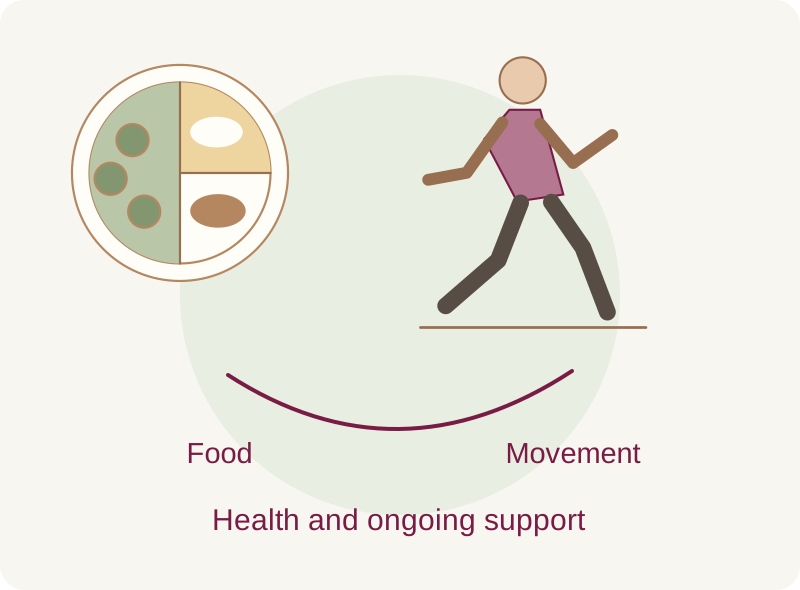
Weight-loss care aims to reduce excess body weight when this would help your health. It starts by understanding your needs, rather than choosing a target from a photograph or a dress size.
Food, movement, sleep and support form the foundation. Some people also benefit from prescription medicine or a specialist referral. A consultation helps you understand which options are relevant.
Meal patterns, portions, drinks, work hours and access to food can affect how much energy you take in. A useful plan works with your everyday circumstances.
Poor sleep can affect appetite. Pain, a sedentary job or limited mobility can make activity harder. These are practical issues to discuss, not reasons to blame yourself.
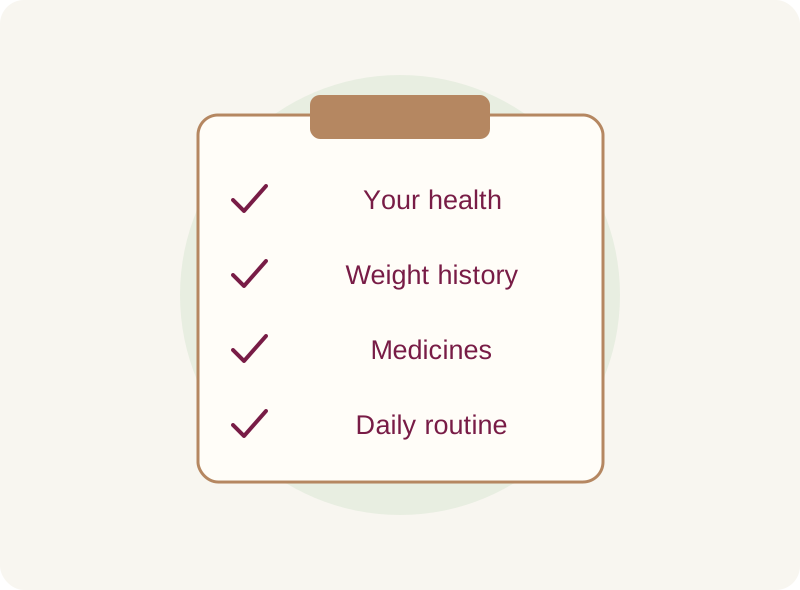
Genes, some medicines and certain health conditions can influence weight. Share any recent changes with your clinician; do not stop prescribed medicine on your own.
Discuss whether losing weight would benefit you, what you have already tried and what made earlier plans difficult.
Blood pressure, blood sugar, sleep symptoms and mobility may be relevant. Your clinician can decide which checks or referrals are needed.
Rapid gain, unplanned weight loss or new symptoms need a medical assessment. Restrictive eating, binge eating or distress around food also deserve appropriate support.
Choose manageable changes to meals, drinks and activity. A dietitian or other qualified professional can help adapt the plan to your preferences and health.
Explore ongoing support
Medication may be an option for selected people with obesity or weight-related health risks. Suitability, benefits and side effects need a prescriber’s assessment.
Learn about GLP-1
More complex health needs may call for an obesity specialist. Metabolic or bariatric surgery can be considered for selected people through an appropriate specialist service.
Bring your medicine list and relevant reports. Explain changes in weight, eating patterns, sleep, activity and your main concern.
The clinician may review weight, height, waist size and blood pressure, with tests only when indicated. No single measurement explains everything.
Discuss food preferences, work hours, family meals and activity you can manage. Choose specific changes instead of trying to change everything at once.
Ask who will guide nutrition, review any medicine and handle health concerns. Arrange specialist input when needed.
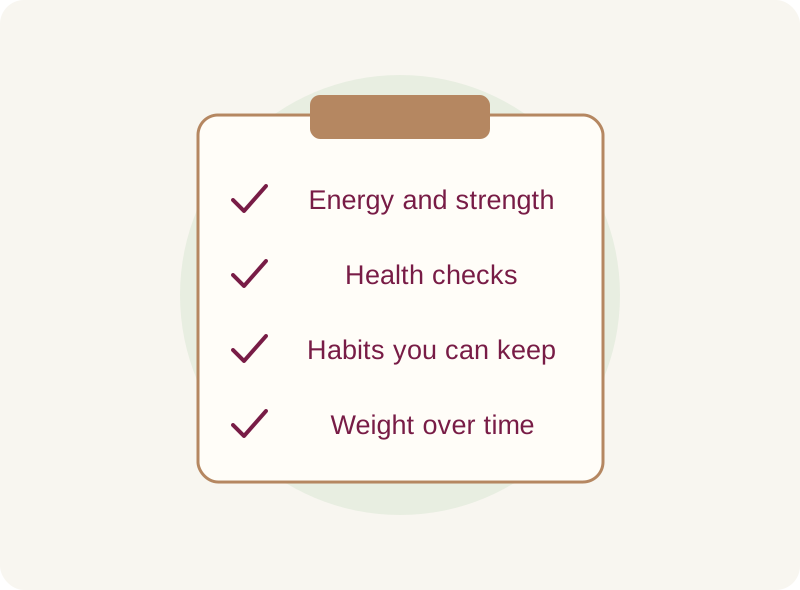
Discuss energy, physical function, symptoms and relevant health measures alongside weight trends.
Revisit obstacles and agree the next review. Keeping progress needs support after the first period of weight loss.
The pace of change varies. A plan should have realistic goals and a review point, without a promise of a fixed number of kilograms. Improvements in activity, comfort or health can matter even when weight changes slowly.
Body-contouring treatments address local shape and are different from weight-loss care. Losing centimetres in one area does not show that a weight-related health condition has been treated.

Dr. Rafia Ali discusses weight and fat-loss care in this SumanTV Health interview, linked from the Layers website.
SumanTV Health · Doctor interview
Watch on YouTubeThese reviews describe consultations and general care at Layers, rather than weight-loss results.
“The doctors listened carefully to my concerns and explained the treatment in a clear and professional manner.”
Consultation experience; condition not specified.
“She explained the treatment clearly and made me feel comfortable throughout the consultation.”
Consultation experience; condition not specified.
“The doctor took the time to understand my skin concerns and explained the treatment plan clearly, without rushing.”
Consultation experience; condition not specified.
“Very patient ,humble and polite to answer every single query and build confidence.”
Consultation experience; condition not specified.
“The doctors explained everything clearly and made me feel comfortable and confident.”
Consultation experience; condition not specified.
“The doctor took the time to listen to my concerns patiently and explained the treatment options clearly.”
Consultation experience; condition not specified.
















That depends on your health and circumstances. A clinician can look beyond a single scale reading and discuss whether weight loss, maintenance or another form of care makes sense.
A plan should provide adequate nutrition and fit your needs. Very restrictive plans are not suitable for everyone. Ask for practical guidance you can continue rather than a short crash diet.
No. Suitable activity can include walking, home exercise, cycling or other movement you enjoy. Start at a level that matches your health and mobility.
No. Tests should follow your history, symptoms and assessment. Bring recent reports so the clinician can decide what, if anything, needs checking.
No. Local contouring treatments aim to change the shape of a selected area. They do not replace a plan for overall weight or obesity-related health concerns.
There is no reliable fixed timetable for everyone. Your starting point, treatment and response all matter. Agree realistic goals and regular reviews.
Yes, seek a coordinated medical assessment. Existing treatment, blood sugar management and other health needs should be considered before changing food intake or starting weight medication.
Arrange a review. Weight regain can happen and may call for changes to the support or treatment plan. You do not need to wait until you have regained all the weight to ask for help.
Arrange a conversation about your weight, health and the support that could help.
Prefer a call? +91 9000 572727