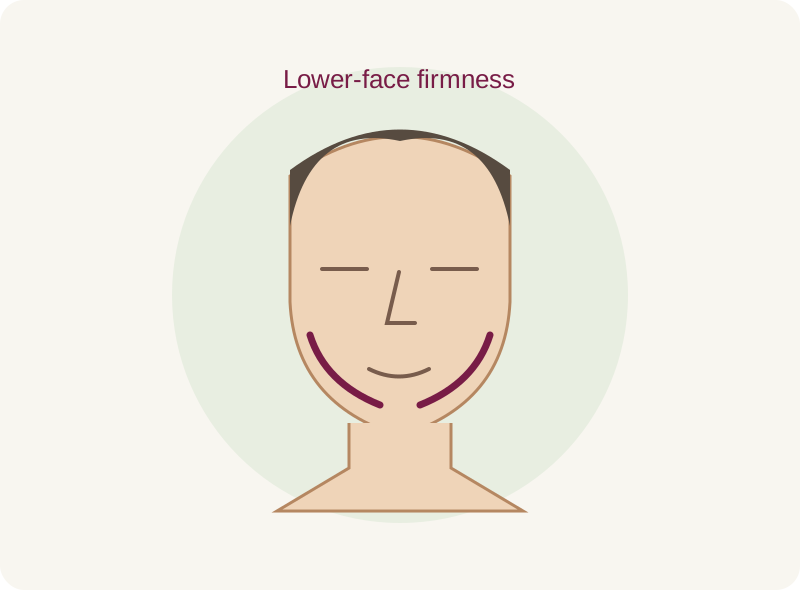
Mild skin looseness
A modest firmness change may be possible for selected face or neck concerns. Large folds or marked sagging are less likely to respond well.
Surface RF uses controlled heat to support skin remodelling. Learn about the procedure, its limits and whether it fits your skin-firmness concern.
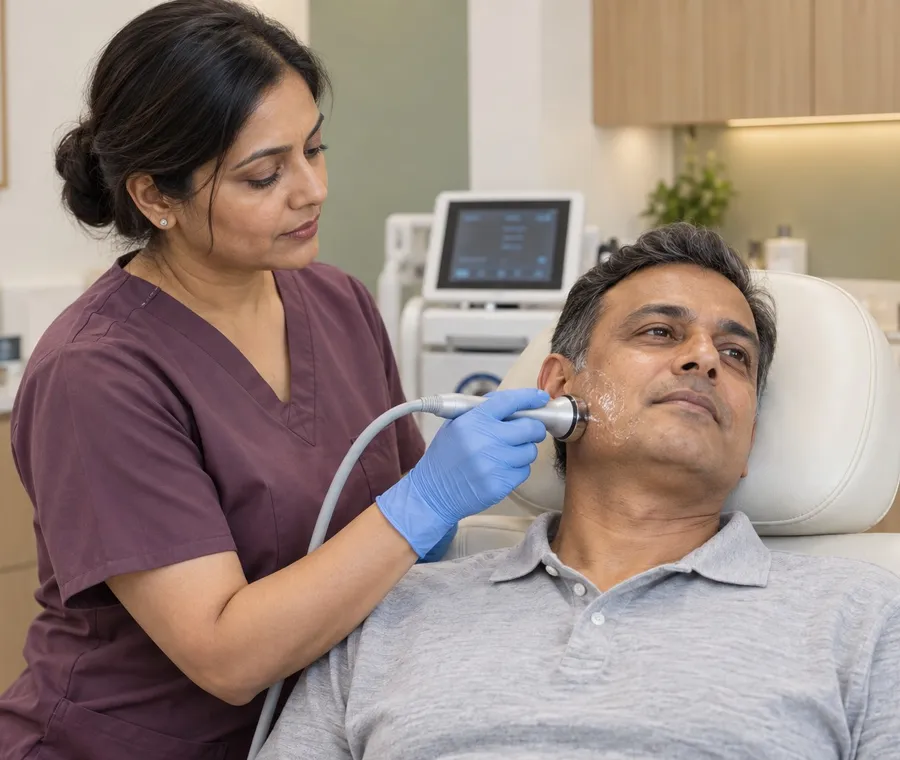
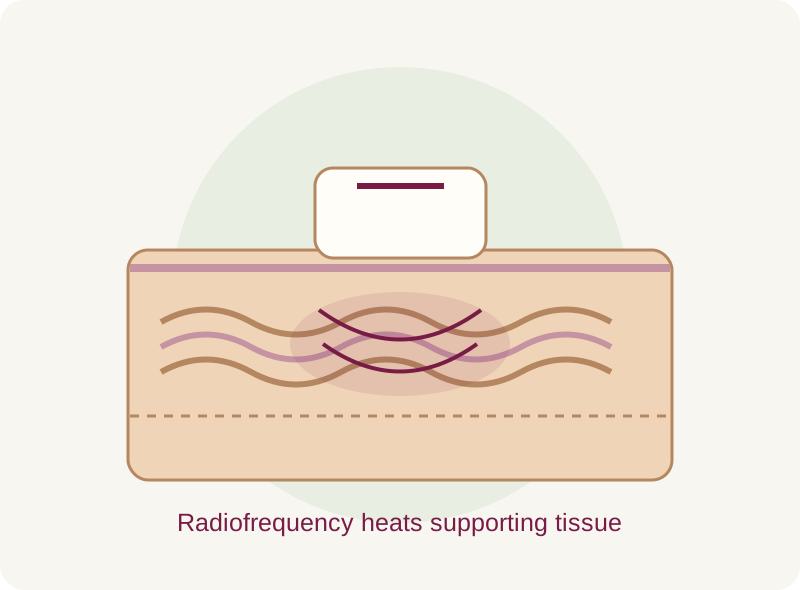
Radiofrequency, or RF, uses electrical energy to warm selected tissue beneath the skin. Controlled heating prompts changes in collagen and gradual tissue remodelling.
This page explains treatment delivered from the skin surface, without needles. The device, applicator and area determine how the energy is delivered and how the skin is protected.
A modest firmness change may be possible for selected face or neck concerns. Large folds or marked sagging are less likely to respond well.
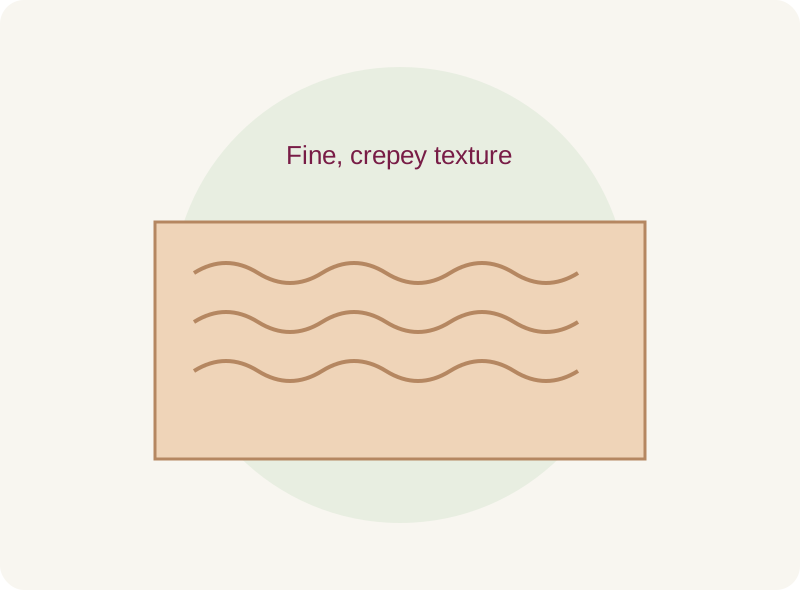
Some people seek a softer appearance to fine lines. Deep folds, lost facial volume and acne scars may need a different approach.
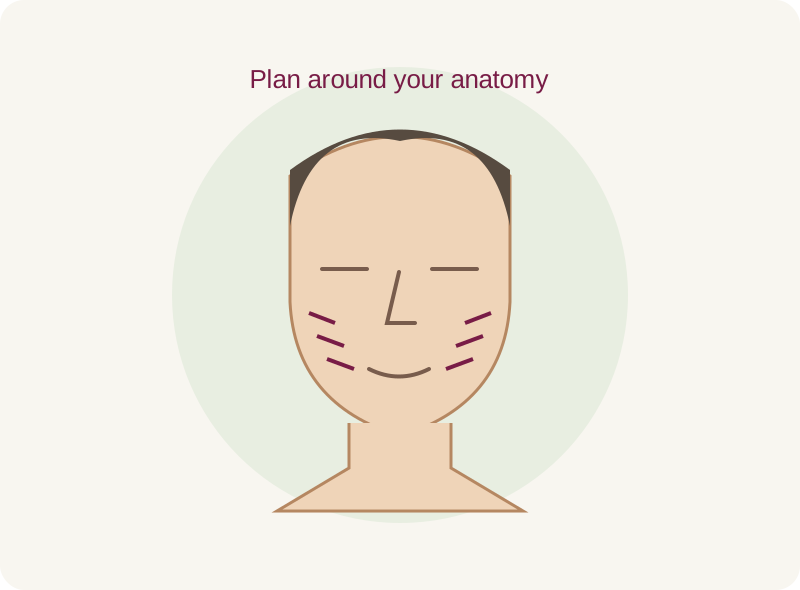
The clinician checks looseness, skin thickness and underlying volume. Ask whether the likely change would be useful for your goal.
Mention pregnancy, active skin disease, medicines, implanted electronic devices, metal in the area and previous procedures. Suitability depends on the system and your history.
Surface RF is usually considered for a smaller change with limited disruption. It cannot remove substantial excess skin or stop ageing.
Discuss your goal, alternatives, possible side effects and the device being used. Baseline photographs may help compare progress.
Follow the clinic’s advice on skin products and jewellery. The skin is cleaned and any contact medium or protective measures are selected for the device.
The clinician places or moves the applicator over the agreed areas according to the system’s technique. Cooling or temperature monitoring may be used.
Warmth, tingling or discomfort can occur. Report a burning sensation or excessive pain straight away so the skin and settings can be checked.
Temporary redness or swelling can occur. Follow the recommended cleansing, moisturising and sun-protection routine.
Agree when to assess the response. The number and spacing of sessions vary; more frequent treatment is not automatically more effective.

Any benefit usually develops over weeks to months. The response can be subtle or limited, and early swelling is not a reliable measure of lasting tightening.
Some devices are used for a single session before review; others use a course. The plan should reflect the system and your response, with maintenance considered only when useful.
Results are not permanent. Ageing, sun exposure and weight changes can affect firmness later.
Many people resume ordinary activities soon after surface RF. Needle-based RF and surgical tightening have different recovery needs.
The applicator stays outside the skin. This is the approach described on this page; the exact device and treatment areas are confirmed at your clinic.
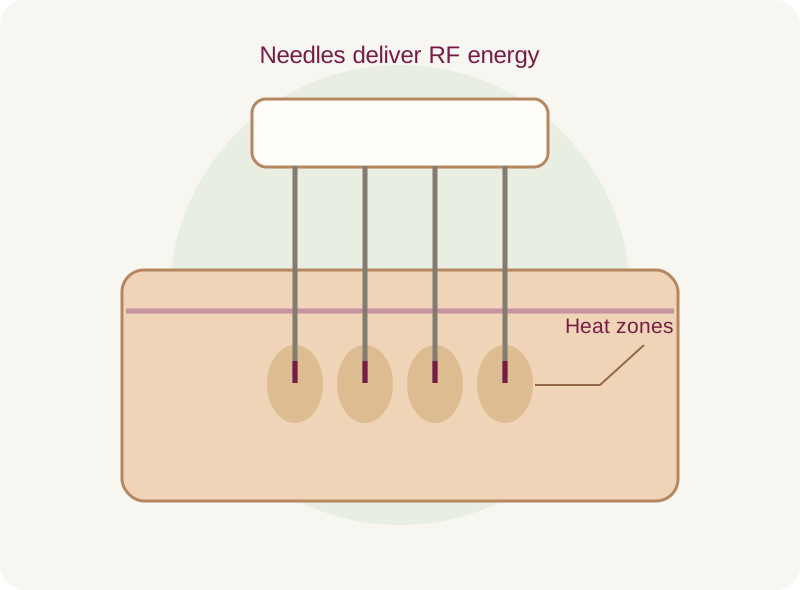
MNRF delivers energy through needles and creates entry points in the skin. It has different uses, preparation and risks.
Explore MNRF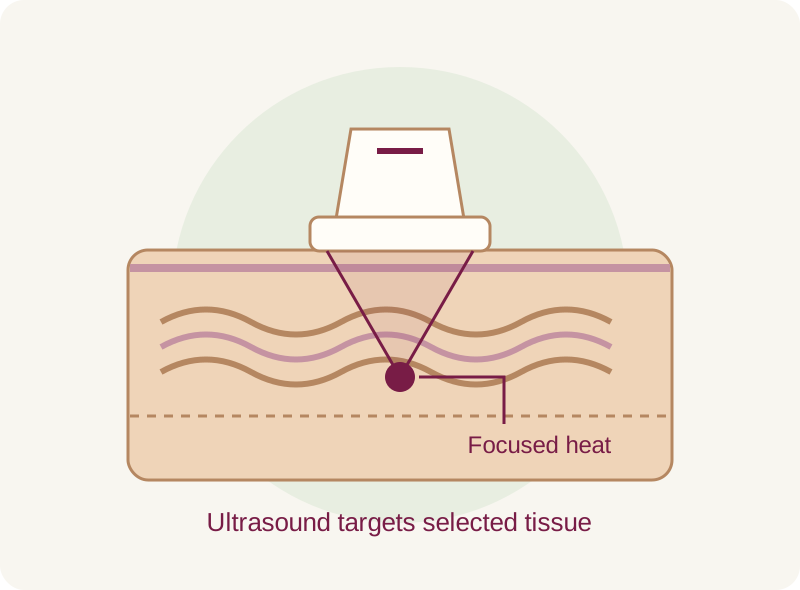
HIFU uses sound energy rather than RF. Anatomy and the degree of laxity help determine whether either method is suitable.
Explore HIFUConfirm when to restart active products, exercise and other treatments. Avoid rubbing or adding strong products to sensitive skin.
Blisters, worsening pain, swelling that does not settle or unexpected skin changes need review. Excessive heating can cause burns; scarring, pigment changes or unwanted contour changes are possible.
Tell the clinician about recent fillers, threads, lasers or surgery. The sequence and spacing need a reason for your skin, not a standard add-on package.

A Layers dermatologist discusses RF alongside HIFU and other options. This older overview can help you prepare questions; the device, treatment choice and schedule need a current assessment.
Layers Skin & Hair Clinics · Doctor explanation · Telugu and English
Watch on YouTubeVerified Google review excerpts about consultations at Layers. The condition is not specified; these are not RF treatment results.
“The doctors listened carefully to my concerns and explained the treatment in a clear and professional manner.”
Consultation experience; condition not specified.
“She explained the treatment clearly and made me feel comfortable throughout the consultation.”
Consultation experience; condition not specified.
“The doctor took the time to understand my skin concerns and explained the treatment plan clearly, without rushing.”
Consultation experience; condition not specified.
“Very patient ,humble and polite to answer every single query and build confidence.”
Consultation experience; condition not specified.
“The doctors explained everything clearly and made me feel comfortable and confident.”
Consultation experience; condition not specified.
“The doctor took the time to listen to my concerns patiently and explained the treatment options clearly.”
Consultation experience; condition not specified.
















No. The applicator stays on the skin surface. RF microneedling uses needles and is a separate procedure with different preparation and recovery.
No. RF uses electrical energy to generate heat, while HIFU uses focused ultrasound. The devices act differently, and neither is automatically best for every person.
This depends on the device, area and skin response. Ask what each session is intended to achieve and when progress will be reviewed before committing to a course.
Changes may develop over several weeks or months as tissue remodels. Some people see little improvement, and a lasting result cannot be judged immediately after treatment.
You may feel warmth, tingling or discomfort. Tell the clinician if the heat becomes painful or feels like burning; a painless experience is not guaranteed.
It may help selected mild laxity, but it cannot remove hanging skin. A surgical assessment can be more appropriate for substantial excess skin.
RF can be considered across skin tones because it does not depend on targeting skin pigment. Appropriate settings, skin assessment and burn prevention still matter.
Do not assume so. Confirm the system, who will treat you, suitable areas and aftercare with your chosen clinic. A brand name alone does not predict the result.
Understand the options, expected change and recovery before choosing treatment.
Prefer a call? +91 9000 572727