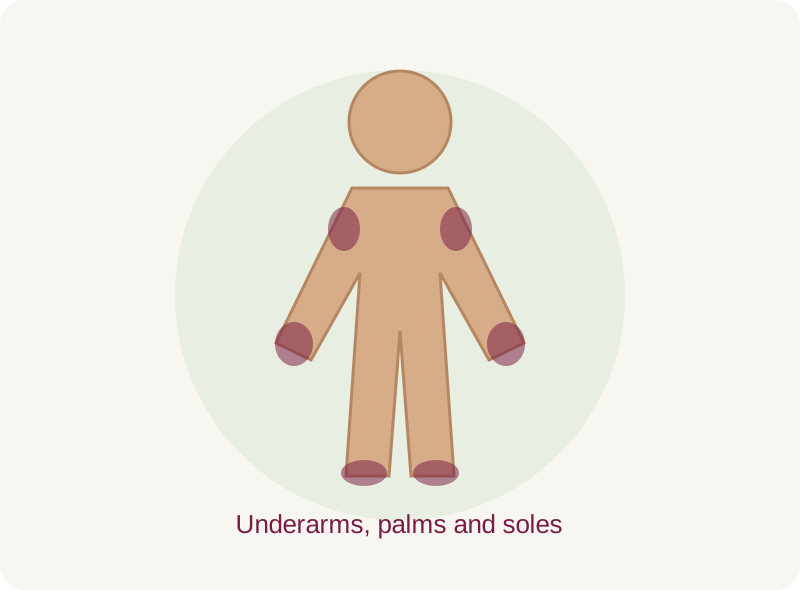
Primary, localised sweating
This often starts earlier in life and affects areas such as both palms, both soles or the underarms. It can run in families and typically settles during sleep. The diagnosis follows a clinical assessment.
If sweating affects your clothes, grip, work or confidence, you do not have to manage it alone. Start by checking the pattern and choosing care for the areas that trouble you.

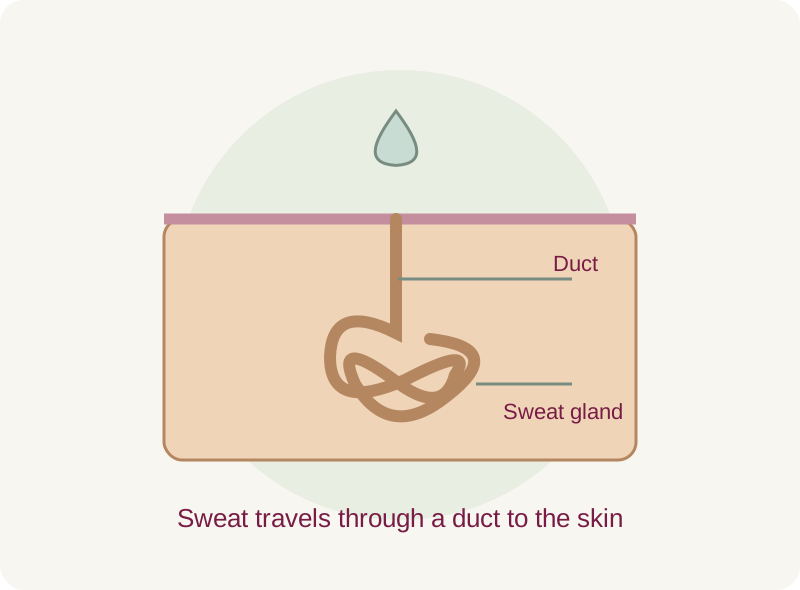
Sweating helps your body cool down. Hyperhidrosis means sweating beyond what is needed for cooling, sometimes even when you are resting or the room is cool.
It can affect a few areas or much of the body. The aim of care is to reduce the sweating that disrupts daily life while keeping normal temperature control in mind.
Damp patches, frequent changes of clothes or avoiding certain fabrics may be part of the problem. Sweat and body odour are related but are not the same thing.
Wet palms can affect writing, using tools, holding a phone or greeting people. Tell the clinician how it changes your routine.
Sweaty feet can make footwear uncomfortable and skin sore. Facial or widespread sweating needs an assessment suited to that pattern, rather than using an underarm product everywhere.
This often starts earlier in life and affects areas such as both palms, both soles or the underarms. It can run in families and typically settles during sleep. The diagnosis follows a clinical assessment.
New, widespread or night-time sweating can relate to medicines or another health condition. Treating that cause may be important alongside managing the sweat itself.
Often a first option for localised sweating. An antiperspirant reduces sweat, while a deodorant mainly addresses odour. Prescription-strength products need instructions for dry skin and avoiding irritation.
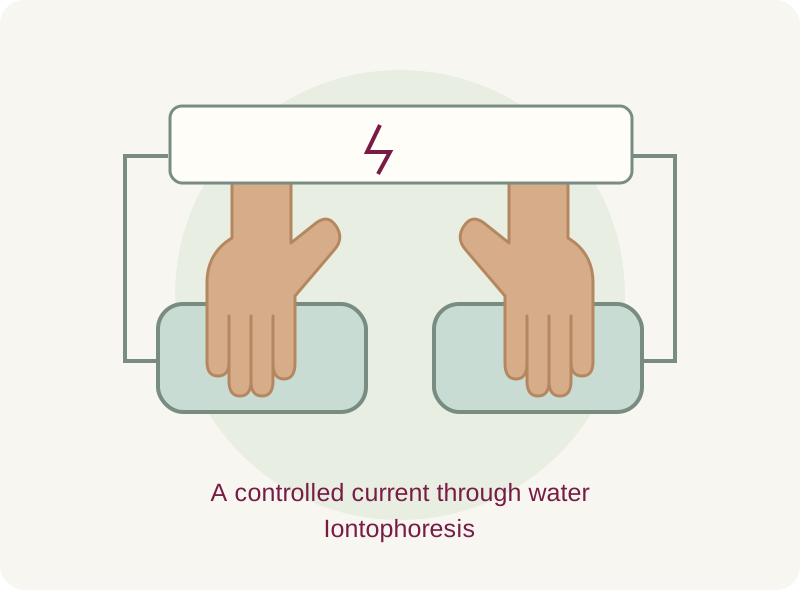
A controlled electrical current passes through water to reduce sweating. An initial course and maintenance are usually needed. Medical history, implanted devices, pregnancy and skin condition affect suitability.
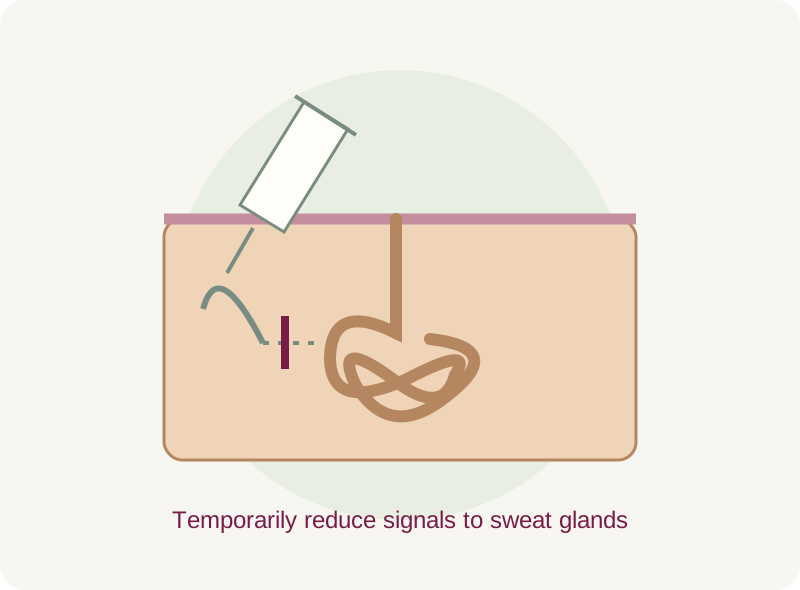
Small injections can temporarily reduce sweating in a selected area, commonly the underarms. Benefits wear off, and discomfort, bruising or local weakness can occur. The plan differs from treatment for facial lines.
About botulinum toxin
Selected topical or oral medicines may help when other care is insufficient. Dry mouth, constipation, blurred vision and difficulty passing urine are possible. Reduced sweating can also make overheating more likely.
Selected severe cases may be assessed for sweat-gland procedures or nerve surgery. Risks can include burns, nerve injury and increased sweating elsewhere. These are separate specialist decisions, not routine first steps.
Note the areas affected, when symptoms began, whether they happen during sleep and how they affect work or social activities.
Bring a medicine list and mention other symptoms. Tests depend on what the history and examination suggest; they are not needed in every case.
Agree which product or procedure to use and what improvement would matter to you. Availability and the suitability of a particular method are confirmed at the clinic.
Ask about application, skin irritation, health precautions and when to contact the clinic. Do not use an underarm medicine around the eyes or on other sites without advice.
Follow comfort, clothing changes, grip and skin irritation, rather than expecting no sweat at all.
Many treatments need ongoing use or repeat visits. Persistent symptoms or side effects may call for a revised diagnosis or treatment.
Follow the label or prescription. Strong antiperspirants are often used on completely dry skin at night; avoid freshly irritated or broken skin and ask what to do if it stings.
Breathable fabrics, absorbent socks and clothing shields can help. Change damp socks and allow shoes to dry between wears.
Heat, stress, caffeine, alcohol or spicy food affect some people. A short diary can help identify a pattern without treating anxiety as the sole cause of the condition.
A useful response may mean drier clothes, a steadier grip or less disruption during the day. The best choice balances improvement, irritation, time and treatment risks.
Some options act only while you keep using them; others last for a period and need review before repeating. Excess sweating can usually be managed, but no single method is best for every person or body area.
These original Google excerpts describe general consultations and care. They do not identify hyperhidrosis treatment or its outcomes.
“The doctors listened carefully to my concerns and explained the treatment in a clear and professional manner.”
Consultation experience; condition not specified.
“She explained the treatment clearly and made me feel comfortable throughout the consultation.”
Consultation experience; condition not specified.
“The doctor took the time to understand my skin concerns and explained the treatment plan clearly, without rushing.”
Consultation experience; condition not specified.
“Very patient ,humble and polite to answer every single query and build confidence.”
Consultation experience; condition not specified.
“The doctors explained everything clearly and made me feel comfortable and confident.”
Consultation experience; condition not specified.
“The doctor took the time to listen to my concerns patiently and explained the treatment options clearly.”
Consultation experience; condition not specified.
















No. Stress can trigger sweating, but primary hyperhidrosis is not simply nervousness. Medicines and other health conditions can also cause excess sweating.
No. Antiperspirant reduces sweat reaching the skin. Deodorant mainly helps with odour; some products combine both functions.
Not everyone does. New widespread sweating, night-time symptoms, medicine changes or other symptoms may lead the clinician to investigate a possible cause.
Yes. Suitable topical products and iontophoresis are among the options. Treatment choice depends on skin health, medical history and practical needs.
The effect is temporary and commonly lasts for several months, but varies by area and person. Repeat treatment should follow a review of benefit, return of symptoms and side effects.
The aim is useful control, not eliminating the body’s cooling response. Medicines can cause side effects and overheating, so dose and suitability need medical supervision.
Most people start with non-surgical options. Surgery is a specialist choice for selected severe cases, and increased sweating in other areas can be a significant lasting problem.
Not automatically. New or unexplained night sweats need assessment for a possible underlying cause before assuming primary localised hyperhidrosis.
Talk about where sweating affects you and what you want treatment to improve.
Prefer a call? +91 9000 572727