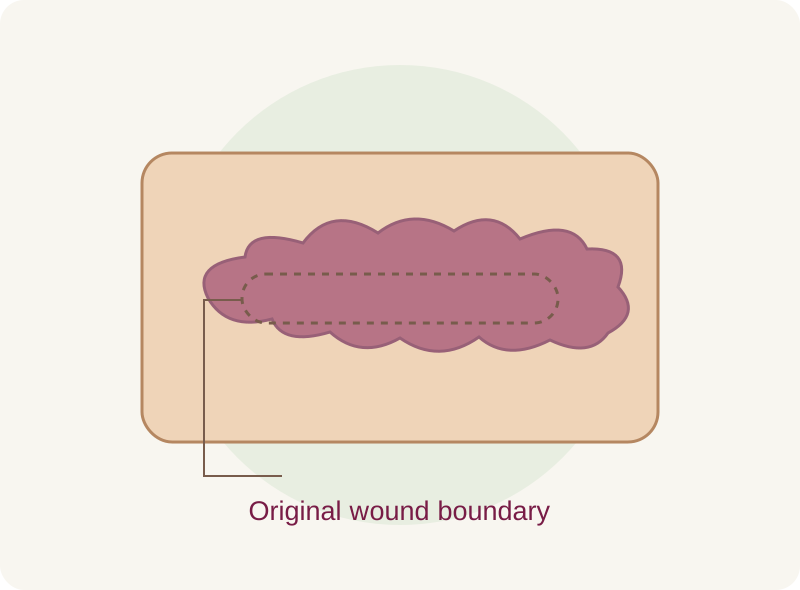
Keloid
Grows beyond the original wound and tends to persist. It may enlarge or return after treatment, so long-term control matters.
Keloids can feel firm, itchy or uncomfortable. A useful plan considers how the scar feels, how it looks and the chance of it returning.

A keloid is an overgrowth of scar tissue that extends beyond the original skin injury. It can appear after a piercing, acne, surgery, a burn or even a small skin injury, sometimes months later.
It is not contagious and does not turn into cancer. However, a new or changing skin growth should be examined rather than assumed to be a keloid.
Grows beyond the original wound and tends to persist. It may enlarge or return after treatment, so long-term control matters.
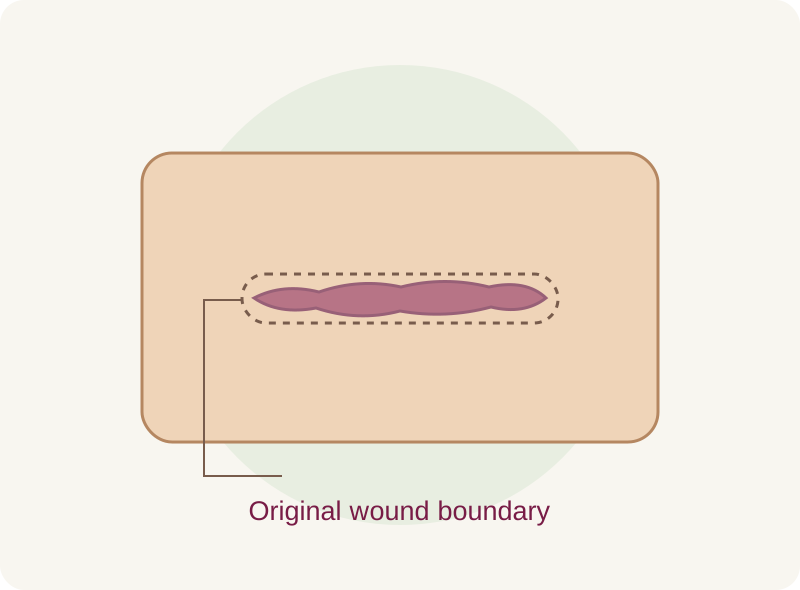
Stays within the original injury. It is more likely to soften or flatten with time, although symptoms may still need treatment.
Explore other scar care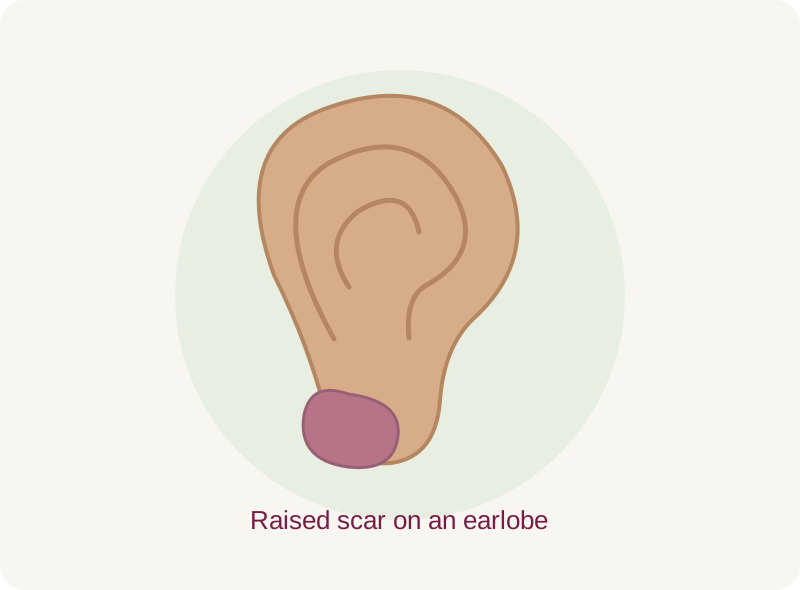
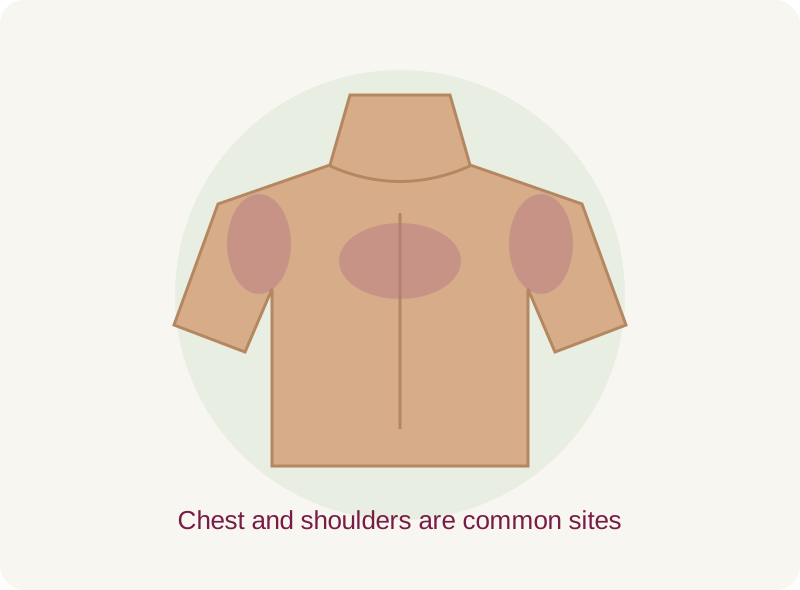
The surface may be smooth or lumpy, with a colour different from nearby skin. Keloids can occur on ears, chest, shoulders and other sites.
Clothing or jewellery may rub the scar. A scar near a joint can sometimes make movement uncomfortable or restricted.
How visible it is may matter as much as discomfort. Tell the clinician which change would make the biggest difference to you.
The healing response produces too much scar tissue. A personal or family history can increase the chance of another keloid.
Piercings, inflammatory acne, surgery and other injuries can trigger growth. Some sites, including the upper chest, shoulders and ears, are more prone.
Keloids are more common in darker skin tones, but anyone can develop one. Your past healing is useful information before a new procedure.
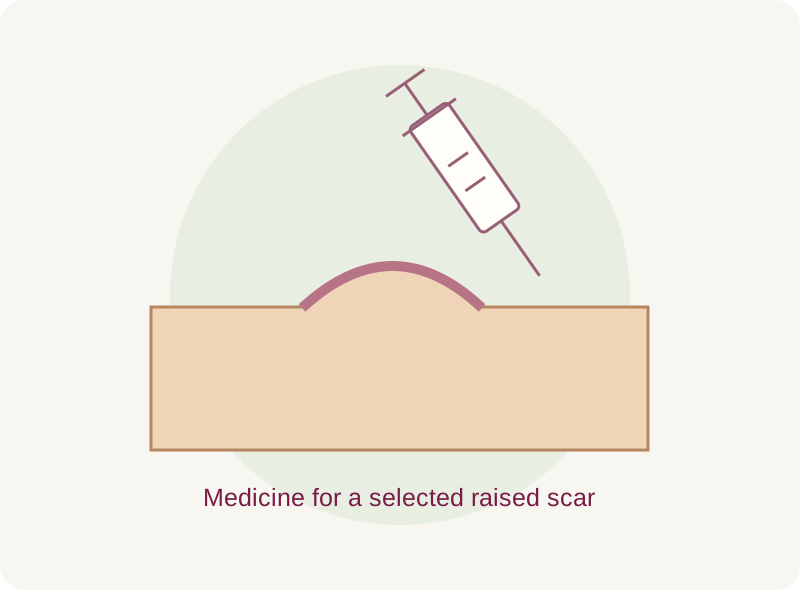
Corticosteroids or other selected medicines may soften and flatten a keloid and ease itch. Repeat visits may be needed; skin thinning and pigment changes are possible.
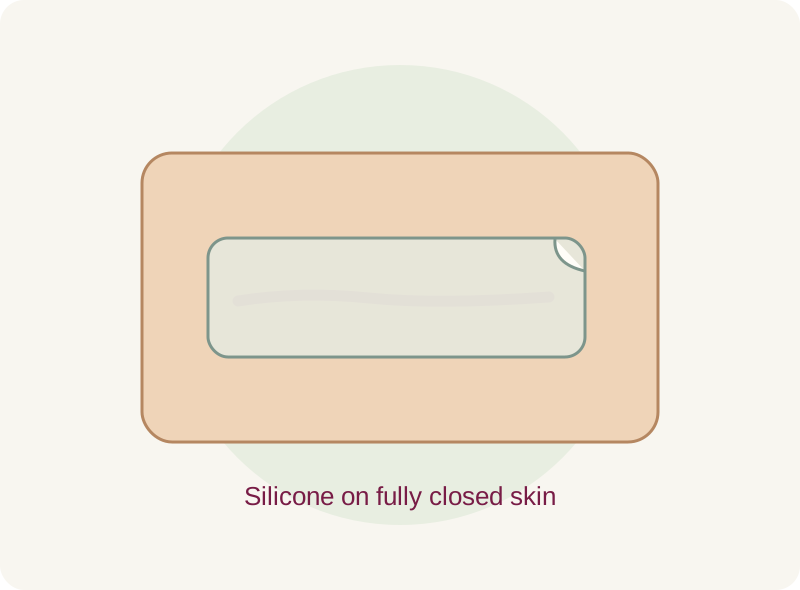
A suitable gel or sheet may be part of scar control. Use it only when the skin has healed and as advised; it is not a dressing for an open wound.
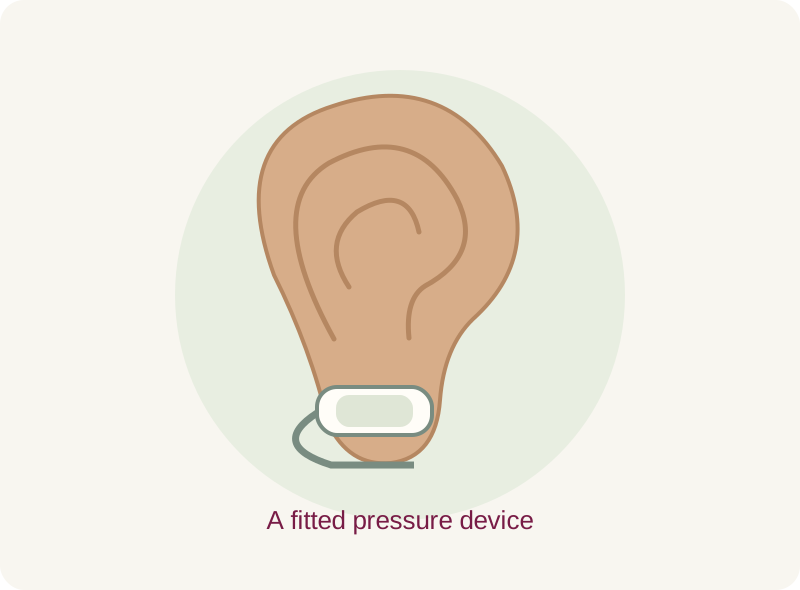
Selected ear scars or postoperative scars may benefit from prescribed pressure. Fit, comfort and skin checks matter; do not improvise tight clips or bandages.
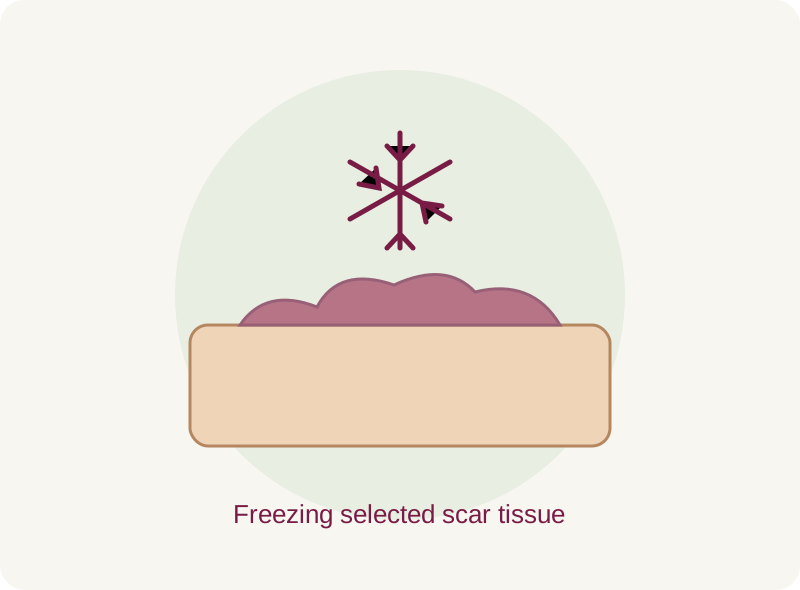
Cryotherapy can reduce some smaller keloids. Pain, blistering and lasting lighter patches are possible, particularly in darker skin.
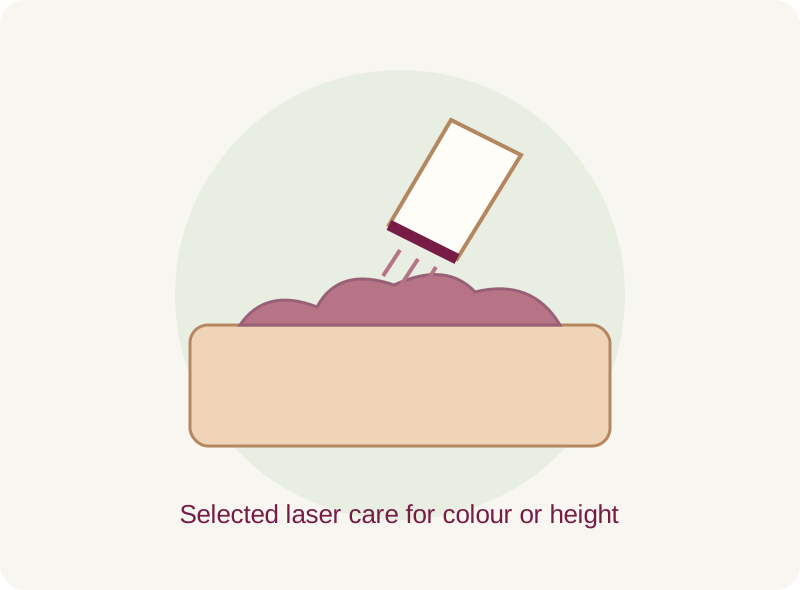
A suitable laser may help colour or height, often alongside another treatment. A resurfacing package is not automatically suitable for keloid-prone skin.
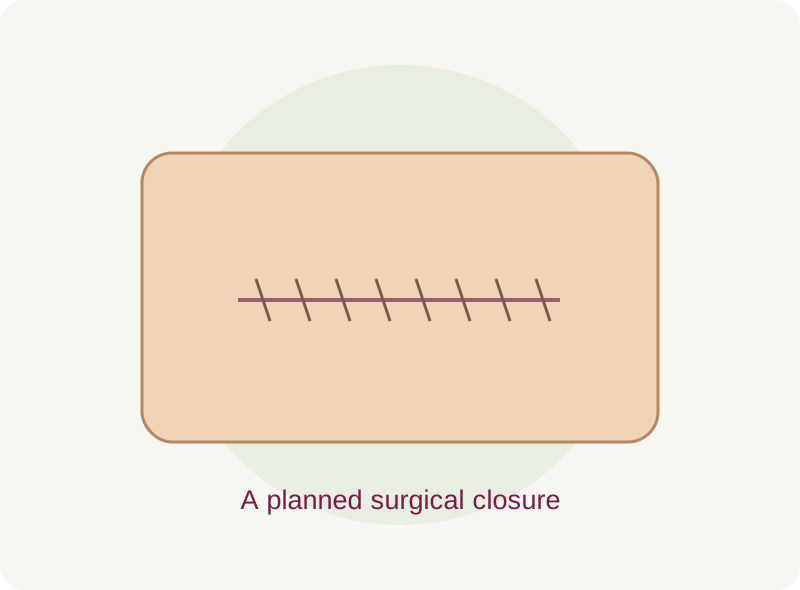
Removal may be considered for selected scars, but treatment and follow-up are central to managing recurrence risks.
Explore keloid treatmentThe clinician checks its size, edges, firmness, symptoms and history. An unusual lesion may need further investigation rather than routine scar treatment.
Explain itch, pain, rubbing, movement or appearance concerns. Tell us how earlier treatments affected the scar and surrounding skin.
The plan may start with symptom control or a combination of treatments. Ask what each part targets and when its effect will be reviewed.
If surgery is considered, agree how regrowth will be addressed before proceeding. Ask who will provide each part of treatment.
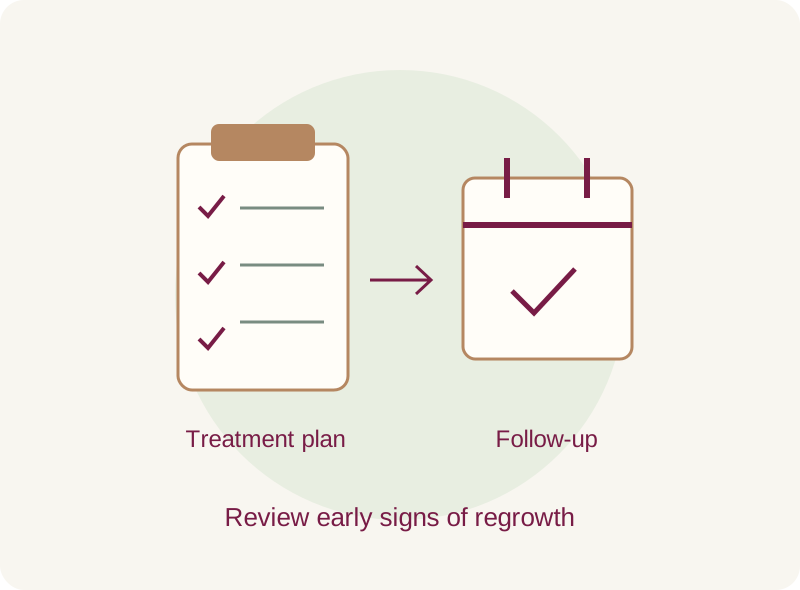
Track comfort, softness, height and movement. A scar may remain visible even when symptoms improve.
Contact the treating team if it becomes firmer, itchier or starts growing again. The plan may need adjustment.
Choose clothing that does not repeatedly rub the scar. Do not cut, tie off or burn a raised growth yourself.
Apply scar products only to suitable healed skin and stop to seek advice if they cause a rash or breakdown. Protect exposed scars from the sun.
Tell clinicians about your keloid history before surgery, piercings, tattoos or cosmetic treatment. Avoiding an unnecessary skin injury may be the best prevention.
Treatment may make a keloid softer, flatter or more comfortable. A complete cure or invisible scar cannot be promised, and a keloid can return even after a good initial response.
Several visits or more than one method may be appropriate. Your review should consider symptoms and skin changes, including unwanted lightening or darkening, before another treatment is repeated.
These original Google excerpts describe general consultations and care. They do not identify keloid treatment or its outcomes.
“The doctors listened carefully to my concerns and explained the treatment in a clear and professional manner.”
Consultation experience; condition not specified.
“She explained the treatment clearly and made me feel comfortable throughout the consultation.”
Consultation experience; condition not specified.
“The doctor took the time to understand my skin concerns and explained the treatment plan clearly, without rushing.”
Consultation experience; condition not specified.
“Very patient ,humble and polite to answer every single query and build confidence.”
Consultation experience; condition not specified.
“The doctors explained everything clearly and made me feel comfortable and confident.”
Consultation experience; condition not specified.
“The doctor took the time to listen to my concerns patiently and explained the treatment options clearly.”
Consultation experience; condition not specified.
















Keloids tend to persist. Some other raised scars flatten as they mature, so confirming the scar type helps set expectations.
A keloid is not contagious and does not turn into cancer. Other skin growths can look similar, so a new or unusual lesion should still be examined.
Keloid growth may start months after an injury and sometimes later. Tell the clinician about old piercings, acne, surgery or other injuries in the area.
No. Injections, silicone, selected pressure treatment or other approaches may be considered. Surgery requires a separate discussion about recurrence and follow-up.
Do not apply silicone scar sheets to open skin or a scab. Wait until your treating team confirms that the wound is ready.
A further piercing can trigger another keloid. Discuss your history before considering it; avoiding another piercing may be the safest option for that area.
Yes. Injections, freezing, lasers and surgery can cause pigment changes. Your skin tone and previous response should be part of choosing a method.
Arrange a review rather than repeating a procedure yourself. Early thickening, itch or growth may lead the clinician to adjust the combination of care.
Discuss comfort, appearance and a plan for ongoing review.
Prefer a call? +91 9000 572727