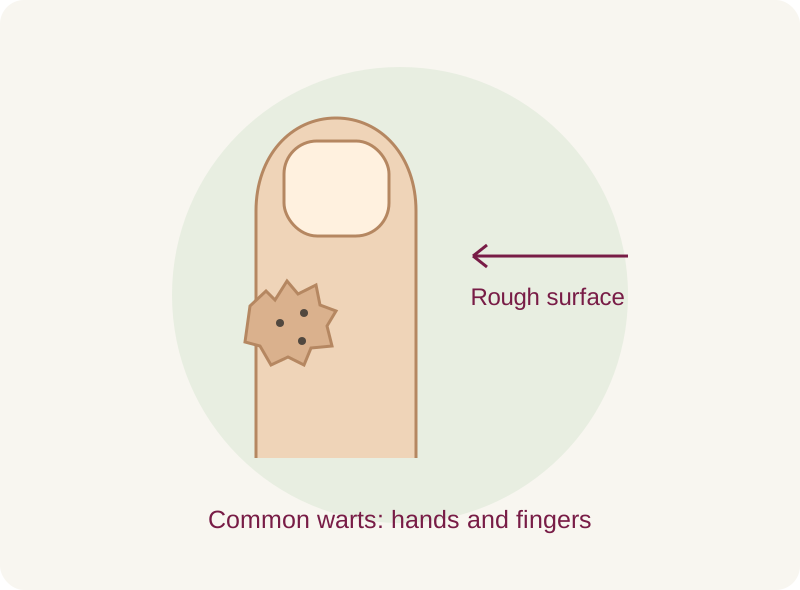
Common warts
Often found on fingers, hands or around nails. Their rough surface may contain tiny dark dots, which are small blood vessels rather than roots.
A rough bump on a finger or a sore spot on the sole may be a wart. Learn what to look for and when a skin assessment can help.
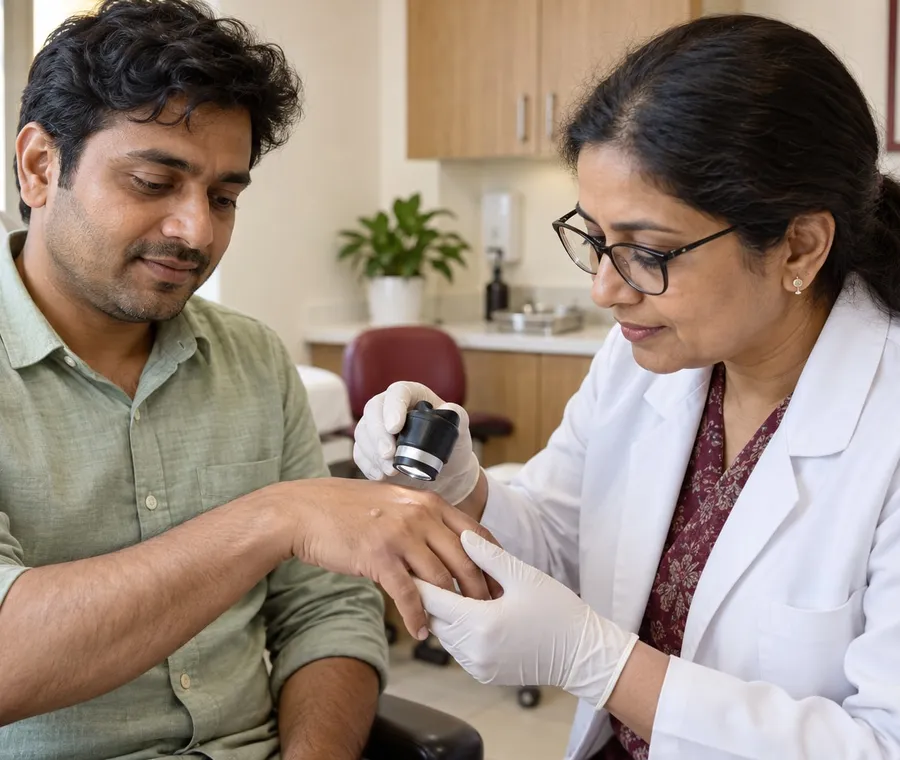
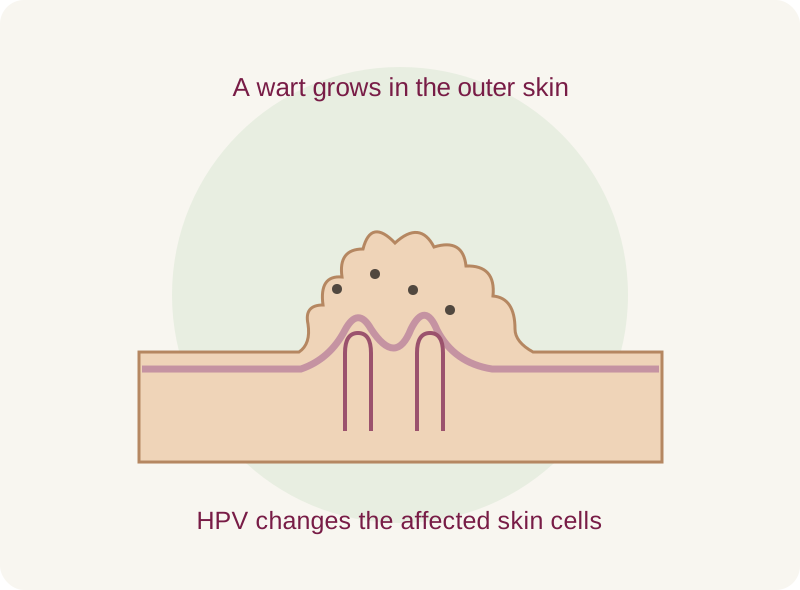
Common skin warts are growths caused by human papillomavirus, or HPV. The virus affects cells in the outer skin, making them grow into a rough or flatter bump.
Some warts clear on their own, especially in children. Others persist, spread or become uncomfortable. A clinician can confirm the growth before you decide whether to treat it.
Often found on fingers, hands or around nails. Their rough surface may contain tiny dark dots, which are small blood vessels rather than roots.
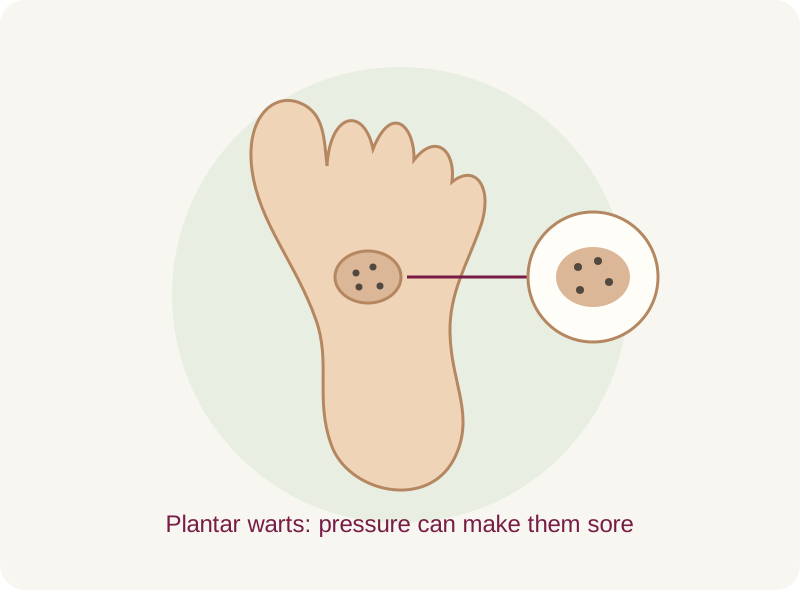
Warts on the sole are also called verrucas. Pressure can flatten them and make walking uncomfortable. They may look similar to a corn or callus.
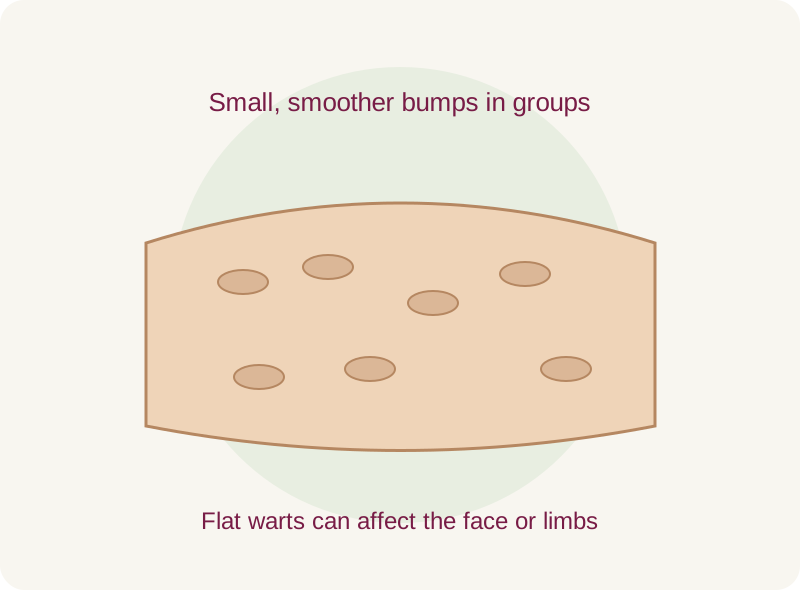
Smaller, smoother bumps may occur in groups on the face, hands or legs. Shaving or scratching can spread them along the skin.
Thread-like warts and warts in sensitive areas need their own assessment. Genital growths should be checked separately; ordinary hand and foot remedies are not suitable there.
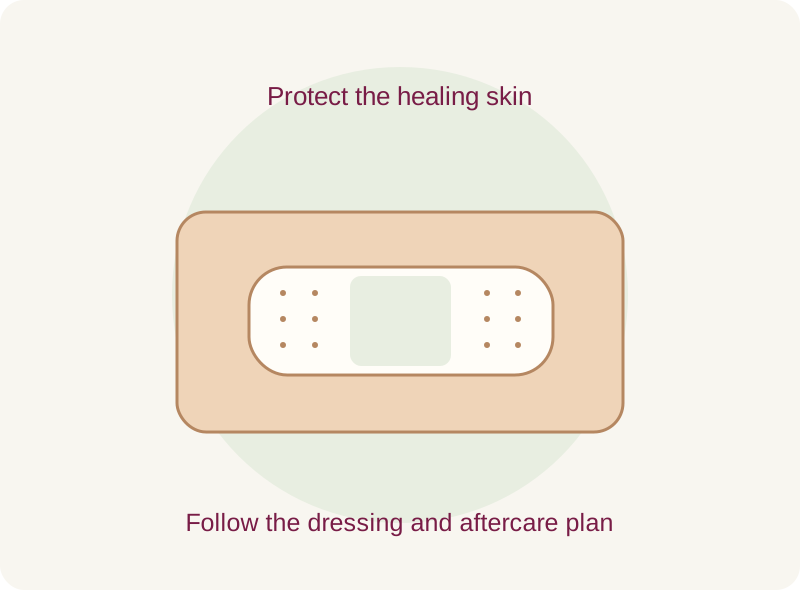
Picking a wart or biting nails can carry the virus to nearby broken skin. Wash your hands after touching or treating it.
Do not share towels, razors, nail tools or a file used on a wart. Avoid shaving directly over affected skin.
Wear suitable footwear around communal showers and pool areas. Cover a verruca with a waterproof dressing for swimming.
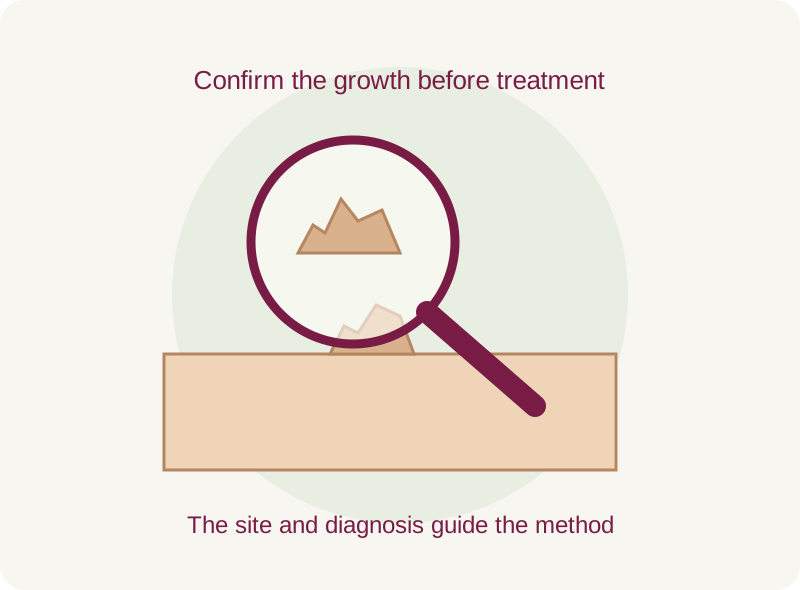
Get a lesion checked if it bleeds, changes appearance, grows quickly or does not look like your other warts. Do not treat an uncertain growth with acid or a home freezing kit.
Face, genital and nail-area lesions need a careful choice of treatment. A painful sole lesion may also need help to distinguish it from a corn.
Ask for advice before home treatment if you have diabetes, reduced sensation, poor circulation or a weakened immune system.
If the diagnosis is clear and a wart is not troublesome, waiting may be reasonable. The time to clear varies, and spreading or changing lesions need review.
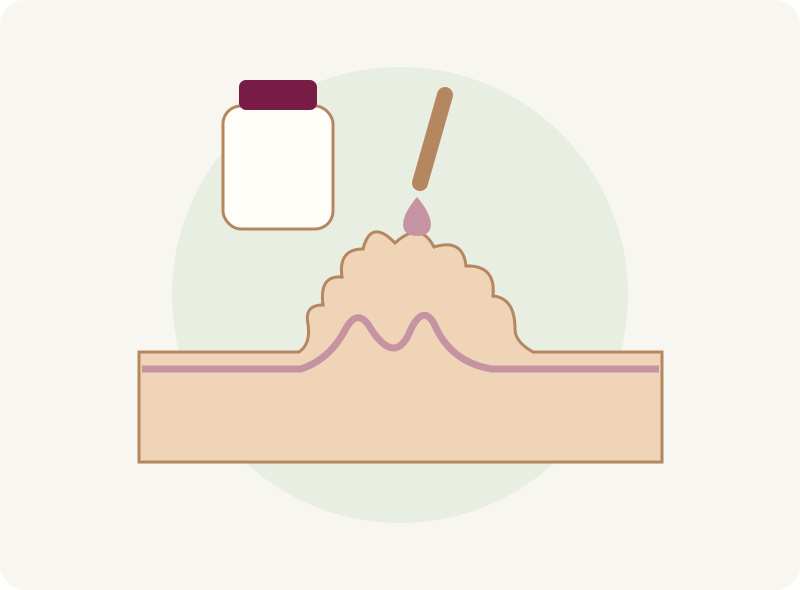
A clinician or pharmacist may advise a wart medicine for an appropriate hand or foot lesion. Protect surrounding skin and follow the product-specific plan.
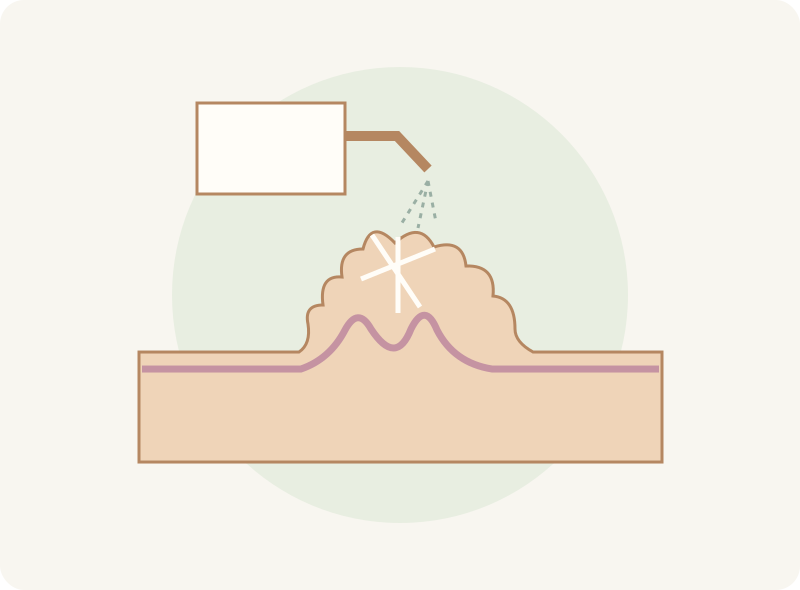
Freezing, laser or another selected method may be discussed for persistent, painful or bothersome warts. Compare the methods and healing needs.
Explore wart removalMention when it appeared, whether it hurts or bleeds, and any previous treatments.
Discuss diabetes, immune conditions, medicines and past problems with healing or scarring.
Observation, medicine or a procedure may suit different situations. Ask about discomfort, recovery and repeat visits.
A hand, nail fold or weight-bearing sole may need different care and precautions.
Use only the agreed treatment and let the clinician know if it causes unexpected irritation.
Warts can persist or return. A review can help decide whether to continue or change the approach.
Verified Google review excerpts about consultations and explanations at Layers. The condition is not specified; these are not wart treatment results.
“The doctors listened carefully to my concerns and explained the treatment in a clear and professional manner.”
Consultation experience; condition not specified.
“She explained the treatment clearly and made me feel comfortable throughout the consultation.”
Consultation experience; condition not specified.
“The doctor took the time to understand my skin concerns and explained the treatment plan clearly, without rushing.”
Consultation experience; condition not specified.
“Very patient ,humble and polite to answer every single query and build confidence.”
Consultation experience; condition not specified.
“The doctors explained everything clearly and made me feel comfortable and confident.”
Consultation experience; condition not specified.
“The doctor took the time to listen to my concerns patiently and explained the treatment options clearly.”
Consultation experience; condition not specified.
















Yes. The virus can spread through contact and to other areas of your own skin, especially where skin is damaged. Avoid picking and sharing personal tools.
No. Some clear without treatment. Pain, spread, location, your health and your preference help decide whether treatment is useful.
No. They are small blood vessels in the wart. A wart does not have a root extending into deeper tissues.
A corn is thickened skin related to pressure or friction. A wart is caused by HPV. An examination is useful when a sole lesion is difficult to identify.
No. Cutting or burning it can cause injury, infection or scarring and may spread the virus. Have uncertain or troublesome growths assessed.
Yes, but the decision considers discomfort, location and whether waiting is reasonable. A child needs age-appropriate advice rather than an adult’s treatment plan.
Do not use ordinary hand or foot wart products on facial or genital skin. These areas need a clinician-guided approach.
Treatment removes affected tissue but may not clear all infected cells. Persistence or recurrence can require another course or a different method.
Talk through what you have noticed and the care that fits the affected area.
Prefer a call? +91 9000 572727