Short-lived episodes
Acute urticaria lasts less than six weeks. An infection, medicine, food allergy or another exposure may be involved, but a clear cause is not always found.
Raised, itchy patches can appear suddenly and disrupt your day. Find out what urticaria is and how a practical care plan can help.

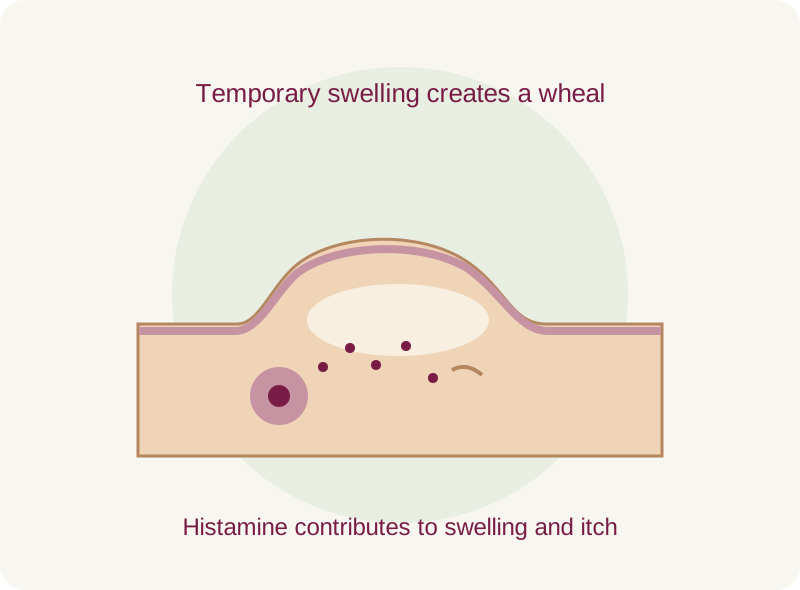
Urticaria is the medical name for hives: temporary raised patches called wheals. Histamine and other signals cause fluid to collect in the skin, creating swelling and itch.
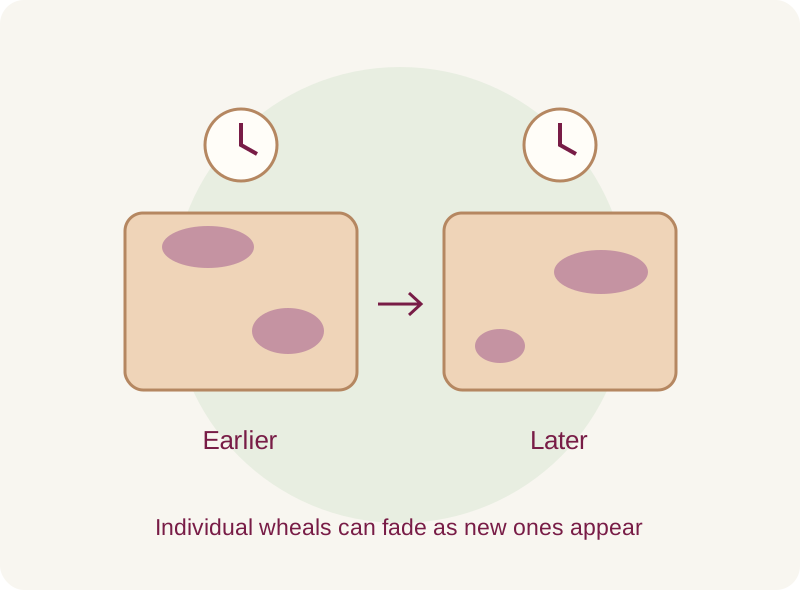
Individual wheals usually fade within a day, while new ones may appear elsewhere. Some people also have deeper swelling called angioedema.
Wheals can be small bumps, rings or larger irregular patches. On darker skin they may be skin-coloured, so the raised shape can be more obvious than redness.
An individual patch may disappear as others develop. Take a photo if the skin often looks normal by the time of your appointment.
Eyelids, lips, hands or feet may swell. New swelling needs prompt advice; mouth, tongue or throat involvement or breathing symptoms need emergency care.
Acute urticaria lasts less than six weeks. An infection, medicine, food allergy or another exposure may be involved, but a clear cause is not always found.
Hives continuing beyond six weeks are called chronic urticaria. Many cases occur without an external trigger and are not caused by a food allergy.
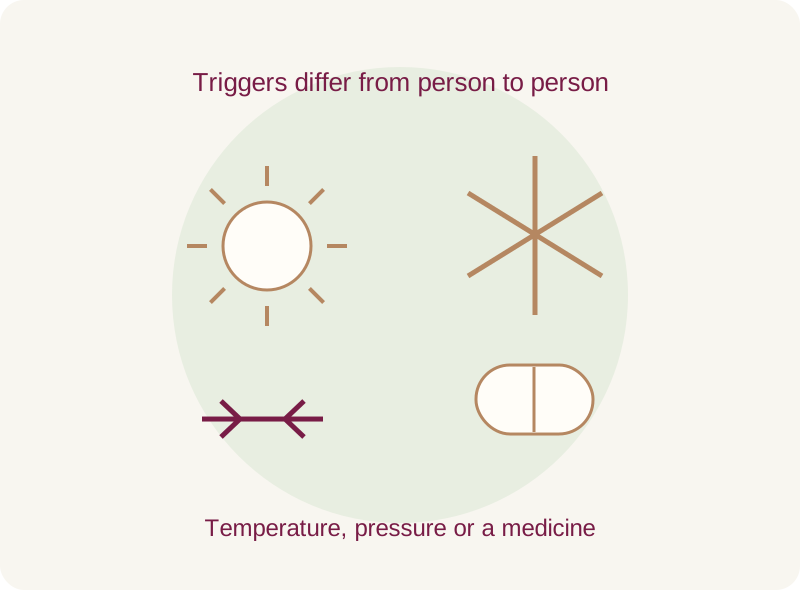
Heat, cold, rubbing or pressure can bring on hives in some people. A reliable link helps the clinician decide whether targeted testing is useful.
A clinician or pharmacist can advise on an appropriate antihistamine. Your age, health, other medicines and any drowsiness matter; follow the agreed instructions.
Avoid a confirmed trigger where practical. Broad allergy tests or removing many foods are not routinely helpful without a suggestive history.
If symptoms remain troublesome despite the initial plan, a specialist can review the diagnosis and discuss additional treatment. Do not increase doses or combine medicines yourself.
Mention how long each patch lasts, any swelling and how often symptoms return.
Bring medicine names and note infections or repeatable links to food, temperature or pressure.
Discuss how to use treatment and what side effects to watch for.
Examination and history guide any tests; not everyone needs an extensive allergy panel.
Tell the clinician about sleep disruption and how well treatment controls symptoms.
A painful patch that stays in one place beyond a day, bruising or fever needs reassessment.
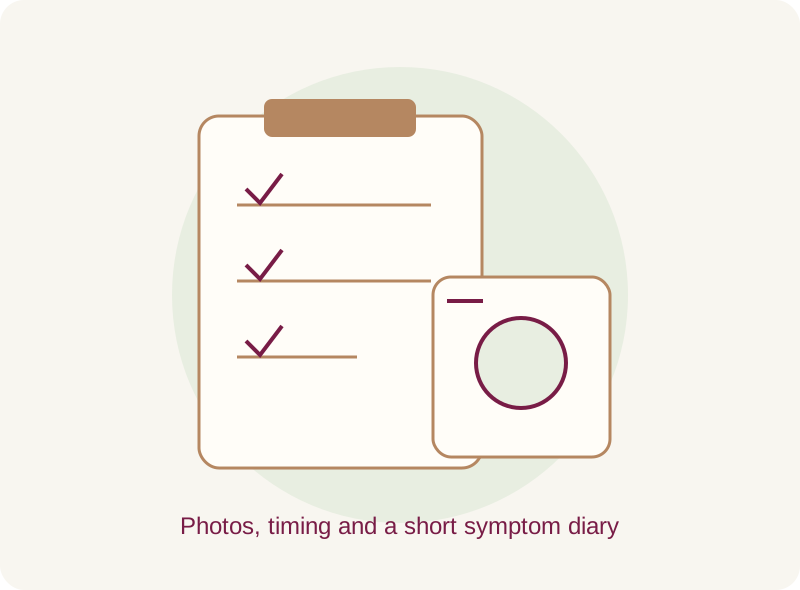
Note the date, a photo, itch and any swelling. A short record is easier to maintain than tracking every possible exposure.
Loose, comfortable clothing and gentle skin care may help. Avoid overheating if it reliably worsens your symptoms.
Some medicines can worsen hives. Discuss a suspected link with the prescriber rather than stopping important treatment on your own.
Verified Google review excerpts about consultations and explanations at Layers. The condition is not specified; these are not urticaria treatment results.
“The doctors listened carefully to my concerns and explained the treatment in a clear and professional manner.”
Consultation experience; condition not specified.
“She explained the treatment clearly and made me feel comfortable throughout the consultation.”
Consultation experience; condition not specified.
“The doctor took the time to understand my skin concerns and explained the treatment plan clearly, without rushing.”
Consultation experience; condition not specified.
“Very patient ,humble and polite to answer every single query and build confidence.”
Consultation experience; condition not specified.
“The doctors explained everything clearly and made me feel comfortable and confident.”
Consultation experience; condition not specified.
“The doctor took the time to listen to my concerns patiently and explained the treatment options clearly.”
Consultation experience; condition not specified.
















No. Infections, physical triggers and immune activity can cause hives. Many chronic cases do not have a specific food or environmental allergy.
Individual wheals often fade while new ones form elsewhere. The rash can look different over a few hours.
Hives themselves are not contagious. If an infection triggered the episode, advice about that infection may still apply.
Testing is guided by the history. A consistent immediate reaction to a particular exposure may justify it; broad screening is not automatically useful for recurring hives.
Avoid a confirmed allergy and follow your clinician’s advice. Removing multiple foods without a clear reason can make eating difficult without improving chronic hives.
Ask your clinician or pharmacist about the appropriate option if you are pregnant, breastfeeding or taking other medicines. Do not assume every product is suitable.
Arrange a review, especially if it is painful, leaves bruising or occurs with fever. The clinician may need to consider a different cause.
Sudden mouth, tongue or throat swelling, difficulty breathing or swallowing, faintness or collapse require emergency medical help.
Talk through the pattern, your current medicines and the effect on your daily life.
Prefer a call? +91 9000 572727