

Pigmentation treatment in Hyderabad helps reduce dark spots, melasma, and uneven skin tone using advanced dermatological solutions like Q-Switch laser, chemical peels, and prescription skincare. Most patients require 4–6 sessions for visible, long-lasting results. With proper sun protection and maintenance, you can achieve clearer, brighter, and more even-toned skin safely even on Indian skin types (IV–VI).
This treatment is ideal for:
- Individuals with dark patches, melasma, or acne marks
- People experiencing sun damage due to Hyderabad’s climate
- Those who have tried OTC creams without results
- Anyone seeking clinically proven, dermatologist-led solutions
What Is Skin Pigmentation?
Pigmentation is related to melanin, the natural pigment responsible for the colour of our skin, hair, and eyes. When melanocytes produce excess melanin or when pigment becomes unevenly distributed, darker patches or spots can appear on the skin.
This condition is commonly referred to as hyperpigmentation.
Pigmentation can appear as:
- Brown or dark facial patches
- Small sun spots
- Dark acne marks
- Uneven skin tone
- Patchy discoloration
- Darkening around the mouth
- Pigmentation on the forehead, cheeks, or nose
- Dark marks following inflammation or skin injury
Not every dark patch has the same cause. Melasma, post-inflammatory hyperpigmentation, solar lentigines, freckles, and other pigmentary disorders can look similar but require different management approaches. A proper dermatological assessment is therefore an important first step.
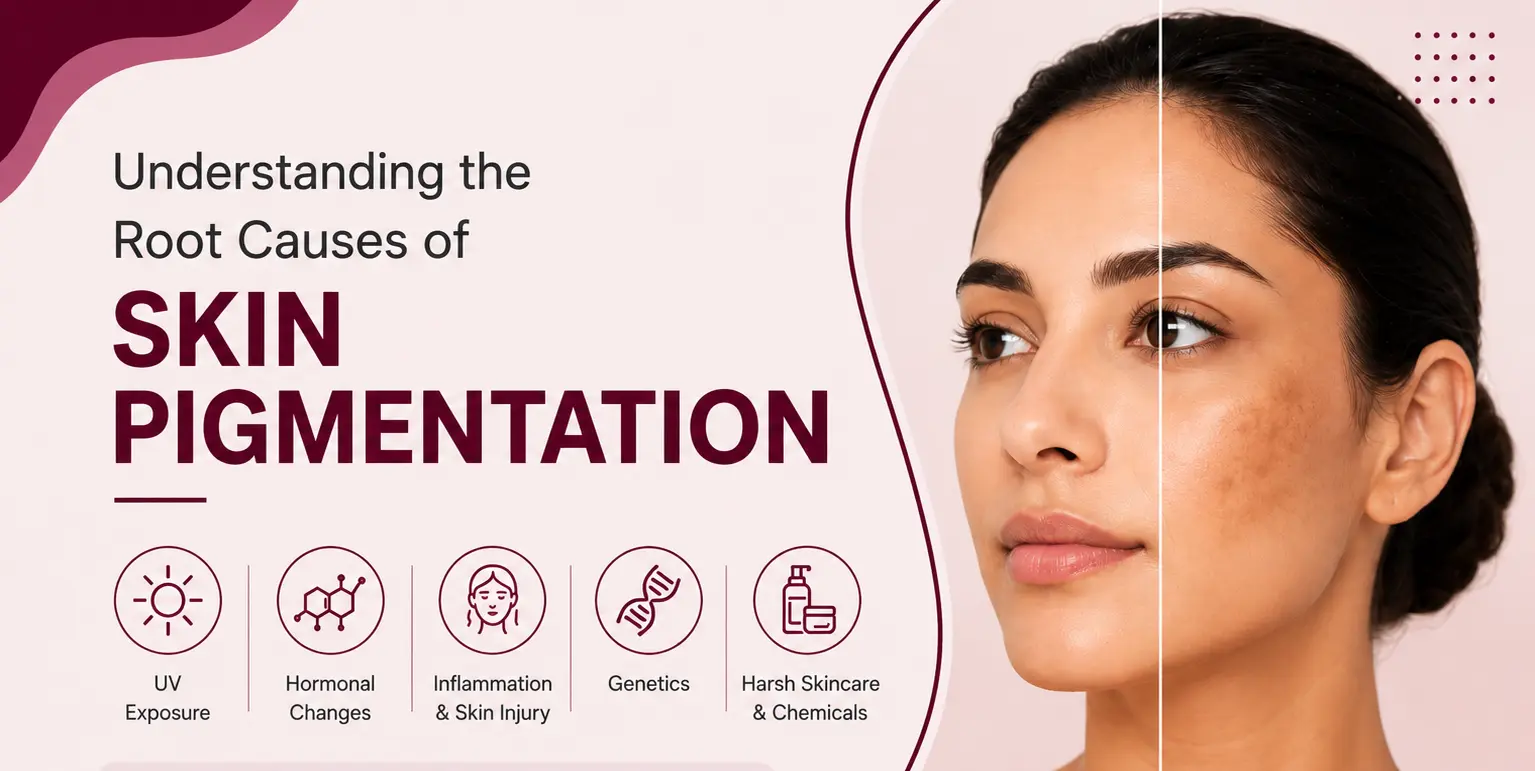
What Causes Pigmentation?
Several factors can contribute to excessive or uneven pigmentation. Understanding the cause helps us select a treatment that is appropriate for the individual patient.
1. Sun Exposure
UV exposure is one of the most important contributors to pigmentation. Repeated exposure can stimulate melanin production and make existing dark spots more visible.
For people with pigmentation, sun protection is not simply an additional skincare step. It is an important part of treatment and maintenance.
2. Hormonal Changes
Hormonal fluctuations can contribute to melasma, particularly on the cheeks, forehead, nose, and upper lip. Pregnancy, hormonal medication, and other hormonal influences may play a role.
Melasma can be persistent and may return even after successful treatment, making long-term maintenance important.
3. Acne and Skin Inflammation
Acne can leave behind dark marks even after the active pimple has disappeared. This is known as post-inflammatory hyperpigmentation (PIH).
Repeated picking, squeezing, or irritating acne can increase inflammation and potentially make the resulting pigmentation more noticeable.
4. Skin Irritation
Harsh skincare products, aggressive exfoliation, burns, or other forms of skin irritation can trigger pigmentation in susceptible individuals.
This is particularly important when treating darker skin tones because excessive inflammation may result in additional pigmentation.
5. Individual Skin Characteristics
Genetics, skin type, previous inflammation, hormonal factors, medication, and environmental exposure can all influence pigmentation.
For this reason, we do not recommend treating every dark spot with the same procedure.
Types of Pigmentation We Treat
Pigmentation can have several forms, including:
| Pigmentation Type | Common Appearance | Common Contributors |
|---|---|---|
| Melasma | Brown or greyish facial patches | Hormones, sunlight, visible light |
| Post-Acne Pigmentation | Brown or dark marks | Acne and inflammation |
| Sun Spots | Localised flat brown spots | Cumulative UV exposure |
| Post-Inflammatory Hyperpigmentation | Darkened areas after inflammation | Acne, irritation, injury |
| Uneven Skin Tone | General patchiness | Multiple contributing factors |
Correct identification is especially important for melasma because aggressive procedures can sometimes worsen pigmentation or contribute to recurrence.
Advanced Pigmentation Treatment Options in Hyderabad
At Layers Clinics, we use a personalised approach rather than assuming that one procedure is suitable for everyone.
Depending on the diagnosis, skin type, pigmentation depth, previous treatments, and individual response, treatment may include medical skincare, chemical peels, laser-based procedures, or carefully selected combination therapies.
1. Medical-Grade Chemical Peels
Chemical peels use carefully selected solutions to exfoliate damaged or pigmented superficial skin layers and encourage renewal.
Depending on the formulation and depth, peels may help improve:
- Surface pigmentation
- Acne marks
- Uneven skin tone
- Dullness
- Certain sun-related pigmentation
- Overall skin texture
The strength and type of peel should be selected according to the patient’s skin characteristics and treatment objective. Chemical peels can be useful, but they must be used carefully because excessive irritation can itself contribute to post-inflammatory pigmentation.
2. Q-Switch Laser for Pigmentation
Q-Switch laser treatment is one of the laser-based options used for selected pigmentary concerns.
The laser delivers short pulses of energy that target pigment within the skin. The appropriate wavelength and treatment parameters depend on the type of pigmentation, location, skin type, and clinical assessment.
Laser treatment should not be considered automatically suitable for every pigmentation problem. In conditions such as melasma, procedures need particularly careful selection because pigmentation can recur or become aggravated.
3. Prescription Skincare for Pigmentation
Topical treatment can play an important role in pigmentation management.
Depending on the diagnosis, dermatologists may consider ingredients such as:
- Azelaic acid
- Retinoids
- Vitamin C
- Kojic acid
- Cysteamine
- Other pigment-modulating ingredients
Prescription treatments may be used before, after, or alongside procedures depending on the patient’s condition.
We recommend using active ingredients under professional guidance rather than combining multiple strong products independently.
4. Combination Pigmentation Treatment
Pigmentation frequently requires a multi-step treatment strategy.
For example, a treatment plan may involve medical skincare together with selected chemical peels or laser procedures. The exact combination depends on whether the pigmentation is superficial or deeper, whether inflammation is still active, and whether the patient has a history of recurrent pigmentation.
The objective is to achieve improvement without unnecessarily irritating the skin.
Is Pigmentation Treatment Safe for Indian Skin?
Pigmentation treatments can be performed safely on Indian skin when they are appropriately selected and carefully administered.
However, darker skin types can be more prone to post-inflammatory hyperpigmentation, meaning that excessive heat, irritation, or injury may sometimes trigger additional pigmentation.
This is why we emphasise:
- Correct diagnosis
- Appropriate treatment selection
- Conservative settings when required
- Proper pre-treatment preparation
- Sun protection
- Post-treatment skincare
- Regular dermatological monitoring
For pigmentation, more aggressive treatment does not necessarily mean better treatment.
How Pigmentation Treatment Works at Layers Clinics
We follow a structured process designed around the patient’s individual skin condition.
Step 1: Dermatological Consultation
We begin by assessing the pigmentation, its distribution, duration, previous treatments, skin type, and potential triggers.
Step 2: Diagnosis and Treatment Planning
Once we understand the pigmentation pattern, we determine whether the patient may benefit from skincare, chemical peels, laser treatment, or a combination approach.
Step 3: Personalised Treatment
Treatment is performed according to the selected protocol. We focus on controlled treatment rather than unnecessarily aggressive procedures.
Step 4: Post-Treatment Care
After treatment, we provide guidance regarding skincare, sun protection, and activities that may increase irritation or pigmentation.
Step 5: Maintenance
Pigmentation can recur, particularly when triggers such as sunlight or hormonal factors continue. Long-term maintenance therefore forms an important part of successful pigmentation management.
Pigmentation Treatment Cost in Hyderabad
The cost of pigmentation treatment in Hyderabad varies from patient to patient because there is no single procedure that is appropriate for every pigmentation concern.
The overall cost may depend on:
- Type and severity of pigmentation
- Treatment area and depth
- Treatment selected
- Number of sessions required
- Combination treatments, if needed
- Prescription skincare and maintenance
- Individual response to treatment
A dermatologist consultation is recommended to determine the most suitable treatment and provide a personalised cost estimate.
Pigmentation Treatment Sessions, Results & Timeline
There is no fixed number of sessions for pigmentation treatment. The treatment duration depends on the type and depth of pigmentation, skin type, treatment selected, and how your skin responds.
Some superficial pigmentation may improve with fewer sessions, while melasma and recurring pigmentation may require longer-term treatment and maintenance.
With treatment, patients may gradually notice:
- Reduced appearance of dark spots
- More even skin tone
- Improved skin clarity
- Reduced acne marks
- Brighter-looking complexion
- Improved overall skin texture
Results vary from person to person, and pigmentation may not disappear overnight. A dermatologist can assess your progress and adjust the treatment plan as needed.
Pigmentation Treatment Aftercare: How to Maintain Results
Proper aftercare is essential for maintaining pigmentation treatment results and reducing the risk of irritation.
- Use SPF 30+ sunscreen daily and reapply during prolonged sun exposure.
- Limit direct sun exposure with hats, protective clothing, and shade.
- Follow a gentle skincare routine and avoid harsh exfoliation or irritating products.
- Avoid picking acne, scabs, or peeling skin, as this may worsen pigmentation.
- Follow your dermatologist’s aftercare instructions based on your treatment.
Possible Side Effects and Downtime
Depending on the treatment, temporary redness, sensitivity, dryness, peeling, swelling, or increased sun sensitivity may occur. Laser and peel treatments can occasionally trigger post-inflammatory hyperpigmentation, especially if the skin becomes irritated.
Downtime and recovery vary by treatment and individual skin type. Your dermatologist will assess potential risks and provide personalised aftercare guidance.
Why Choose Layers Clinics for Pigmentation Treatment in Hyderabad?
At Layers Clinics, our approach focuses on diagnosis, personalisation, controlled treatment, and long-term maintenance.
We focus on:
- Dermatologist-guided pigmentation management
- Individualised treatment plans
- Advanced treatment options where clinically appropriate
- Combination approaches when required
- Skin-type-conscious treatment planning
- Post-treatment skincare guidance
- Long-term pigmentation prevention
Our objective is to improve pigmentation while maintaining the health and appearance of the surrounding skin.
Frequently Asked Questions
Is pigmentation treatment permanent?
Treatments effectively clear existing pigmentation, but long-term results depend on consistent sun protection and maintenance. Periodic touch-ups may be recommended, especially for hormonally-driven melasma.
Is Q-Switch laser safe for Indian skin?
Yes. Q-Switch laser is specifically chosen for its safety profile on darker skin tones when used by experienced dermatologists with correctly calibrated settings.
Is there any downtime after treatment?
Most treatments have minimal to no downtime. You may experience slight redness or flaking that subsides within a few days.
How can I prevent pigmentation from coming back?
Daily use of broad-spectrum sunscreen (SPF 30+), along with the specific skincare routine your dermatologist recommends, is the single biggest factor in maintaining results long-term.
How many sessions will I actually need?
Most patients see visible improvement after 2-3 sessions, with a full course of 4-6 sessions recommended for complete, lasting results though this varies by pigmentation type and depth, which is assessed during your consultation.
Key Takeaway
Pigmentation is not just a cosmetic issue it requires correct diagnosis and targeted treatment. With the right combination of laser, peels, and medical skincare, you can achieve clear, even-toned skin safely and effectively.
Ready to Reveal Your Brightest Skin?
If persistent pigmentation is affecting your confidence, we can help you understand the cause and identify a treatment approach suited to your skin.
Book a dermatology consultation at Layers Clinics to discuss your pigmentation concerns, treatment options, expected results, aftercare, and personalised cost.
Call: +91-9000572727. Visit: https://www.layersclinics.com/pigmentation-treatment-in-hyderabad/
Last Updated: August 2026
