
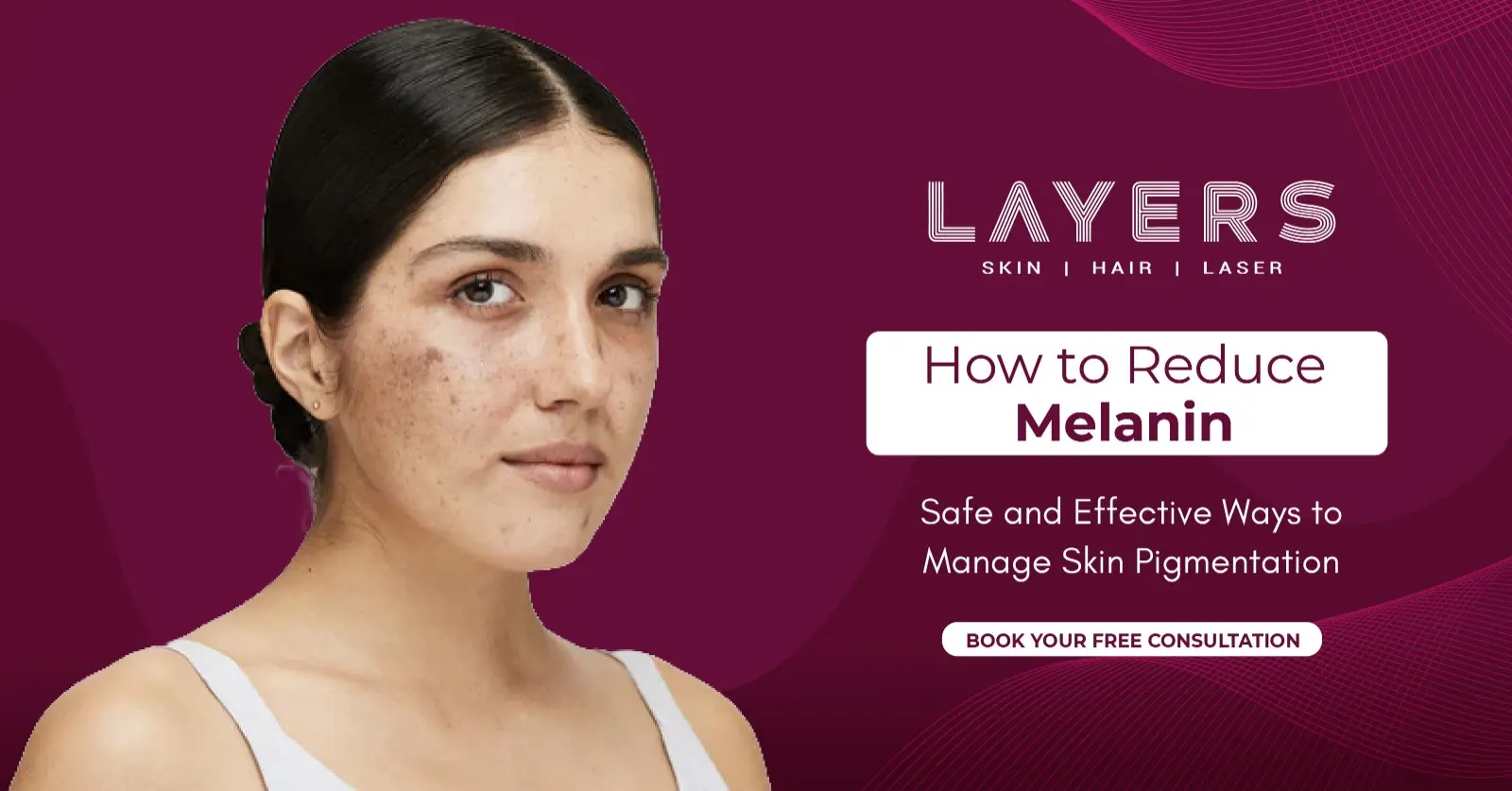
A tan that won’t fade, dark patches that seem to deepen every summer, or spots left behind after a breakout most people searching for how to reduce melanin are dealing with one of these three problems. The instinct is often to reach for the strongest whitening cream on the shelf, but melanin isn’t something you want to eliminate it’s your skin’s natural defense against UV damage. The real goal is regulating excess production safely, without disrupting that protection or damaging your skin barrier in the process.
This guide is for adults concerned about facial pigmentation, tanning, dark spots, post-acne marks, or uneven skin tone who want safe ways to manage excess melanin. It is especially useful for people deciding whether to continue with home skincare or consider dermatologist-guided pigmentation treatments.
Understanding Melanin and Its Role in Skin
Melanin is a natural pigment produced by melanocytes, specialized cells in the skin’s epidermal layer. It determines the natural colour of your skin, hair, and eyes, and functions as the body’s built-in defense against ultraviolet radiation.
When skin is exposed to sunlight, melanocytes ramp up pigment production to absorb UV rays before they can damage deeper skin layers this is what causes tanning. The problem isn’t melanin itself; it’s when internal or external triggers push production into overdrive in specific areas, creating visibly uneven pigmentation.
What Causes Excess Melanin Production?
Sun exposure is the most common driver. Repeated, unprotected UV exposure leads to tanning, freckles, and stubborn dark patches over time.
Hormonal fluctuations, including pregnancy, hormonal therapy, or conditions like PCOS, can trigger melasma the pigmentation disorder that shows up as symmetrical dark patches, often across the cheeks and forehead.
Skin inflammation from acne, rashes, or injury frequently leaves post-inflammatory hyperpigmentation behind once the original issue heals.
Environmental stress, including pollution and oxidative damage, can also stimulate melanocytes over time, particularly in cities with high traffic pollution.
Genetics play a role too, some people naturally produce more melanin and are more prone to pigmentation and tanning as a result.
Daily Habits That Help Control Excess Pigmentation
Sun protection, without exception. This is the step that matters more than any product:
- Broad-spectrum sunscreen with SPF 30 or higher, applied daily including on cloudy days and indoors near windows
- Reapplication every 2–3 hours when outdoors
- Physical protection hats, scarves, or sunglasses during peak sunlight hours
A gentle, consistent skincare routine. Irritated skin often triggers melanocytes, so over-exfoliating or using harsh scrubs can actually worsen pigmentation rather than fade it. Stick to:
- Mild cleansers that don’t strip the skin barrier
- Hydrating moisturizers that keep the barrier intact
- Targeted serums introduced gradually, not layered all at once
Foods that support skin repair and pigmentation balance. Diet won’t reverse pigmentation on its own, but antioxidant-rich foods help reduce the oxidative stress that contributes to discoloration:
- Citrus fruits and amla, rich in vitamin C
- Berries and pomegranate, high in polyphenols
- Tomatoes and carrots, sources of beta carotene
- Leafy greens and nuts, which support vitamin E intake
- Green tea, another strong source of antioxidants
Hydration also supports normal cell turnover, which indirectly helps pigmented cells shed and renew faster.
Dermatology-Approved Ingredients for Reducing Melanin
- Vitamin C — a strong antioxidant that reduces oxidative stress, brightens tone, and supports collagen production
- Niacinamide — regulates melanin transfer within the skin and strengthens the barrier at the same time
- Alpha arbutin — gradually fades hyperpigmentation by inhibiting excess melanin formation
- Azelaic acid — particularly effective for post-acne marks and pigmentation with an inflammatory component
- Tranexamic acid — increasingly used for stubborn melasma, often alongside other actives
- Retinoids — speed up cell turnover, helping pigmented cells shed faster and reveal brighter skin beneath
Results from active ingredients build gradually most people need 6–12 weeks of consistent use before seeing a meaningful difference, and pairing any of these with inconsistent sun protection significantly slows progress.
Common Myths About Reducing Melanin
“Lemon juice or DIY bleaching lightens pigmentation fast.” Raw lemon juice is highly acidic and can irritate or even burn the skin, often worsening pigmentation through inflammation rather than fading it.
“Melanin can be reduced overnight with the right product.” Melanin regulation is a biological process tied to skin cell turnover, which takes weeks, not days any product promising overnight results should be treated with caution.
“A more expensive cream always works better.” Results come down to active ingredient concentration and consistency of use, not price. A well-formulated, dermatologist-recommended product often outperforms a premium one with the wrong actives for your skin type.
“Once pigmentation fades, it’s gone for good.” Without ongoing sun protection, pigmentation frequently returns, since melanocytes are reactivated by fresh UV exposure regardless of past treatment.
Are Skin-Lightening Creams Safe? What You Need to Know
Not all skin-lightening products sold over the counter are safe, and this is worth taking seriously rather than glossing over. Some unregulated creams contain high concentrations of hydroquinone, added steroids, or in rare cases, mercury compounds none of which should be used without medical supervision. Long-term, unsupervised use of these ingredients can cause skin thinning, rebound pigmentation, or other complications that are harder to treat than the original discoloration.
If a product promises dramatic lightening within days, or doesn’t clearly list its active ingredients, it’s best avoided. Any prescription-strength lightening ingredient should be used only under a dermatologist’s guidance, with a defined duration rather than indefinite use.
Professional Dermatology Treatments for Persistent Pigmentation
When pigmentation doesn’t respond to skincare alone, in-clinic treatments can offer faster, more targeted results:
- Medical chemical peels exfoliate damaged outer layers, encouraging fresh, more even-toned skin underneath
- Laser pigmentation treatment precisely targets melanin deposits, particularly effective for sun spots, age spots, and stubborn pigmentation that hasn’t responded to topical care
- Combination brightening therapies pair exfoliation, hydration, and targeted actives for a more comprehensive approach
If you’re considering laser-based treatment specifically, our dedicated guide on laser toning covers how that procedure works, what it costs, and what results to expect in detail.
Can Melanin Be Permanently Reduced?
No and that’s by design. Melanin is essential, protecting the skin from ongoing UV damage, so completely eliminating it isn’t a realistic or safe goal. Dermatological treatment instead focuses on:
- Regulating excess, localized melanin production
- Fading visible dark spots and patches
- Maintaining an even, balanced skin tone over time
The objective is healthy, balanced pigmentation not artificially altering your skin’s natural tone.
How to Manage Pigmentation on Different Parts of the Body
Face — the most exposed area, prone to pigmentation from daily sun and pollution; consistent sunscreen and a gentle routine matter most here.
Neck and hands — frequently develop uneven tanning from sun exposure that’s often missed during sunscreen application; gentle exfoliation and regular moisturizing help even out tone.
Underarms and other sensitive areas — pigmentation here is often linked to friction, shaving irritation, or hormonal factors rather than sun exposure, and usually needs a different, gentler treatment approach.
When Should You See a Dermatologist for Pigmentation?
Skincare alone can manage mild pigmentation, but professional evaluation is worth prioritizing if:
- Dark patches continue to spread despite consistent care
- Pigmentation appears suddenly, without a clear trigger
- A home remedy or over-the-counter product causes irritation
- You notice symmetrical patches suggestive of melasma
- There’s little to no improvement after 2–3 months of consistent skincare
Early diagnosis makes a meaningful difference, pigmentation caught and treated early responds faster and needs fewer interventions than patches left to deepen over time.
Why Choose Layers Clinics for Pigmentation Treatment?
- Experienced dermatology specialists who diagnose the underlying trigger, not just the visible patch
- Advanced pigmentation treatment technology, including laser and peel options
- Personalized skin consultations rather than generic product recommendations
- Safe, hygienic clinical environments for every procedure
- Long-term skincare guidance to help maintain results after treatment ends
Frequently Asked Questions
How can I reduce melanin naturally?
You cannot safely eliminate melanin, but you can help control excess pigmentation through daily sunscreen, a gentle skincare routine, adequate hydration, and antioxidant-rich foods. Dermatologist-approved ingredients may also help reduce excess pigmentation gradually.
How can I reduce melanin on my face safely?
Daily broad-spectrum sunscreen combined with ingredients such as vitamin C, niacinamide, alpha arbutin, azelaic acid, or retinoids can help manage facial pigmentation. Persistent pigmentation may benefit from dermatologist-guided chemical peels or laser treatments.
Can melanin production be stopped completely?
No. Melanin is an essential pigment that helps protect the skin from UV radiation. The goal of pigmentation treatment is to regulate excess melanin production and improve uneven skin tone rather than eliminate melanin completely.
How long does it take to see results from pigmentation treatment?
Mild pigmentation may show improvement after around 6–12 weeks of consistent skincare and sun protection. Deeper pigmentation, including melasma, may require several months and professional treatment.
Are skin-lightening creams safe to use without a prescription?
Not necessarily. Some unregulated products may contain inappropriate concentrations of ingredients such as hydroquinone or corticosteroids. Prescription-strength pigmentation treatments should be used only under dermatologist supervision.
When should I see a dermatologist for pigmentation?
Consult a dermatologist if pigmentation spreads, appears suddenly, becomes increasingly noticeable, causes irritation, or does not improve after 2–3 months of consistent skincare and sun protection.
Key Takeaway
Melanin is a natural pigment that protects your skin from UV damage, so it should not be eliminated completely. To manage excess pigmentation safely, focus on daily broad-spectrum SPF 30+ sunscreen, proven ingredients such as vitamin C, niacinamide, alpha arbutin, azelaic acid and retinoids, and a gentle skincare routine. Mild pigmentation may improve within 6–12 weeks, while persistent or deeper pigmentation may require dermatologist-guided treatments such as chemical peels or laser-based therapies. Avoid harsh DIY remedies and unregulated skin-lightening creams, as they can irritate the skin and worsen pigmentation.
Conclusion: How to Reduce Melanin
Managing pigmentation is a gradual process built on consistent sun protection, the right active ingredients, and patience not aggressive treatments or unverified home remedies that can do more harm than good. Understanding what genuinely regulates melanin, versus what’s simply myth, helps you make safer choices for your skin. At Layers Clinics, we combine dermatology expertise with personalized treatment planning to help you achieve a clearer, more even complexion while keeping your skin’s natural barrier intact.
