
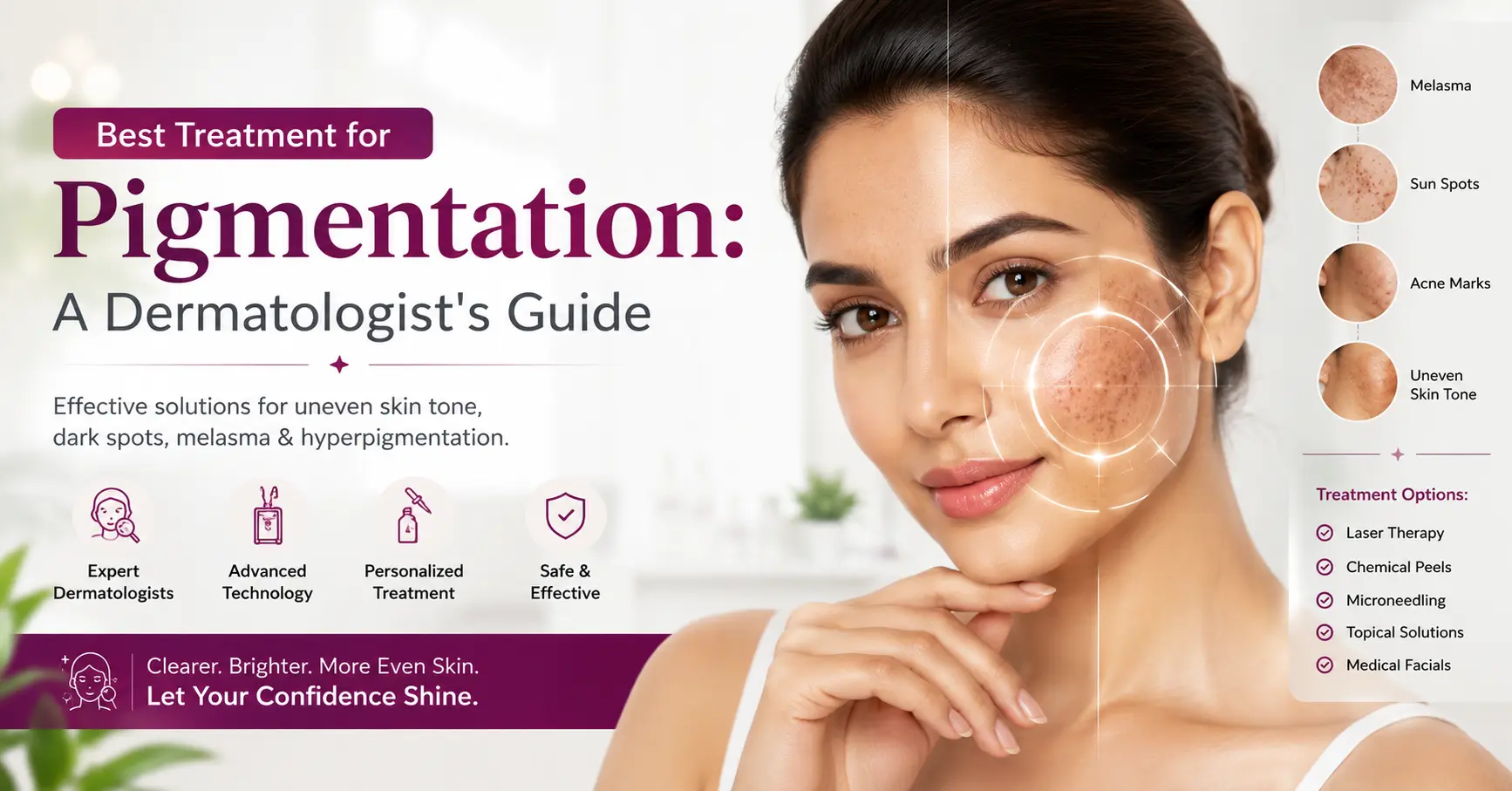
If you’ve spent any time googling Best Treatment for pigmentation, you’ve probably noticed there isn’t one clean answer. That’s because there genuinely isn’t a single fix that works for everyone what clears up sun spots won’t necessarily touch melasma, and what works on melasma might do nothing for those stubborn marks left behind by old acne. Laser treatment, chemical peels, and targeted topical therapy guided by an actual dermatologist remain the most reliable ways to deal with pigmentation safely, but which combination depends entirely on what you’re dealing with.
If you’ve already tried a whitening cream that promised the world and delivered irritation instead, you’re far from the only one. A lot of over-the-counter products lean on quick-fix marketing without ever addressing why the pigmentation showed up in the first place. At Layers Clinics Hyderabad, we start differently by figuring out exactly what type of pigmentation you have before suggesting anything, because treating melasma like a sunspot rarely ends well.
What Is Skin Pigmentation?
In simple terms, pigmentation is just the colouring of your skin, driven by melanin the same pigment responsible for your hair and eye colour too. When your body starts producing melanin unevenly, that’s when you get dark patches, spots, or general discolouration. It can turn up almost anywhere face, hands, arms, neck, back, feet and ranges from something as mild as a few sun spots to something more persistent like melasma.
What Causes Pigmentation?
Figuring out the why behind your pigmentation is really the first real step toward fixing it. A few of the usual suspects:
- Too much sun. UV exposure pushes your skin into overproducing melanin, which is how sun spots and uneven tone show up in the first place.
- Hormones doing their thing. Pregnancy, birth control, hormonal shifts melasma loves to show up around these.
- Skin that’s been through something. Acne, a cut, a burn any kind of inflammation can leave behind marks long after the original issue has healed.
- Genetics. Some pigmentation, like certain birthmarks or Hori’s naevus, is just something you were born with.
- Stress, believe it or not. Chronic stress messes with your hormones, and that can quietly make pigmentation worse over time.
Types of Pigmentation We Treat
Pigmentation isn’t one condition it’s a whole category. At Layers Clinics, we regularly diagnose and treat freckles, melasma, age spots, birthmarks, Hori’s naevus, solar lentigines, hyperpigmented scars, and the marks left behind by acne or general inflammation.
Because each of these behaves so differently, getting an accurate diagnosis matters far more than picking whatever treatment happens to be trending on social media that week.
Laser treatment. This is often the go-to for stubborn pigmentation. Focused light energy breaks down the excess melanin, and your body clears it out naturally afterward. It tends to work particularly well on things like solar lentigines and certain forms of melasma, often with fewer sessions than you’d need with topical treatment alone.
Chemical peels. These work through controlled exfoliation essentially removing the pigmented top layer of skin so fresher, more even-toned skin can surface. Especially effective for post-acne marks and mild sun damage.
Microdermabrasion. A gentler, mechanical form of exfoliation that removes just the outermost skin layer. It’s a good option for milder pigmentation, or as something used alongside a more intensive treatment.
Prescription topical treatments. Creams with ingredients like hydroquinone, retinoids, or vitamin C can lighten pigmentation gradually though they tend to work best paired with an in-clinic procedure, not used entirely on their own.
Honestly, the “right” treatment usually isn’t one thing it’s a combination shaped by your specific pigmentation type, how sensitive your skin is, and how quickly you’re hoping to see change. Which is exactly why a proper consultation matters more than just picking something off a list online.
What Actually Happens During a Laser Session
During a laser pigmentation session, focused light is directed straight at the pigmented area. That breaks the excess melanin down into smaller particles, which your body then clears away naturally over the following weeks. Most sessions wrap up in under an hour, and the discomfort if you feel any at all is usually described as a light snap against the skin, nothing more.
How Fast Will You See Results?
- Weeks 1–2: Some redness or slight darkening of the treated spots is completely normal that’s just the melanin starting to break down.
- Week 4: This is usually when the fading becomes noticeable.
- Weeks 6–8: Full results tend to show up here, with visibly smoother, more even-toned skin.
- After that: Depending on your pigmentation type and how much sun exposure you get, occasional maintenance sessions might be worth considering.
What Does It Actually Cost in Hyderabad?
Honestly, it varies a lot depends on the treatment technique, how many sessions you need, and how large or deep the pigmented area is. Deeper pigmentation like melasma usually needs more sessions than a superficial sun spot would. At Layers Clinics, we keep pricing transparent and competitive the best way to get an accurate number is to come in for a consultation and get a quote based on your actual skin.
After Your Treatment: What Actually Protects Your Results
Getting the treatment done is really only half the job protecting the results afterward matters just as much:
- Wear SPF 30+ every single day, indoors included sun exposure is genuinely the biggest reason pigmentation comes back
- Don’t pick at acne or scabs; that’s a fast track to post-inflammatory hyperpigmentation
- Keep your skincare routine gentle post-treatment skip harsh scrubs or active ingredients unless your dermatologist says otherwise
- Actually show up for your follow-up sessions
- Where you can, manage things like stress or hormonal imbalances that tend to feed pigmentation in the background
A Few Myths Worth Clearing Up
Whitening creams are the fastest fix. Not really a lot of over-the-counter whitening creams contain harsh ingredients that damage your skin barrier and can make discolouration worse over time, without ever touching the actual cause.
Laser treatment works the same for everyone. Not quite. Pigmentation type changes everything about the approach melasma, for instance, is treated very differently from sun spots or acne marks.
Once it’s treated, it’s gone for good. Treatment does significantly reduce existing pigmentation, but without consistent sun protection and skincare afterward, there’s a real chance it comes back.
Who Is a Good Candidate?
You might be a good candidate for pigmentation treatment if you’re dealing with visible dark spots or uneven tone, you’ve already tried topical products without much luck, you’re looking for something more dermatologist-guided and long-term, or you just want a plan that’s actually built around your skin instead of a generic routine.
Honestly, the most reliable way to know for sure is just to sit down with a dermatologist and talk it through.
Why Choose Layers Clinics
At Layers Clinics Hyderabad, we don’t hand out the same treatment plan to every patient who walks in with pigmentation. We diagnose your specific type first, then build the plan around that.
- Real dermatologist consultations that pin down the exact cause and type
- Treatment for pigmentation anywhere on the body face, hands, arms, back, neck, feet
- Transparent, fairly priced treatment packages
- Care plans shaped around your actual skin and lifestyle, not a template
The Bottom Line
Pigmentation doesn’t have to mean hiding behind makeup every day or gambling on another unregulated whitening cream that promises more than it delivers. With an accurate diagnosis and a dermatologist actually guiding your treatment whether that ends up being laser therapy, a chemical peel, or targeted topical care clearer, more even-toned skin is genuinely achievable.
At Layers Clinics Hyderabad, we’ll help you figure out exactly what’s causing your pigmentation and recommend a treatment that’s both effective and reasonably priced for what it delivers.
Ready for clearer skin? Book your pigmentation consultation with Layers Clinics today.
Ready for clearer skin? Book your pigmentation consultation with Layers Clinics today.
Frequently Asked Questions
It really depends on your specific type. Laser treatment, chemical peels, and prescription topical treatments are the most effective options which combination makes sense comes down to what a dermatologist actually sees on your skin.
Most people notice initial improvement around the 4-week mark, with fuller results typically visible by weeks 6 to 8.
Generally, yes it’s considered safe across most skin types. That said, a dermatologist should still assess your skin beforehand to get the settings and session frequency right for you specifically.
Usually some combination of sun exposure, hormonal changes, old acne scarring, or genetics. Pinning down the actual cause is what makes the treatment plan effective.
It depends on the treatment type, number of sessions, and the area being treated. Layers Clinics keeps pricing transparent and competitive ask for a personalized quote at your consultation.
