Dark marks after spots or a rash
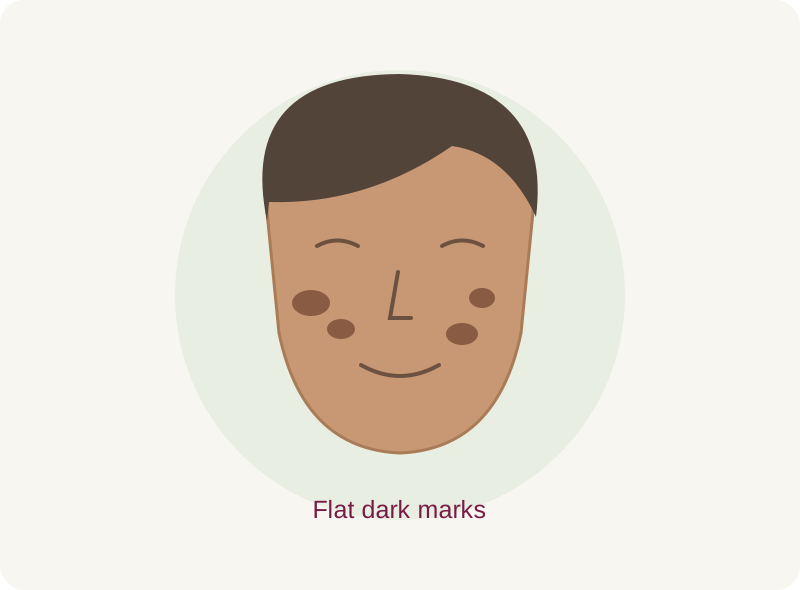
Acne, scratching and irritation can leave flat colour changes after the skin settles. These differ from a raised or indented scar.
Explore acne marksDark marks, lighter patches and redness have different causes. A skin check helps you understand the change and choose a useful next step.
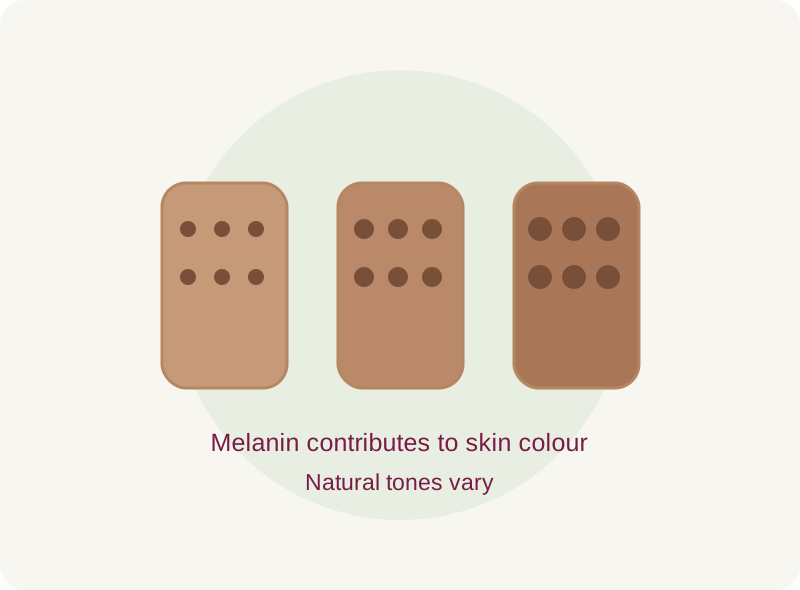
Melanin is a pigment that contributes to your natural skin tone. Blood flow, skin thickness and inflammation can also affect how an area looks. Some variation between body areas is normal.
Uneven tone is a description, not a single diagnosis. Care may involve treating an active skin condition, fading an unwanted mark or simply protecting healthy skin. Your natural complexion does not need correcting.
Acne, scratching and irritation can leave flat colour changes after the skin settles. These differ from a raised or indented scar.
Explore acne marks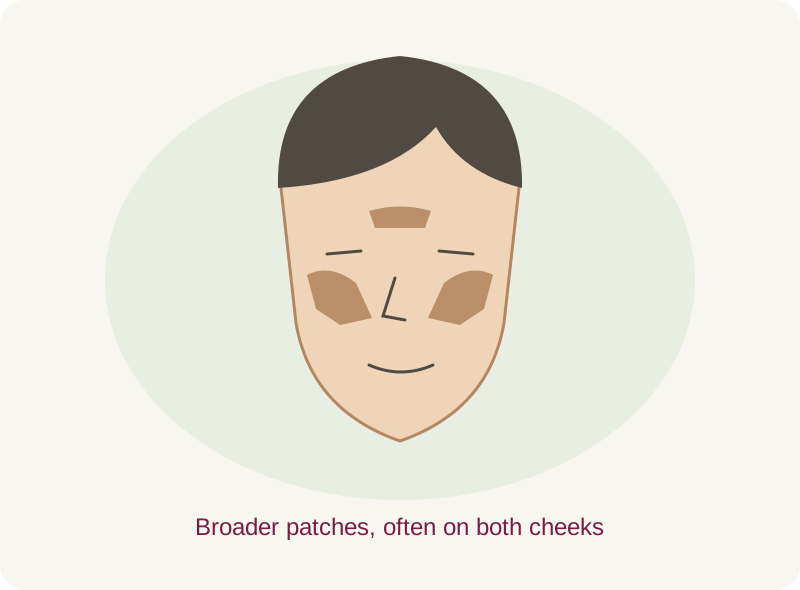
Melasma is one possible cause of persistent facial patches. Hormones and sunlight can influence it, so a one-off facial may not address the problem.
Explore pigmentation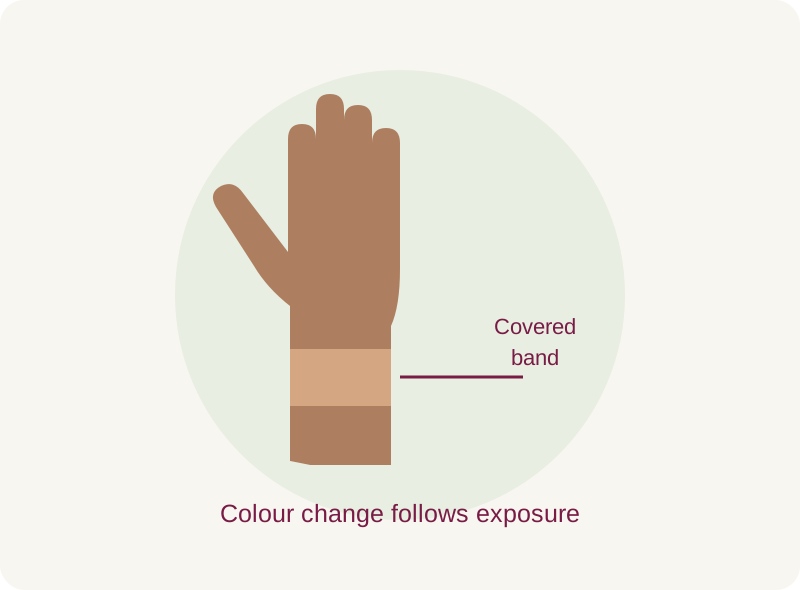
Tanning often follows exposed areas or clothing lines. Ongoing exposure can keep the colour change visible, while individual sun spots need a separate assessment.
Explore tan care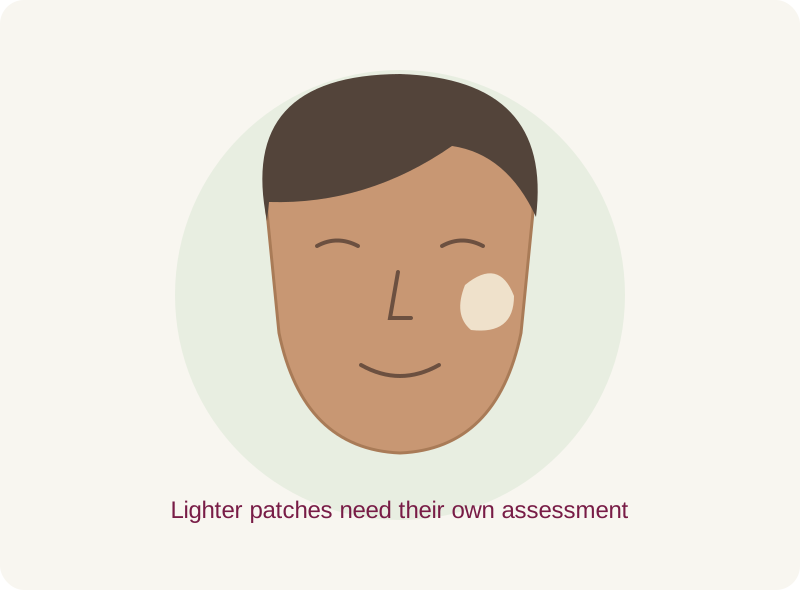
Loss of pigment, a previous rash or some infections can cause lighter areas. The appearance alone cannot confirm vitiligo or tell you which cream to use.
Understand vitiligo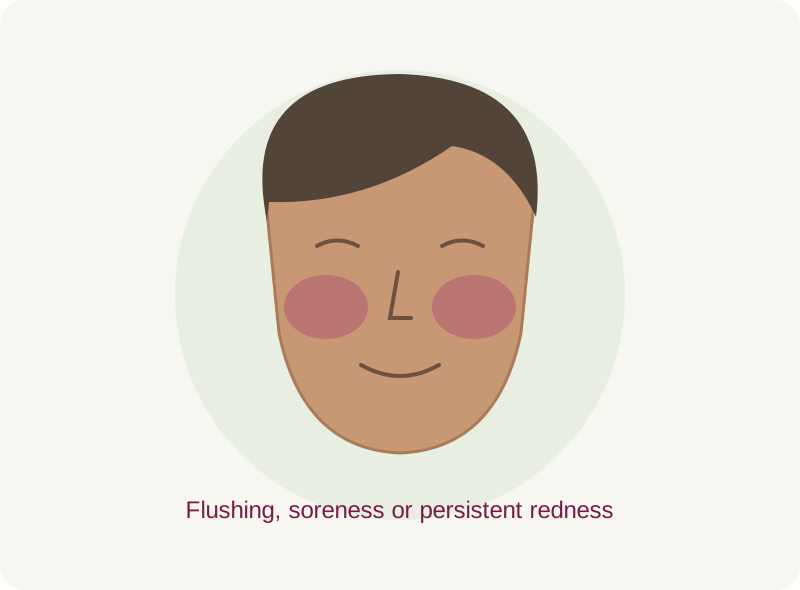
Warmth, stinging, visible vessels or flushing may point to inflammation rather than extra pigment. Redness can look dusky or less obvious in brown skin.
Explore rosacea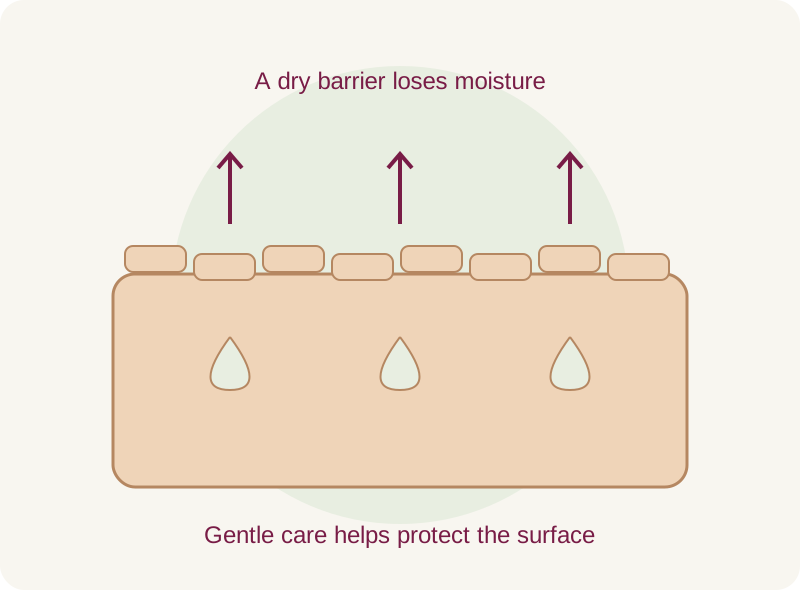
Flaking and surface texture can make skin appear uneven. A gentler routine may be more useful than trying to lighten it.
Explore dull skin
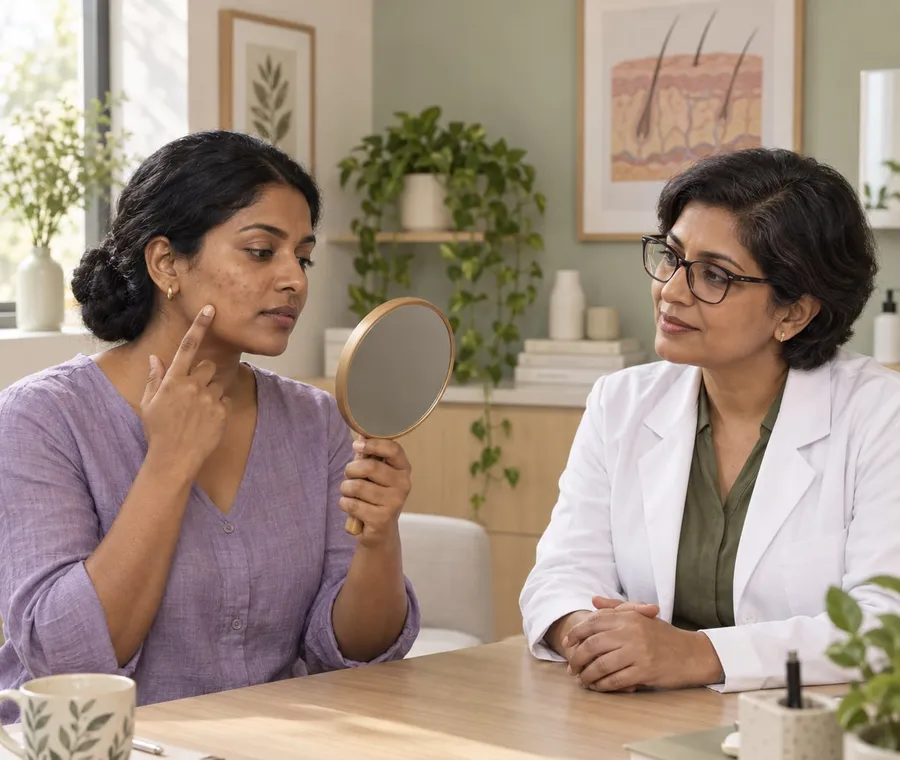
Tell us when it started, where it appears and whether it follows sun exposure, a breakout, an injury or a new product. Earlier photographs can help.
Mention itch, pain, scaling, flushing or numbness, along with medicines and previous treatments. A rash and its leftover colour may need different care.
Point out the specific areas that concern you. Discuss comfort, visible marks and realistic improvement rather than choosing a whole-body colour target.
Sun protection and skin-barrier care support many plans. Avoid repeated irritation from scrubs or several strong active ingredients at once.
Acne, eczema, fungal conditions and pigment loss need their own approach. Stopping the underlying problem can be more important than treating the colour alone.
Explore eczema care
A clinician may recommend ingredients suited to the diagnosis and your skin tolerance. Pregnancy, other medicines and previous reactions can affect the choice.
Explore pigment care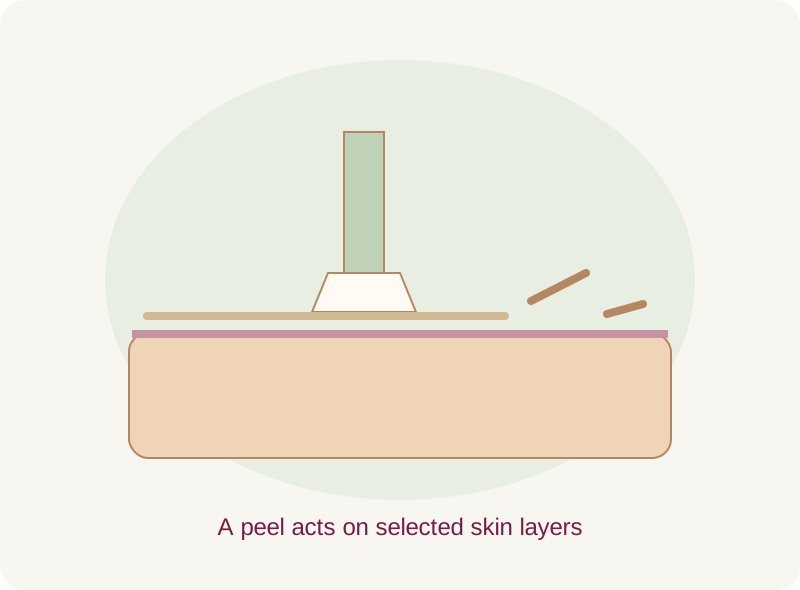
Peels or light-based procedures may help selected concerns. Skin can also become darker or lighter after irritation, so strength and method need careful selection.
Explore chemical peelsThe clinician examines the pattern and individual marks. Further tests are considered only when the findings call for them.
For example, ongoing acne and old acne marks may be present together. A plan should address each without using the same treatment for everything.
Discuss the purpose of each product or procedure, expected benefit and possible irritation. Observation may be reasonable for a harmless stable mark.
Bring packaging or ingredient photographs. Avoid adding a new lightening mixture when its contents or instructions are unclear.
Use similar lighting, angle and camera settings. A lighting change can make the skin look lighter without any real treatment effect.
Report persistent stinging, a new rash or unexpected colour change. Review the plan before increasing strength or adding procedures.
Choose broad-spectrum SPF 30 or higher, with shade and clothing. Ask whether a tinted sunscreen would help if visible light worsens your pigmentation.
Avoid picking and harsh scrubbing. Burning is a reason to review a product, not proof that it is working.
Unlabelled or inappropriate steroid-containing mixtures can damage skin. Use prescription ingredients only for the problem and duration they were prescribed for.
The timeline depends on the cause. Settling irritation, fading an old dark mark and managing loss of pigment are different goals. Some colour changes improve slowly and some can return.
No responsible plan can promise a fixed number of shades or permanently stop all future marks. Ask which change is realistic for your skin and what ongoing care will be needed.
A pigmentation example shared by Layers. It does not show treatment for every type of colour change or a change in natural complexion.
Showing all 6 photographs
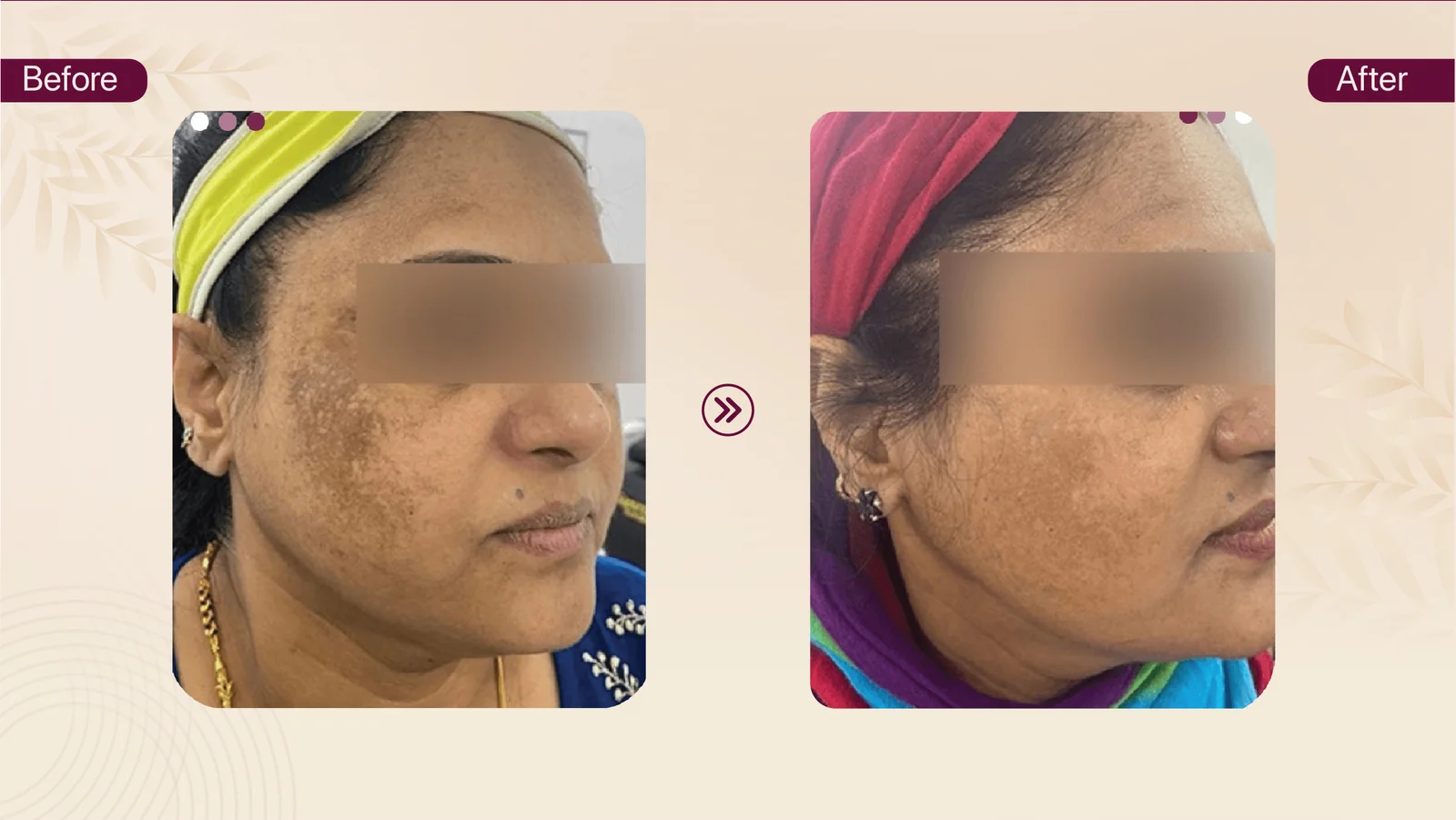
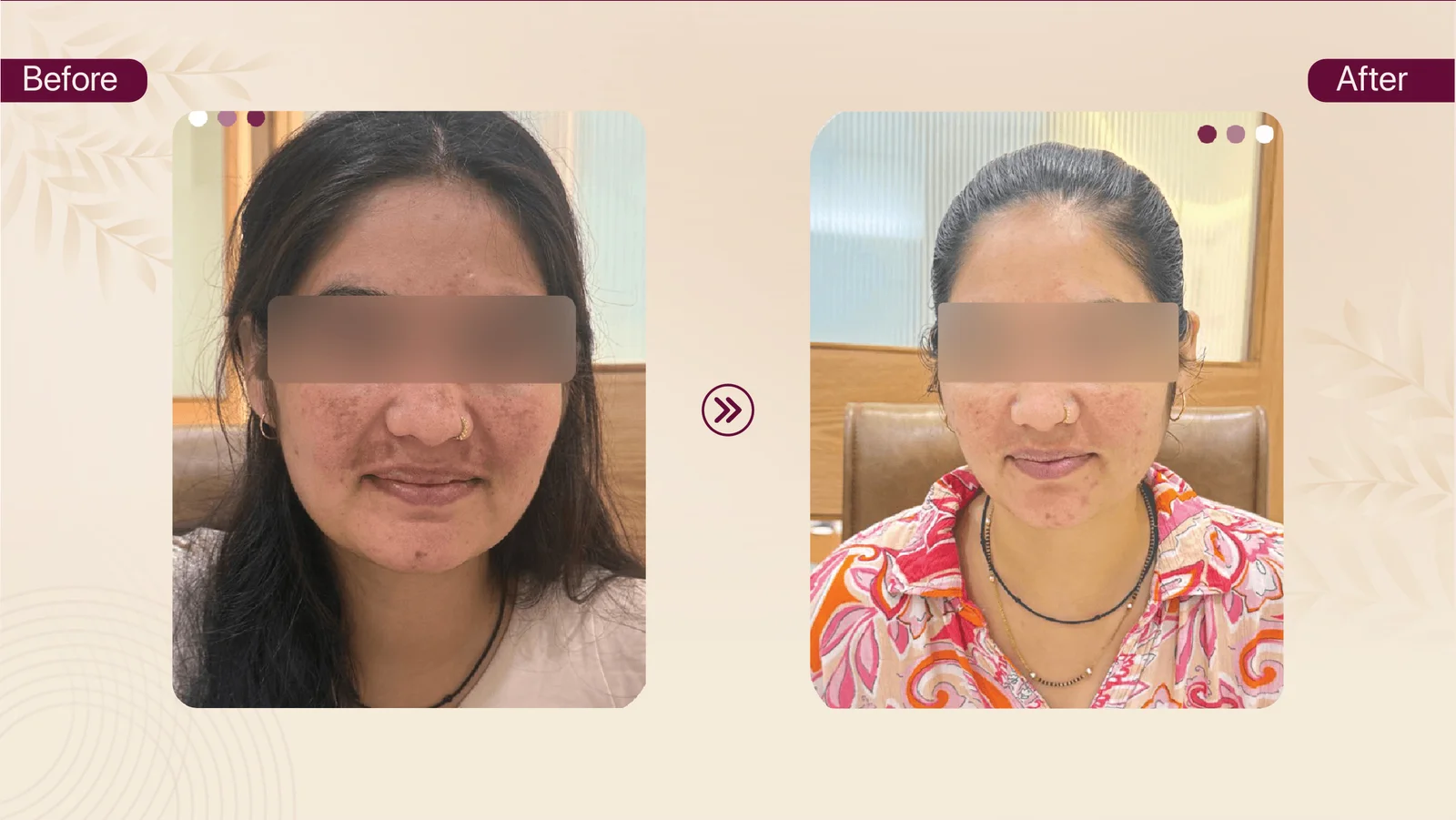
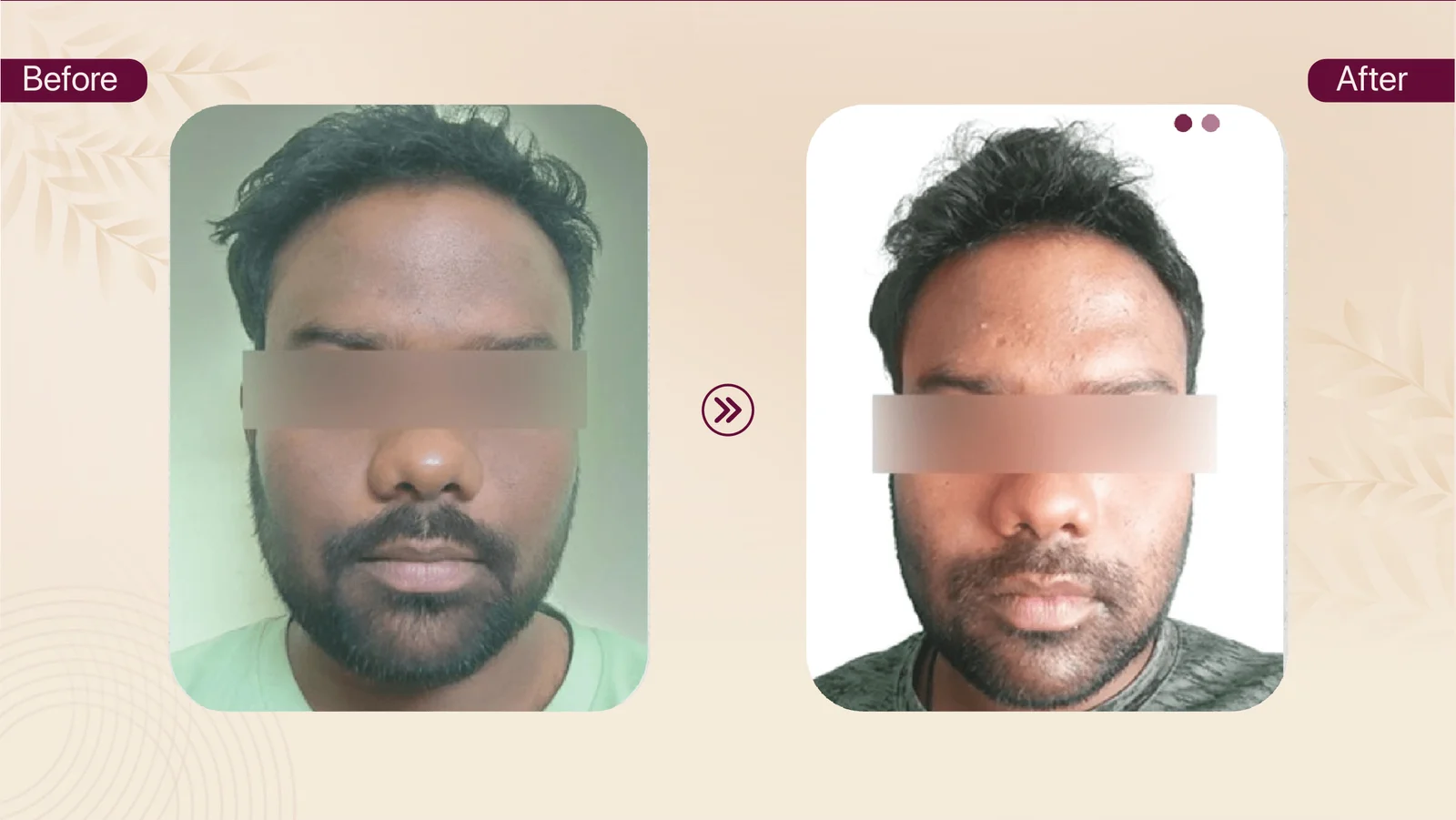
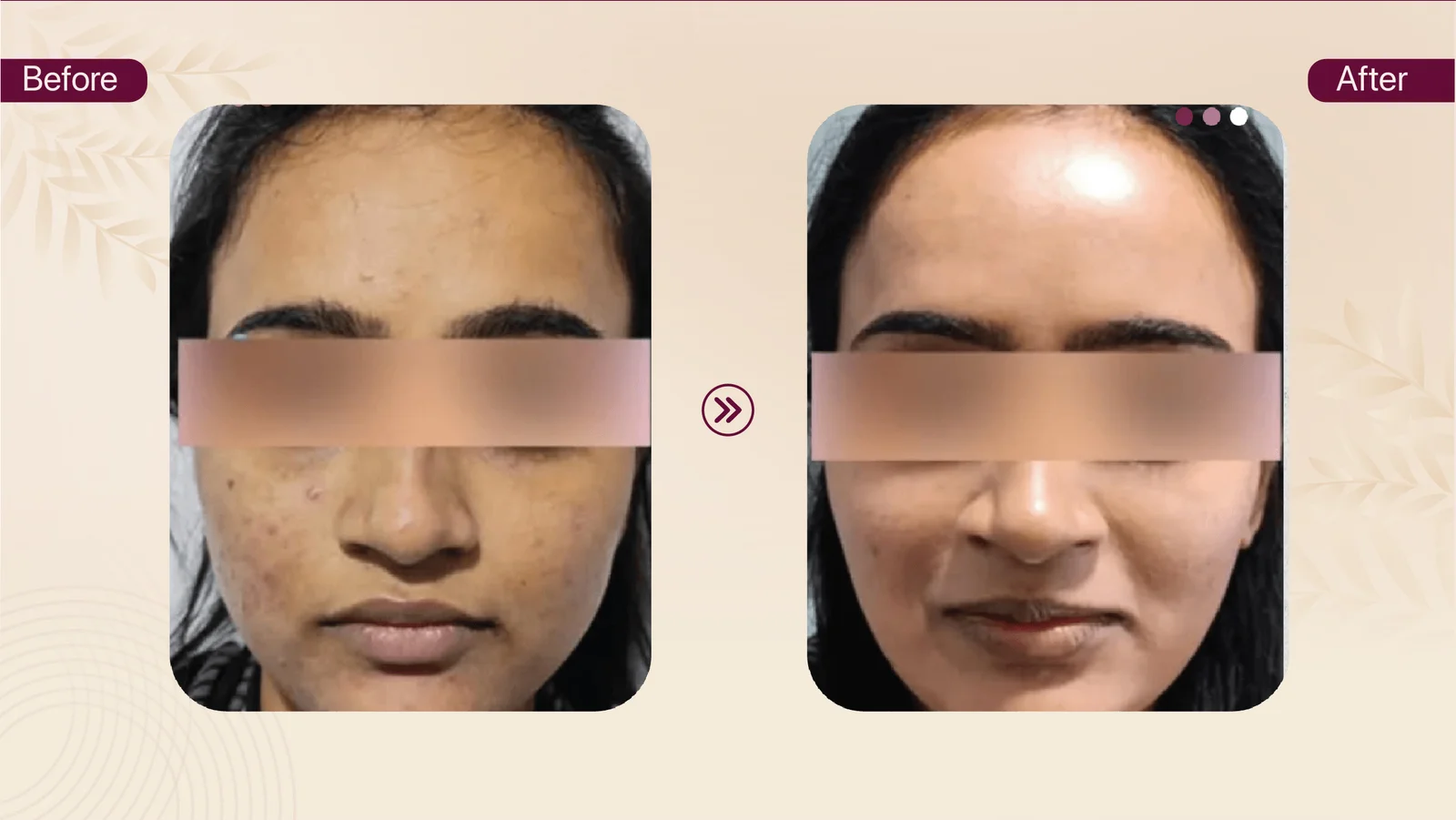
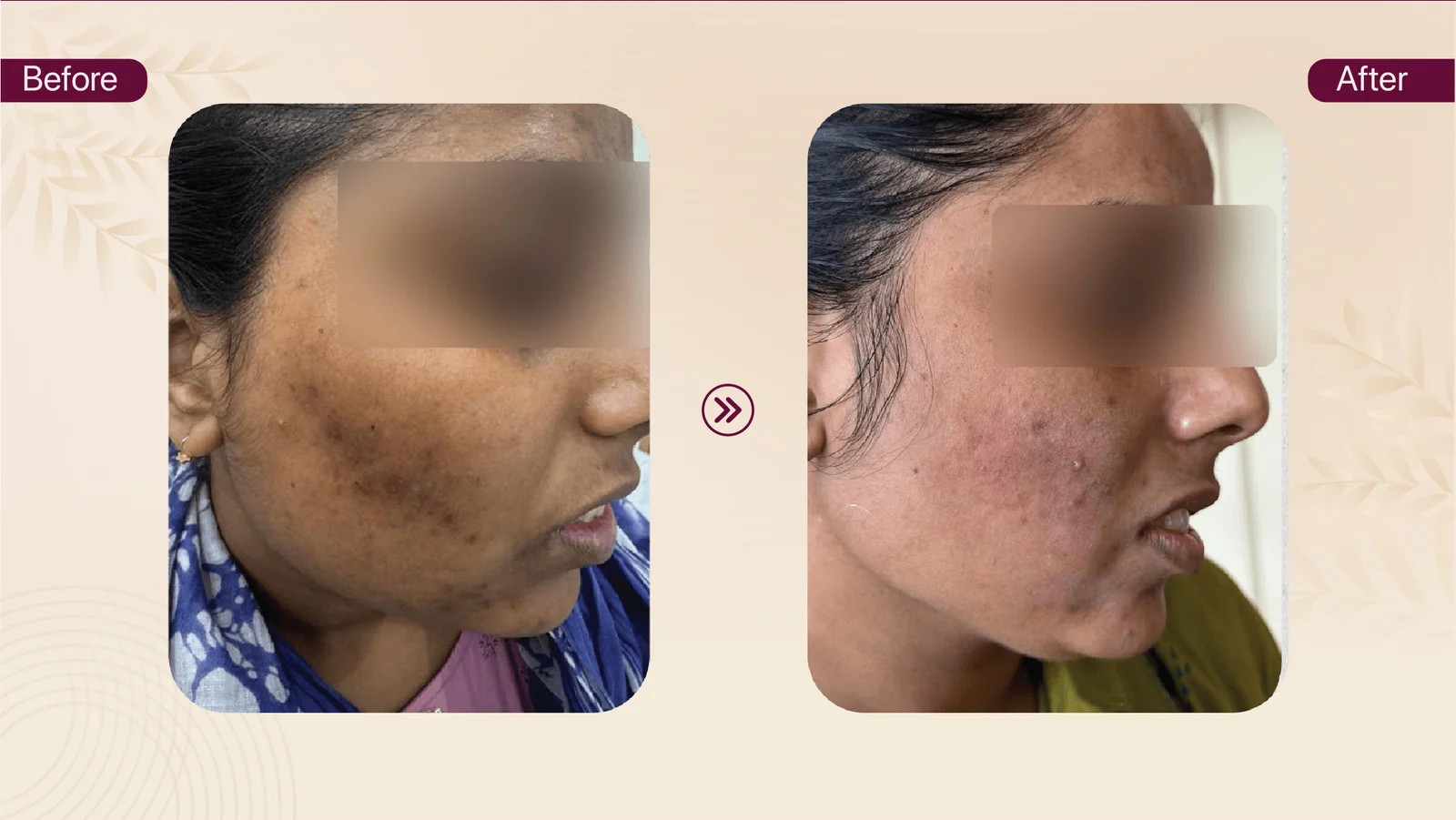
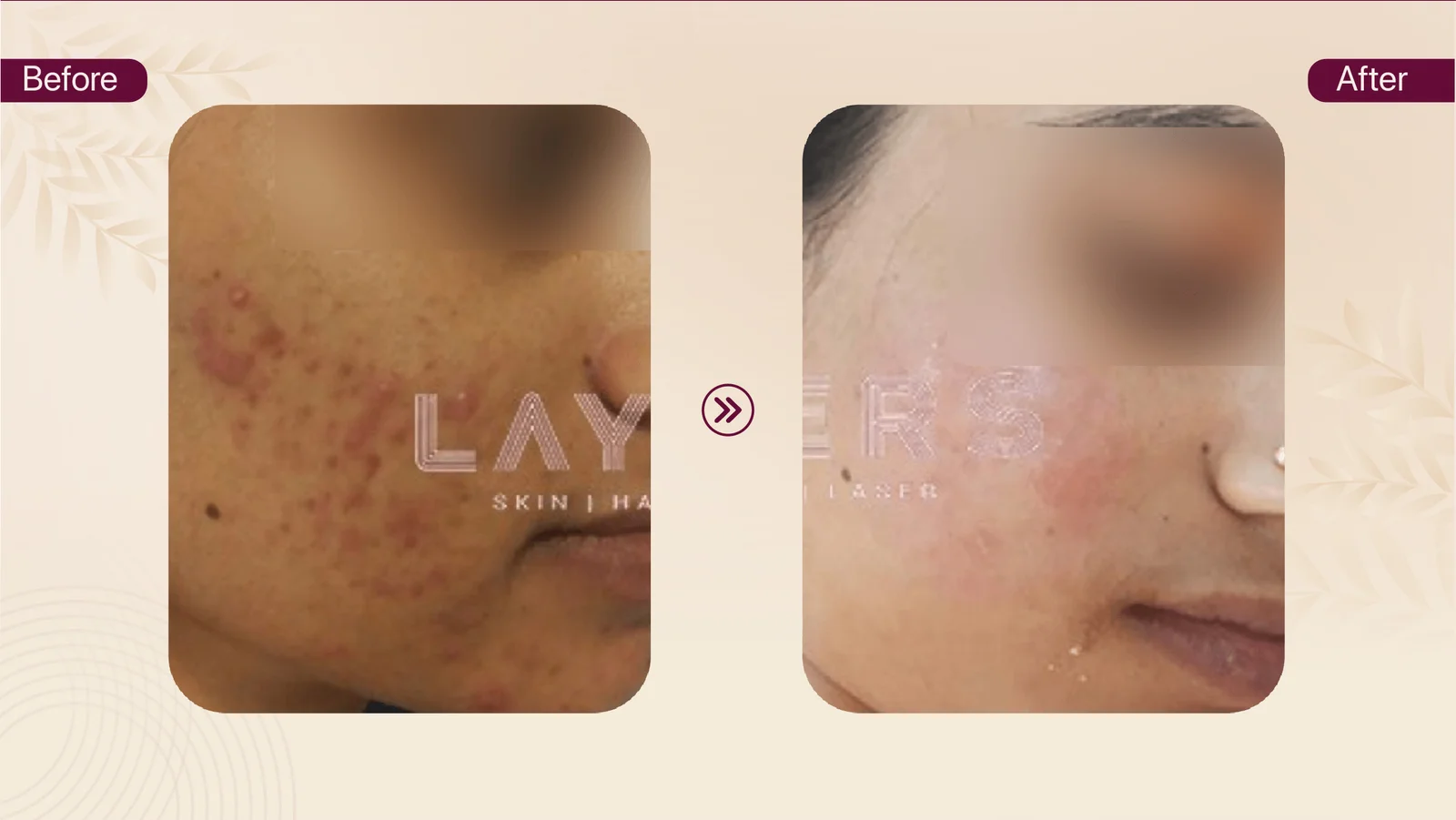
Individual results vary. These photographs show specific cases, not guaranteed outcomes. Original image quality, lighting and angles may differ. Your doctor can explain what may be possible for you.
These original Google excerpts mention pigmentation-related care, sometimes with combined treatments. They do not describe every concern covered on this page.
“I have been taking Q-switch laser treatment for my pigmentation cure. And it is working good. I have started getting results.”
“I took Q-switch laser and HydraFacial sessions, and I can already see improvement.”
Combined Q-switch and Hydrafacial care.
“Had a peel in layers for my pigmentation. Results are really satisfactory”
“I recently visited kakinada layers. so I consult about pigmentation it's very good I got very good results thank you layars”
“Visited here for my pigmentation problem, I found quit good results in 3 sessions hope for more better results”
















No. It describes an appearance. A dermatologist checks whether the change comes from pigment, inflammation, a skin condition or normal variation.
That is not the aim of this care. We focus on a specific concern, such as a dark mark or an active rash, while respecting your natural complexion.
No. The possible causes are different. A lightening cream can be inappropriate for an area that has already lost pigment.
No. A facial may suit a surface-care concern, but persistent pigment changes, redness or a rash can need a different plan.
Combining strong products can cause irritation. Bring your routine to the consultation and add or change products according to the agreed plan.
No. Daily care, treatment of an active condition, a suitable cream or monitoring may be enough. A procedure should have a clear purpose.
Use photographs in similar lighting and note symptoms such as itching or stinging. Compare at an agreed review rather than judging daily changes in different mirrors.
Bring earlier photographs, your medicine list and the names or packaging of skincare products. Mention recent tanning, procedures, pregnancy and previous product reactions.
Tell us what you have noticed and what you would like help with.
Prefer a call? +91 9000 572727