
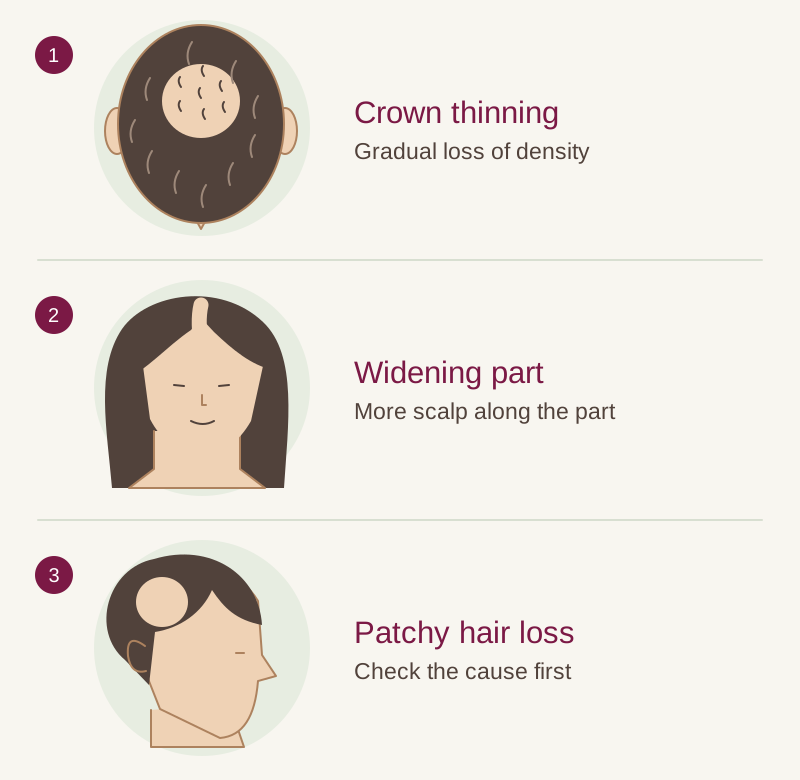
Understand shedding or thinning
Start with your history, scalp examination and review of recent changes before choosing a treatment.
Explore hair-fall careLearn when nutrition matters, what an IV can and cannot establish, and how to choose care for your pattern of hair loss.
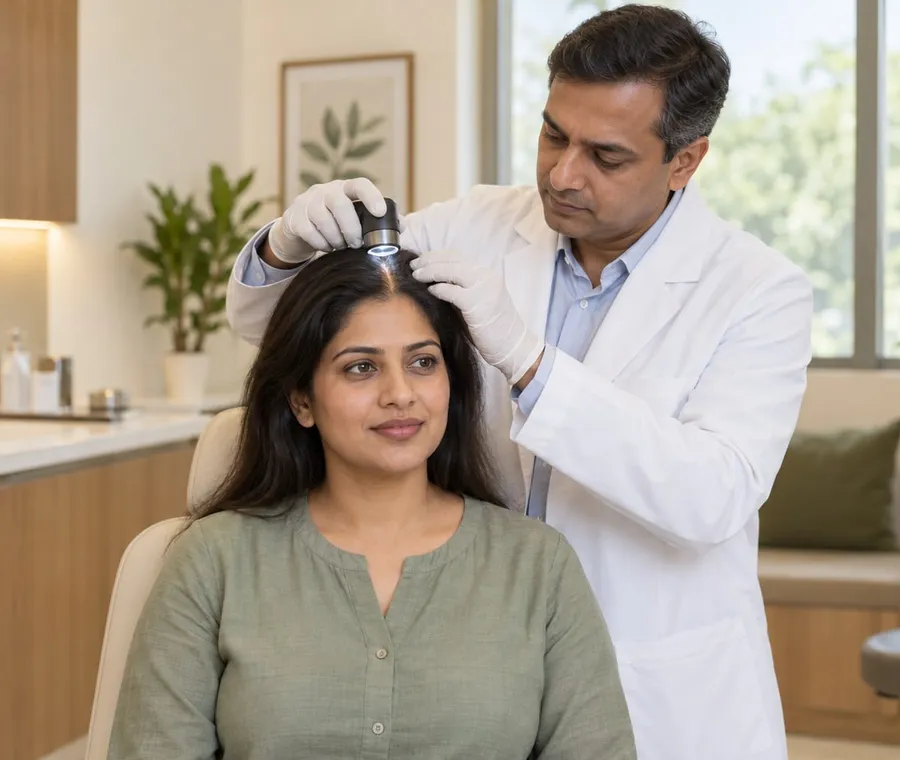
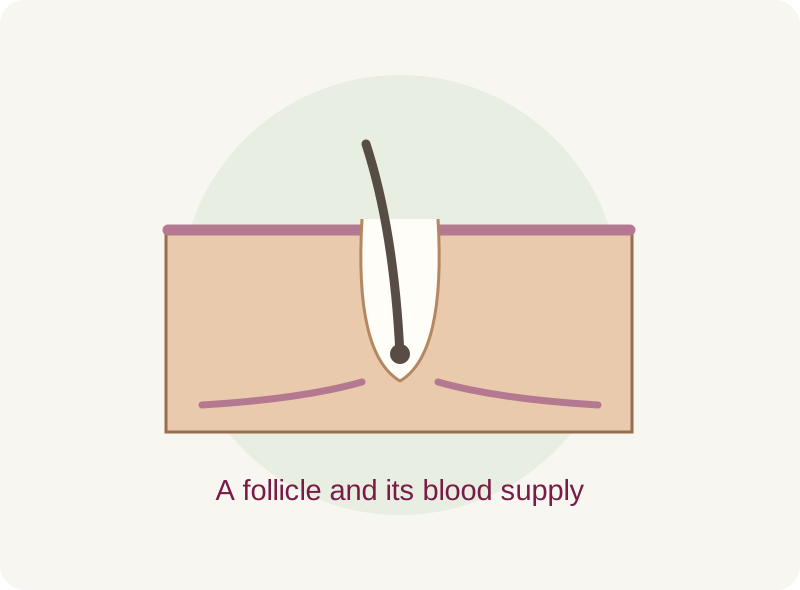
Hair-fall control drip is a marketing name for an intravenous preparation offered for shedding or thinning. It does not identify one standard treatment or explain why your hair is falling.
Hair needs adequate nutrition, but hair loss can also relate to pattern thinning, illness, hormones, medicines or scalp disease. An assessment helps distinguish these causes before choosing supplements or a procedure.
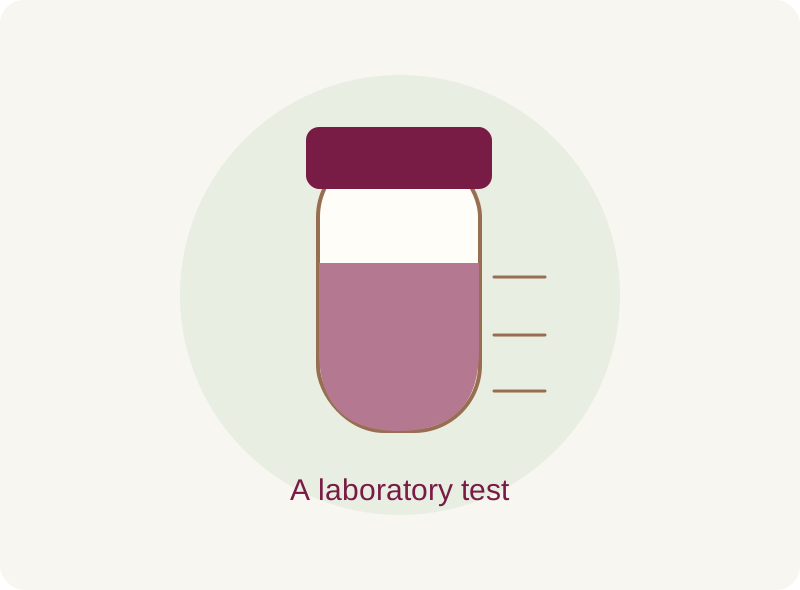
Poor protein intake or a deficiency of certain nutrients can contribute to hair problems. A dermatologist may recommend tests when your history or examination suggests a deficiency, rather than ordering the same panel for everyone.
Correcting an identified problem may form part of care. If nutrient levels are adequate, taking extra vitamins does not establish a regrowth benefit and may be harmful. An IV is not automatically needed to correct a deficiency.
Start with your history, scalp examination and review of recent changes before choosing a treatment.
Explore hair-fall care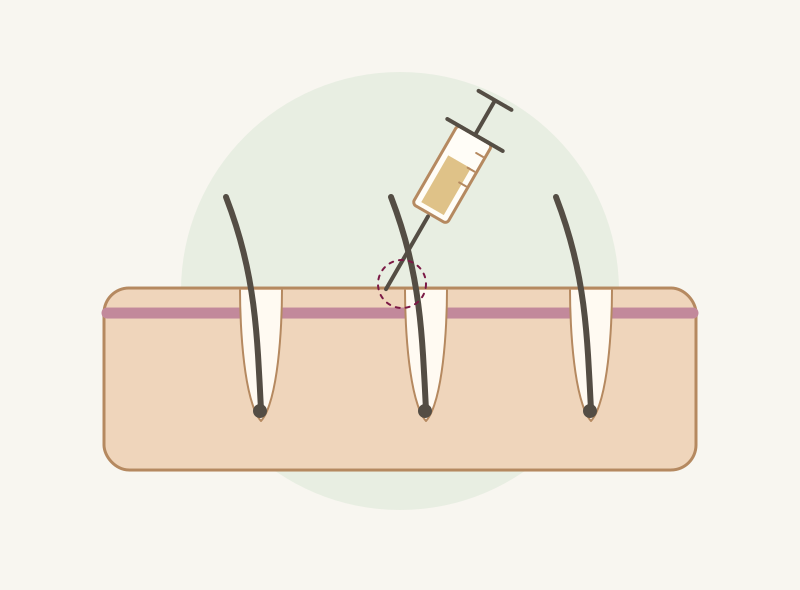
PRP may be discussed for selected hair-loss patterns. It has its own preparation, evidence, risks and follow-up.
Understand PRP
Medicines and other options depend on the diagnosis and may need continuing use and monitoring.
Explore regrowth care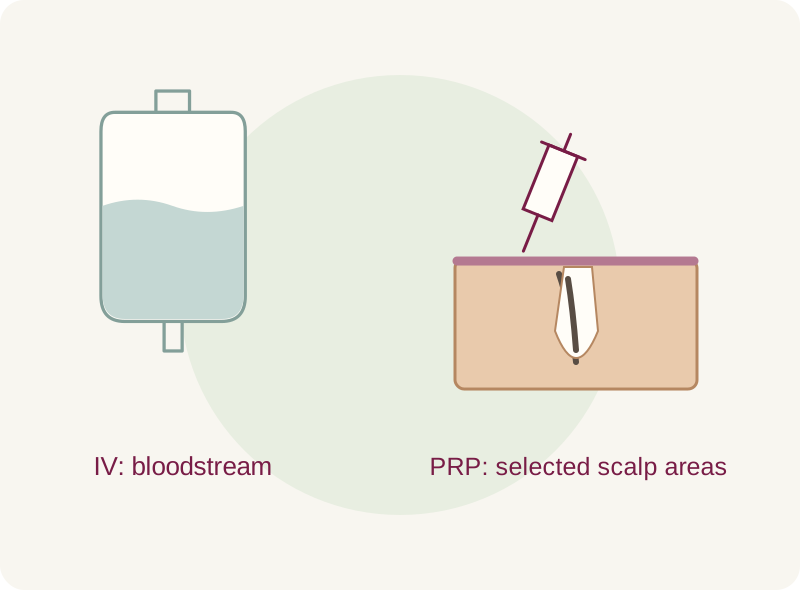
An IV infusion enters a vein and circulates through the body. It does not place a treatment directly into selected scalp areas. PRP is prepared from your own blood and used locally in the scalp for selected cases.
These are different procedures. Evidence for PRP, oral supplements or treatment of a deficiency cannot be used as proof that a hair-vitamin drip works.
Good evidence for routine wellness IV mixtures as a treatment for hair loss in people without a relevant deficiency is lacking. The current Indian dermatology task-force consensus does not support routine aesthetic IV use.
A hair plan should address the diagnosis. Nutrient replacement for an identified medical problem is a separate decision, and it does not make a generic multi-ingredient drip a proven hair-regrowth treatment.
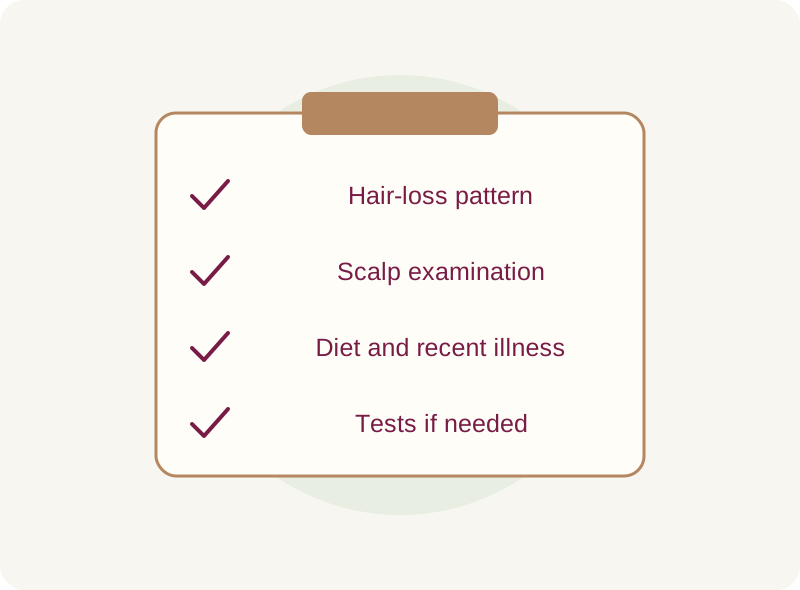
Explain whether shedding started suddenly, the part is widening, or patches have appeared. Mention itching, pain, scaling, recent illness, pregnancy or weight change.
Share dietary restrictions, low appetite and all products taken for hair. Biotin can interfere with some laboratory tests, so tell the clinician and laboratory before testing.
Mention allergies, pregnancy or breastfeeding, kidney or heart conditions and any infusion reaction. The exact product and clinical reason matter if IV treatment is proposed.
Discuss when hair loss began, symptoms and changes in health or routine. Examination helps decide whether further tests are useful.
Investigate a nutrient problem when indicated. Do not assume every person with hair fall lacks vitamins.
Discuss scalp care, medicines, nutrition support or selected procedures with their own benefits and limitations.
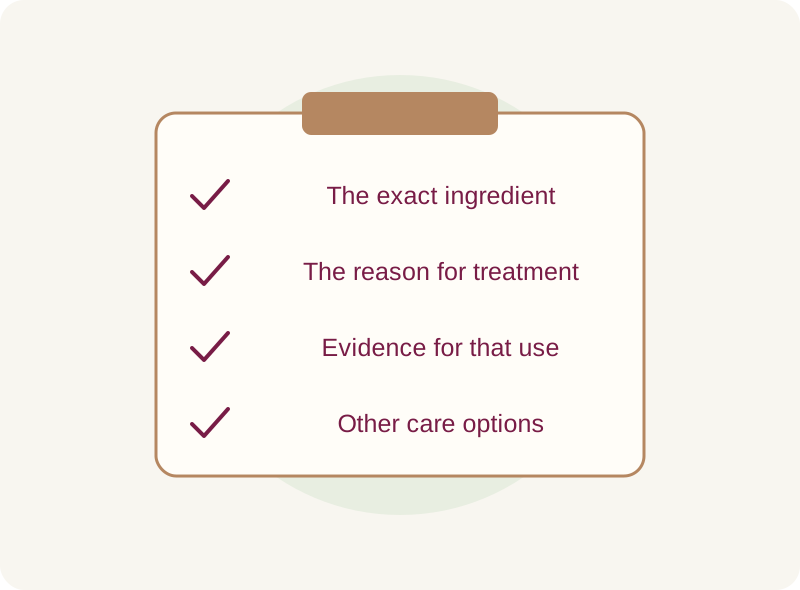
Ask for the exact ingredients and medical reason, why that route is needed, and whether a simpler option is appropriate. A drip is not a required step in every hair plan.
Response to appropriate care may take months. Review shedding, scalp comfort and agreed photographs rather than expecting an immediate change.
Report new symptoms or side effects. A lack of progress may need reassessment of the diagnosis or treatment, not simply more supplements.

These are shared hair-restoration experiences at Layers, not testimonials for IV drips.
Original before-and-after cases showing hair density improvement across the Layers network. Individual results vary.
Let’s talk about your goalsIndividual results vary. Photos show specific cases and do not guarantee the same outcome. Your doctor can explain what may be possible for you.
Related PRP, GFC and hair-thinning experiences; these reviews do not describe IV-drip treatment.
“I underwent GFC and PRP treatment for hair loss and had a very positive experience.”
Combined PRP and GFC hair care.
“This was my first GFC treatment, and I'm very happy with my decision.”
GFC hair care.
“Excellent experience from consultation to treatment. The GFC procedure was explained clearly, and the doctors were very knowledgeable.”
GFC hair care.
“I am currently undergoing GFC (Growth Factor Concentrate) treatment at Layers and my experience so far has been highly satisfactory!”
GFC hair care.
“They suggested me GFC treatment and I experienced good results.”
GFC hair care.
“Most importantly, I’m seeing amazing results for my hair thinning treatment.”
Hair-thinning care.
“I noticed visible improvements in my skin texture and a significant reduction in hair fall within just a few sessions.”
Hair-fall and skin care.










No. There are many causes of shedding and thinning. History and examination guide whether nutrient tests are appropriate.
A reliable faster-regrowth benefit is not established for a generic hair IV blend. Hair response depends on the diagnosis and the care used.
No. Biotin should not be treated as a universal hair-growth remedy. It can also affect some blood-test results, so disclose its use to the clinician and laboratory.
No. They are different treatments. Do not replace a diagnosis-based plan with an infusion on the assumption that all hair treatments do the same thing.
Your clinician should assess the cause and select appropriate replacement and follow-up. An oral or medical IV treatment may be chosen for specific reasons; a general hair-drip blend is not automatically suitable.
Arrange an assessment for persistent thinning or shedding. Patchy loss, scalp pain, marked inflammation or scarring should be reviewed promptly.
Do not stack products without a review of their ingredients. Duplicate nutrients may lead to excessive amounts, interactions or test interference.
No. They are related hair-restoration experiences from Layers. They help introduce patient experiences, but do not establish that hair-fall IV drips work.
Understand the cause of shedding or thinning and the options worth discussing.
Prefer a call? +91 9000 572727