FUE: collecting the grafts
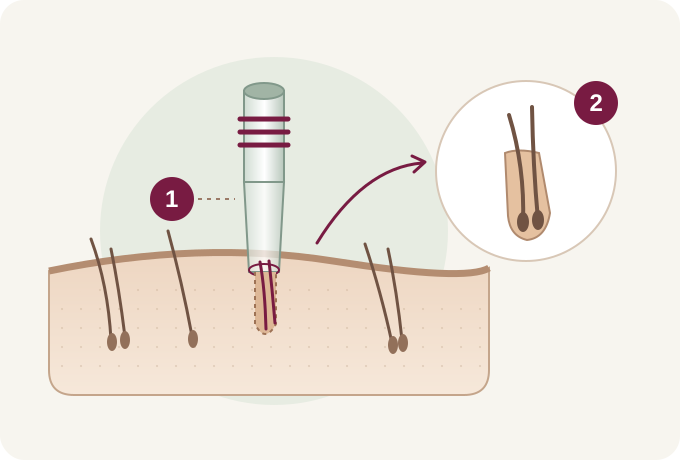
FUE frees individual grafts from the donor area. It describes collection, before the grafts are placed.
Explore FUEExplore how prepared hair grafts are placed with an implanter, and how that placement fits into your overall transplant plan.
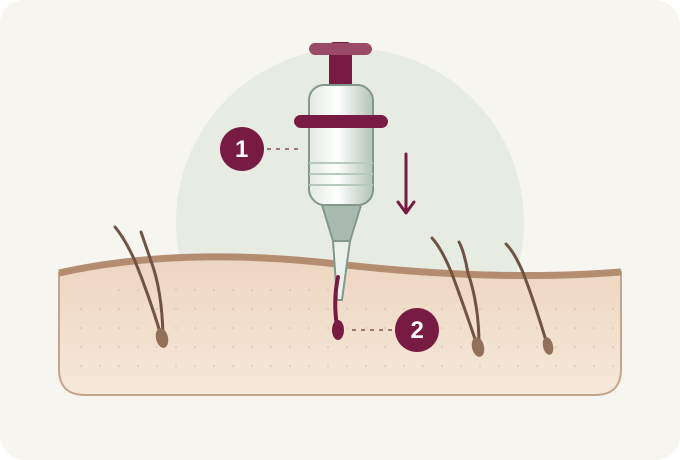
DHI means direct hair implantation. The term is commonly used for transplant methods that use an implanter to place hair grafts into the scalp.
The grafts still need to be collected from a suitable donor area. During placement, the surgeon considers each graft's position, direction, angle and depth to match the planned hairline and coverage.
An implanter does not make transplantation incision-free. The placement tool is one part of the operation; planning, graft care and surgical skill also matter.
FUE frees individual grafts from the donor area. It describes collection, before the grafts are placed.
Explore FUEAn implanter helps deliver prepared grafts into recipient sites. Ask your surgeon how both collection and placement will be performed.
Compare transplant methodsThese names do not automatically describe competing operations. Individual FUE collection may be followed by implanter placement.
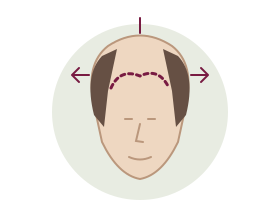
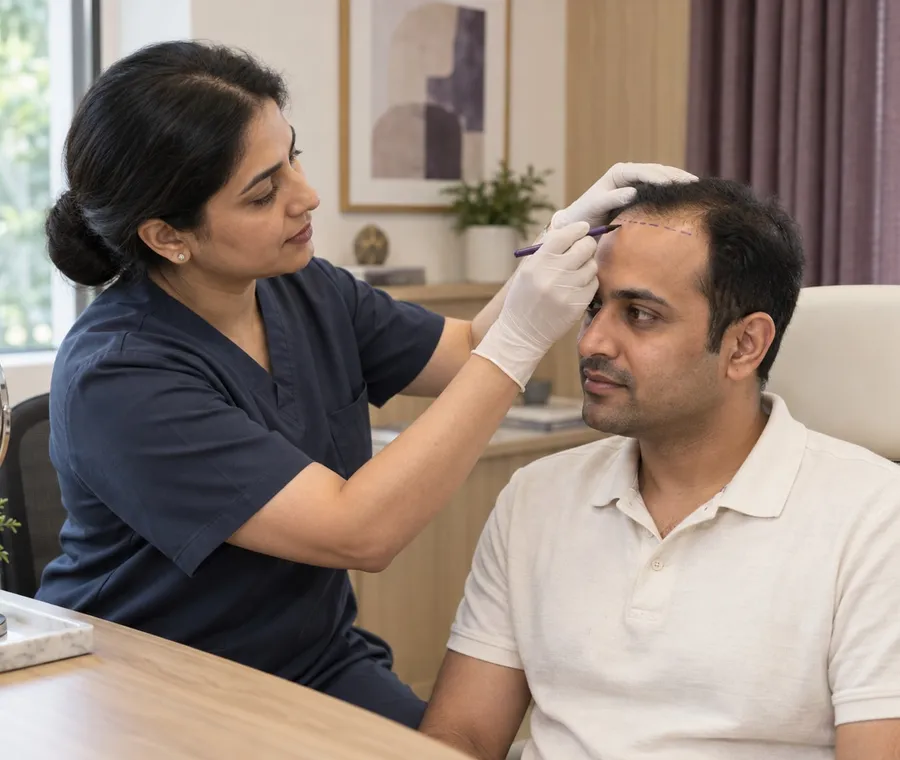
The direction of your existing hair helps guide placement, including the changing pattern around the crown.
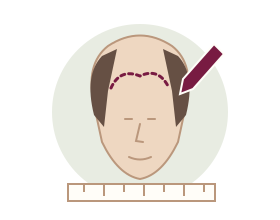
The design should suit your face and future hair loss. The number and type of hairs in each graft affect how the hairline looks.
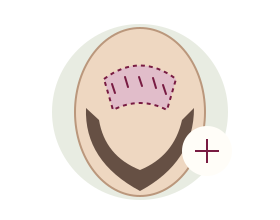
Coverage is limited by donor supply. The aim is a considered distribution of grafts, rather than the highest possible number.
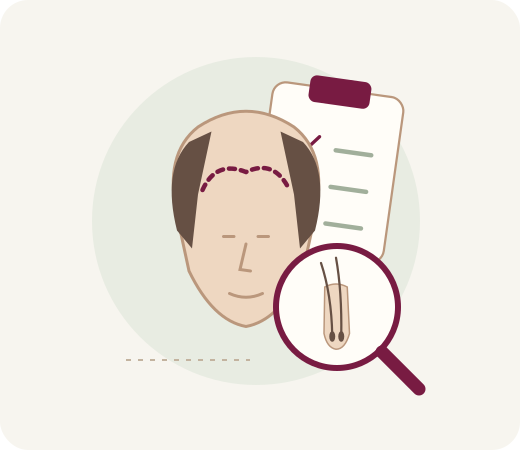
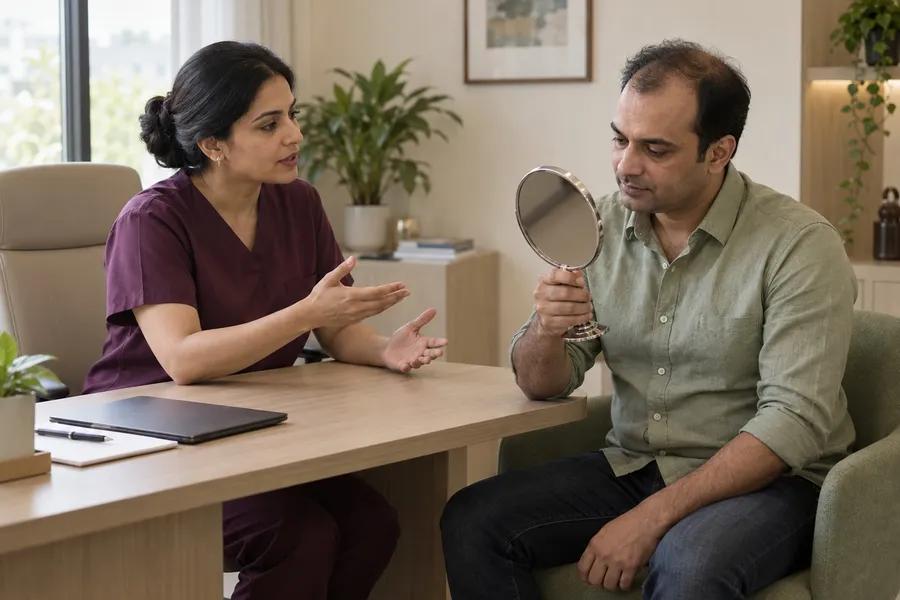
Your surgeon first checks the cause and pattern of hair loss. An implantation method is selected after deciding whether transplantation is appropriate.
The donor supply, the areas to be treated and the hair already growing there all affect planning.
Discuss time away from work, scalp care and follow-up. DHI still requires healing and careful care of the newly placed grafts.
Agree the donor method, planned recipient areas, graft estimate and surgeon's role. Share your health history and medicines.
Ask which implanter approach will be used. Some implanters create the recipient opening as the graft is placed; other tools are used with sites made beforehand.
Local anaesthetic is used, then donor grafts are collected by the agreed method and prepared for implantation.
Prepared grafts are loaded carefully into the instrument. Handling and keeping grafts in suitable conditions are important.
The surgeon follows the agreed design, controlling position, angle and depth as the grafts are placed.
Follow the clinic's instructions for washing, sleeping and exercise. Do not pick at scabs or rub the treated areas.
Checks assess healing first, then hair growth over the following months. Report severe pain or unexpected symptoms promptly.

Tenderness, swelling and scabbing can occur. Plan time away from work and strenuous activity with your surgeon.
Transplanted hairs may shed in the weeks after surgery. New growth develops gradually over the following months.
Progress is reviewed with photographs. Existing hair can continue to thin, so a medicine-based plan may still have a role.
Bleeding, infection, anaesthetic reactions, visible scars and poor graft growth are possible. Your surgeon should explain the risks for your situation and how problems would be managed.
An implanter provides a way to deliver prepared grafts to selected sites. Its effectiveness depends on the operator and the overall plan.
Different placement tools can suit different surgical workflows. The tool's name alone does not establish better density or growth.
Placement may need to account for existing hair. Whether implanter use is helpful in your case is a planning decision, not a guarantee of zero damage.
Explore hair restoration journeys at Layers. Choose a case, then move the divider to compare its before-and-after photographs.
Let’s talk about your goalsIndividual results vary. Photos show specific cases and do not guarantee the same outcome. Your doctor can explain what may be possible for you.
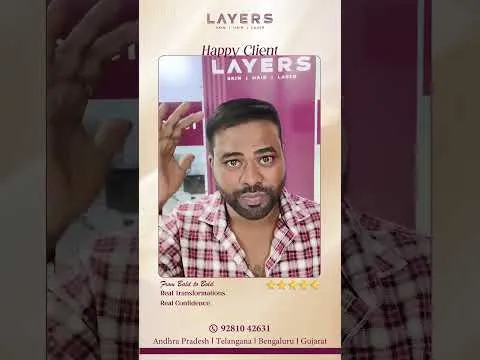
Hair-transplant experiences from Layers patients, including reviews of combined hair care. These are not all specific to DHI.
“My hair transplant was done very well by Dr. Ramya mam and Mr. Ravi well experienced staff”
“I had my hair transplant done at Layers Skin and Hair Clinic, Kondapur, and I couldn't be happier with the results!”
“A special thanks to Soumya, Teja, and Vijay for their exceptional support and professionalism throughout my hair transplant procedure.”
“I had a wonderful experience. I came to this branch for Hair Transplant and it went very well.”
“Visited here for the hair transplantations results are super this is my 5th month running”
Progress shared at month five; the reviewer also mentions care for existing hair.
“Took hair hair transplantation in layers prive results so far is good and continuing with QR678 and GFC treatment combination”
This review describes ongoing combined transplant, QR678 and GFC care.
















Explore hair restoration journeys at Layers. Choose a case, then move the divider to compare its before-and-after photographs.
Let’s talk about your goalsIndividual results vary. Photos show specific cases and do not guarantee the same outcome. Your doctor can explain what may be possible for you.
Hair-transplant experiences from Layers patients, including reviews of combined care. These are not all specific to DHI.
“My hair transplant was done very well by Dr. Ramya mam and Mr. Ravi well experienced staff”
“I had my hair transplant done at Layers Skin and Hair Clinic, Kondapur, and I couldn't be happier with the results!”
“A special thanks to Soumya, Teja, and Vijay for their exceptional support and professionalism throughout my hair transplant procedure.”
“I had a wonderful experience. I came to this branch for Hair Transplant and it went very well.”
“Visited here for the hair transplantations results are super this is my 5th month running”
Progress shared at month five; the reviewer also mentions care for existing hair.
“Took hair hair transplantation in layers prive results so far is good and continuing with QR678 and GFC treatment combination”
This review describes ongoing combined transplant, QR678 and GFC care.
FUE describes collecting grafts; DHI commonly describes implanter-based placement. A transplant may combine them. Compare the full plan and the surgeon's experience rather than choosing on the names alone.
No. Both collection and placement involve the skin. Donor scarring depends on collection, and recipient sites still need to heal.
No. The available donor hair, recipient area, graft care, surgical technique and healing all affect the result. There is no unlimited-density option.
Trimming requirements depend on donor collection and the planned placement. Ask what will be trimmed and how it will look during early recovery before you book.
The estimate is based on the area to cover and your donor supply. A graft can contain more than one hair, so hair counts and graft counts should be explained separately.
Early shedding can happen after transplantation. Growth is gradual over months, with progress assessed through follow-up photographs and scalp checks.
A transplant moves follicles; it does not stop all continuing loss of your existing hair. Your doctor may recommend ongoing medical care where suitable.
Discuss your hairline, donor hair and the approach that may suit your goals.
Prefer a call? +91 9000 572727