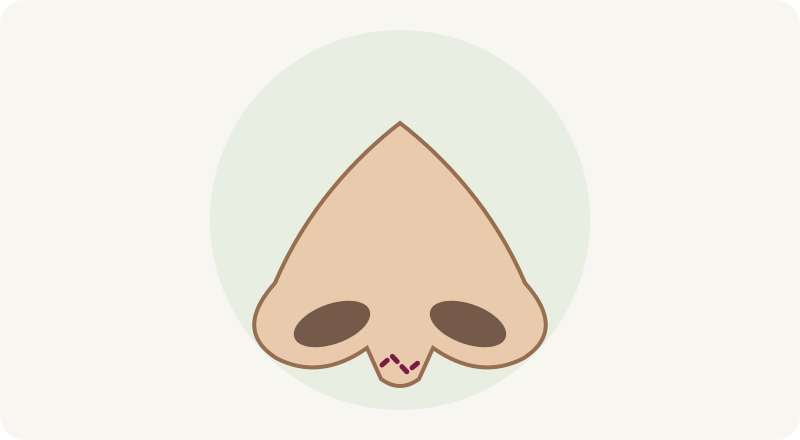
Open rhinoplasty
Incisions inside the nose connect with a small incision across the columella, the skin between the nostrils. This gives the surgeon access to the framework and leaves an external scar.
Thinking about nose surgery? Understand the changes that may be possible, how breathing is assessed and what recovery involves before you decide.
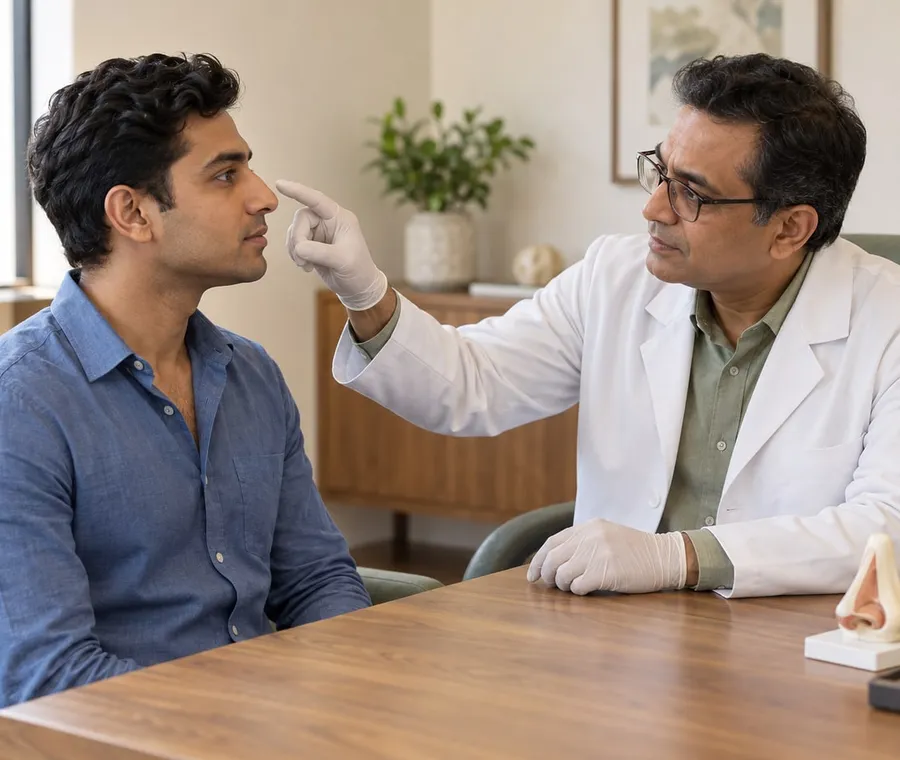
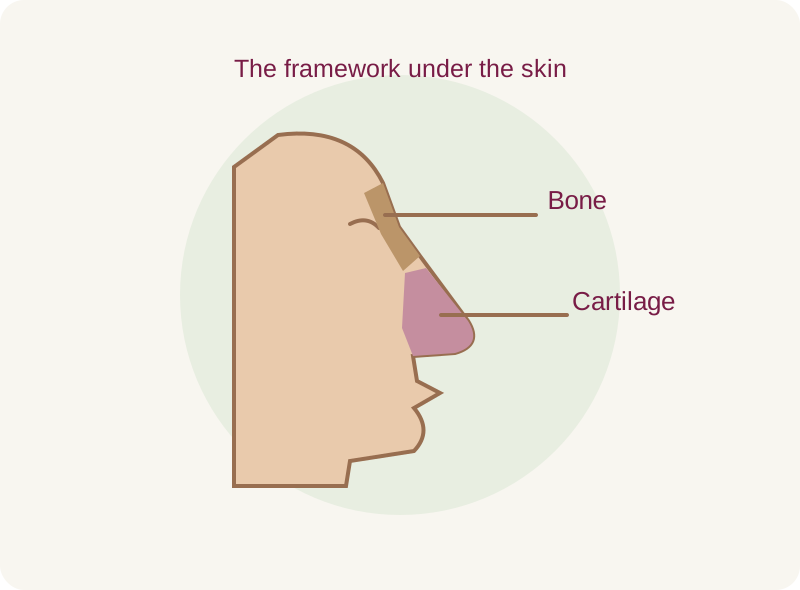
Rhinoplasty reshapes the nose by changing its supporting bone and cartilage. It can address appearance, selected structural breathing problems, or both. The plan depends on your anatomy and the change you want.
Bridge shape, tip position, width and the nostrils are considered alongside skin thickness and the rest of the face. The aim is an appropriate change for you; one reference photograph cannot define the right operation.
Incisions inside the nose connect with a small incision across the columella, the skin between the nostrils. This gives the surgeon access to the framework and leaves an external scar.
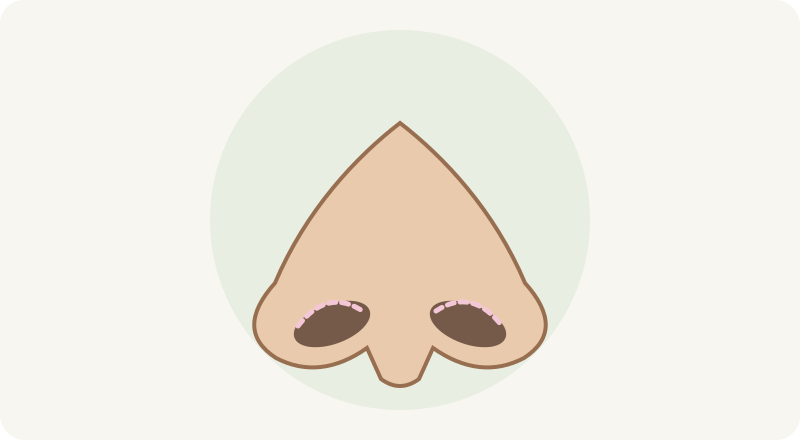
The access incisions are inside the nose. This avoids a columella incision, but does not make it the best method for every reshaping or revision plan.
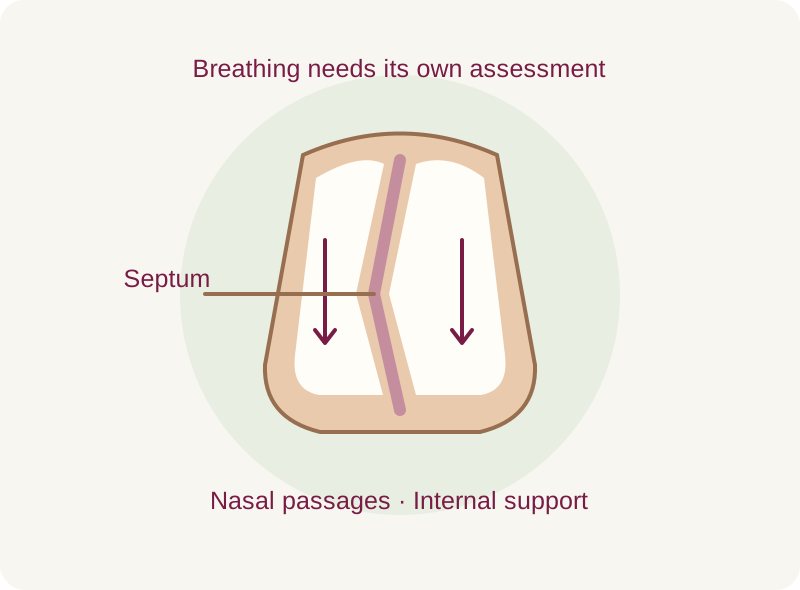
A blocked nose needs an examination of the internal airway. The septum is the wall between the two passages; septoplasty addresses a deviated septum. Other structures can also affect airflow.
Rhinoplasty and septoplasty may be combined when appropriate, but they are not interchangeable. Explain any obstruction, previous injury or surgery, and whether symptoms affect one or both sides. A cosmetic shape change alone does not guarantee easier breathing.
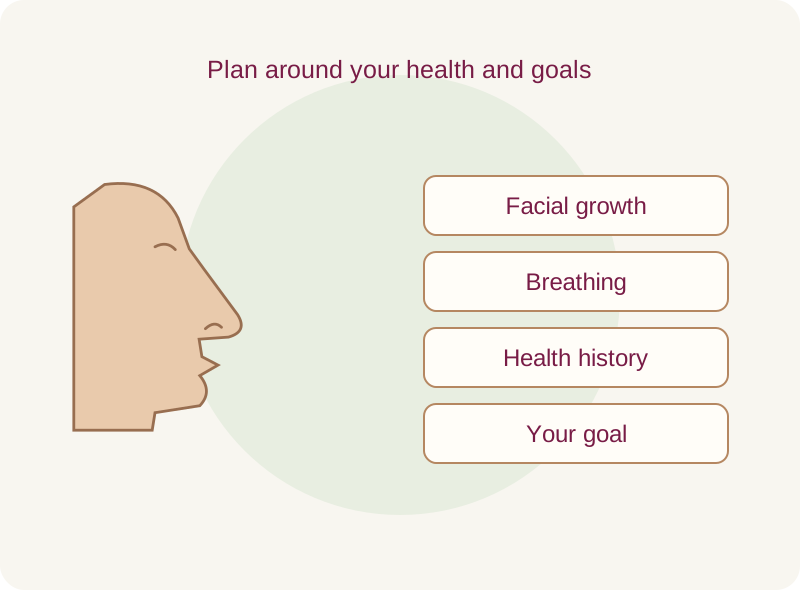
Elective cosmetic reshaping is generally planned after facial growth is complete. Age alone does not establish readiness; the decision also needs time and realistic expectations.
Describe what bothers you and what you hope to keep. Surgery should be your choice, without pressure to copy someone else’s face.
Discuss bleeding problems, medicines, supplements, nicotine use and previous procedures. Ask how these affect healing and preparation.
Plan time away from demanding work, help after anaesthesia and follow-up visits. The visible shape continues to settle after daily activities resume.
Review which structures would change, the access incisions and whether cartilage grafts are needed. Graft tissue may come from the septum, ear or rib; a donor site has its own recovery.
Ask about relevant training, experience with noses like yours, the operating facility, anaesthesia and who handles follow-up or urgent concerns.
Clinical photographs help planning. A simulation, if offered, is a discussion aid rather than a promise. Ask what differences or limits are likely to remain.
The surgeon reviews your history, facial proportions and nasal structure. Agree the goals, risks, proposed incisions and consent before scheduling.
Follow your team’s instructions for tests, medicines, food, drink and nicotine. Do not stop prescribed medicines on your own. Arrange transport and support at home.
Under the planned anaesthetic, the surgeon accesses and reshapes the supporting structures. Tissue may be reduced, repositioned or supported with grafts as needed.
The tissues are positioned and the incisions closed. External or internal splints, dressings or packing may be used according to the operation.
The team monitors you after anaesthesia and confirms when you can leave. Follow instructions for wound care, medicines and the first check.
Keep follow-up appointments for any dressing, splint or stitch care. Ask before restarting activities that could strain or knock the nose.
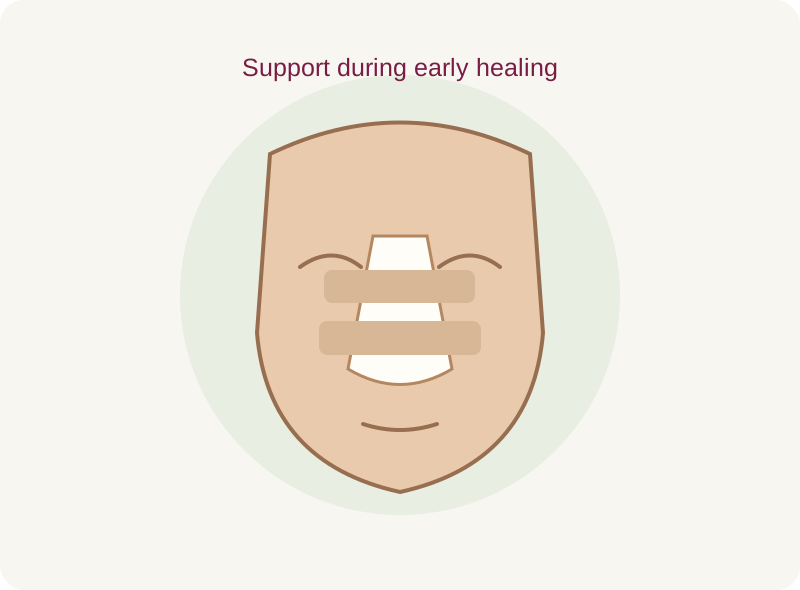
Swelling, bruising and a blocked feeling are common. Rest with your head raised as directed and keep dressings or splints in place until the team advises otherwise.
Allow roughly one to two weeks away from work as an initial planning guide. The operation, your job and visible bruising can change that timing.
Avoid nose blowing, heavy exertion and pressure from glasses until cleared. Ask about sneezing, washing, sleeping and contact sports rather than following one fixed online schedule.
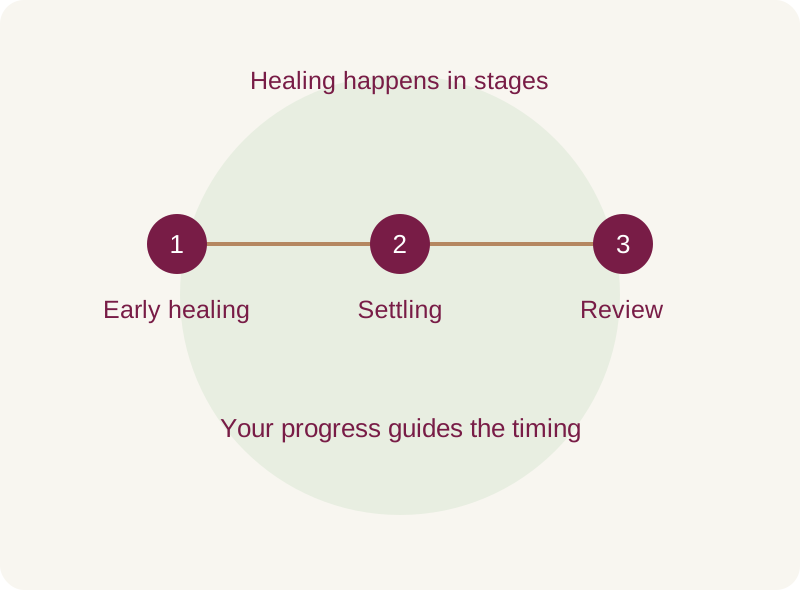
Early swelling falls over weeks, while finer changes can continue for about a year. Morning swelling may vary. A newly removed splint does not reveal the finished result.
Natural asymmetry can remain, and the nose continues to change with age. If a revision is being considered, the surgeon usually allows substantial healing before planning another operation.
Persistent or new breathing difficulty, altered sensation or smell, and a hole in the septum are possible.
Infection, bleeding, scarring, skin changes, prolonged swelling or an uneven result can occur. Some concerns may need revision surgery.
The team will assess risks related to anaesthesia and your health. Ask how complications would be recognised, managed and followed up.
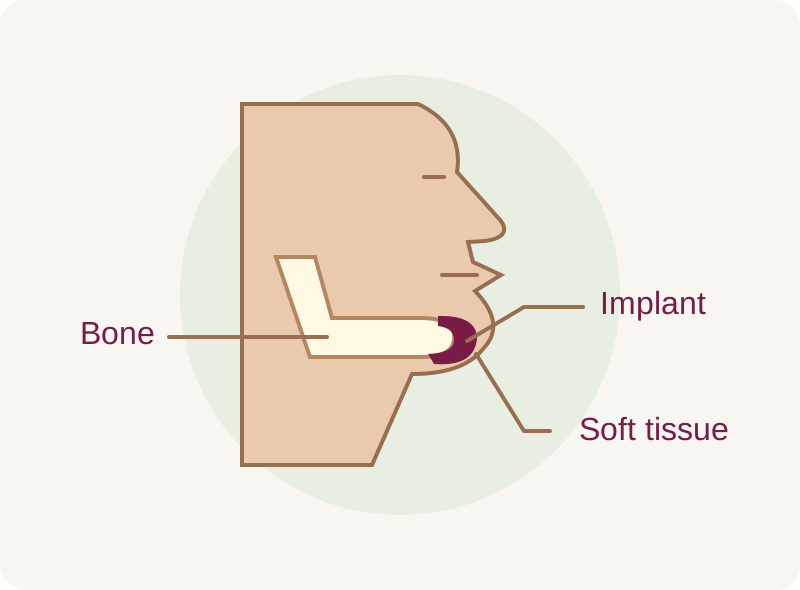
Chin projection affects how the nose and face look in profile. Learn about implant options without assuming that both operations are needed.
Understand chin augmentationThese original Google excerpts describe general consultations and care at Layers. They are not rhinoplasty outcome reports.
“The doctors listened carefully to my concerns and explained the treatment in a clear and professional manner.”
Consultation experience; condition not specified.
“She explained the treatment clearly and made me feel comfortable throughout the consultation.”
Consultation experience; condition not specified.
“The doctor took the time to understand my skin concerns and explained the treatment plan clearly, without rushing.”
Consultation experience; condition not specified.
“Very patient ,humble and polite to answer every single query and build confidence.”
Consultation experience; condition not specified.
“The doctors explained everything clearly and made me feel comfortable and confident.”
Consultation experience; condition not specified.
“The doctor took the time to listen to my concerns patiently and explained the treatment options clearly.”
Consultation experience; condition not specified.
















No. Rhinoplasty changes nasal shape and supporting structure. Septoplasty addresses the internal dividing wall. A surgeon may recommend one or both after assessing appearance and breathing.
Neither is best for everyone. The access needed, your structure and any previous operation guide the choice. Ask why a particular approach suits your plan.
Open surgery leaves a small scar across the columella. Other incisions may be needed around the nostrils for selected changes. Scars can fade but do not disappear.
Not necessarily. Surgery may reduce, reposition or add support to selected structures. Your surgeon will explain which changes fit your face and breathing needs.
Some plans need cartilage grafts for support or shape. The source and its possible effects should be discussed before surgery; grafts are not needed in every case.
Photographs and simulations can help explain goals. They cannot predict every aspect of healing or guarantee the final shape.
Glasses can press on the healing nose. Ask the team about support options and when it is safe to rest them on the bridge.
Revision surgery may be possible but needs a separate assessment of scars, support and breathing. Bring previous records if available and allow the earlier result to settle.
Arrange a consultation to discuss the change you want, your breathing and the recovery you can plan for.
Prefer a call? +91 9000 572727