Washing and daily exposure
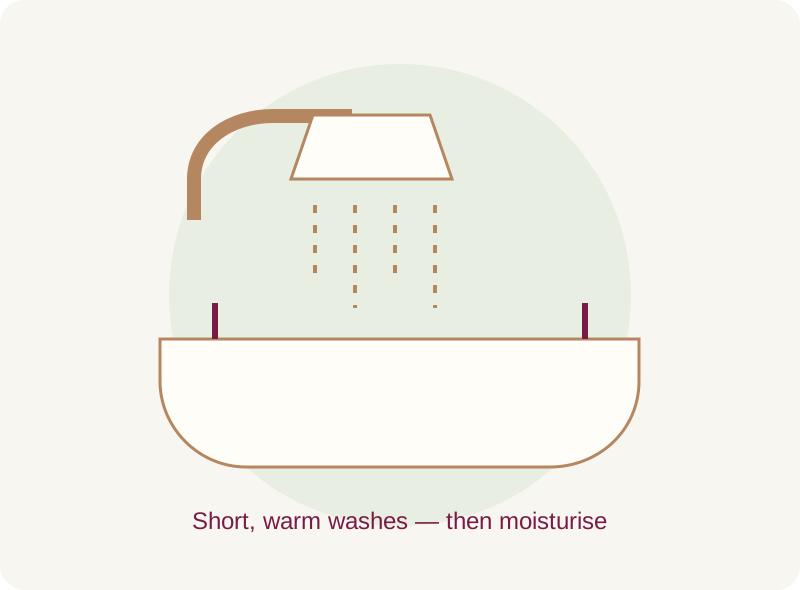
Frequent washing, long hot baths, detergents and repeated wet work can strip or irritate the outer barrier.
Flaking, tightness and cracks can make everyday life uncomfortable. Find out what may be causing the dryness and what can help.

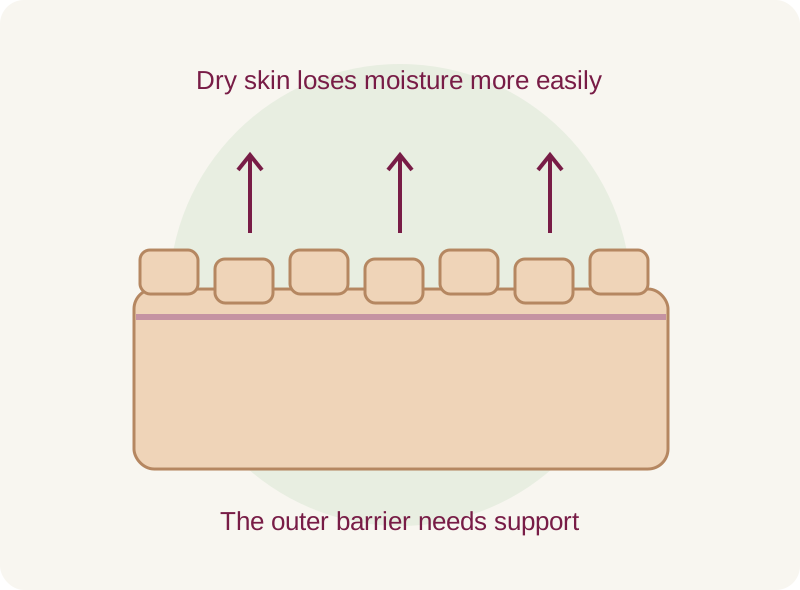
Xerosis is the medical name for dry skin. The outer skin layer does not hold moisture as well as it should, leaving the surface rough, flaky or less flexible.
It can affect the face, hands, legs or other areas. Some dryness improves with regular skin care; persistent or inflamed patches need an examination to check for another condition.
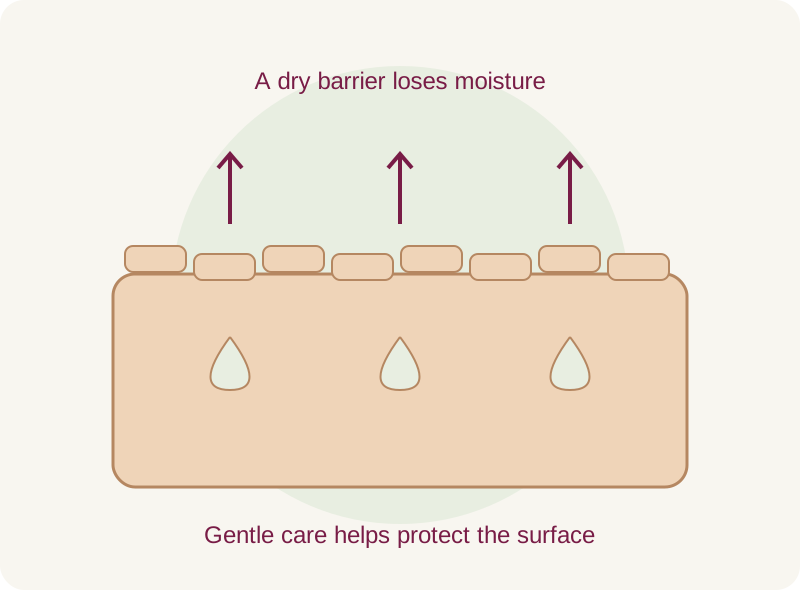
You may notice fine scales, an ashy look or tightness after washing.
Dry areas can itch or sting. Repeated scratching may further irritate the surface.
More severe dryness can cause fissures, especially on hands and feet. Bleeding, painful or infected cracks need medical care.
Frequent washing, long hot baths, detergents and repeated wet work can strip or irritate the outer barrier.
Skin often becomes drier with age. Low humidity, wind and prolonged air-conditioning may add to the problem.
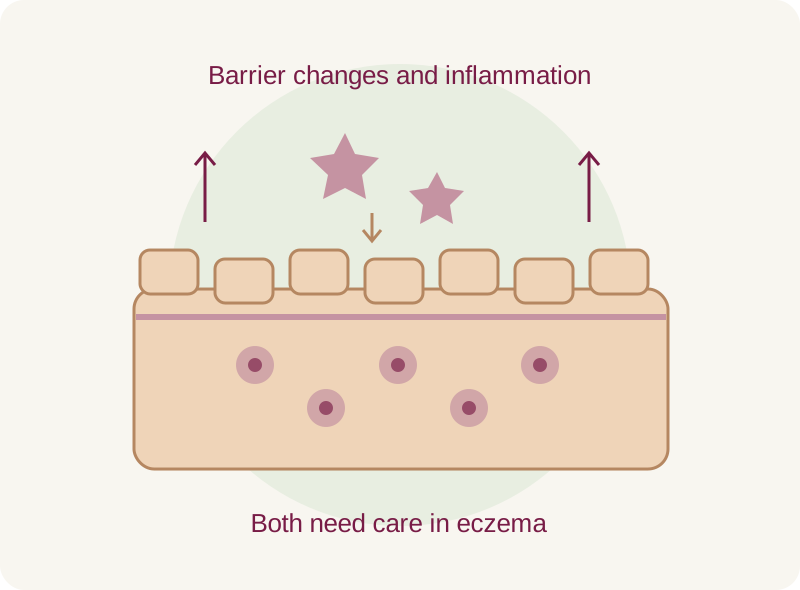
Eczema and some other conditions can look dry. Medicines and wider health factors can also contribute; discuss new or persistent changes with your doctor.
Explore eczema care
Use warm rather than hot water and keep washes short. Choose a gentle, fragrance-free cleanser and pat the skin dry.
Apply a cream or ointment soon after washing and again when needed. Choose a product that feels comfortable rather than one that stings.
Reduce unnecessary contact with detergents and wet work. Use suitable protective gloves, changing them if the inside becomes damp.
Avoid scrubs, harsh exfoliants and picking at flakes. Irritated skin needs a gentler routine.
The texture and ingredients can be adjusted for the area and severity. Your dermatologist may suggest a specific product for persistent dryness.
If there is eczema or another inflamed rash, moisturiser may be only one part of the plan. Medication should match the diagnosis and body area.
Explore eczema careIf dryness is widespread, new or not improving, your clinician reviews medicines, daily exposures and health history. Tests are chosen only when the findings suggest a need.
List your products, medicines, work exposures and what you have already tried.
Tell us where the dryness occurs, how long it has lasted and whether itching, pain or a rash is present.
Your clinician checks the pattern, cracking and any signs of inflammation or infection.
Discuss moisturising, changes at home or work and any treatment needed for an underlying condition.
Tell the team if a product stings, is difficult to apply or does not fit your day.
If the plan is not helping, a further examination can guide changes instead of repeatedly switching products yourself.
Book an assessment if itching disturbs sleep, cracks keep returning or regular moisturising is not helping.
Dryness with thick, inflamed or unusual patches may be eczema or another skin condition.
Seek prompt medical care for spreading warmth or swelling, increasing pain, discharge or fever. These need more than moisturiser.
Verified Google review excerpts about listening, explanations and consultations at Layers. The skin condition is not specified; these are not dry-skin treatment results.
“The doctors listened carefully to my concerns and explained the treatment in a clear and professional manner.”
Consultation experience; condition not specified.
“She explained the treatment clearly and made me feel comfortable throughout the consultation.”
Consultation experience; condition not specified.
“The doctor took the time to understand my skin concerns and explained the treatment plan clearly, without rushing.”
Consultation experience; condition not specified.
“Very patient ,humble and polite to answer every single query and build confidence.”
Consultation experience; condition not specified.
“The doctors explained everything clearly and made me feel comfortable and confident.”
Consultation experience; condition not specified.
“The doctor took the time to listen to my concerns patiently and explained the treatment options clearly.”
Consultation experience; condition not specified.
















Xerosis is the medical term for dry skin. It describes the dryness, while the cause can vary.
No. Dry skin can occur on its own. An itchy, inflamed or recurring rash may be eczema and should be assessed.
Very dry skin often benefits from a richer cream or ointment. The best choice also depends on the body area, climate and what your skin tolerates.
Scrubbing can further irritate dry skin. Start with gentle washing and moisturising; ask your dermatologist about persistent thick scaling.
Hot water and harsh cleansers can remove protective surface oils. Shorter warm washes and prompt moisturising may help.
Not everyone does. Examination and history come first. Tests may be useful if there are signs of an underlying health condition.
Some can contribute. Tell your doctor what you take, but do not stop prescribed medicine on your own.
It may recur if the triggers or a tendency to dryness remain. A routine that fits your day can help maintain comfort, with review if symptoms change.
Let’s understand the dryness and agree on care that works for your skin and routine.
Prefer a call? +91 9000 572727