Muscle activity
Some research suggests benefits for muscle strength in selected groups. A useful plan needs an appropriate goal and progression, not simply a longer session.
A vibrating platform makes muscles respond to movement beneath your feet. Explore what it may add to an activity plan, and what it cannot replace.
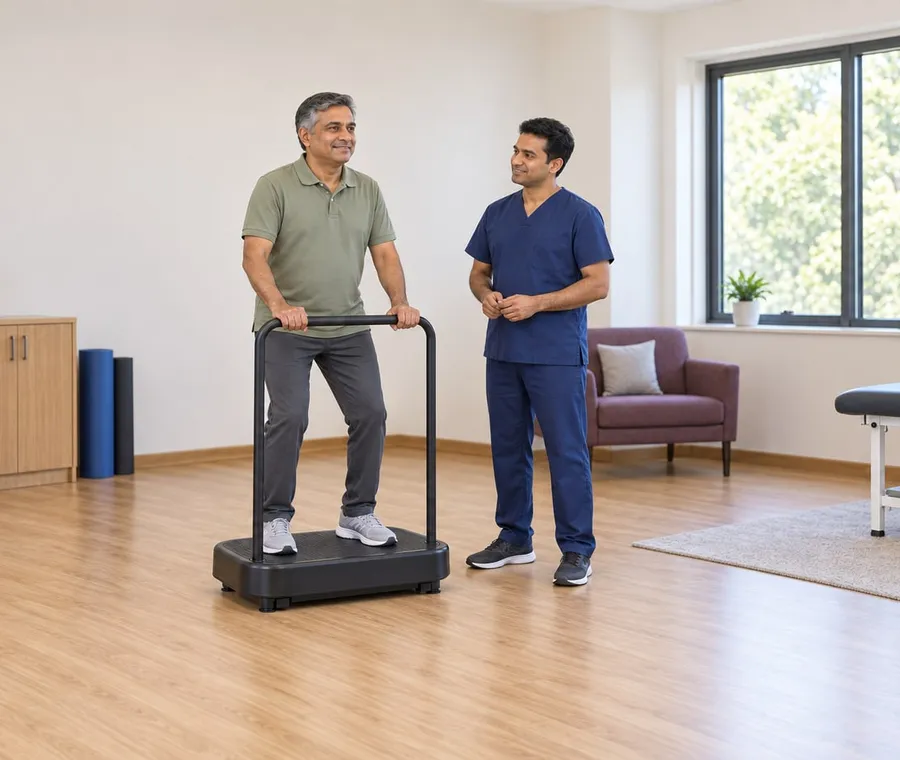
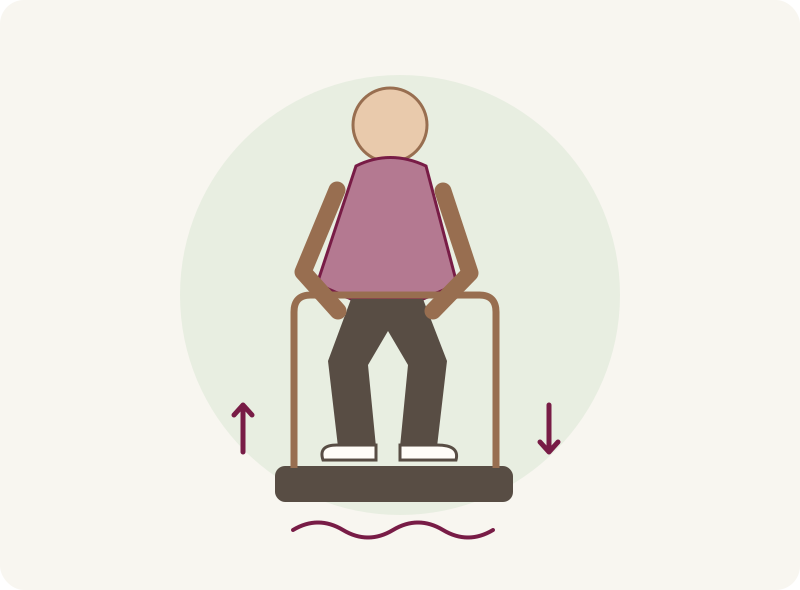
Whole-body vibration uses a platform that moves rapidly. The movement travels through the body and prompts repeated muscle responses. The way you stand or exercise on it changes the activity.
It can be used as part of supervised exercise or selected rehabilitation plans. Platforms and programmes differ, so a generic machine demonstration is not a personal prescription.
Some research suggests benefits for muscle strength in selected groups. A useful plan needs an appropriate goal and progression, not simply a longer session.
Selected supervised programmes study balance and physical function. People with mobility problems need an individual assessment and suitable support.
Walking or other aerobic activity and strength training still matter. Vibration should not replace the full range of movement your health allows.
Vibration alone is not a reliable weight-loss treatment. A recent review of randomised trials found no significant overall reduction in body weight or fat mass from whole-body vibration on its own.
A programme that also changes food intake or exercise cannot attribute all its results to the platform. If weight management is your goal, discuss a plan that includes your health, nutrition, activity and ongoing support.
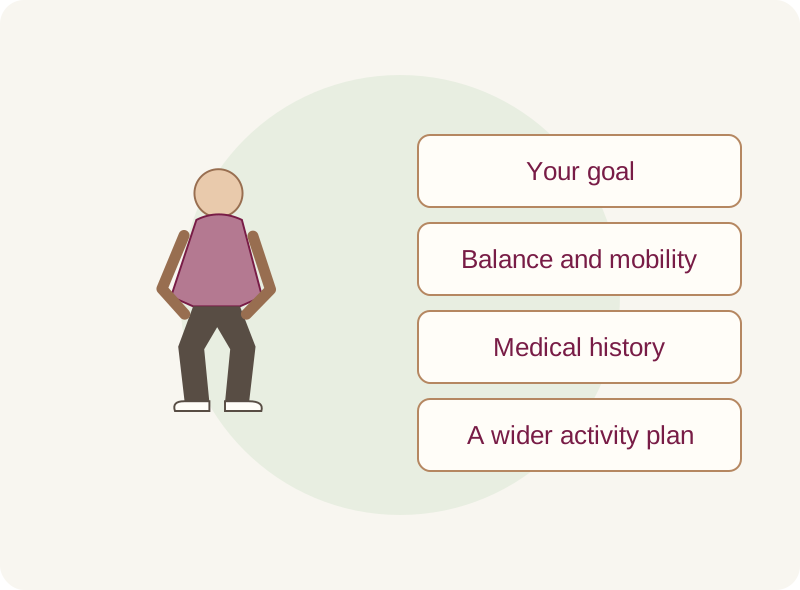
Speak to a clinician before starting if you are pregnant or have a health condition. Explain recent surgery, injuries, medicines and any implanted device.
The team needs to know whether you can get on and off the platform and hold the planned position safely. Dizziness, pain or instability need attention.
Agree what you want to improve and how it will be checked. A platform should not be sold as a cure for every health or body-shape concern.
Explain your activity level and any symptoms or medical concerns. The clinician can decide whether assessment or another form of care should come first.
Ask how to use the support and stop the machine. The selected position, settings and duration should suit the device and your ability.
The session may include a supported stance or selected movements. Use only the activities the supervising professional has chosen for you.
Tell the team if you feel dizzy, unstable, nauseated or in pain. Stronger vibration is not automatically more useful.
Report symptoms rather than pushing through them at the next visit. Ask what level of muscle tiredness is expected for your session.
Continue the agreed movement and health plan. Review progress before increasing intensity or committing to further sessions.

Choose a measure that matches the reason for treatment, such as an agreed strength or balance task. Your starting ability, the programme and other exercise all influence the response.
There is no single session count or setting that works for everyone. Review whether the activity is comfortable and helpful, and whether another approach would be a better use of your time.
These reviews describe general consultations and care at Layers. They do not report vibration-plate outcomes.
“The doctors listened carefully to my concerns and explained the treatment in a clear and professional manner.”
Consultation experience; condition not specified.
“She explained the treatment clearly and made me feel comfortable throughout the consultation.”
Consultation experience; condition not specified.
“The doctor took the time to understand my skin concerns and explained the treatment plan clearly, without rushing.”
Consultation experience; condition not specified.
“Very patient ,humble and polite to answer every single query and build confidence.”
Consultation experience; condition not specified.
“The doctors explained everything clearly and made me feel comfortable and confident.”
Consultation experience; condition not specified.
“The doctor took the time to listen to my concerns patiently and explained the treatment options clearly.”
Consultation experience; condition not specified.
















No. Movement of the platform is not proof that fat is being removed. Vibration alone has not shown a reliable overall weight-loss effect.
No. Keep suitable aerobic activity and strength work in your routine. A platform may be an addition for selected goals, rather than a replacement.
Some programmes use a stance while others add selected movements. What you do should match the device, your ability and the supervised plan.
Some studies examine strength and balance in older people. Age alone does not establish suitability; health, mobility and the ability to use the platform safely matter.
Check with the clinician responsible for your pregnancy before considering vibration. Do not assume a fitness device is suitable because it is non-surgical.
Start with an assessment and a clear purpose. Ask when progress will be reviewed rather than choosing a fixed package without knowing whether it suits you.
Research in selected groups does not make it a substitute for diagnosis or an individual medical plan. Discuss symptoms and any existing treatment with the relevant clinician.
Platforms vary in movement and settings, and supervision changes how they are used. Do not copy a clinic programme or assume an online demonstration is suitable for your health.
Talk about your movement goals and whether supervised vibration could complement your routine.
Prefer a call? +91 9000 572727