
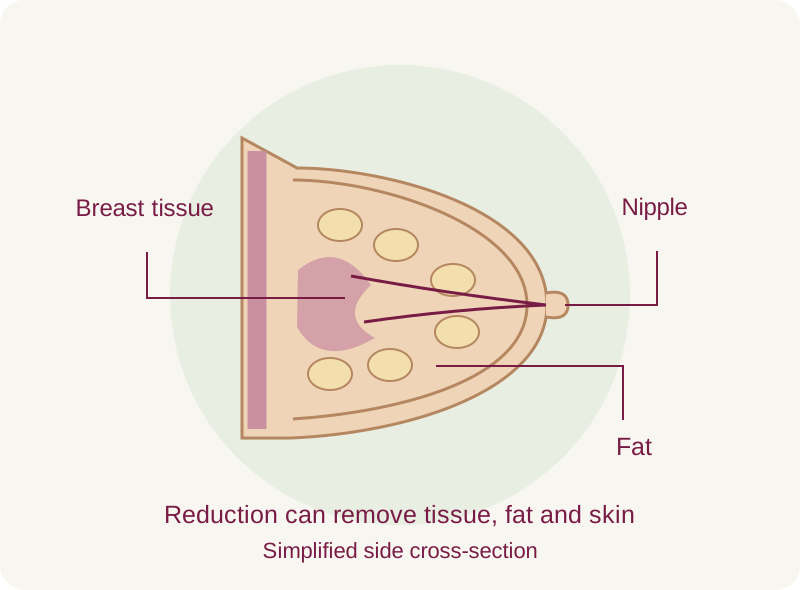
Remove breast tissue and weight
Reduction removes tissue and reshapes the breast. It may suit a size or weight concern as well as loose skin.
If breast weight or size affects comfort, clothing or activity, an assessment can help you understand the cause and the options. Explore surgery, its limits and the recovery involved.

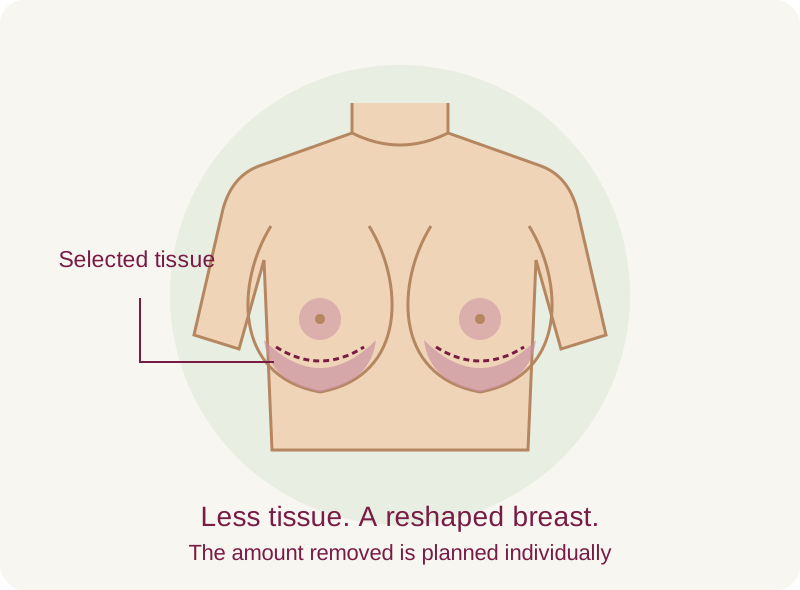
Breast reduction, or reduction mammaplasty, removes selected breast tissue, fat and skin. The remaining tissue is reshaped to create a smaller breast, usually with a higher nipple position.
The aim may include easing discomfort from breast weight as well as changing size. The amount removed is planned around your anatomy, symptoms and goals; an exact cup size cannot be promised.
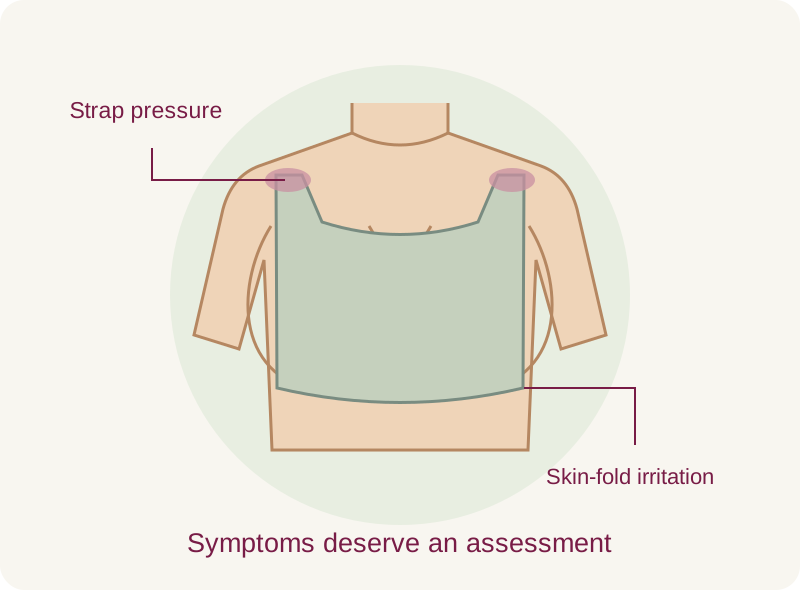
Some people experience neck, shoulder or back discomfort related to breast weight. Pain can have other causes, so it needs assessment before linking it to breast size.
Recurring irritation beneath the breast fold or deep bra-strap marks can affect daily comfort. Tell the clinician about any rash or skin breakdown.
Difficulty finding supportive bras or taking part in exercise can also matter. Explain the practical change you hope surgery would make.
Reduction removes tissue and reshapes the breast. It may suit a size or weight concern as well as loose skin.
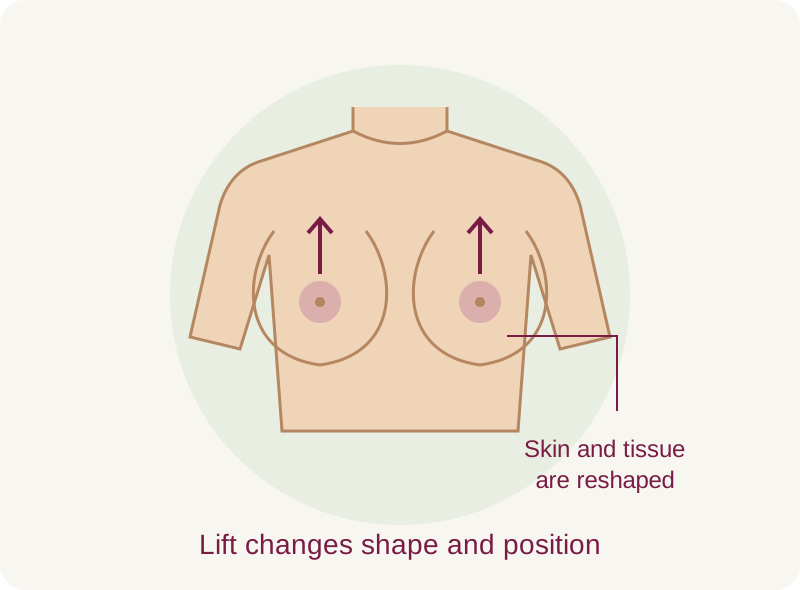
A lift mainly changes position and shape. It does not usually remove enough breast tissue to address a substantial weight concern.
Explore breast lift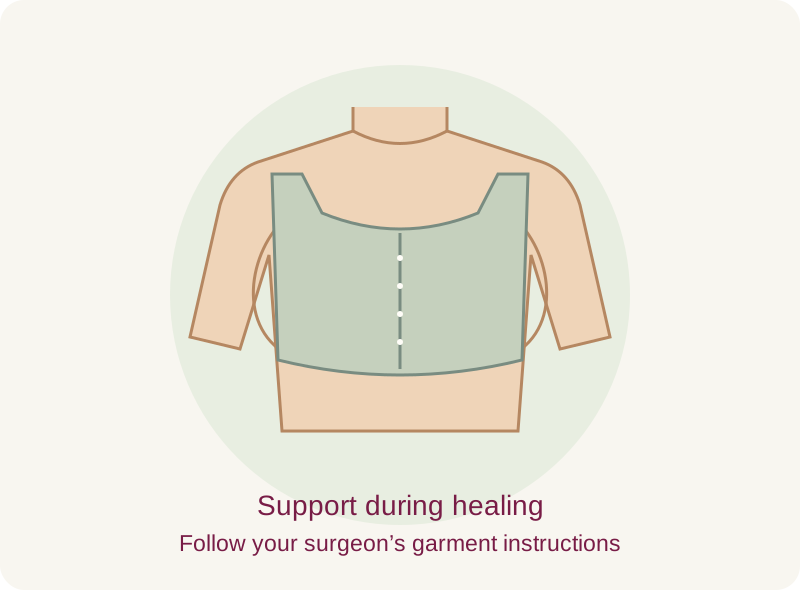
A well-fitting bra and care for skin irritation may help symptoms. Discuss these options, and whether weight changes or other treatment would affect your plan.
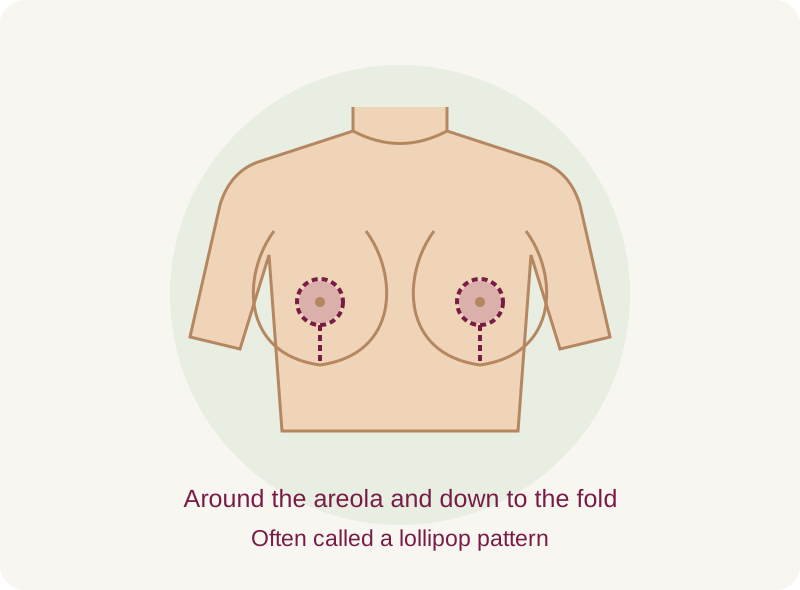
A line around the areola continues down to the fold. Sometimes called a lollipop pattern, it allows tissue removal and reshaping for selected breast sizes and skin patterns.
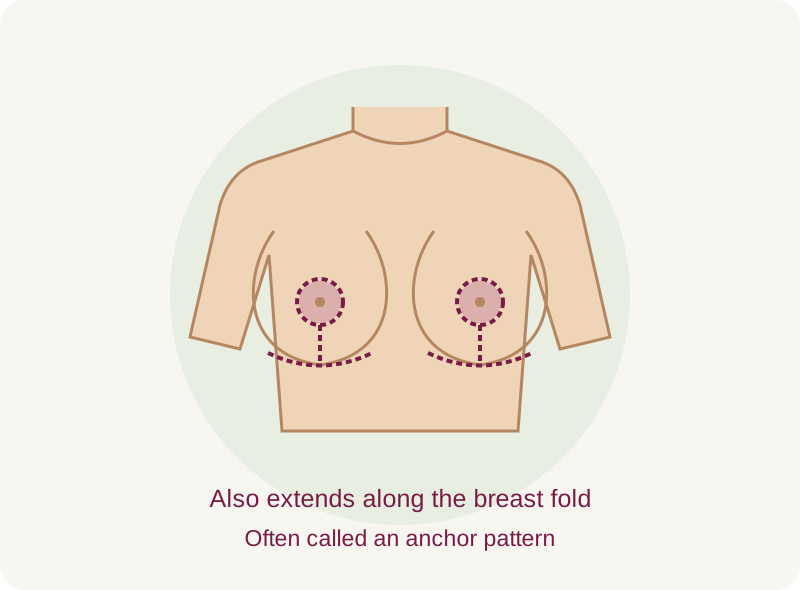
A further incision runs along the breast fold. A wider skin and tissue-removal plan may need this pattern.
The incision pattern and the tissue that supports the nipple are separate parts of the surgical plan. Ask the surgeon to explain both.
Discuss your symptoms, medicines, previous surgery and personal or family breast history. Any new lump, nipple discharge or unexplained breast change needs medical assessment.
Smoking or vaping can impair healing. Discuss nicotine, diabetes and other health factors, along with any major weight change you are planning.
Consider the likely benefit alongside permanent scars and recovery. A decision about surgery should reflect your own priorities, with practical help arranged at home.
Usually the nipple and areola stay attached to a section of tissue that carries blood supply and nerves while they are moved. With some very large reductions, a free nipple graft may be discussed instead. That has different implications for sensation, healing and breastfeeding.
Reduction can reduce or prevent milk production, and nipple sensation may change temporarily or permanently. Discuss future pregnancy and breastfeeding before deciding; no technique can guarantee these functions will be unchanged.
The plastic surgeon examines and measures the breasts. Discuss symptoms, the proposed reduction, nipple technique and scars, as well as the surgeon, facility and aftercare.
Breast imaging or laboratory tests may be requested based on your age and history. Follow individual medicine, nicotine and fasting instructions. Arrange transport and someone to stay with you initially.
Under the agreed anaesthetic, excess tissue, fat and skin are removed through the planned incisions. Liposuction may be added if appropriate.
The nipple position and remaining tissue are adjusted. The breast is supported with stitches and the incisions are closed and dressed.
A support bra is commonly used, and some patients have temporary drains. Get instructions for dressings, medicines, washing and any drain care.
Attend the planned checks and build activity back gradually. The team will tell you when lifting, driving and exercise are appropriate.
Swelling, bruising and soreness are expected at first. Keep to the wound-care and support-bra instructions and contact the team if symptoms worsen unexpectedly.
Arrange support for childcare, shopping and other lifting. Avoid strain, friction and strenuous activity while the incisions heal.
Some people return to less physical work after a few weeks; heavier work and exercise may need longer. Your operation and healing determine the timing.
Some incision lines follow the natural breast fold, while others remain on the breast surface. Ask to see the expected pattern before consent.
They may fade and soften over time, but do not disappear. Thick, raised or widened scars are possible.
Focus first on wound healing. Use silicone, massage or other scar care only when your team says the skin is ready.
Bleeding, infection, fluid collections, wound separation and loss of skin or fatty tissue can occur. The nipple or areola can lose part or all of its tissue if blood supply is affected.
Breast asymmetry, contour changes, persistent pain or lasting numbness are possible. Breastfeeding can be affected. Further surgery may be needed for some problems.
Blood clots and heart, lung or anaesthetic complications are serious surgical risks. Your medical history helps the team assess them.
Reducing breast weight may improve comfort and make activity or clothing easier. It cannot guarantee that every source of pain will resolve. Review your original symptoms as well as the appearance.
Swelling may hide the final size and shape for several months. Weight changes, pregnancy and ageing can change the breasts again; maintaining a stable weight supports the result.
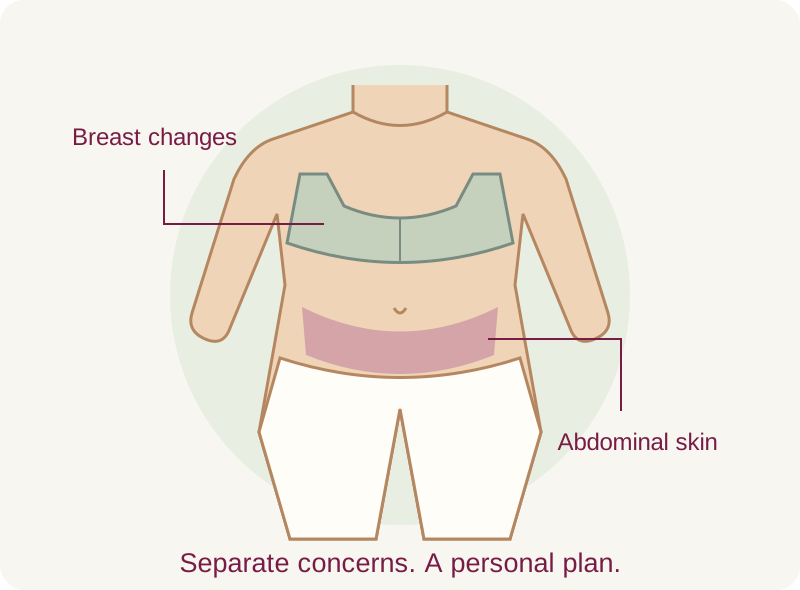
A reduction can be discussed on its own or alongside other priorities. Combining procedures needs its own recovery and risk assessment.
Explore mommy makeoverThese verified Google excerpts describe general consultations and care. They do not identify breast reduction surgery or show its results.
“The doctors listened carefully to my concerns and explained the treatment in a clear and professional manner.”
Consultation experience; condition not specified.
“She explained the treatment clearly and made me feel comfortable throughout the consultation.”
Consultation experience; condition not specified.
“The doctor took the time to understand my skin concerns and explained the treatment plan clearly, without rushing.”
Consultation experience; condition not specified.
“Very patient ,humble and polite to answer every single query and build confidence.”
Consultation experience; condition not specified.
“The doctors explained everything clearly and made me feel comfortable and confident.”
Consultation experience; condition not specified.
“The doctor took the time to listen to my concerns patiently and explained the treatment options clearly.”
Consultation experience; condition not specified.
















No. Reduction removes breast tissue and weight as well as reshaping. A lift mainly changes skin, shape and position.
You can discuss the size and comfort you want, but anatomy, tissue safety and differences between bra sizing make an exact cup size difficult to guarantee.
Surgery may help pain related to breast weight. Other causes of pain need their own assessment, and complete relief cannot be promised.
Usually they stay attached to supporting tissue while being repositioned. A free nipple graft may be needed in selected very large reductions; discuss the implications beforehand.
It may be possible, but reduction can reduce or prevent milk production. Your technique, amount of reduction and future plans need discussion.
Both can change breast size and the surgical result. Explain your plans so the surgeon can advise on timing.
It removes fat rather than glandular tissue or excess skin. It may suit selected cases, but does not replace a skin-and-tissue reduction for everyone.
Wait for advice based on your healing and the activity. Everyday lifting, driving and gym exercise place different demands on the chest.
Arrange an assessment of your symptoms, goals and the care that may help.
Prefer a call? +91 9000 572727