Hair fall care
Explore an option for thinning hair that uses a preparation from your own blood. Start with a scalp assessment, understand the process and decide whether PRP has a place in your care.
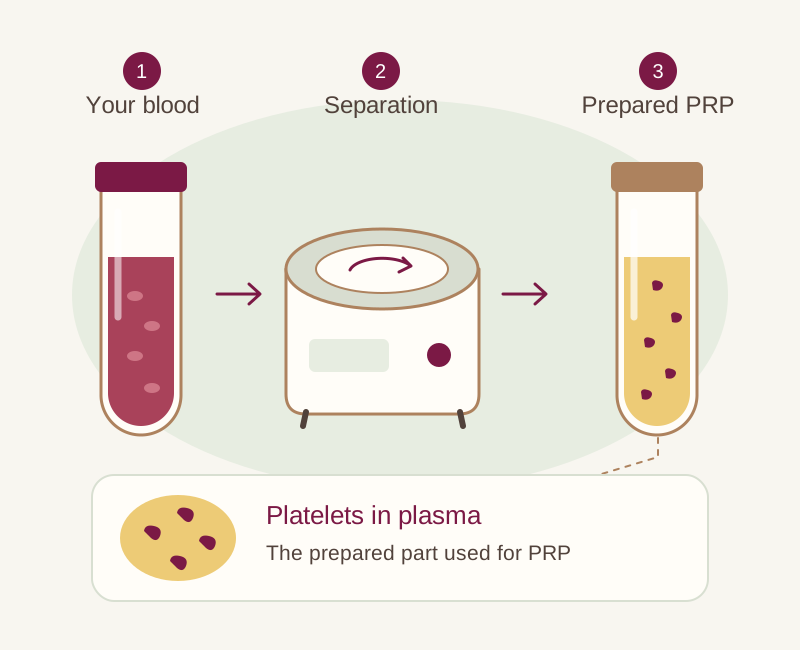
PRP stands for platelet-rich plasma. It is a preparation made from your own blood, containing a higher concentration of platelets.
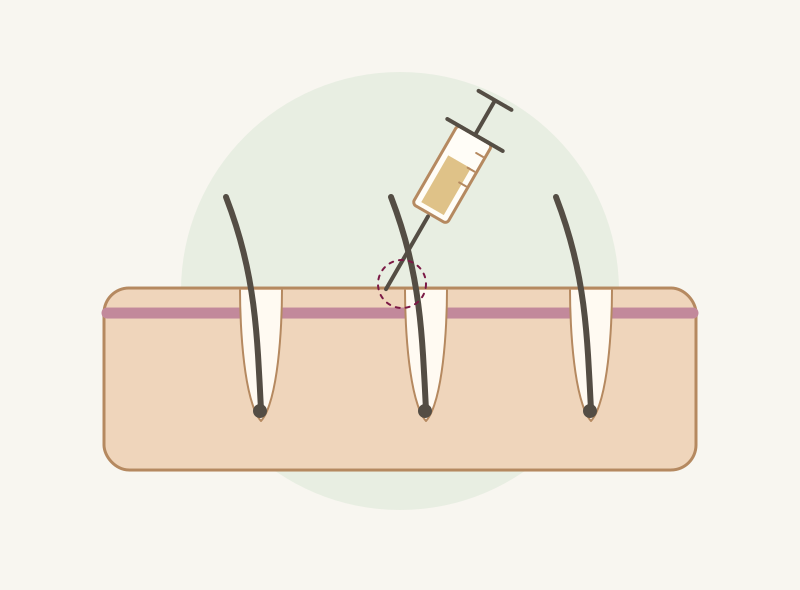
Platelets contain growth factors. In hair care, PRP is injected into selected scalp areas to support existing follicles in people for whom it is suitable.
The goal: support hair growth and density in selected cases of thinning. PRP does not move or create new follicles.
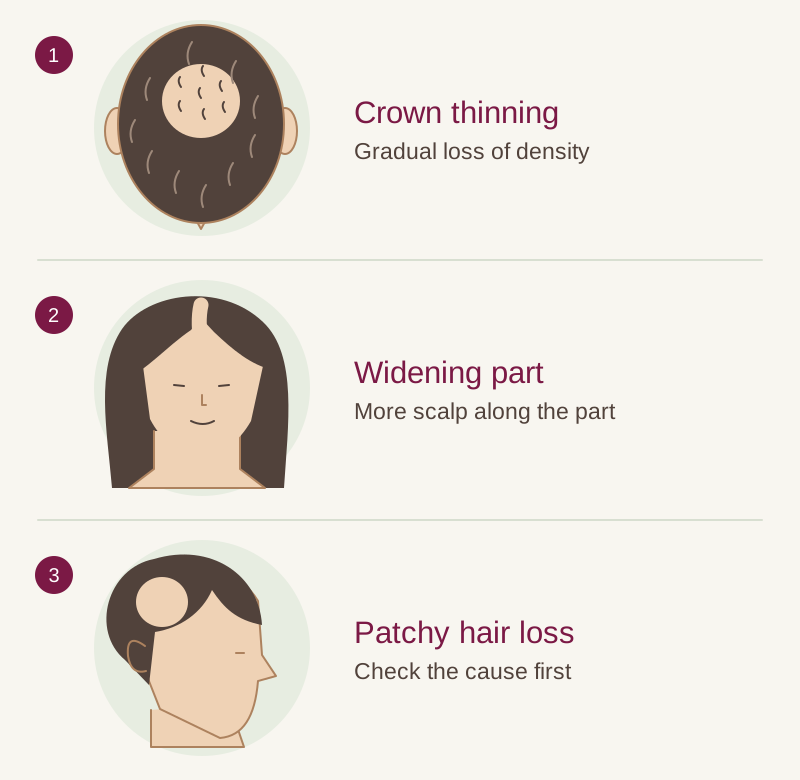
PRP may be an option for gradual pattern hair loss where there are still hair follicles to treat.
PRP may also be considered for female pattern hair loss. Your dermatologist will check what is causing the thinning.
Sudden patches, scalp irritation or heavy shedding need an assessment first. Another treatment may be more suitable.
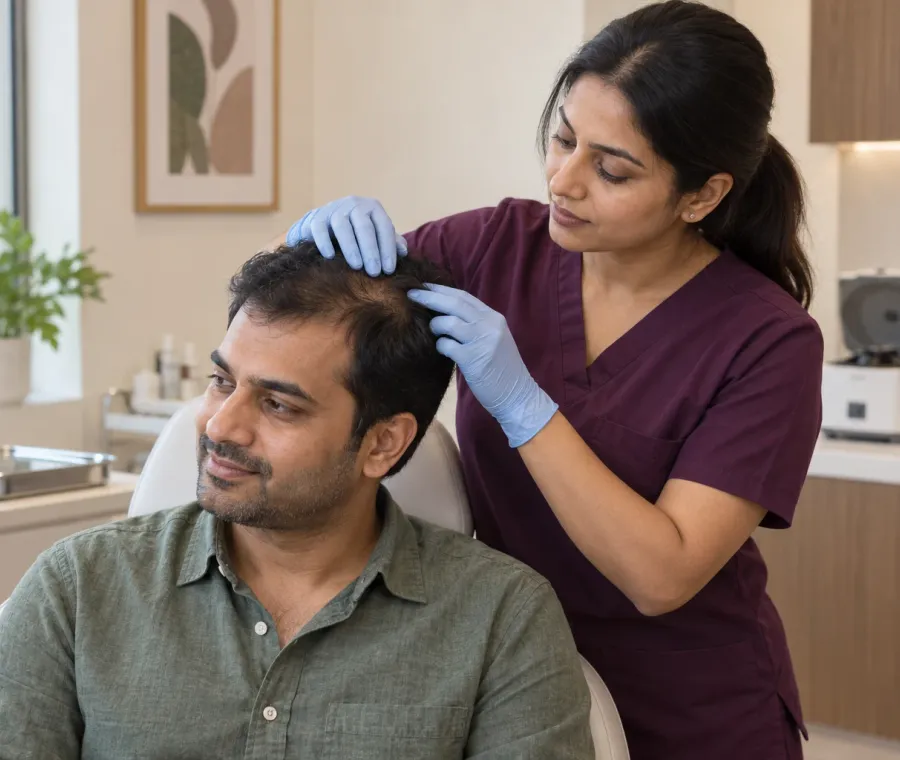
Your dermatologist will also review your health, medicines and scalp before recommending PRP.
Share your medical history, medicines and supplements, including anything that affects bleeding. Follow the clinic’s preparation advice; do not stop prescribed medicines on your own.
Once your treatment plan is agreed, a clinician collects a blood sample using sterile equipment.
The sample is processed in a centrifuge to separate a platelet-rich portion. Preparation systems can differ.
The prepared PRP is injected into the areas chosen during your assessment. Your clinician discusses comfort measures.
Expect blood collection, preparation and scalp injections. Tenderness or a stinging sensation is possible. Confirm the expected visit length and comfort options with your clinic.
Temporary soreness, swelling or bruising can occur. Follow the instructions you receive about scalp care, washing and exercise. Contact the clinic for worsening pain, spreading redness or fever.
PRP is usually considered as a course with follow-up, rather than one instant fix. Agree when to review changes, whether more sessions make sense and how to continue any other hair care.

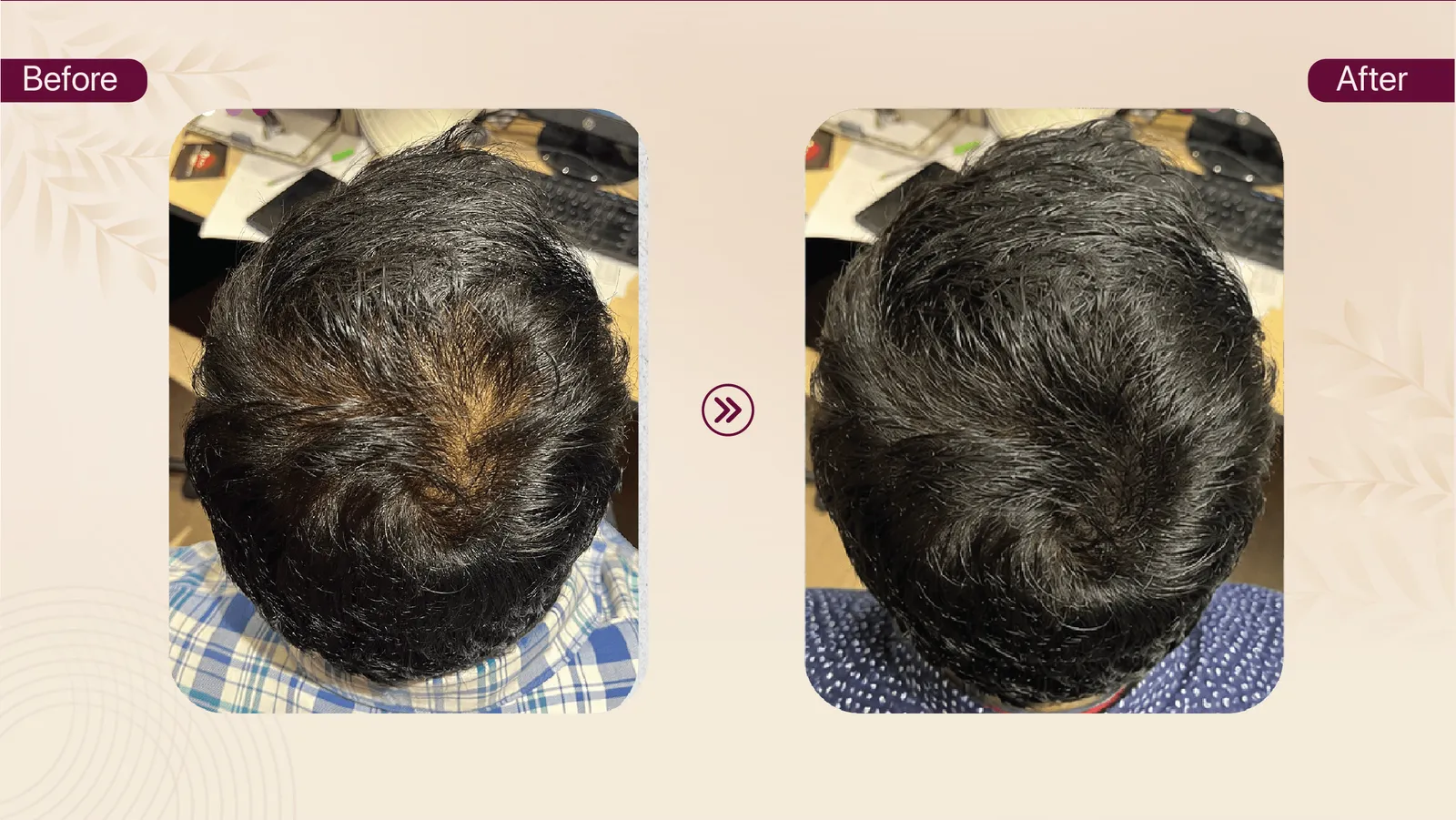
Patient before-and-after photographs showing hair restoration progress across the Layers network. Individual results vary.
Showing all 7 photographs
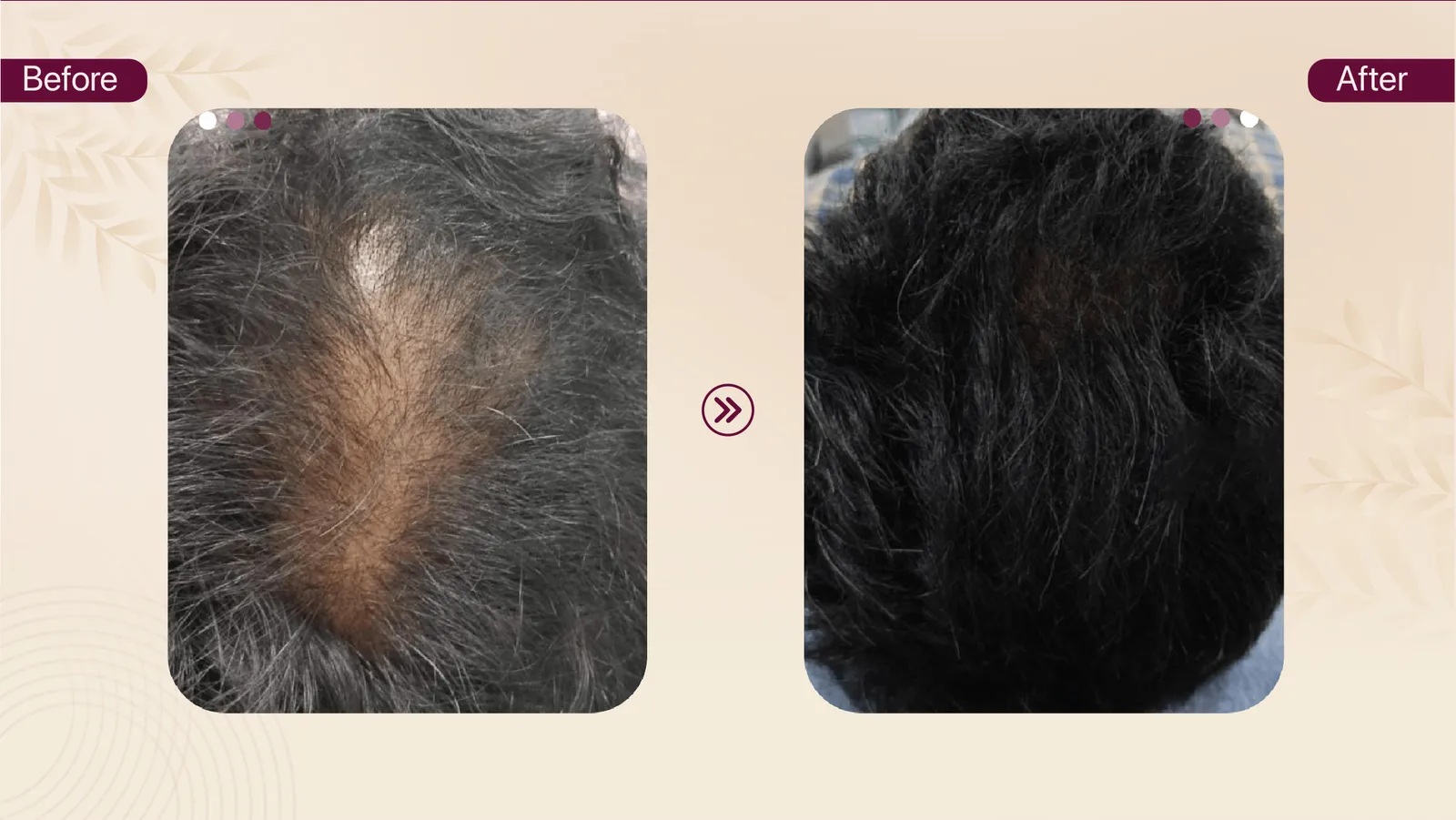
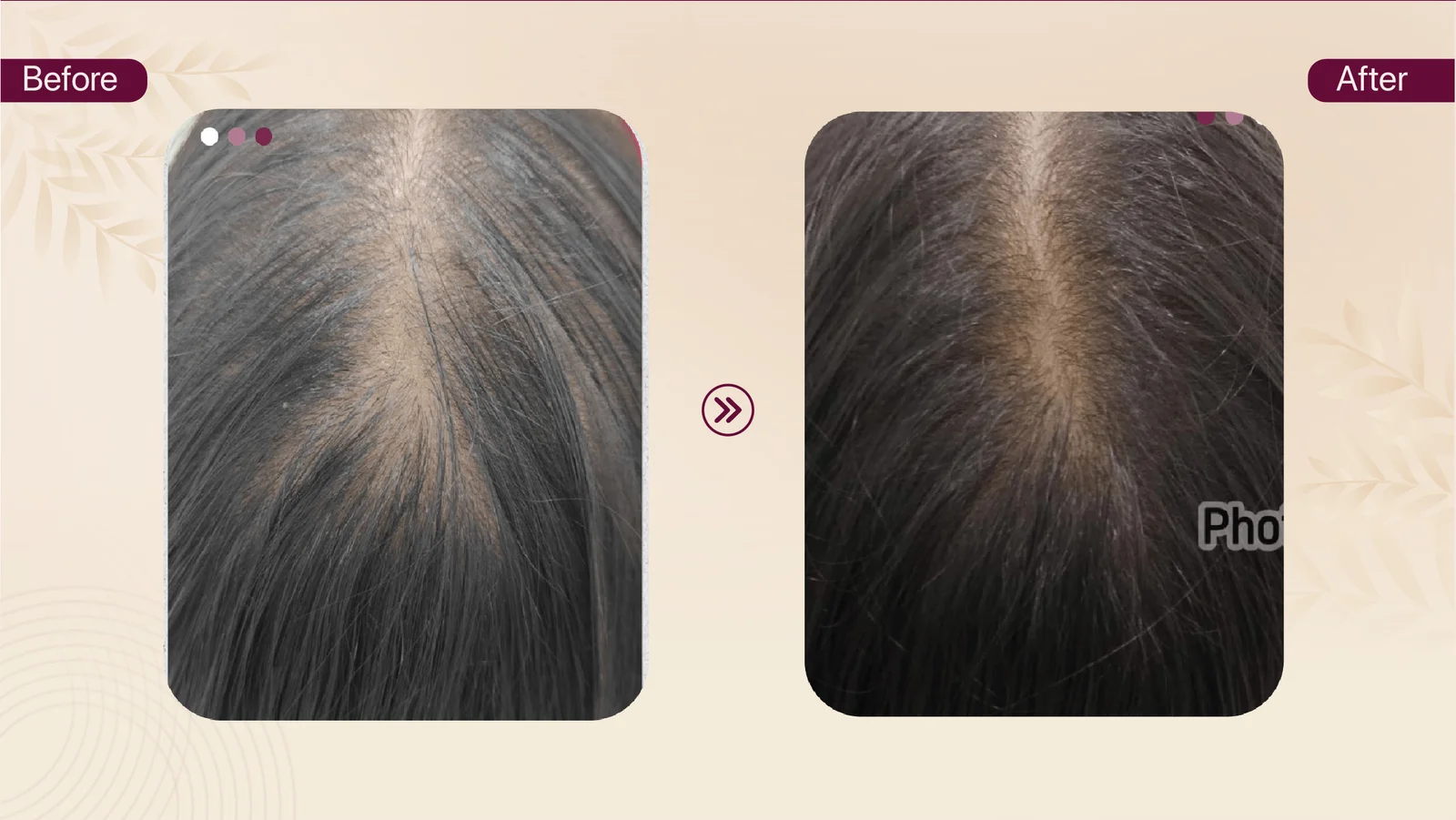
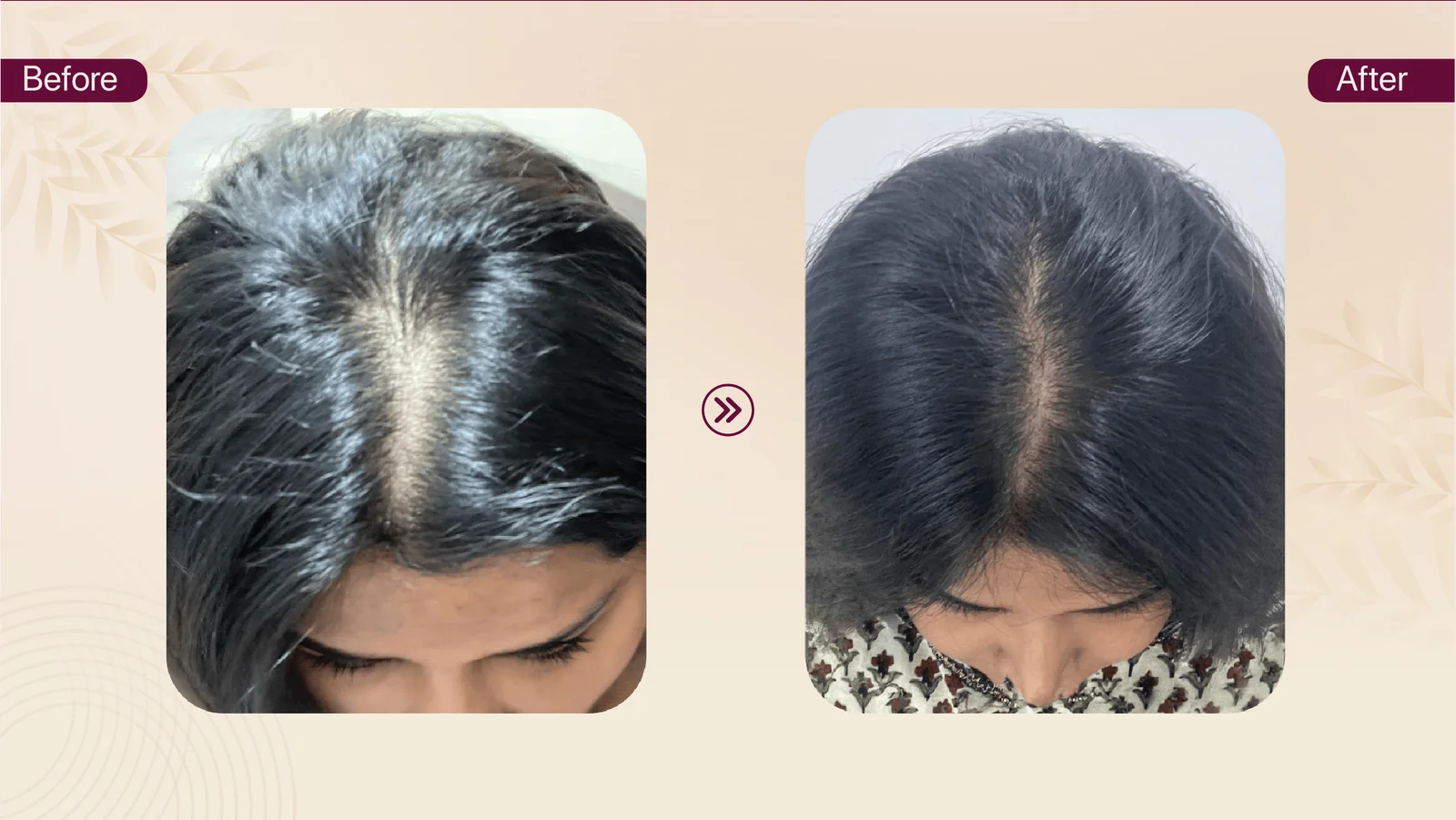
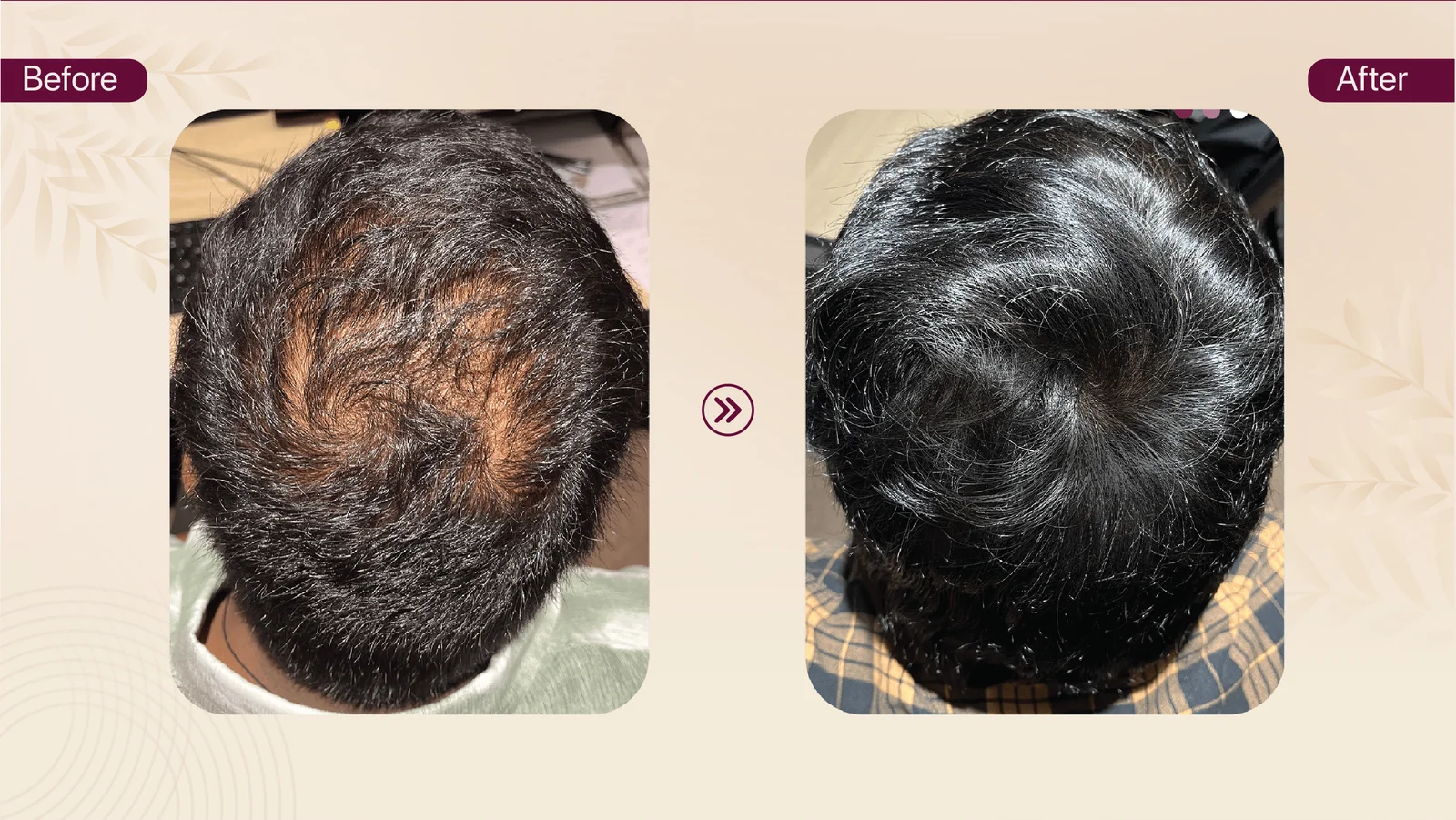
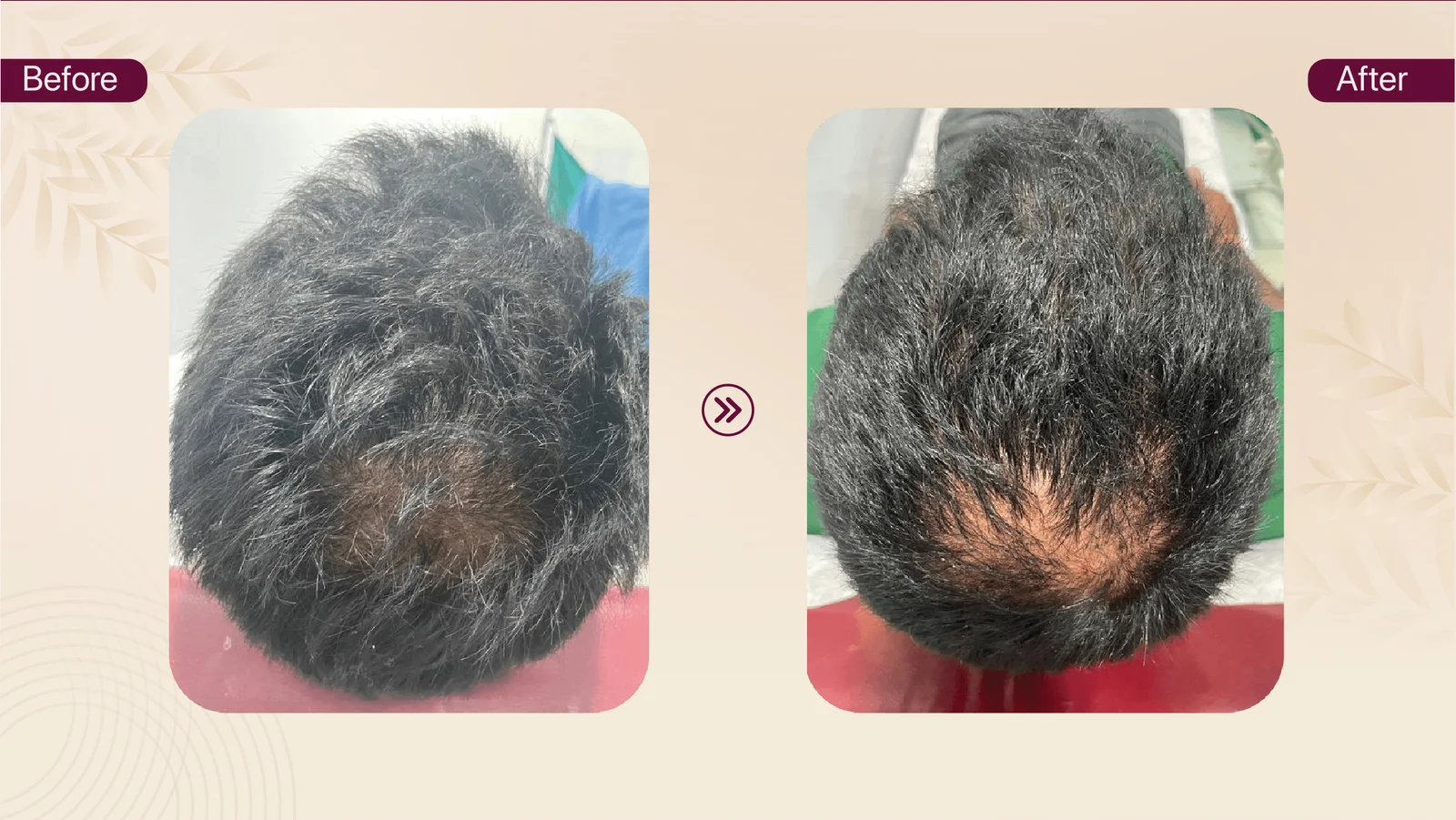
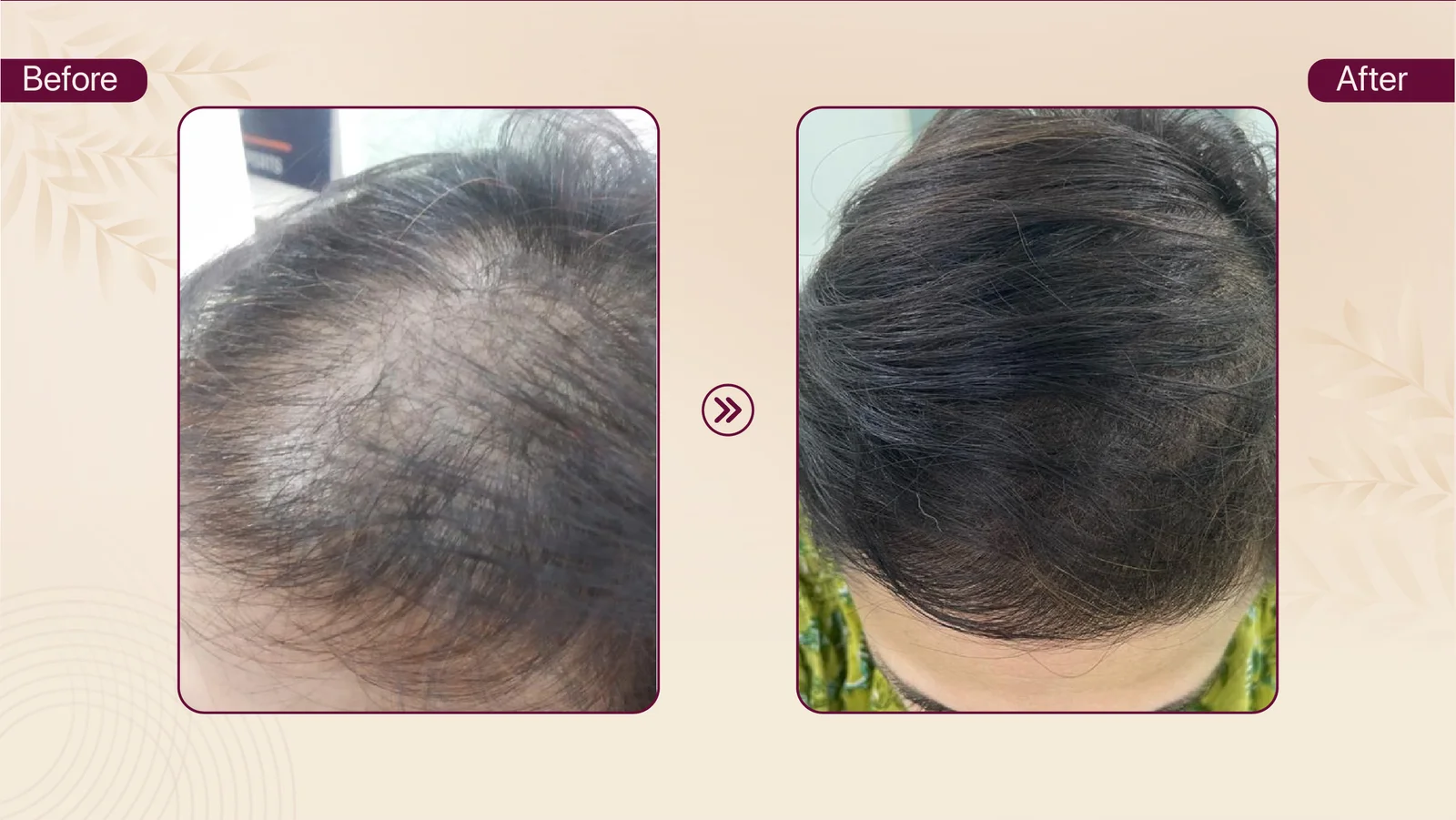
Individual results vary. These photographs show specific cases, not guaranteed outcomes. Original image quality, lighting and angles may differ. Your doctor can explain what may be possible for you.
Hair-care experiences at Layers, including PRP, GFC and hair-fall care.
“I underwent GFC and PRP treatment for hair loss and had a very positive experience.”
Combined PRP and GFC hair care.
“This was my first GFC treatment, and I'm very happy with my decision.”
GFC hair care.
“Excellent experience from consultation to treatment. The GFC procedure was explained clearly, and the doctors were very knowledgeable.”
GFC hair care.
“I am currently undergoing GFC (Growth Factor Concentrate) treatment at Layers and my experience so far has been highly satisfactory!”
GFC hair care.
“They suggested me GFC treatment and I experienced good results.”
GFC hair care.
“Most importantly, I’m seeing amazing results for my hair thinning treatment.”
Hair-thinning care.
“I noticed visible improvements in my skin texture and a significant reduction in hair fall within just a few sessions.”
Hair-fall and skin care.
















No. PRP is injected into the scalp around existing follicles. A hair transplant moves follicles from a donor area. These procedures have different purposes and suitability requirements.
It may be considered for selected people with pattern hair thinning. A dermatologist first checks the cause of your hair loss, scalp health and medical history. Not every kind of shedding needs injections.
A course and follow-up may be recommended. The schedule depends on your diagnosis, the preparation used and your response. Ask for an individual plan with review points before beginning.
Hair changes take time and are assessed over months. Response varies, and some people may not notice the improvement they hope for. Follow-up photographs help your clinician compare changes over time.
Scalp injections can be uncomfortable. Soreness, swelling and bruising are possible; bleeding or infection can also occur. Discuss comfort measures and your individual risks before treatment.
Sometimes it is used alongside medical care. Your dermatologist should explain the purpose of each part of the plan, including what to continue and how progress will be reviewed.
Tell the clinician before booking a procedure. Pregnancy, medicines and conditions affecting blood or platelets can change the decision. Do not stop any prescribed medicine without advice from the prescribing clinician.
Book a hair and scalp assessment. Bring your questions about suitability, sessions and follow-up.
Prefer a call? +91 9000 572727